Compact Hiking Binoculars
Guide
Finally at the top of the trail, you are face to face with a breathtaking landscape. It is there, at the very moment an eagle soars into the sky, that you realize the importance of good equipment: choosing compact binoculars for hiking is not a minor detail; it is the key to capturing these fleeting moments without unnecessarily burdening yourself. Yet, faced with technical specifications, it's easy to get lost. Let me guide you through the essentials, so your only worry is not missing any of the spectacle.
Key Points to Remember
- An 8x32 is the best compromise for hiking, combining stability, brightness, and a wide field of view.
- The mention "Fully multi-coated" and prisms made of BaK-4 glass are non-negotiable criteria for a clear and sharp image.
- Waterproofing and nitrogen filling are essential to protect your binoculars from the weather and internal fogging.
- A long eye relief (16mm+) is crucial for comfortable use, especially if you wear glasses.
- Gentle cleaning (blow then tap with a microfiber cloth) preserves the delicate optical coatings on the lenses.
Understanding Key Figures: Magnification, Brightness, and Field of View
These two numbers inscribed on the housing, for example 8x32 or 10x25, are your starting point. They summarize the essential behavior of your binoculars in the field. Deciphering them is how you avoid the first major pitfall.
Magnification (the first number): Stability above all
A magnification of 8x or 10x is the perfect standard for hiking. Why? Because beyond that, say 12x, the image becomes very sensitive to the slightest tremor of your hands. Holding 12x steady without support or a tripod in the wind after a climb is mission impossible. The 10x brings you a bit closer, ideal for identifying plumage at a distance, but the 8x offers a wider and much more stable image. Honestly, if you are a beginner or tend to have shaky hands, 8x is a no-regret choice.
The Objective Lens Diameter (the second number): The key to brightness
This dictates the amount of light that enters your binoculars. A small 21 or 25 mm objective lens will be ultra-light and fit in a jacket pocket, but it sacrifices clarity in dense forest or at dusk. A diameter of 30 or 32 mm, as in an 8x32 model, makes a considerable difference in these low-light conditions. The image is brighter, details in the shadows more visible. It's the smart compromise for those who don't want to skimp on observation quality. The magic number to remember is the exit pupil diameter: it is calculated by dividing the objective lens diameter by the magnification (ex: 32/8 = 4). Above 4, the brightness is excellent.
The Field of View: Don't lose your target
This is the width of the scene you see through the binoculars, usually expressed in meters at 1000 meters distance (ex: 115m/1000m). The higher this number, the easier it is to quickly "frame" a bird hopping from branch to branch or to follow an animal moving along a ridge. A lower magnification (like 8x) generally offers a wider field of view than 10x. This is an often underestimated but crucial criterion for the pleasure of observation. Honestly, a narrow field of view makes the experience frustrating and tedious.
Let's take a concrete example. You're hesitating between two models for your mountain hikes:
- A 10x25: Ultra-compact and light. Perfect for observing details on a sunny cliff at noon. However, in the evening in a shaded hollow, the image will become dark and you will struggle to stabilize the image.
- An 8x32: Slightly more voluminous, but much more versatile. The image is stable, bright even in the shade, and the wide field of view helps you locate your subjects. It is often the most balanced choice for enthusiasts.
Don't focus on just one number. The art of choosing the best compact hiking binoculars lies in the balance between these three parameters. A good 8x32 will serve you faithfully in 90% of situations, while an extreme 10x25 will be a specialized companion, brilliant in very specific conditions but limiting in others.
Deciphering Optical Quality: Coatings, Prisms, and Lenses
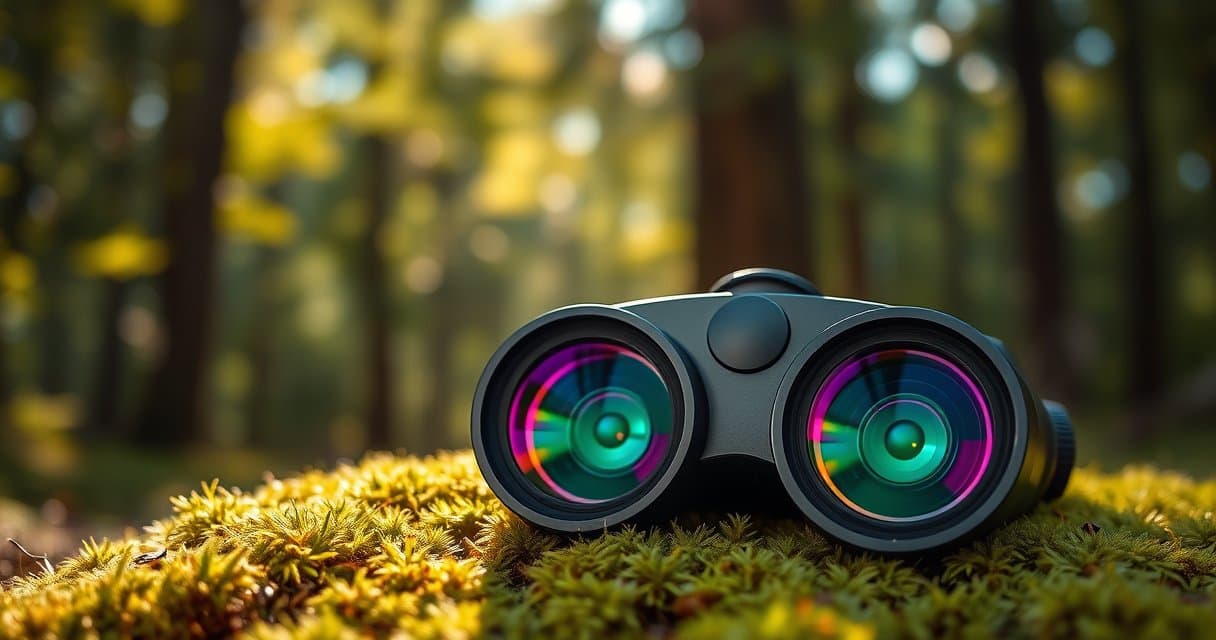
Basic specifications give you an idea of performance, but it's under the hood where the real difference lies between decent binoculars and the best compact hiking binoculars. Two pairs in 8x32 can offer a radically different experience depending on the quality of their components.
Lens Coatings: The Key to Clarity
Every time light passes through a lens, some of it is reflected and lost. In an instrument containing several lenses, this loss results in a dull, low-contrast image. This is where anti-reflective coatings applied to the glass come in.
- Fully multi-coated: This is the label you absolutely must look for. It means that all air-to-glass surfaces (not just the external faces) have received multiple layers of coating. The gain in brightness and contrast is palpable, especially in grey weather or under tree cover. The difference compared to simple "coated" is enormous to the naked eye.
- An untreated or poorly treated lens steals light from you. Frankly, for a model intended for nature observation, this is a non-negotiable criterion.
The Heart of the System: Prisms (BK-7 vs. BaK-4)
Prisms fold the light inside the binoculars to make them compact. Their quality directly influences the sharpness of the image, especially at the edges.
- BaK-4 glass prisms: This is the premium material. Its higher refractive index allows for optimal light transmission and a perfectly round, uniform image right to the edges of the field of view. If you wear glasses and have to hold your eyes back from the eyepieces, you will see the difference.
- BK-7 glass prisms: More economical. They can produce a slight loss of brightness and sharpness at the periphery (a "soft focus" effect on the edges). This isn't necessarily a deal-breaker on an entry-level model, but for regular use, BaK-4 is a true guarantee of comfort and quality.
ED or HD Glass: For a Sharp and True Image
You may have seen these abbreviations on slightly more ambitious models. ED stands for "Extra-low Dispersion", HD for "High Definition". Their role? To massively reduce chromatic aberration. This optical defect manifests as colored fringes (often purple or green) on high-contrast edges, like a dark tree branch against a bright sky. It is very distracting and blurs fine details.
ED or HD glass provides an image of crystalline sharpness, with natural colors and perfect separation of details. Is it a luxury? Not necessarily. Once you have observed through ED glass, it's hard to go back, especially for appreciating the detailed plumage of a bird. For a photographer hiker or a demanding ornithologist, it is an investment that is fully justified.
Our Selection
Today, we are focusing our lens on a selection of practical and accessible outdoor equipment. We are looking at two binocular models with very distinct profiles and a compact multifunctional backpack. Our analysis is based on technical specifications and community feedback to give you a clear view of their strengths and limitations.
To begin, here is a comparative overview of the selected products:
| Product | Magnification & Objective | Design & Protection | Weight | Community Strengths |
|---|---|---|---|---|
| Kylietech 12x42 | 12x / 42mm Objective | Waterproof and fog-proof | 550 g | Versatility, smartphone accessory, brightness |
| G4Free Hiking Backpack | 12L / 20L (capacity) | Durable polyester | 360 g (12L) | Compactness, organization, comfort for light hiking |
| Vilepe 10x25 | 10x / 25mm Objective | Compact and portable | 360 g | Ultra-lightweight, practical for children, night vision |
Kylietech 12x42 Binoculars
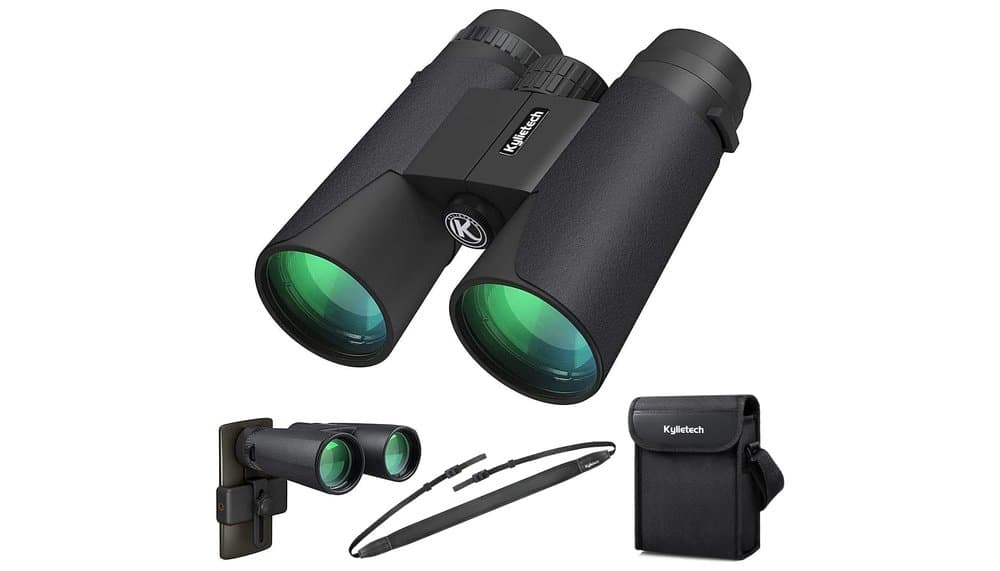
On paper, the specs of the Kylietech 12x42 announce a versatility suited for nature activities like birdwatching or observation. The combination of 12x magnification and 42mm objectives, paired with BAK-4 prisms and a fully multi-coated (FMC) lens, promises in theory a bright and sharp image. Community reviews largely confirm this technical promise, often highlighting the good image quality for the price, especially in daylight.
The strengths pointed out by users are numerous. Waterproofing and fog-proof protection are frequently cited as major assets for outdoor use without worrying about the weather. The inclusion of a smartphone adapter in the box is a much-appreciated plus, allowing for capturing images or videos through the eyepiece. Furthermore, the presence of a tripod mount offers the possibility of stable observation over long periods, a detail that makes a difference. The rubber coating is also noted for its comfortable grip and robustness against minor shocks.
However, some feedback tempers this enthusiasm. The 12x magnification, while powerful, makes the image more sensitive to hand tremors. The community notes that for prolonged use without a tripod, this can be tiring and harm observation stability. On the other hand, despite the large objectives, some users mention a certain loss of brightness and a field of view that seems less wide than expected in low-light conditions (twilight). Finally, despite its waterproofing, some reviews point out an ergonomics that may not suit all body types, especially for those who wear glasses, despite the retractable eyecups.
G4Free Hiking Backpack
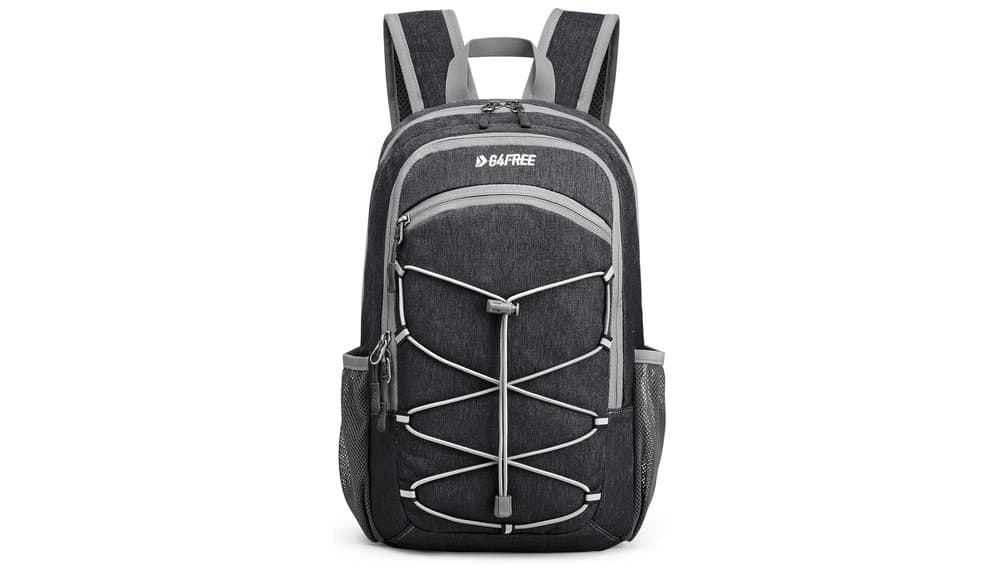
The G4Free Hiking Backpack presents itself as a lightweight and organized companion for day trips. According to user feedback, it largely delivers on its promises as a compact and multifunctional backpack. Its modular capacity (12L or 20L depending on the model) and featherweight make it a preferred choice for light hiking, city trips, or as carry-on luggage.
The community particularly praises its thoughtful organization. The many pockets, internal and external, as well as the storage nets allow for intelligently distributing one's belongings: a hydration bladder sleeve, a compartment for a laptop up to 13 inches, side compression straps... Reviews emphasize that nothing gets lost at the bottom of the bag. Comfort is also a recurring point in positive comments, with padded and breathable shoulder straps and a chest strap that allow for carrying the load without discomfort for medium durations.
The reported limitations are linked to the very purpose of the product. For more serious hiking with heavy gear, its lightweight structure and the lack of a rigid frame or hip belt can prove insufficient. The less breathable back can also become uncomfortable during intense effort in hot weather. Finally, some users note that the quality of the materials, while decent for the price, may show signs of premature wear on zippers or seams if the bag is subjected to very intensive use or regularly overloaded.
Vilepe 10x25 Compact Binoculars
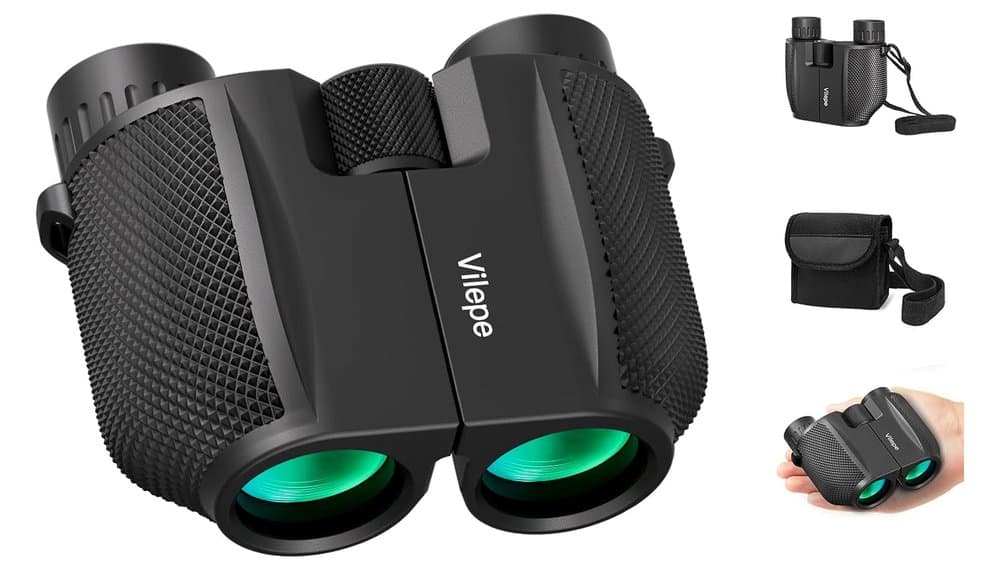
The Vilepe 10x25 plays the card of extreme compactness and simplicity. These mini binoculars, with their featherweight of only 360 grams, are clearly designed to be slipped into a jacket pocket or a small handbag. The promise is that of a portable and accessible observation tool for all occasions, from shows to family walks.
Customer reviews highlight this practicality. Their small size is their main asset: you take them anywhere without hesitation. They are frequently recommended for children due to their lightness and ease of use. Their "night vision" mention (which actually refers to low-light performance) is perceived as a bonus for observations in the early evening. Their 10x magnification is considered a good compromise, offering interesting zoom while remaining fairly stable handheld.
Nevertheless, one must be aware of the inherent compromises of this format. The 25mm objectives capture much less light than larger models, which, according to feedback, results in a noticeably less bright and contrasted image, especially in overcast weather or deep shade. Furthermore, the construction is lighter, with a clear lack of indicated waterproofing, making them vulnerable to rain or moisture. Finally, users wearing glasses may find the eye relief limited, making observation less comfortable. It is therefore a tool for occasional use and discovery, not an instrument for regular and demanding practice.
Robustness, Waterproofing, and Handling Comfort
You could have the best optics in the world, but if your binoculars take on water in the first shower or slip from your hands, they won't last long on the trails. This chapter discusses the physical relationship you will have with your tool, in all weather conditions.
Waterproofing and Gas Purging: An Essential Assurance
A "waterproof" rating doesn't just mean they will survive a drizzle. It's a guarantee that the instrument is sealed and capable of resisting temporary immersion (usually up to 1 or 2 meters deep) and heavy rain. Even more critical is nitrogen or argon purging. This process replaces the humid air inside the tubes with an inert gas. Why? To completely prevent internal lens fogging during thermal shocks—like when you step out of an air-conditioned car to observe in full summer sun, or when the temperature drops rapidly at altitude. Without it, your binoculars become unusable. Don't skip this feature.
The Body and Armoring: A Balance Between Lightness and Grip
The choice of materials is a balancing act. A magnesium alloy body is light, rigid, and dissipates heat well, but it is often more expensive. A reinforced polymer body can be very durable and less expensive, but its feel in the hand is different. Whatever the material, a rubber armor is almost mandatory. It absorbs shocks in case of a drop, provides a non-slip grip even with wet or gloved hands, and offers thermal insulation. Feel it: it should not be too soft or sticky.
Weight and Balance: Finding the Sweet Spot
Total weight is often discussed, but balance in the hand is just as crucial. Binoculars that are too light can paradoxically be harder to stabilize, as your muscles compensate for the lack of inertia with micro-tremors. A model weighing around 300 to 400 grams often offers a good compromise: light enough to not weigh down your bag, yet dense enough to feel stable and reassuring in hand. Also check the weight distribution. Are they well-balanced, or do they tip heavily forward? This will affect your comfort during prolonged observations.
Everyday Details: Ergonomics and Handling
Look at the small things. The focus wheel and diopter adjustment wheel should turn with a firm, precise resistance—not too smooth to avoid accidental adjustment in your bag. The eyecups should fit your face: if they are too hard, they will be uncomfortable; if they are too soft, they will deform. For eyeglass wearers, eyecups that fold down cleanly are essential. And finally, is the original neck strap wide and comfortable enough for a day around your neck? Often thin and cutting, it deserves to be replaced with a wider strap for real comfort—a small investment that changes everything.
The Details That Make a Difference in Use
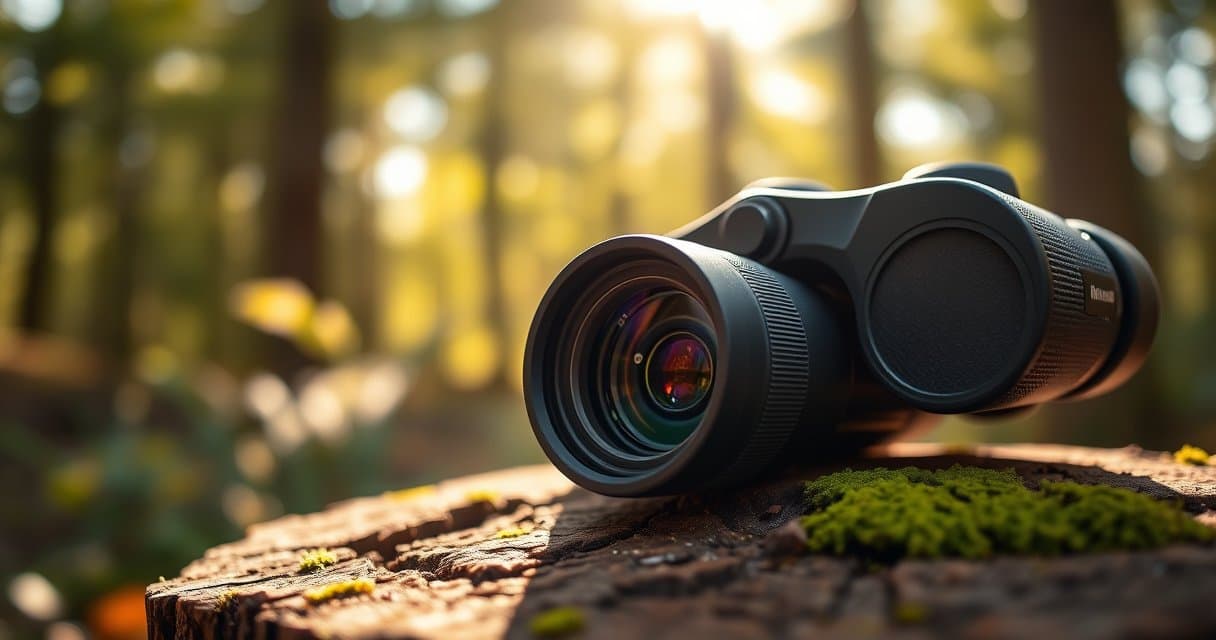
It's often in the field, after hours of use, that you discover what separates a good pair of binoculars from a great pair. These characteristics aren't always highlighted on the box, but they profoundly influence your viewing pleasure.
Eye Relief: Comfort for All, Especially with Glasses
This is the distance between the eyepiece and your eye that allows you to see the entire image. Expressed in millimeters, long eye relief (16mm or more) is an absolute must if you wear glasses. It saves you from constantly having to take them off. But even without correction, good eye relief allows you to rest your eyebrows without smudging the lenses and reduces eye strain. Test this: if you have to press your eyes against the eyepieces to see the whole field of view, it's too short. Comfort disappears quickly.
Minimum Focus Distance: For the Infinitely Close
We always talk about seeing far away, but being able to observe up close is magical. A minimum focusing distance of 1.5 to 2 meters is common. The best compact binoculars for hiking, especially if you're curious about botany or insects, can go down to 1 meter, or even less. Imagine studying the details of a dragonfly perched on a flower within arm's reach. This is an underrated feature that opens up a world of new observations.
Stability and the Adjustment System
The central focusing wheel must turn with millimeter precision. A wheel that's too loose gets misadjusted in the bag; a wheel that's too stiff is a pain to use with gloves or cold fingers. The diopter adjustment, usually on the right eyepiece, is crucial. Once set for the difference between your two eyes, it must lock positively. Nothing is more frustrating than having to recalibrate it constantly. Some models offer a click-stop or twist-push system, much more secure than a freely rotating ring.
The Accessory That Changes Everything: The Strap and Case
The supplied strap is often a manufacturer's afterthought. If it's thin, it cuts into your neck. Replace it with a wide, padded strap, or opt for a harness that distributes the weight across both shoulders for long days. As for the case, a soft case ("semi-rigid") is often more practical than a hard one: it slips more easily into a bag, conforms to the shape, and protects just as well. Truly, these small investments are worth every penny for your daily comfort.
How to Transport and Maintain Your Binoculars in the Field
A pair of binoculars is a faithful, yet delicate, companion. How you treat it between observations determines its longevity and performance. This is where the real durability of your investment is decided.
Transport: Avoiding Shocks and Scratches
The first rule is to always use the case. Even for a five-minute trip in your backpack. Shocks against a compass, water bottle, or stone can misalign the prisms, causing irreversible damage. For the best compact hiking binoculars, a soft neoprene "egg crate" style case is often more practical than a rigid one: it cushions better, takes up less space, and fits in a side compartment. If you're heading out for a long day, consider a chest harness. It frees your neck, distributes the weight, and keeps the binoculars ready to use against your chest.
Lens Cleaning: A Matter of Method, Not Force
It's tempting to wipe a dirty lens with your t-shirt. Resist! You risk scratching the delicate multi-layer coatings. Here is the correct routine:
- Blow first to dislodge abrasive dust or sand particles. A small soft-bristled brush, like those for camera lenses, is ideal.
- Only then, use a clean microfiber cloth reserved for this purpose. Dab gently; do not rub in circles with pressure.
- For stubborn marks (fingerprints, sap), dampen a corner of the cloth with a specialized optical cleaning fluid. Never use standard glass cleaner, as it is too harsh. It's a minute of care that preserves your optics for years.
Managing Humidity and Extreme Temperatures
Your binoculars are waterproof, but that does not make them immune to condensation. If you go from a cold winter environment into a heated shelter, leave them in their closed case while they gradually warm up. Avoid placing them near a direct heat source. If they get wet from rain, dry the exterior with an absorbent cloth before storing them. Frankly, a simple camping microfiber towel does both jobs perfectly.
Quick Checks Before You Head Out
A two-minute checklist can prevent disappointment in the middle of a panorama:
- Are the eyecups raised or folded down according to your need (with or without glasses)?
- Is the diopter adjustment ring still locked on your personal setting?
- Is the strap securely attached and in good condition? A worn seam can fail at the worst moment. Adopting these habits ensures your equipment will be ready when the variable hawk appears above the ridge.
Conclusion
Choosing your compact binoculars for hiking ultimately means prioritizing the quality of the experience over the mere weight of the gear.
The right model then becomes a natural extension of your gaze, discreet in your pack but decisive when faced with the spectacle.
So, travel light. But travel with the tool that will transform a distant silhouette into a sharp and vibrant memory.
Frequently Asked Questions
What is the best binocular configuration for hiking?
The 8x32 configuration is the best all-around compromise for hiking, as it offers a stable, bright image (with a 4 mm exit pupil) and a wide field of view for easily locating subjects.
What is a suitable magnification for hiking?
A magnification of 8x or 10x is ideal; beyond 12x, the image becomes too sensitive to hand shake without a tripod, which is impractical on the trail.
How to choose lightweight and bright binoculars?
For a good balance, prioritize an objective lens diameter of around 30 or 32 mm (like in 8x32) and check for the "Fully multi-coated" label on the lenses for optimal clarity even in low light.
Should compact binoculars be waterproof?
Yes, waterproof and nitrogen-purged binoculars are essential to withstand rain and prevent internal fogging during temperature changes at altitude or in humid conditions.
What is the importance of field of view for hiking binoculars?
A wide field of view (e.g., 115m at 1000m) is crucial because it allows you to quickly frame a moving bird or follow an animal along a ridge without losing sight of the target.
How to properly clean binocular lenses?
First, blow to remove abrasive dust, then use only a clean, dedicated microfiber cloth, possibly dampened with a special lens cleaning fluid, gently dabbing without rubbing.
100% free and independent — All our articles are written independently, without any sponsorship. We may earn a commission on purchases made through our links, at no extra cost to you.
Guides you might like
Astrophotography Telescope Buying Guide
Choose the right telescope for astrophotography to avoid frustration. Key factors depend on your target nebula or object.
Best Binoculars Value Guide
Find value binoculars that match your real needs. Understand specs like 8x42 and key features for the best observation without overspending.
Best Nature Binoculars Kids
Discover how to choose the perfect first binoculars for a child, focusing on lightweight design, ergonomics, and sparking a love for nature observation.
Articles you might like
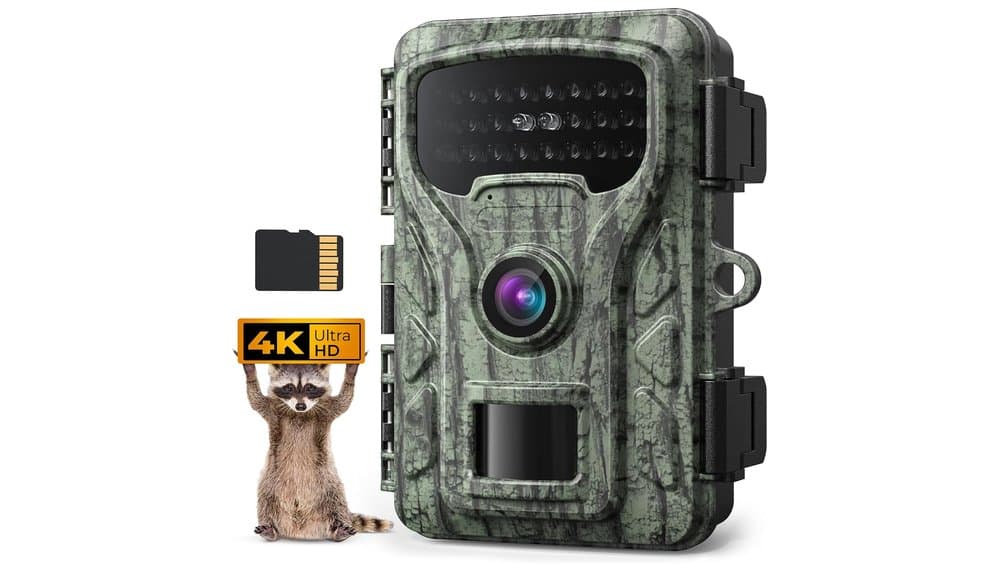
Caytail 4K 48MP Hunting Camera Review & Test
In-depth review of the Caytail 4K 48MP trail camera with included SD card. We analyze specs and real user feedback on its true field performance.
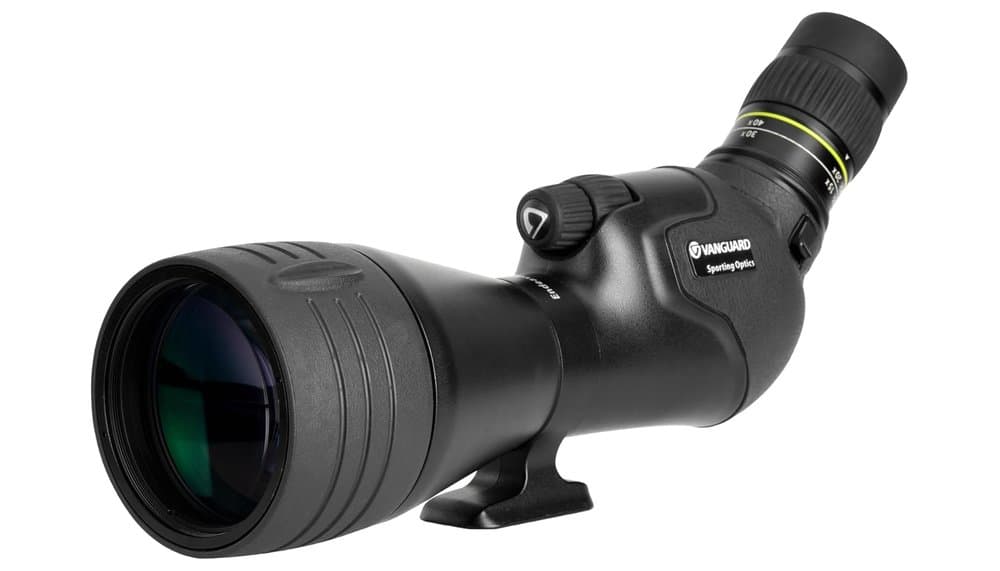
Vanguard Endeavor HD65A Spotting Scope Review
Spotting scope with 65mm ED glass & 15-45x zoom for birding & hiking. Balanced performance & portability for serious nature observers.
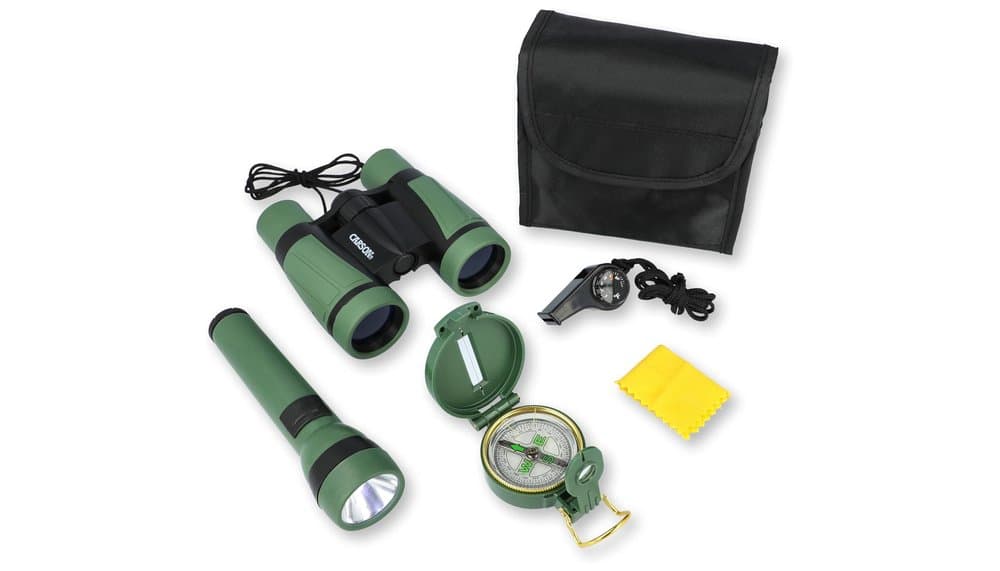
Carson AdventurePak Kids' Exploration Tool Kit Review
Explore nature with this kid's 5-piece tool kit for outdoor adventure and educational discovery. Perfect for young explorers.