Best Binoculars Value Guide
Guide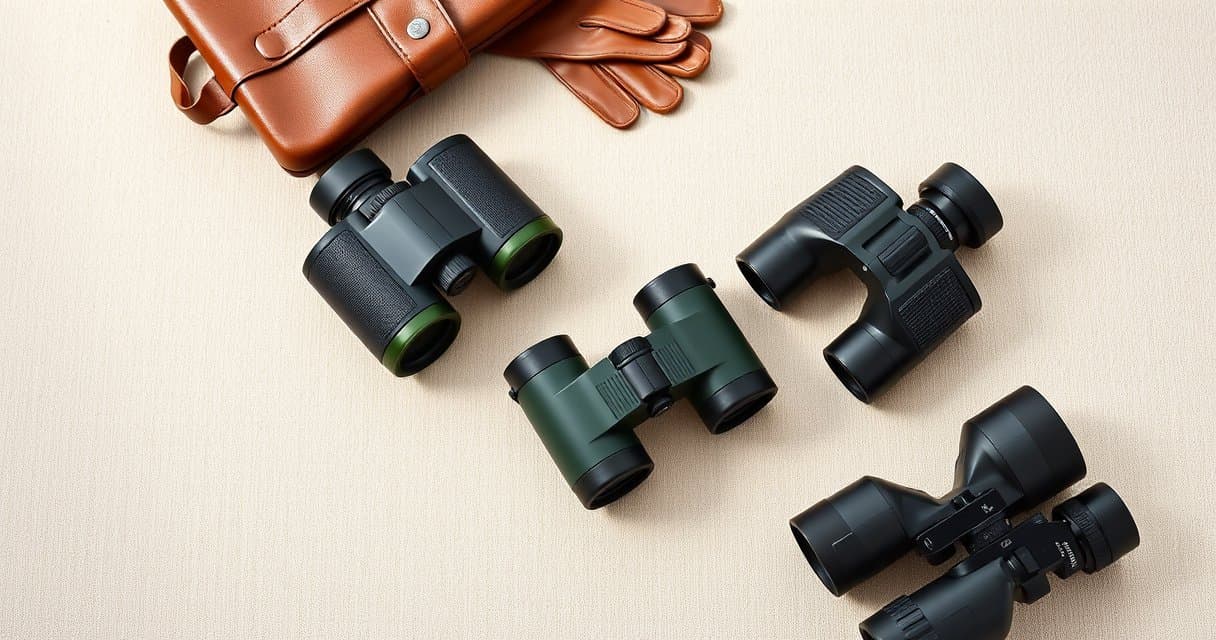
Dream of stunning details without breaking the bank? That's the whole art of value for money when it comes to binoculars. Between marketing promises and real observation needs, the choice can quickly become a headache. Don't worry, we'll sort out the essentials together to find the pair that really suits you.
Key Points to Remember
- Numbers like 8x42 indicate the magnification and objective lens diameter, the latter being crucial for brightness.
- For versatile use, favor an 8x42 or 10x42 format, an optimal balance between stability, brightness, and field of view.
- Optical quality is judged by "Fully Multi-Coated" treatments and BaK-4 glass prisms for a clear and contrasted image.
- A waterproof construction with nitrogen purging (IPX7) is essential to protect your binoculars in all outdoor conditions.
- Choose your binoculars according to your main activity: compactness for hiking, brightness for birdwatching, reinforced waterproofing for marine use.
What Do Numbers Like 8x42 or 10x50 Really Mean?
This is the first mystery to solve. These two numbers are not a random code, but a clear identifier. The first number (before the "x") is the magnification. Therefore, a 10x50 pair magnifies the image ten times. It's as if you were getting ten times closer to the animal or landscape. The second number is the diameter of the front lenses, expressed in millimeters. The larger it is, the greater the "well of light" that enters. It largely determines the clarity of the image, especially when light levels drop.
These two values create a third, fundamental one: the exit pupil. To calculate it, simply divide the objective lens diameter by the magnification. Example: with 10x42, you do 42 ÷ 10 = 4.2 mm. This figure corresponds to the small circle of light that reaches your eye. Why is it crucial? An exit pupil of at least 4 mm is ideal for observation at dusk or under forest cover, as it better matches our pupil's ability to dilate in darkness. 8x25 binoculars, for example, will have an exit pupil of 3.1 mm (25÷8) – perfect in broad daylight, but less effective at nightfall.
Magnification: The Myth of "Bigger is Better"
Frankly, this is where most people go wrong. High magnification, like 12x or 15x, seems appealing, but it makes the image very sensitive to the slightest tremor of your hands. Without a tripod, everything becomes blurry. Furthermore, the field of view (the width of what you see) drastically reduces. Trying to follow a bird in flight with 15x? Good luck.
For versatile use in nature, the sweet spot is between 8x and 10x. 8x offers a more stable image and a wider field, perfect for scanning a landscape or following a moving animal. 10x provides appreciable extra detail for identifying plumage at a distance. It's all about compromise.
Objective Lens Diameter: The Light Collector
This is the real quality factor. A 42 mm objective lens gathers nearly 75% more light than a 32 mm lens (calculated surface area, it's mathematical). This difference is immediately noticeable. For the best value-for-money binoculars, aiming for 42 mm is often the most judicious choice. It's the standard in birding for a good reason: sufficient brightness without excessive weight.
Consider this comparison:
- 8x32 / 10x32: Lightweight, compact. Perfect for hiking where every gram counts. But in dense undergrowth or late in the day, the image darkens quickly.
- 8x42 / 10x42: The best balance. Bright enough for most situations, without being too heavy. This is the most recommended configuration for starting seriously.
- 10x50 / 12x50: Beacons. Ideal for casual astronomy, fixed maritime observation, or from a hide. But their weight and bulk make them impractical for long walks.
My advice? For a first serious purchase, don't go below 42 mm in diameter. The frustration of a dim image is the best way to leave your binoculars at the back of a closet.
The Winning Trio: Magnification, Objective Lens, and Field of View
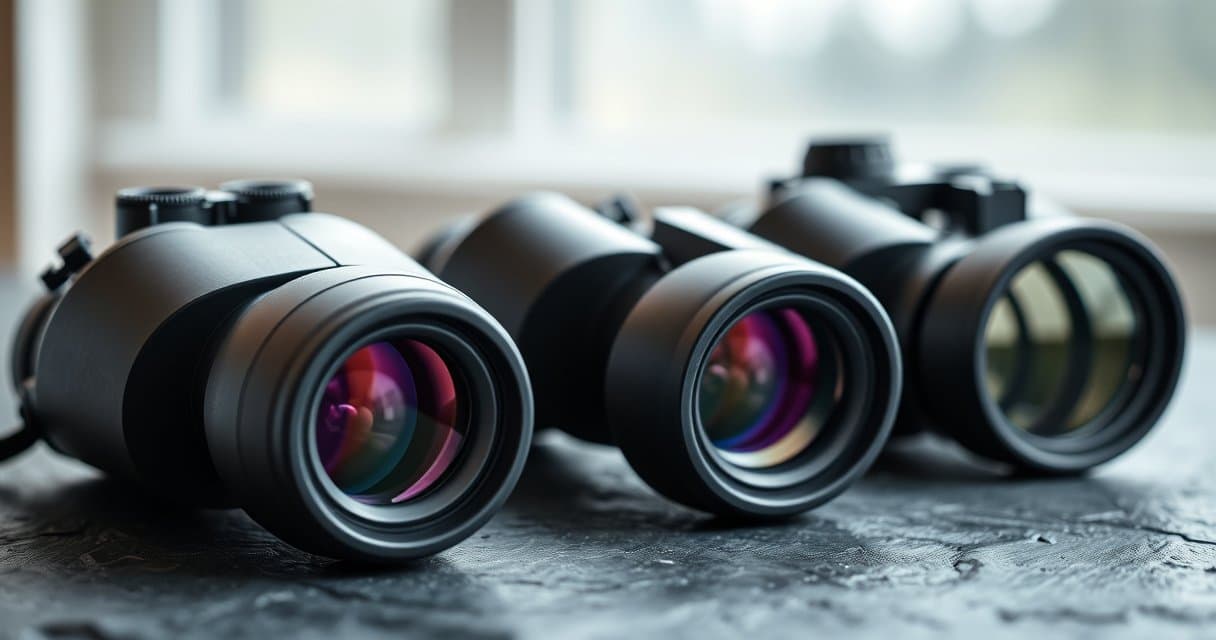
Now that you can decode the numbers, you need to understand how they interact. It's not a simple addition; it's an equation. Each choice has a direct consequence on your experience. The real challenge is finding the balance point that matches your hand, your eye, and what you are observing.
Field of View: The Often-Forgotten Element
You have magnification to bring you closer, and the objective lens to gather light. But how wide is the scene? That's the field of view. It is generally indicated in meters at 1000m (e.g., 120m/1000m) or in degrees. This is crucial.
Imagine following a kingfisher flying low over the water. With high-magnification binoculars and a narrow field, you will constantly lose it, spending your time searching empty space. A wide field allows you to easily "frame" it and follow its movement. For dynamic observation (birds in flight, moving mammals), a wide field is often more valuable than extreme detail. Frankly, for most of us, a restricted field is a source of daily frustration.
Balancing for Use: Smart Compromises
Value for money is the art of thoughtful compromise. Here’s how this trio plays out for different activities.
- For Hiking and General Observation: Priority goes to lightness and a wide field for scanning landscapes. An 8x32 is an excellent choice. The field is generous, the weight contained. The 8x offers natural stability even after hours of walking. You sacrifice a bit of light for comfort, and it's a good trade-off.
- For Serious Birdwatching and Wildlife: This is where the trio reaches its optimum. A 10x42 is often cited as the benchmark. Why? The 10x provides the detail needed to identify subtle patterns. The 42mm brings the essential light in woodlands or at dusk. And manufacturers often optimize this configuration to offer a very decent field of view. It's the combo with the fewest weaknesses.
- For Stationary Observation (Blinds, Seawatching): When weight is secondary and light-gathering is paramount, you can aim bigger. A 10x50 or 12x50 makes perfect sense. The large objective lens maximizes brightness and often allows for a good field. The high magnification, however, demands absolute stability – a support, a tripod, or very controlled breathing. Handheld, beyond 10x, is often counterproductive.
My advice? Never choose based on paper specs. These numbers must be experienced. A 10x with a 110m field at 1000m will be much more pleasant than a 10x with a 90m field. When looking for the best value binoculars, demand this information. And remember: a good compromise is the one that makes you forget the technique so you can focus only on nature.
Our Selection
For those looking for reliable binoculars, the choice can be complex between a high-performance model for demanding conditions and an ultra-compact option for everyday outings. Our selection actually compares two products that meet very different needs: the Steiner Observer 8x56, a serious instrument for low-light observation, and the Timber 8x25 Binoculars, a light and practical companion for hiking. Here is a comparison table to lay the groundwork.
| Product | Magnification & Objective | Weight | Waterproofing & Robustness | Key Strengths |
|---|---|---|---|---|
| STEINER Observer 8x56 | 8x56 mm | 1170 g | Waterproof and fog-proof (nitrogen), -15°C to +55°C | Exceptional brightness, high-contrast optics, 10-year warranty |
| TIMBER Binoculars 8x25 | 8x25 mm | 120 g | Waterproof (certified) | Extreme compactness, lightweight design, very easy to transport |
STEINER Observer 8x56
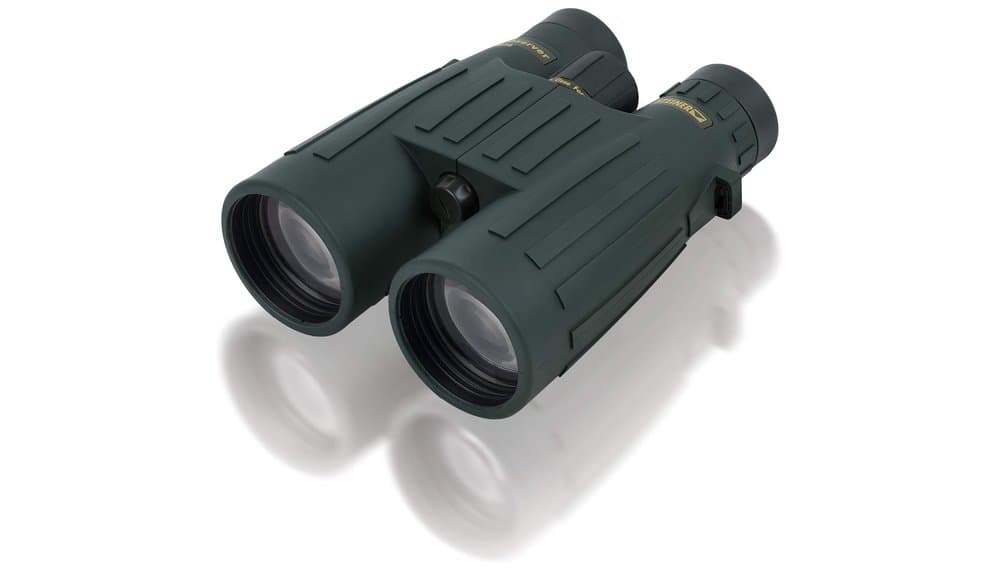
On paper, the specifications of the STEINER Observer 8x56 clearly state its purpose: it is an instrument designed for optical performance in low light. Its large 56 mm objective lens combined with the brand's High-Contrast optics promises bright and detailed images even at dusk. According to user feedback, this is precisely where this model excels. The community notes that the brightness is remarkable, offering a clear advantage for observation in forests or under overcast skies. The construction also inspires confidence: the waterproof and nitrogen-filled housing prevents internal fogging, and the 10-year warranty testifies to the robustness claimed by this German brand.
However, this performance comes at the cost of bulk. Reviews emphasize that the weight of 1.17 kg and generous dimensions make it a substantial piece of equipment. It is not meant to be worn around the neck for hours of walking without a good harness. It is a tool for dedicated observation sessions, such as hunting or wildlife study. Another point raised by some users concerns the focus: while the Fast-Close-Focus system is generally appreciated for its precision, it requires some practice to be adjusted very quickly on moving targets. In summary, the Steiner Observer 8x56 is the choice of an enthusiast or professional who prioritizes image quality and reliability in difficult conditions and is willing to accept its size to achieve it.
TIMBER Binoculars 8x25
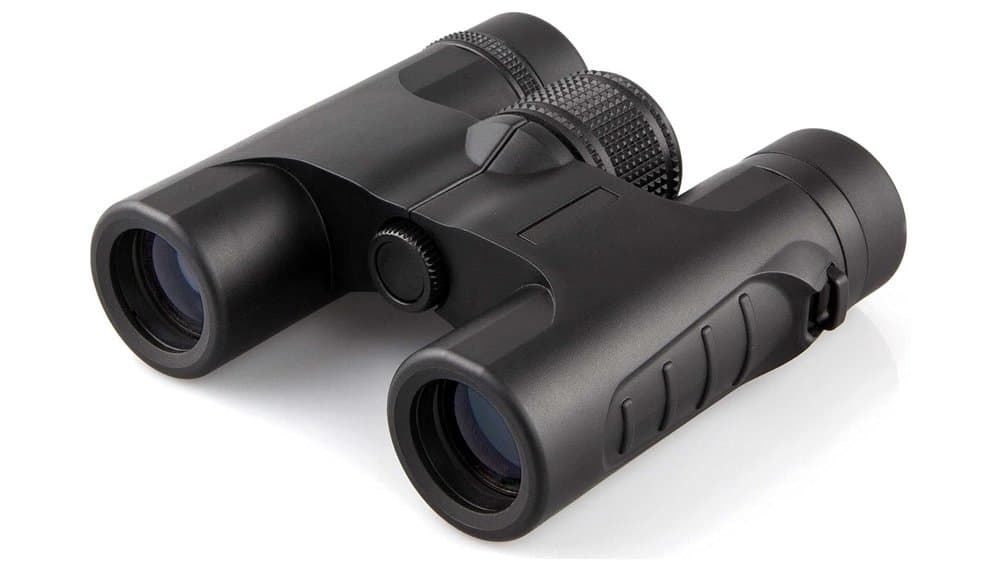
At the opposite end of the spectrum, the TIMBER Binoculars 8x25 bets everything on compactness and lightness. With a featherweight of 120 grams and reduced dimensions, it is designed to be forgotten at the bottom of a bag or slipped into a pocket until the moment of use. The technical specifications highlight its waterproof design, a significant asset for facing a rain shower while hiking or a splash at sea. For daily activities like hiking, travel, or outdoor sporting events, its format is a major selling point.
Analysis of community reviews confirms this impression of a practical product, but it also brings nuances regarding optical performance. User feedback indicates that brightness and the field of view are logically limited by the small 25 mm objective lenses. Images may appear less bright and detail less fine in subdued light conditions, such as late in the day or under dense forest cover. This is the classic compactness compromise. Furthermore, some reviews mention that the eyepieces can be a bit small for prolonged viewing comfort, especially for eyeglass wearers, despite the advertised 8 mm eye relief. The Timber 8x25 therefore perfectly fulfills its role as a backup binocular, reliable and easy to carry, offering excellent value for occasional use in good light, but it does not claim to compete with bulkier models on purely optical terms.
What the Optical Components Reveal About Quality
The numbers on the body give you an idea of the capabilities, but the real difference is inside. Two pairs labeled 10x42 can offer radically different images. Clarity, colors, sharpness – all of that depends on the components. And this is often where the budget is best invested.
The Prism Choice: BaK-4 or BK-7, a Matter of Clarity
Behind the eyepieces lie prisms that correct the image. Their quality is a first revealing filter.
- Prisms made of BaK-4 glass (barium crown) are the objective to have. Their higher refractive index allows for nearly perfect internal reflection. The result? A brighter image, a sharper field of view from edge to edge, without that grayish vignetting on the edges. This is standard on mid-range models and above.
- Prisms made of BK-7 glass (borosilicate) are more economical. They can cause a slight loss of light and a "shadowing" effect (visible as square or gray edges in the exit pupil) if the alignment isn't perfect. They are often found on entry-level models.
How to check easily? Hold the binoculars about 30 cm from your eyes, look through the eyepieces towards a light source. The circle of light you see (the exit pupil) should be perfectly round. If it has square or gray edges, it's an indication of BK-7 prisms. This is an excellent trick to detect the basic quality.
Coatings: Where the Magic Happens
A naked glass surface reflects part of the light. This is a direct loss of brightness and contrast. Anti-reflective coatings are therefore non-negotiable. But beware of the labels.
- Coated: A single thin layer on a few lenses. This is the bare minimum, often synonymous with entry-level.
- Fully Coated: One layer on all air-to-glass surfaces. This is already better, you gain brightness.
- Multi-Coated: Multiple layers on some lenses. This is a good compromise, typical of models offering excellent value for money.
- Fully Multi-Coated: Multiple layers on all air-to-glass surfaces. This is the Holy Grail. Light transmission is maximized, images are brilliant, with deep contrasts and faithful colors. This is what to aim for for serious use, especially in low light. If you're looking for the best binoculars for your money, this is the feature to prioritize within your budget.
Special Glasses: When Should You Invest?
Terms like HD (High Definition) or ED (Extra-low Dispersion) are seen more and more. These aren't just marketing words. These special glasses limit chromatic aberration, those purple or green fringes on edges with high contrast (a dark branch against a bright sky, for example). Is it essential? For general daytime observation, quality multi-coatings are sufficient. However, if you observe in harsh lighting conditions, aim for the finest details (identifying birds at a distance, distinguishing patterns on plumage), or push your sessions into late evening, the investment in ED/HD glasses is fully justified. The image gains sharpness and "cleanliness." Beyond a certain level of demand, this is what truly makes the difference between a good image and an excellent one.
Robust or Lightweight: The Weight, Waterproofing, and Durability Compromise
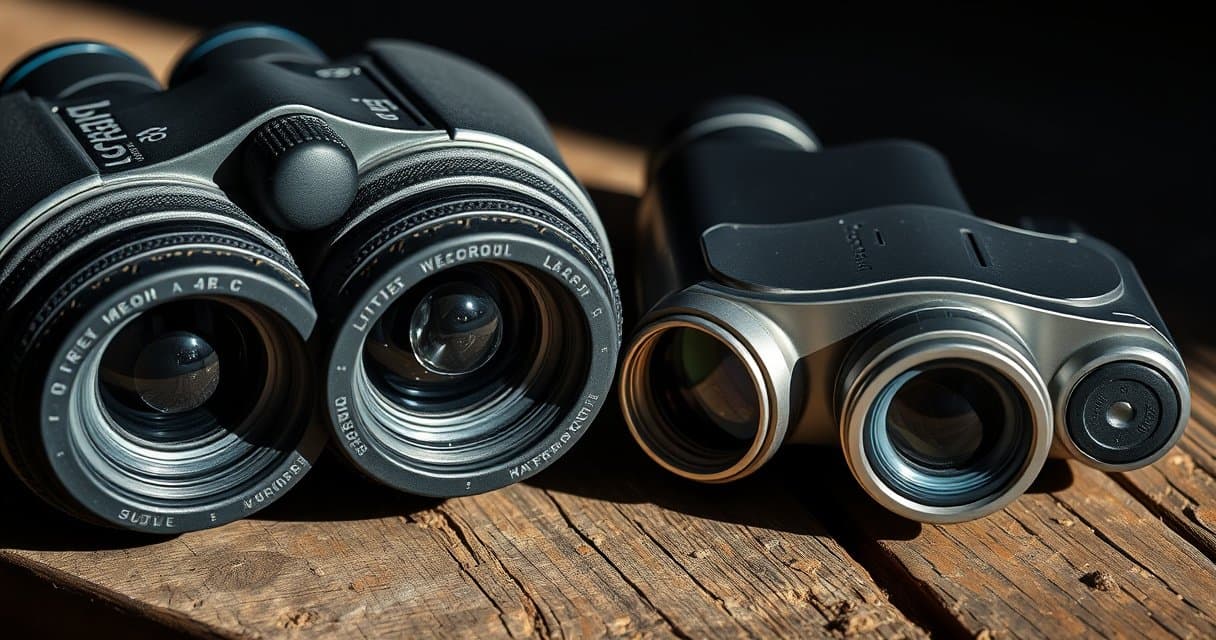
Great optics are essential. But if your binoculars fail after a rain shower or exhaust your arms after an hour of walking, the experience is ruined. The build is where longevity and daily enjoyment are determined. And frankly, this is an area where entry-level models often make significant compromises.
The Chassis: Plastic, Alloy, or Carbon Fiber?
The body of your binoculars defines their weight and shock resistance.
- ABS plastic is light and economical. It is typical of compact and entry-level models. It absorbs minor shocks well but can deform over time, and the hinges are often the weak point. Perfect for occasional and protected use.
- Magnesium alloys are the sweet spot for many pairs offering excellent value for money. They are significantly lighter than classic aluminum while being very rigid and resistant. This is what allows for robust 42mm binoculars without being overly heavy. If you aim for versatility and durability, look for this specification.
- Carbon fiber is the high-end option for maximum weight reduction. It is often reserved for premium models, but it is starting to appear on some ambitious mid-range models. The weight saving is tangible, especially on formats like 10x50.
My advice? Literally weigh the pros and cons. Binoculars that are too heavy will end up in your bag. Binoculars that are too fragile will not survive your adventures. Magnesium alloy is often the ideal compromise.
Waterproofing is Non-Negotiable for Outdoor Use
The terms "water-resistant" or "waterproof" are common but imprecise. What you need are binoculars that are nitrogen-purged (or argon-purged). This process involves replacing the humid air inside the tubes with an inert, dry gas. Why is this crucial? It prevents fogging from forming inside the lenses during sudden temperature changes. Imagine yourself in the forest on a cool morning: without this purge, your lenses fog up from the inside, and it's irreversible.
Also, check the protection level, often indicated by an IPX code (like IPX7). An IPX7 rating means the device can be temporarily immersed in water. For nature observation, IPX6 or IPX7 is largely sufficient, protecting you from sustained rain and accidental drops in wet grass. Do not venture out without it.
Comfort Makes the Difference
Pay attention to the small details. The focus and diopter adjustment rings should turn smoothly and evenly, without jerks or play. Soft rubber eyecups are a must: they should fold back comfortably if you wear glasses and stay in place. The body coating is also important: thick rubber absorbs shocks better and provides a better grip, even with wet or gloved hands, compared to a smooth, icy plastic surface.
Choosing Based on Your Activity: Hiking, Birdwatching, Marine
Now that you know how to read a spec sheet, it's time to translate all that into concrete needs. Because frankly, the best value-for-money binoculars for watching birds from your garden are not the same as for a boat crossing. Here's how to match the technical specs to your playground.
For Hiking and Trekking
Here, your worst enemy is weight. Every gram counts after several hours in the mountains. Prioritize compact models (e.g., 8x25, 10x25) or light all-rounders in 8x32. A magnification of 8x is largely sufficient and much more stable when you're out of breath. Brightness will be lower with a small objective lens, but you'll use them mainly in daylight. Waterproofing (IPX7) is essential for sudden showers. My personal recommendation: never go above 700g. A good compromise is the 8x32 format: brighter than compacts, but much lighter and more manageable than a classic 8x42.
For Birdwatching and Nature Observation
This is the target audience for all-round binoculars, and for good reason. The ideal? The mythical 8x42 format. It's the perfect balance. The 8x offers a wide field of view to easily locate a bird in a tree, and perfect stability for prolonged observations. The 42mm diameter captures enough light for forests or twilight settings, key moments for observation. The absolute priority goes to optical quality: BaK-4 prisms and multi-coatings for true colors and sharp contrast between plumage and foliage. Prioritize a model with a short minimum focusing distance (less than 2 meters) to observe insects or small passerines up close.
For Marine Observation, Sailing, and Wide-Open Spaces
Here, conditions are extreme: spray, salt humidity, boat rocking. Waterproofing is no longer an option, it's a survival requirement. Look for the mention spray proof or a marine certification (like the JIS standard). A large objective lens (50mm) is often favored for its brightness against the glare of the water, but watch out for the weight. A 7x50 or 10x50 is classic. The crucial point, often overlooked, is the long eye relief: if you wear sunglasses (essential at sea), you must be able to see the entire field of view without having to take them off. And for comfort on rough water, moderate magnification (7x or 8x) is much more pleasant and stable than high magnification which amplifies every movement of the boat.
For Hunting and Stalking
The main constraint is low light (dawn, dusk, under forest cover). The priority therefore goes to maximum light transmission. The 8x42 or 10x42 formats with high-performance multi-coatings are an excellent choice. An underestimated feature is ultra-fast focusing: the adjustment wheel must allow switching from a distant observation to a range of 10-15 meters in less than one turn, to react quickly. Their construction must be silent: no clicking or creaking that could give away your presence. Models with a matte finish (forest green, camouflage) are preferable to glossy finishes that catch the light.
Optional Expenses: When an Accessory Is Worth It
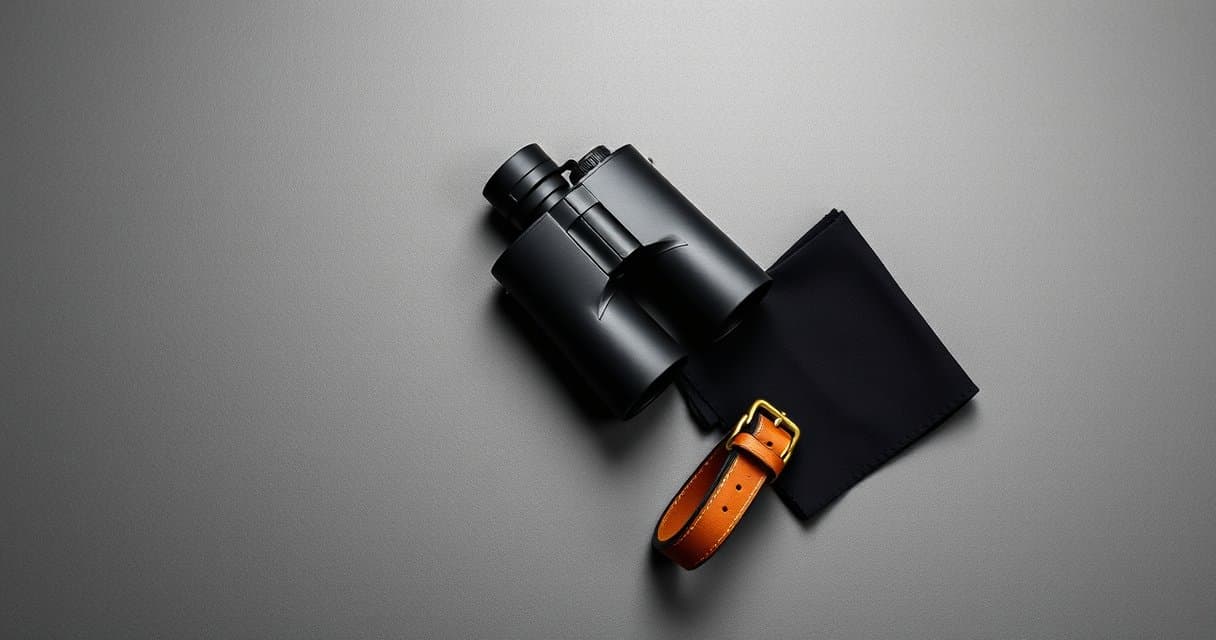
You've finally chosen your binoculars? Perfect. But don't close your wallet too fast. Some accessories are just gimmicks, others radically transform your experience. Here is an honest breakdown so you don't waste your budget.
The Carrying Harness: Comfort That Changes Everything
If your observation sessions regularly exceed an hour, a harness is not a luxury, it's a revelation. Carrying an 8x42 or 10x50 model around your neck quickly becomes uncomfortable, even painful for your neck. A good harness distributes the weight across your shoulders and back and holds the binoculars against your chest without swaying. For long birdwatching hikes or stakeout sessions, it's essential. Frankly, for an investment of €20 to €50, the gain in comfort is such that you'll wonder how you ever managed without it. It's a must-have to serenely get the most out of the best value-for-money binoculars.
The Tripod Adapter: The Key to Stability
With a magnification of 10x and above, the slightest hand tremor blurs the image. The adapter (a small plate that screws onto the body of the binoculars) allows you to mount them on any standard photo tripod. For casual astronomical observation (the Moon, planets), for digiscoping (taking photos with your smartphone), or simply for observing for a long time without fatigue, it's magical. Double-check that your binoculars have a tripod socket (usually hidden under a cap on the central hinge). If they do, don't ignore it.
Eyepiece Cups and Sunshades
These small additions should be considered based on your usage. Soft rubber eyepiece cups, often sold separately, slide onto the folded-down eyecups. They are perfect if you wear glasses, as they block side light and improve comfort. The sunshade (or lens hood) is a tube that screws onto the front of the objective lenses. Its role is purely optical: it prevents sunlight from hitting the lenses directly, which creates internal reflections and severely reduces image contrast. In open environments, by the sea, or in the mountains, the effect is very noticeable. An inexpensive accessory for a real performance gain.
What About the Others? The Verdict.
- Alternative Straps: Often, the included strap is basic. A wider, padded strap can be a small comfort plus, but the harness remains a far superior solution.
- Bags and Cases: The original hard case is essential for transport in a backpack. An additional soft case, called a "field" case, allows for quicker access, but is not a priority.
- Optical Filters (polarizing, yellow): Except for very specific uses (permanently reducing reflections on water), they unnecessarily complicate handling and often degrade light transmission. You can easily do without them.
The principle is simple: invest first in what improves comfort of use (harness) or optical performance (sunshade, tripod adapter). The rest is often superfluous.
Conclusion
There you have it, you now have all the keys to find binoculars with an unbeatable price-quality ratio. The trick? Prioritize the use you will actually have for them.
Don't buy promises from a catalog, but a pair that will become your ally in the field. Happy observing!
Frequently Asked Questions
What do the numbers 8x42 on binoculars mean?
The first number (8x) is the magnification, which brings the image eight times closer, and the second (42) is the diameter of the objective lenses in millimeters, crucial for brightness.
What magnification should I choose for bird watching?
A magnification of 8x or 10x is ideal for bird watching, offering a good compromise between handheld stability and detail, unlike higher magnifications which amplify hand shake too much.
What is the best binocular size for hiking?
For hiking, prioritize compact and lightweight models like the 8x32 format, which offers a good field of view without weighing down your pack.
What are waterproof binoculars with nitrogen purging?
Nitrogen-purged binoculars have their interior filled with dry gas, which permanently prevents fogging on the lenses during temperature changes, an essential feature for outdoor use.
How to recognize binoculars with good optical quality?
For good optical quality, check for the "Fully Multi-Coated" mention for optimal anti-reflective coatings and look for BaK-4 glass prisms, which offer a brighter and sharper image than BK-7 prisms.
Do I need a harness for binoculars?
A harness is highly recommended for long observation sessions, as it distributes the weight of the binoculars across the shoulders and back, thus avoiding neck pain caused by wearing them around the neck.
100% free and independent — All our articles are written independently, without any sponsorship. We may earn a commission on purchases made through our links, at no extra cost to you.
Guides you might like
Astrophotography Telescope Buying Guide
Choose the right telescope for astrophotography to avoid frustration. Key factors depend on your target nebula or object.
Best Nature Binoculars Kids
Discover how to choose the perfect first binoculars for a child, focusing on lightweight design, ergonomics, and sparking a love for nature observation.
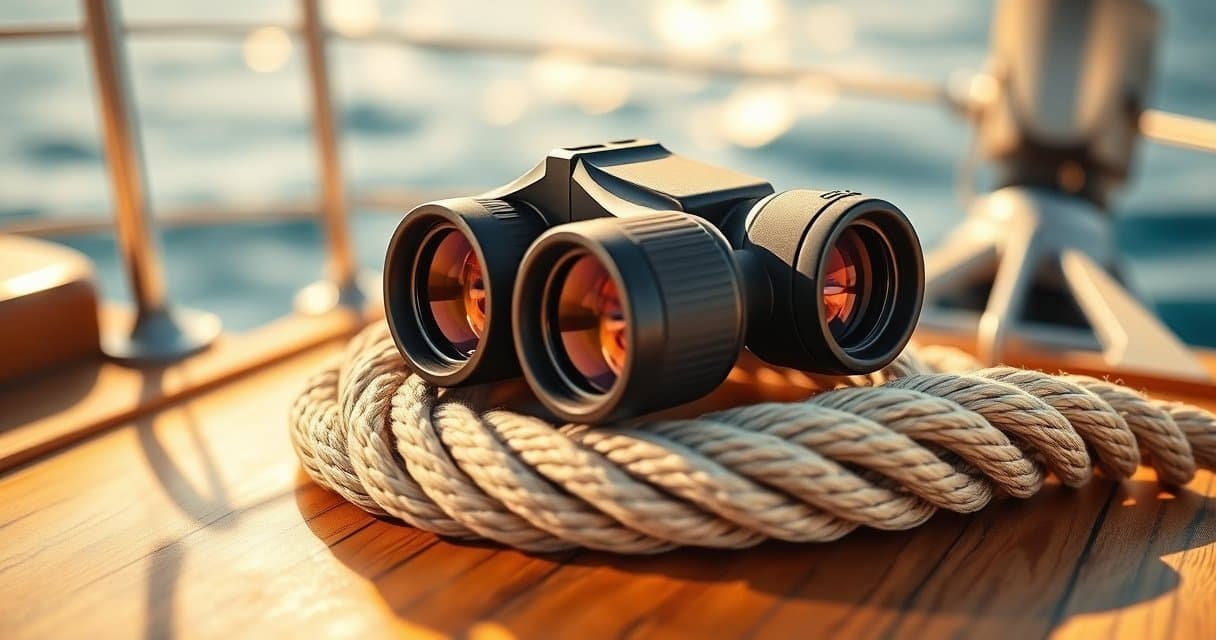
Best waterproof marine binoculars
Choose waterproof marine binoculars for safety & clarity. Avoid poor optics & nausea. Find gear for all weather.
Articles you might like
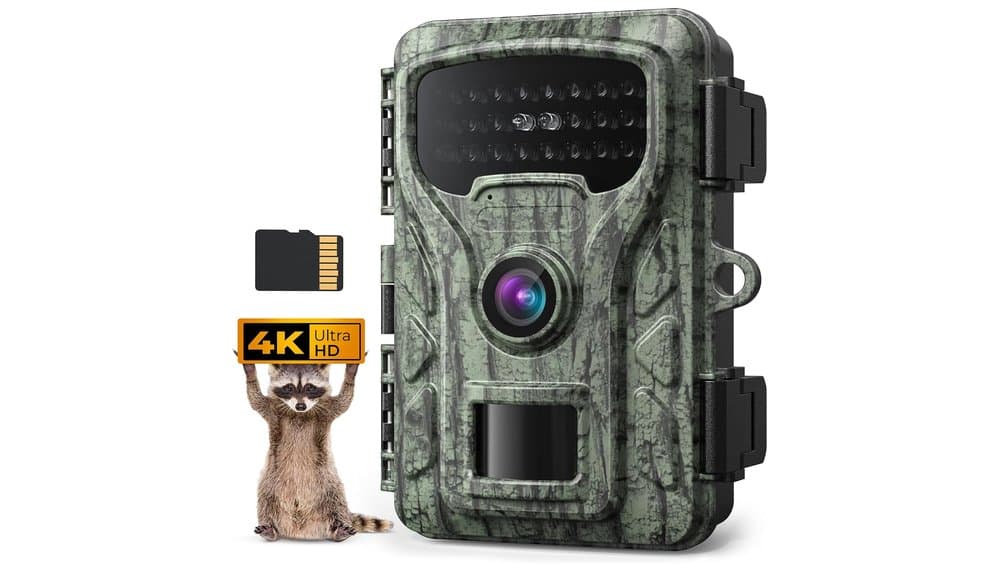
Caytail 4K 48MP Hunting Camera Review & Test
In-depth review of the Caytail 4K 48MP trail camera with included SD card. We analyze specs and real user feedback on its true field performance.
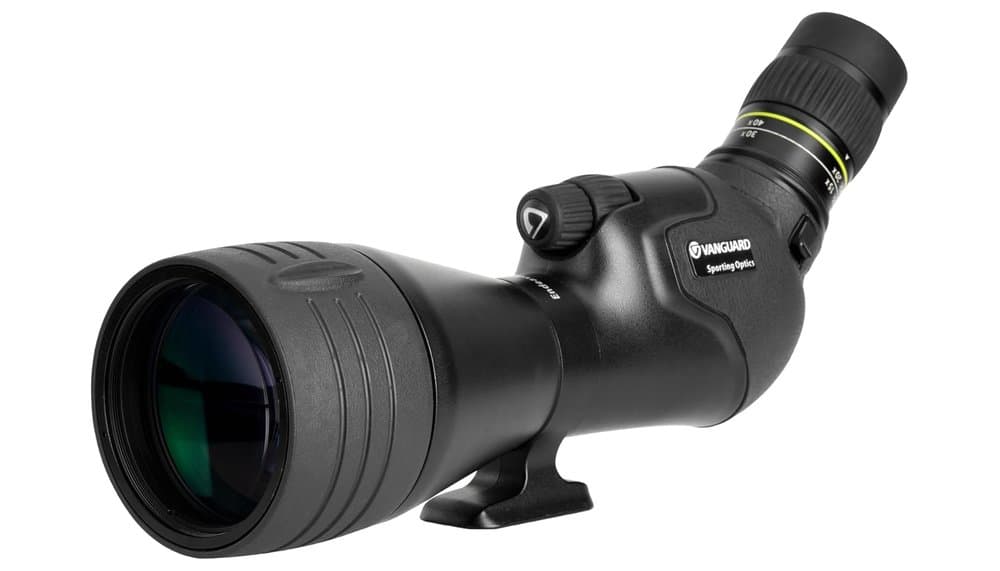
Vanguard Endeavor HD65A Spotting Scope Review
Spotting scope with 65mm ED glass & 15-45x zoom for birding & hiking. Balanced performance & portability for serious nature observers.
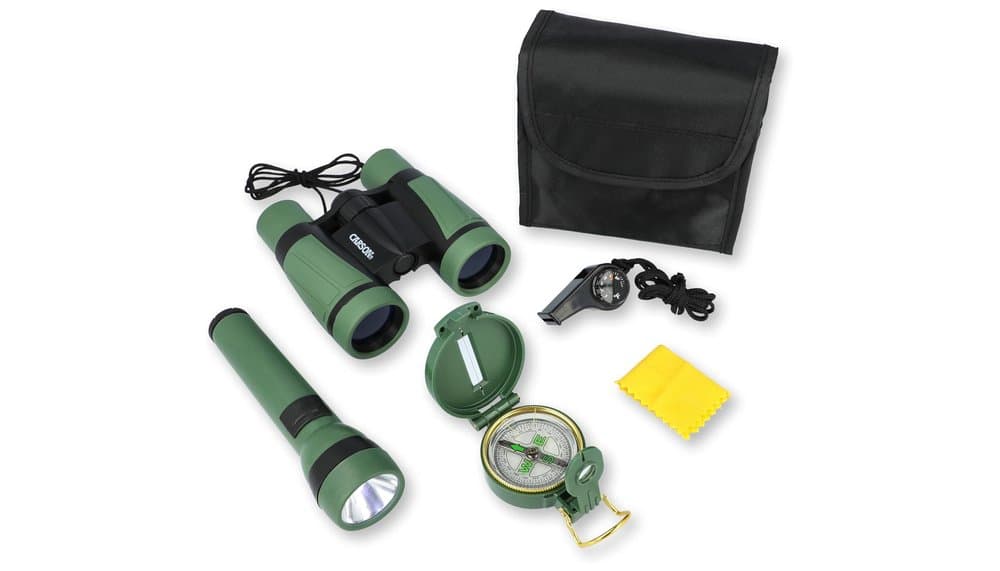
Carson AdventurePak Kids' Exploration Tool Kit Review
Explore nature with this kid's 5-piece tool kit for outdoor adventure and educational discovery. Perfect for young explorers.