Best Nature Binoculars Kids
Guide
Giving a child their first binoculars is opening a window to a world teeming with details invisible to the naked eye. Imagine them suddenly captivated by a bird's plumage or a squirrel's race. But between a fragile toy and a tool that is too technical, the choice is crucial. Let's talk frankly about what truly makes a good pair of binoculars for starting out in nature.
Key Points to Remember
- Above all, prioritize a model that is lightweight, ergonomic, and suited to the child's morphology to guarantee comfort and easy handling.
- A magnification of 8x (as in 8x32) is ideal for beginners, offering a good balance between stability, brightness, and field of view.
- Imperatively choose waterproof and robust binoculars (IPX7 standard) so they can withstand shocks, rain, and the adventures of young explorers.
- Quality optics with multi-layer coatings are essential to provide a clear and contrasted image that captivates the child.
- Adapt the technical choice (weight, field of view, minimum focus distance) to the main use: hiking, close-up observation, or birdwatching.
Comfort and Grip Adapted for the Youngest Users
This is the most important point, and yet the most often overlooked. A pair of best children's binoculars nature is not a miniaturized version of an adult model. If the instrument is too heavy or bulky, it will end up at the bottom of the bag, regardless of its optical quality.
Let's talk about weight, first. For a child aged 5 to 8, aim absolutely for a model under 300 grams. Beyond that, they will struggle to hold it steady, and fatigue will set in quickly. For ages 9-12, you can go up to 400-500 grams, but that's already the upper limit. Keep this in mind: a compact camera often weighs more.
Ergonomics are just as crucial. Two elements make all the difference:
- Eyepiece spacing: Children's eyes are closer together than ours. Binoculars where you can bring the two tubes closer together (meaning with adjustable interpupillary distance) are essential. Otherwise, they will see two black circles and get a headache.
- Grip coating: Look for a rubberized, soft, and non-slip texture. Hands are small, sometimes sweaty with excitement, and a smooth plastic shell will undoubtedly slip.
What about focus adjustment? Opt for a central wheel, wide and knurled, that the child can easily operate with one finger. Avoid systems that are too stiff or too small. Another point I personally love: soft and retractable eyecups. They protect the lenses if the child wears glasses and are much more comfortable against the eyebrows than hard plastic.
Frankly, before marveling at magnification numbers, have your child hold the model in the store. Their immediate reaction – "It's light!" or "It's too big" – will tell you more than a spec sheet.
What Magnification Power for a First Pair of Binoculars?
It's the first thing we look at, and often, we get it wrong. The temptation to want the biggest number possible is strong. Big mistake! For a child, overly powerful magnification becomes their worst enemy. The image shakes at the slightest movement, the field of view shrinks to a straw, and finding the little bird hidden in the branches becomes a miracle.
Forget the 12x or 16x. For a successful introduction, the answer is simple: aim for a magnification of 8x. Why? It's the best compromise. It offers a good level of magnification without requiring statue-like stability. With an 8x, the child can follow a moving animal, explore a wider landscape, and enjoy a bright and stable image. Some 7x models are also excellent, and can even be easier for the very young.
The Second Number, the One We Too Often Forget
Do you always see a notation like "8x32"? That "32" is the diameter of the objective lenses, in millimeters. It controls the brightness. The larger it is, the brighter the image, especially in wooded areas or at dusk. For versatile nature use, a 32 mm diameter is perfect. An 8x21 will be very compact, but much less bright; an 8x42 will be super bright, but heavier.
A Trap to Avoid: Zoom
You might come across models labeled "8-24x". Frankly, run away. Zoom binoculars are almost always of mediocre optical quality, with fragile mechanisms. The child will spend their time turning the ring without ever managing to adjust the focus. For the best child's nature binoculars, the simplicity of fixed magnification is always preferable. It allows them to focus on observation, not on adjustments.
Think of it this way: the goal is not to count the feathers of a falcon 2 km away, but to identify a robin 20 meters away in the garden. An 8x32 or a 7x35 achieves that brilliantly, and without frustration. It's a choice you won't regret.
Our Selection
Our selection: a little adventurer's gear
Today we are looking at a product designed for first explorations. It is not professional equipment, but an initiation kit intended to spark children's curiosity during nature walks. We examined its specifications and, above all, what parents and children actually get from it.
| Product | Target Age | Kit Composition | Ease of Use | Key Strengths (according to reviews) |
|---|---|---|---|---|
| Buki BN014 Nature Hiking Set | 6 years and up | 5x32 binoculars, headlamp, compass, pedometer, bag | Immediate | Complete kit, stimulates imagination |
Buki BN014 Nature Hiking Set
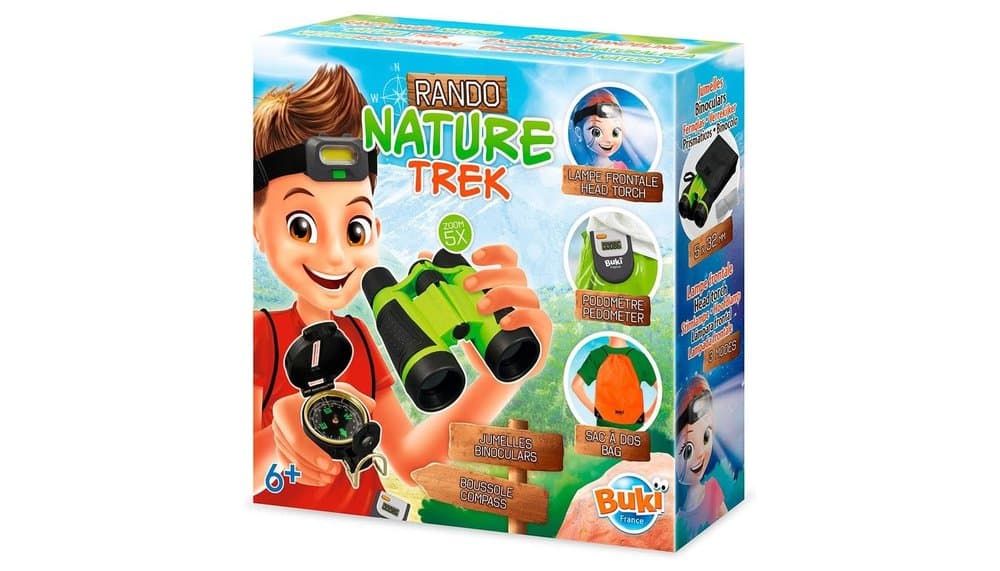
This exploration kit presents itself as the ideal gear to give children aged 6 and up the feeling of going on an adventure. On paper, the specifications promise a coherent set: 5x magnification binoculars with a 32 mm objective lens, a headlamp, a compass, a pedometer, and a lightweight carrying bag. The goal is clear: awaken the senses and provide simple tools for observing, orienting, and quantifying effort.
Analysis of user feedback reveals several concrete strengths. Parents highlight that this kit is an excellent imagination stimulator. It transforms a simple walk into an expedition, motivating children to walk and observe their surroundings with a fresh eye. The completeness of the set is highly appreciated: having several accessories in a single bag gives a sense of serious gear in children's eyes. Reviews also confirm that the products are lightweight and easy for small hands to handle, with immediate usability that doesn't require lengthy explanations.
However, the community also notes significant limitations to keep in mind. It is crucial to understand that this is an initiation toy, not quality optical or technical equipment. According to feedback, the binoculars provide adequate vision for initial discovery, but their field of view and sharpness are limited. The compass is basic and serves more to illustrate the principle than for precise orientation in real conditions. As for the pedometer, its operation is considered very simplified and sometimes inaccurate, but it fulfills its role as a motivating gadget for the child. The construction, mainly in plastic, is age-appropriate but obviously not designed for extreme durability or intensive use.
In conclusion, our analysis shows that the Buki BN014 perfectly fulfills its mission: demystifying and making exploration fun for young children. It's a kit whose value lies in its completeness and motivational aspect, much more than in the technical performance of each of its components. It is ideal for short, easy family hikes where the goal is to entertain and spark curiosity. For a passionate child who might want more serious equipment after this initiation, one would then need to look into specialized gear.
Why Optical Quality is Non-Negotiable Even for Beginners
We often think: "It's for beginners, a basic optical system will suffice." This is the best way to kill a budding passion in its infancy. A yellowish image, blurry at the edges, with greenish flares ruining everything... The child lowers the binoculars after two minutes, frustrated. Optical quality is what transforms a simple "close-up view" into a magical discovery experience. It makes all the difference between being bored and being amazed.
The Heart of the Matter: Prisms and Their Coatings
Inside, everything relies on two small blocks of glass that correct the image: the prisms. For truly better nature binoculars for children, you need to aim for BaK-4 prisms. This is a higher quality glass (barium crown) that offers a sharper and brighter image all the way to the edge, unlike BK-7, which is often associated with very low-end models.
But the most important aspect is the coatings on the lenses. An uncoated lens reflects light like a windowpane. Look at the front of the objectives: if you see beautiful colored reflections (bluish, violet, green), that's a good sign. It means the lenses have "multi-coat" treatments to let in the maximum amount of light. This is what provides a clear, contrasted, and bright image, even in gray weather. An uncoated optical system appears dull and dark, which dampens enthusiasm.
What About ED Glass?
We hear about it for expert models, but it has become accessible for serious children. ED (Extra-low Dispersion) glass corrects a major flaw: the colored fringing (chromatic aberration) around contrasting objects, like a black bird against a bright sky. Without ED, contours can appear with a slight purple or green halo. With it, the image is distinctly sharper and more realistic. It's not mandatory for a first pair, but if the budget allows, it's an investment that is immediately noticeable. The child perceives a striking difference in sharpness.
Frankly, saving €20 on the optics is cutting corners on what's essential. It's not a gadget he'll throw away in a month, it's his first observation instrument. Good optics make him want to look longer, to search further. They make the world more beautiful and more interesting. And that is priceless for sparking a passion.
Built to Last: Durability and Weather Resistance
Kids' binoculars live an adventurer's life. They fall out of the backpack, land in wet grass, get caught in a downpour during a campout, and often end up in the hands of a little brother or sister. That's why sturdiness isn't a luxury, it's a must for them to survive the season. Choosing a "toy" model is signing their death warrant in the short term. Aim for gear designed for real life.
Waterproofing, an Essential Life Insurance
This is the number one criterion, no discussion. You want the best kids' nature binoculars? Look for the word "waterproof" or the IPX7 rating. In practical terms, this means the pair can be temporarily immersed in one meter of water without taking on water. In practice, this translates to total peace of mind: driving rain, a drop in a puddle, thick fog… Nothing gets inside. Non-waterproof models fog up at the slightest temperature change and, worse, develop irreparable mold within a few months.
This waterproofing is achieved through O-ring seals and, ideally, nitrogen filling. This inert gas drives out all residual moisture and prevents internal fogging. This is called "fogproof" construction. If you see these specifications, you're on the right track.
An Armor That Withstands Impacts
The rubber isn't just for the "tactical" look. It's shock-absorbing armor. A binocular fully coated in rubber absorbs impacts far better than a bare plastic body, which cracks at the first serious knock. Also check the sturdiness of the eyecups (the little caps on the eyepieces) and the objective lens caps: Are they attached with a sturdy cord? Do they have a positive locking system that prevents them from getting lost in the ferns after five minutes? These small details make a big difference day-to-day.
And for focusing, the center wheel should turn with a certain firmness, not too loose. A wheel that's too soft gets knocked out of adjustment too easily in the bag or by clumsy fingers. Good stiffness is a guarantee of longevity and preserved accuracy. Don't be afraid to test it in the store: turn it, shake the pair gently near your ear. A rattle or a squeak is a very bad sign, indicating poorly secured internal elements.
In short, you need to see this as an investment. A robust and waterproof pair can follow your child for years, through the seasons, and be passed down. A fragile, non-waterproof shell is money thrown out the window, or rather, into the pond.
Adapt the Model to the Child's Primary Use
There is no such thing as the absolute "best kids' nature binoculars." What works for bird watching from a blind will be a nightmare for hiking in the mountains. The key is to identify the activity that will truly occupy 80% of their observation time. Ask yourself this simple question: where will they be used most often? The answer immediately points you toward very specific technical choices.
For Tracking and Close-Range Observation (Forest, Garden)
Does your child love finding insects on tree bark, following a frog at the pond's edge, or watching a nest in the bushes? Then the most important parameter becomes the minimum focusing distance. This is the shortest distance at which the binoculars can produce a sharp image. For this type of use, aim for a figure of 2 meters, or even 1.5 meters. This is crucial. With a standard pair that only focuses at 4 or 5 meters, everything close-up remains a frustrating blur. This often requires specially designed optics, but it's worth it. A wide field of view is also a major advantage here for spotting and following moving targets in a dense environment.
For Hiking and Vast Landscapes (Mountain, Sea)
Here, the priorities shift radically. Weight and bulk become your number one enemies. A pair that's too heavy will end up at the bottom of the backpack and never come out. Target compact models, preferably under 300 grams. The compromise is often on power: an 8x25 or 8x30 is often more sensible than a 10x42, which is far too bulky. Waterproofing (IPX7) is also non-negotiable to face rapid weather changes at altitude or sea spray. And frankly, for admiring an ibex on a ridge or a sailboat offshore, a generous field of view is more immersive than high magnification that shakes.
For Classic Birdwatching (Wetlands, Parks)
This is the traditional core activity. Here, we seek a balance. A magnification of 8x or 10x is useful for identifying details on plumage. Optical quality, with high-performance multi-coatings, is essential for capturing colors and contrast in the dim light of woodlands. A good exit pupil (the diameter of the circle of light in the eyepiece) of at least 3.5 mm will allow for comfortable observations at dawn or dusk, magical times when birds are very active. This is typically the area where investing in slightly more refined optics is fully justified.
Don't try to find the universal pair; it doesn't exist. A bug enthusiast will have optical needs radically different from a young hiker. By targeting the primary use, you make a choice that will directly reward your child's curiosity with clear results suited to their favorite playground.
Conclusion
Finding the best nature binoculars for a child is ultimately a story of balance. A balance between the instrument and its young user.
Stay focused on comfort, durability, and a clear image. This trio is essential. Everything else adjusts based on their favorite adventure spots.
The goal is not technical perfection. It is to offer a window to the world that makes them want to look, again and again. Choose with these priorities in mind, and you are sure to make an excellent choice.
Happy observing!
Frequently Asked Questions
What are the best binoculars for a 7-year-old child?
For a 7-year-old child, aim for a model under 300 grams with 8x magnification (like an 8x32) and a waterproof construction (IPX7) to ensure comfort, stability, and durability.
What magnification for a child's first binoculars?
The ideal magnification for beginners is 8x, as it offers good enlargement without amplifying hand shake too much, unlike more powerful models which are difficult for a child to stabilize.
How to choose lightweight binoculars for a child?
Prioritize a weight under 300 grams for ages 5-8 and check the ergonomics, particularly an adjustable interpupillary distance and a non-slip grip for a good hold.
Are waterproof binoculars necessary for a child?
Yes, waterproofing (standard IPX7) is essential to protect the binoculars from rain, drops in water, and internal fogging, thus ensuring their longevity.
What objective lens diameter for children's nature binoculars?
An objective lens diameter of 32 mm (as in an 8x32 configuration) is an excellent compromise, offering good brightness for observing in various conditions without excessively weighing down the device.
Are zoom binoculars recommended for children?
No, zoom binoculars should be avoided as they are often of poor optical quality, fragile, and complicated for a child to adjust; a fixed magnification (like 8x) is much more suitable.
100% free and independent — All our articles are written independently, without any sponsorship. We may earn a commission on purchases made through our links, at no extra cost to you.
Guides you might like
Astrophotography Telescope Buying Guide
Choose the right telescope for astrophotography to avoid frustration. Key factors depend on your target nebula or object.
Best Binoculars Value Guide
Find value binoculars that match your real needs. Understand specs like 8x42 and key features for the best observation without overspending.
Best waterproof marine binoculars
Choose waterproof marine binoculars for safety & clarity. Avoid poor optics & nausea. Find gear for all weather.
Articles you might like
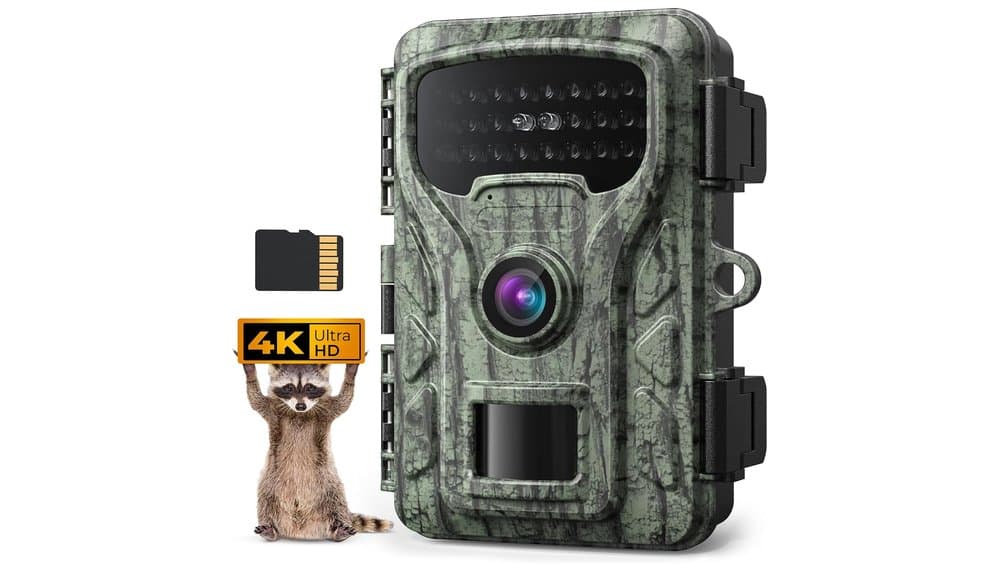
Caytail 4K 48MP Hunting Camera Review & Test
In-depth review of the Caytail 4K 48MP trail camera with included SD card. We analyze specs and real user feedback on its true field performance.
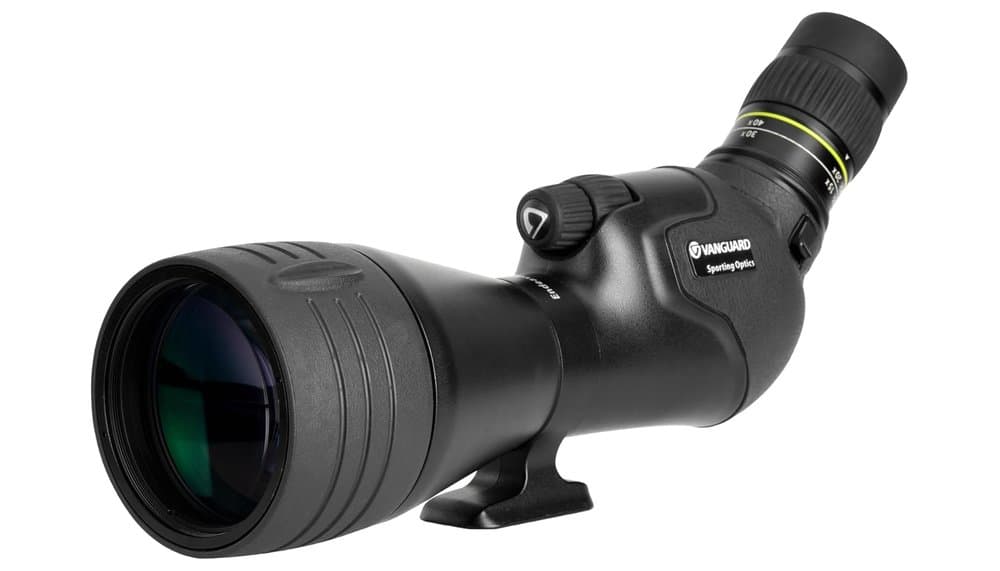
Vanguard Endeavor HD65A Spotting Scope Review
Spotting scope with 65mm ED glass & 15-45x zoom for birding & hiking. Balanced performance & portability for serious nature observers.
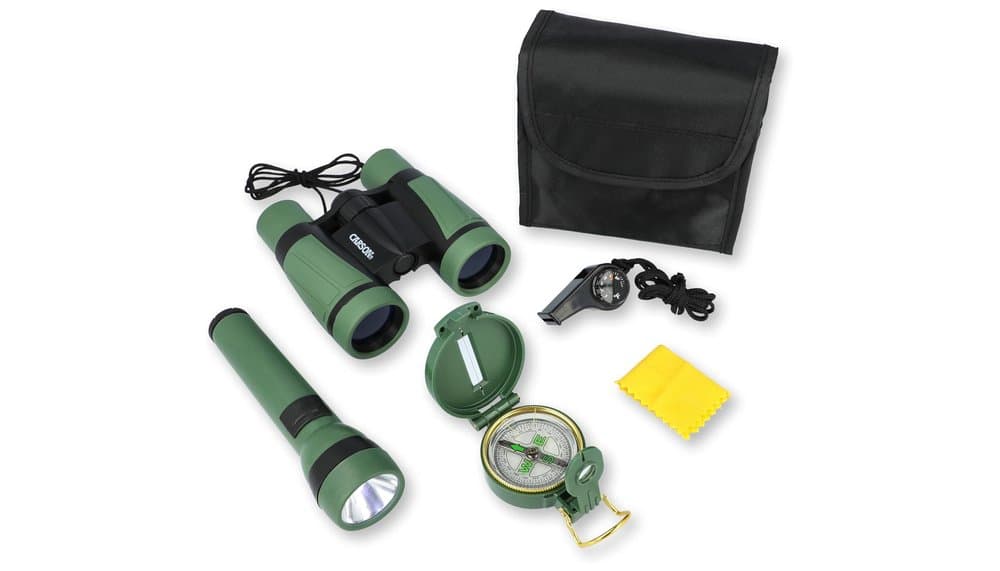
Carson AdventurePak Kids' Exploration Tool Kit Review
Explore nature with this kid's 5-piece tool kit for outdoor adventure and educational discovery. Perfect for young explorers.