Twin Harness Comfort Guide
Guide
You have undoubtedly felt that unpleasant tension in the neck after a long observation session. A good binocular harness is precisely the solution that turns this chore into pure pleasure. Frankly, once you've adopted one, you no longer understand how you managed before. We're talking about comfort, but also total freedom for your hands and unparalleled stability.
Key Points to Remember
- A good harness transfers the weight of the binoculars from your neck to your torso, multiplying the carrying surface for prolonged comfort.
- Precise strap adjustment is crucial to forget you're wearing it and achieve perfect stability.
- The choice of materials (comfortable neoprene or durable nylon) should correspond to your main activity.
- A secure attachment adapted to the diameter of your binoculars is essential for safety and peace of mind.
- Details like an integrated pocket or silent materials significantly enhance the experience in the field.
Why Your Neck and Shoulders Will Thank You
You know that precise point of pain, right where the traditional neck strap fails after an hour in the field? It's not inevitable. The difference between an enjoyable observation session and one that turns into an ordeal often comes down to a few hundred grams poorly distributed. A better, more comfortable binocular harness acts like an intelligent suspension system: it transfers the load from your cervical vertebrae – which aren't built for that – to the more powerful muscles of your torso and shoulders.
Take a concrete example. A standard pair of binoculars easily weighs 800g to 1kg. With a neck strap, all that weight hangs from the base of your neck, creating a constant pressure point. With a well-fitted harness, this load is spread over a surface area that can be 10 to 15 times larger. It's the difference between carrying a backpack with string straps and one with padded straps and a hip belt. The result? You literally gain hours of comfort. Where you felt you had to put your binoculars down after 30 minutes, you can now observe for a whole morning without thinking about it.
The Mechanics of Relief
The secret is triangular distribution. Two straps go from the binoculars up to your shoulders, and a third strap (the dorsal or horizontal strap) connects them across your back. This forms a stable triangle that prevents the system from tipping sideways and avoids the infamous "tourniquet" effect on the back of the neck. Some models go further with an adjustable chest strap, which further stabilizes everything and prevents unwanted swinging when you walk quickly. Honestly, once you've experienced this, going back to a simple cord around your neck is like going back to a wooden chair after an ergonomic office chair.
Let's not forget posture. With a harness, your binoculars are held flat against your chest, right at your center of gravity. You naturally stand more upright; you no longer lean your head forward to compensate for the swinging optics. In the long term, for those who go out every weekend, it's a real health issue. It's an investment for your body as much as for your passion.
Choosing the Right Materials: Between Comfort and Durability
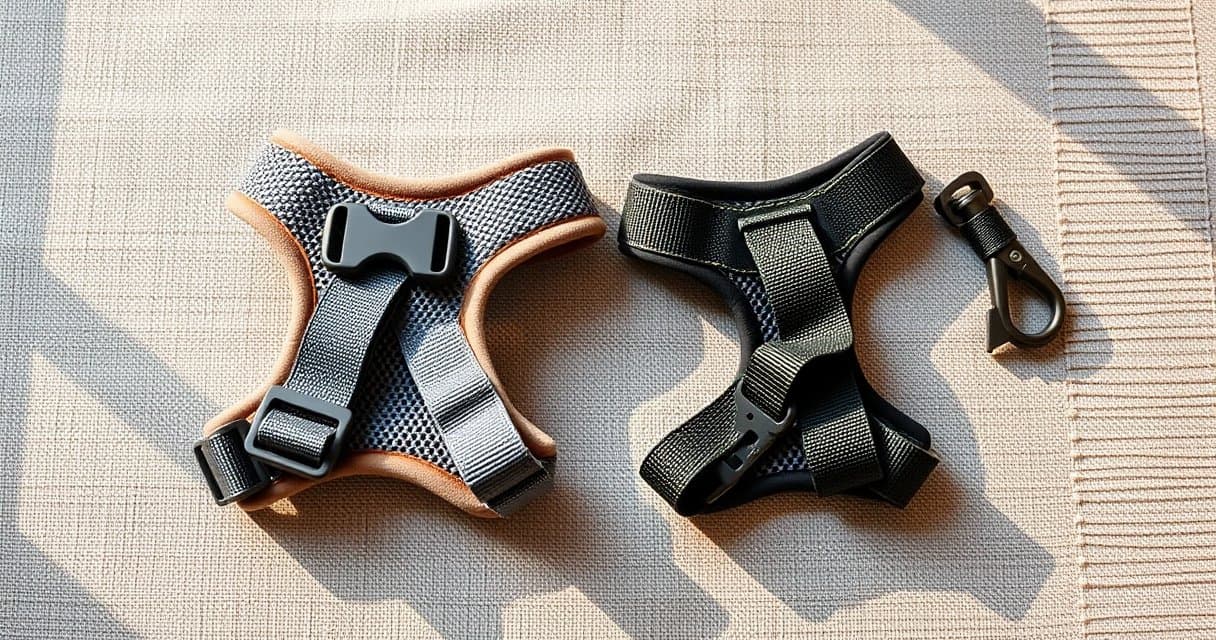
The material is the first thing you touch. And it will determine whether your harness feels like a cloud or a hairshirt after three hours of walking. We don't think about it enough, but the fabric is in constant contact with your clothes and skin, often under the sun or rain. Making the right choice here is a cornerstone for finding the most comfortable binocular harness.
Neoprene, the King of Immediate Comfort
This is often the star material of mid-range and high-end models, and for good reason. It's soft, slightly elastic, and above all, it's heavily padded. Imagine a thin wetsuit, but cut into straps. The advantage? It conforms to your shape without creating sharp creases and absorbs micro-movements. It also insulates well from the cold if you wear it over a t-shirt in winter. The downside? It's not the most breathable. On a hot summer day, if you sweat, moisture can get trapped. A good model compensates with breathable mesh on the side against your body, but stay vigilant if you tend to get very warm.
Nylon/Polyester, the Champions of Robustness
This is the choice for bulletproof durability. These synthetic fabrics are highly resistant to abrasion (think of friction against a backpack) and UV rays. They dry in a flash and often breathe better. Comfort then depends entirely on the quality of the integrated padding. The best ones use open-cell foam, which is breathable and retains its shape. Cheaper ones have just a thin layer of foam, or even none at all – to be absolutely avoided. For intensive use in rough terrain (brush, rocks), it's often the safest bet.
The Details That Make the Difference
Quality is also found in the details. Look at the adjustment buckles: cheap, creaky plastic that can break, or reinforced polymer (or even lightweight metal on some models) that slides smoothly and lasts for years. The straps should be wide, at least 3 cm, and ideally flare out at the shoulders. A detail I personally love: a discreet non-slip silicone inner lining. It prevents the harness from riding up or slipping on a technical jacket; it's a real plus for stability. Don't hesitate to run your fingers over the seams: they should be flat, tight, and without loose threads. A bulky or poorly done seam is a guaranteed future blister.
Our Selection
This selection focuses on a well-known problem for outdoor and photography enthusiasts: how to comfortably carry your binoculars or camera during long excursions. Instead of enduring the weight and sway of a traditional neck strap, solutions exist. We have analyzed three products that adopt different approaches to lighten and secure your gear, based on their technical specifications and user community feedback.
| Product | Carrying Type | Main Material | Key Strengths | Customer Reviews |
|---|---|---|---|---|
| Bushnell Universal Harness | Harness (shoulder straps) | Lightweight, breathable fabric | Lightness, wearing comfort, recognized brand | 4.1/5 (283 reviews) |
| QOTSTEOS Camera Strap | X-Harness (crossed shoulder straps) | Durable nylon | Increased stability, weight distribution, versatility | 4.2/5 (53 reviews) |
| Chest Bag | Chest pouch/bag | Waterproof Oxford | Multi-compartment, integrated storage, weather protection | Overall rating (few reviews) |
Bushnell Universal Harness
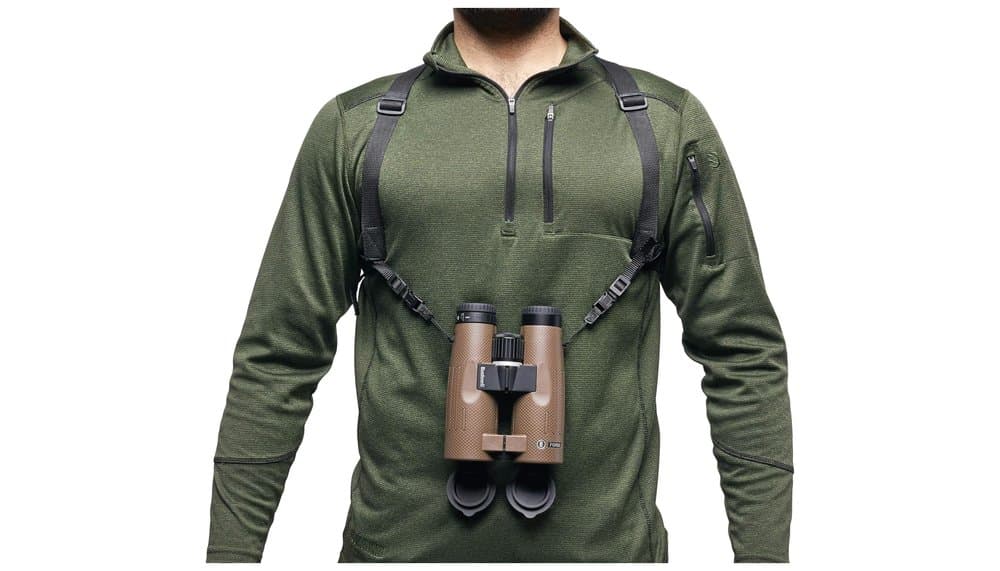
This harness from the Bushnell brand presents itself as a simple and proven solution to relieve neck strain. On paper, the specs promise a very light item (0.15g according to the technical sheet, although this weight seems erroneous and extremely low) made from a breathable fabric. Its principle is clear: two straps go over the shoulders to distribute the weight of the binoculars across the torso, with quick-release clips to detach the equipment instantly.
According to user feedback, the confirmed main asset is indeed comfort. Many reviews highlight that the harness eliminates neck pain during long observation sessions. The ease of setup and adjustment is also highly appreciated. The community notes that the product is well-designed and does exactly what it's supposed to: hold binoculars in a stable and accessible manner.
However, the analysis of reviews also reveals some limitations. Some users mention that the material, while breathable, can feel a bit light and less robust than thick nylon, raising questions about its long-term durability under extreme conditions. Furthermore, although universal, the fit may not perfectly suit all body types or all particularly large and heavy binocular models. In summary, it is an excellent option for those who prioritize simple comfort and maximum lightness, with the backing of an established brand, but who are not necessarily looking for ultimate ruggedness or additional features like storage.
QOTSTEOS Camera Strap
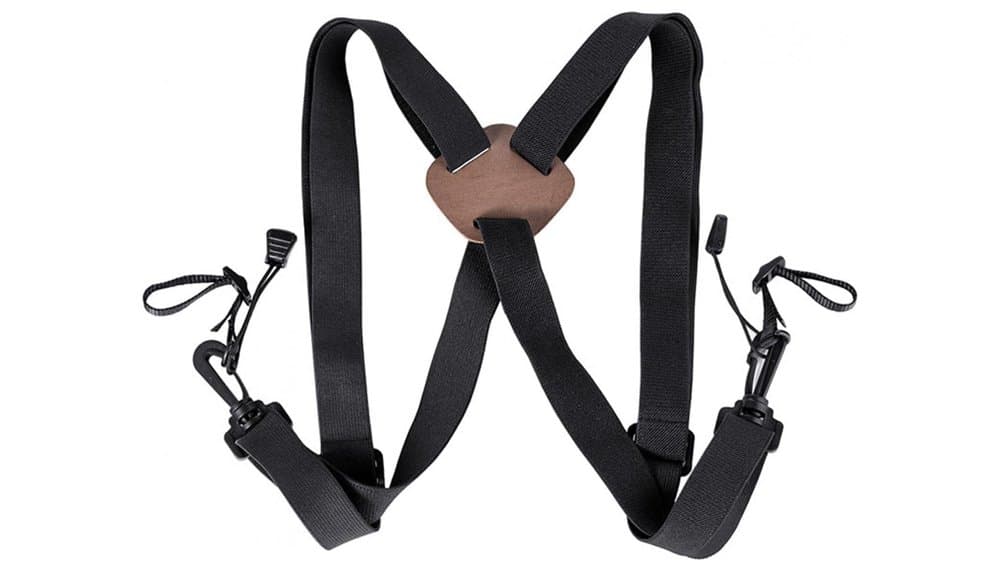
The QOTSTEOS harness adopts a slightly different approach with an X design (the straps cross in the back). This configuration is often praised for its superior stability, preventing the straps from slipping off the shoulders. The technical specifications highlight the use of nylon resistant to wear and heat, suggesting a robust construction. Its weight of 90g indicates a more structured product than the Bushnell.
Community reviews confirm this: users particularly appreciate how this harness distributes weight across the back and shoulders, offering an increased sense of security, especially during sudden movements like running or climbing. Versatility is another highlighted strength; it is appreciated as much for binoculars as for DSLR cameras, making it a useful accessory for amateur photographers and naturalists.
Nevertheless, some feedback provides nuance. Adjusting the many straps, while allowing fine customization, can seem a bit complex during initial use compared to a more basic system. Also, its more elaborate design and thicker material can make it slightly less airy than the Bushnell model in high heat. This product therefore seems ideal for those who need enhanced stability and who use relatively heavy or valuable gear, and who are willing to sacrifice an ounce of simplicity for more security.
Chest Bag
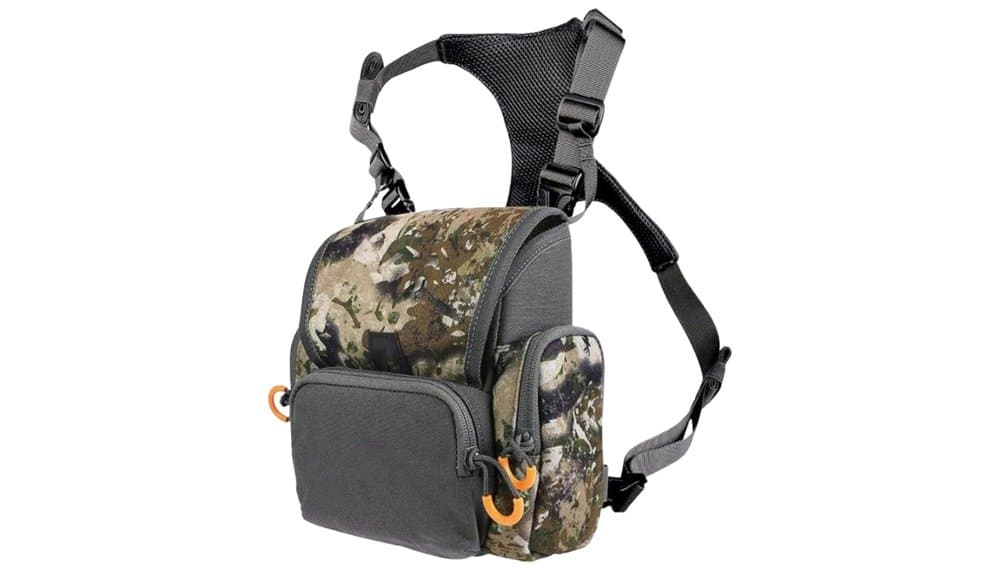
This third product radically changes the concept: it is no longer a simple harness, but a chest pouch/bag incorporating a dedicated pocket for binoculars. Made from Oxford fabric with water-resistant closures, it promises to protect your belongings from the elements. Its dimensions (21.5x12x21cm) and multiple compartments make it a true storage accessory, allowing you to carry keys, phone, snacks, or small gear.
The analysis of its technical strengths highlights its utility value. It's not just a binocular carrier; it's a complete storage solution for hikers, joggers, or cyclists wanting to have their hands free. The ergonomic design and adjustable straps aim to ensure good hold during physical activities.
However, it is important to note that direct customer reviews are less numerous for this specific product, making the evaluation less precise. On paper, the potential limitations are obvious: it is the bulkiest and heaviest option (approximately 400g empty). It adds volume on the torso, which can generate heat or hinder certain movements, despite the advertised ventilation channels. Access to the binoculars is also necessarily less quick than via a harness with quick-release clips, as you have to open a pocket. This product therefore primarily targets those for whom additional storage function is paramount and who accept the trade-off of having more cumbersome equipment on their chest.
The Right Adjustment to Forget You're Wearing It
This is where the magic happens. An ill-adjusted harness, even one made of amazing neoprene, will be a real pain. The goal is simple: the binoculars should come to you effortlessly and rest against your sternum without banging, swaying, or pulling on your neck. You achieve the best binocular harness comfort when you completely forget it's there.
Basic Adjustment: A Matter of Centimeters
Start with the shoulder straps. Tighten them just enough so the harness doesn't slip, but not so much that they compress your shoulders. A good test: hop lightly in place. The binoculars should not bounce wildly against your chest. Their weight should be evenly distributed across your upper back. Next, adjust the length of the cords or straps connecting the binoculars to the harness. This is crucial! Too long, and they will dangle and bump your stomach while walking. Too short, and you'll have to contort yourself to bring them to your eyes. The ideal position? The eyepieces should be about 5 to 8 cm below your chin when at rest.
The Sternum Strap, Your Stability Ally
Don't neglect it! This small horizontal strap connecting the two shoulder straps at chest level isn't just for looks. Its role is to prevent the shoulder straps from splaying outward, which would concentrate all the load on your trapezius muscles. Position it at the height of your sternum or slightly below. It should be tight enough to maintain the structure, but should in no way hinder your breathing. On a well-designed model, this strap slides vertically to perfectly adapt to your body shape, whether you are tall or short.
Adjusting in Real Conditions
The real test is in the field. And you need to plan ahead. Heading out for a hike with layers? Adjust your harness while wearing the thickest jacket you'll have on. Otherwise, in the middle of your outing, you'll have to loosen everything and comfort will be compromised. Also think about your observation position: if you're often on a watch, sitting down, you can shorten the attachments a tiny bit so the binoculars are even higher and more accessible. Conversely, for active hiking with elevation changes, a slightly lower position can be more comfortable for arm swing. The key is the adjustment range: the larger and more precise it is (thanks to quality buckles), the more you can customize the fit for your body and your activity of the day. Honestly, that's what separates a gimmick from serious gear.
Compatibility and Attachment: Ensuring Everything Holds
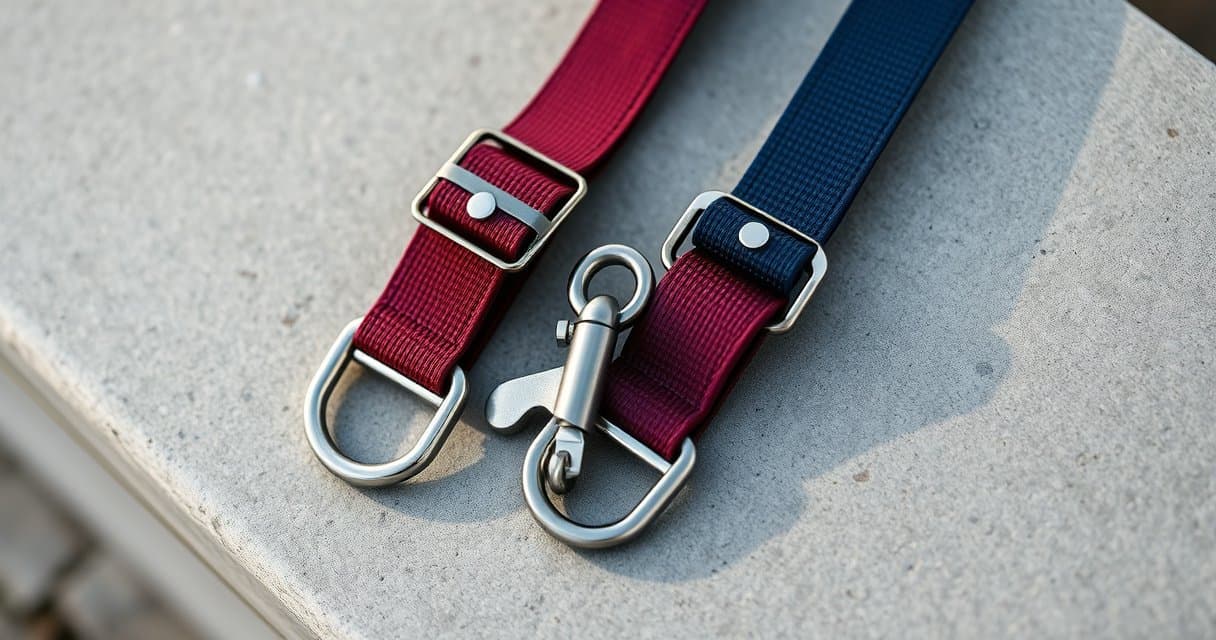
Imagine this: you've just spotted an eagle, you grab your binoculars... and the clip fails. It's the ultimate nightmare, and it happens more often than you'd think with poorly matched attachments. Compatibility isn't a technical detail; it's the security guarantee for your precious gear and the essential condition for the best comfortable binocular harness – because a wobbly mount stresses you out and ruins everything.
Ring Diameters: The First Thing to Check
It all starts with the rings on your binoculars. Most harnesses use a quick-release buckle system that clips onto these rings. But be careful, not all rings have the same diameter. Compact models often have thin rings, around 6 to 8 mm. Heavier marine or astronomy binoculars can have wide rings of 10 mm or more. Before buying, check the harness specifications: it should clearly state the range of accepted diameters. A good system offers adjustable connectors or adapters to cover multiple sizes. A connector that's too small strains and can damage the ring; one that's too large may not lock securely.
The Type of Attachment: Security vs. Speed
This is where philosophies differ.
- The Quick Clip: This is the most common. Handy for one-handed use, it allows you to detach the binoculars in a second. But not all clips are equal. Look for a double-locking mechanism, with a strong main latch and often a small rotating lock or sliding safety that prevents accidental opening if you brush against a rock or branch. This is non-negotiable.
- The Cord Loop and Lanyard: Less quick, but often considered safer and quieter. A cord passes through the binocular's ring and is secured via a knot or plastic grommet. It's ultra-secure (no risk of unintentional opening) and discreet for stalking. The downside? It takes a few more seconds to detach the equipment.
Resistance to Twisting and Swinging
The ultimate test isn't while stationary, but in motion. A good attachment must hold the binoculars in a stable position, lens forward, and not let them spin on themselves. Look at how the connector is attached to the strap: a quality pivoting junction allows the binoculars to orient naturally with your movement without straining the rings. Some models integrate a small ball-rotating system, very effective. Without it, with every step, your binoculars will give you little taps on the ribs – frankly, it's unbearable over time.
My personal advice? Always prioritize an attachment that's too strong rather than too light. The weight of the connectors is negligible compared to the relief provided by the harness. And don't hesitate to "stress-test" the attachment at home before leaving: pull firmly on the binoculars in all directions to check that nothing gives way and the locking holds fast.
The Little Extras That Truly Change the Experience
Once the basics of comfort are covered, it's often these ingenious details that elevate your experience from good to excellent. They transform a simple binocular harness into interactive equipment perfectly adapted to your needs in the field. Don't underestimate them.
Integrated Storage: The Pocket That Saves Ten Minutes
A small pocket strategically placed on the chest strap is a revolution. You can slip in your eyepiece covers, a microfiber cloth, or those little objective lens caps you're always losing. The advantage? Everything is at your fingertips, without having to take off your backpack or rummage through your pockets full of receipts. Look for a pocket with a sturdy zipper closure (rather than a simple flap) so you don't lose anything during a sudden movement. For me, it's an absolute must-have. Some models even offer two, including a waterproof one for a phone – genuinely practical in a sudden downpour.
Absolute Silence, the Asset of the Perfect Observer
If you're observing wildlife, the slightest metallic "click!" of a buckle can ruin everything. The trend is towards silent materials and mechanisms. We're seeing the appearance of matte plastic buckles that don't clatter, discreet magnetic closures for pockets, and straps whose adjustable buckles are covered in fabric to avoid any friction noise. It's a level of detail that proves the design was conceived by observers, for observers. If your practice requires discretion, this is a criterion to examine very closely.
Modularity and Attachment Points
Why limit yourself to binoculars? The most advanced systems integrate lateral MOLLE-type webbing or additional D-rings. This allows you to add, depending on your outing, a small pouch for an identification guide, a case for a laser rangefinder, or even a mount for a compact camera. It's the kind of feature that offers real versatility, especially if you have multiple outdoor activities. Be careful, this can add a bit of complexity and weight: reserved for those who have a real use for it.
Climate Management: Ventilation and Protection
A comfortable harness at 20°C can become torture at 30°C. The best-designed models anticipate this with an aerated back panel on the straps – a breathable mesh that allows air to circulate along your spine. Conversely, for cold or wet environments, some offer a light water-repellent finish on the straps, which prevents the absorption of rainwater or melting snow. These aren't flashy features, but they preserve your comfort for hours, no matter the conditions.
Which Harness for Which Activity?
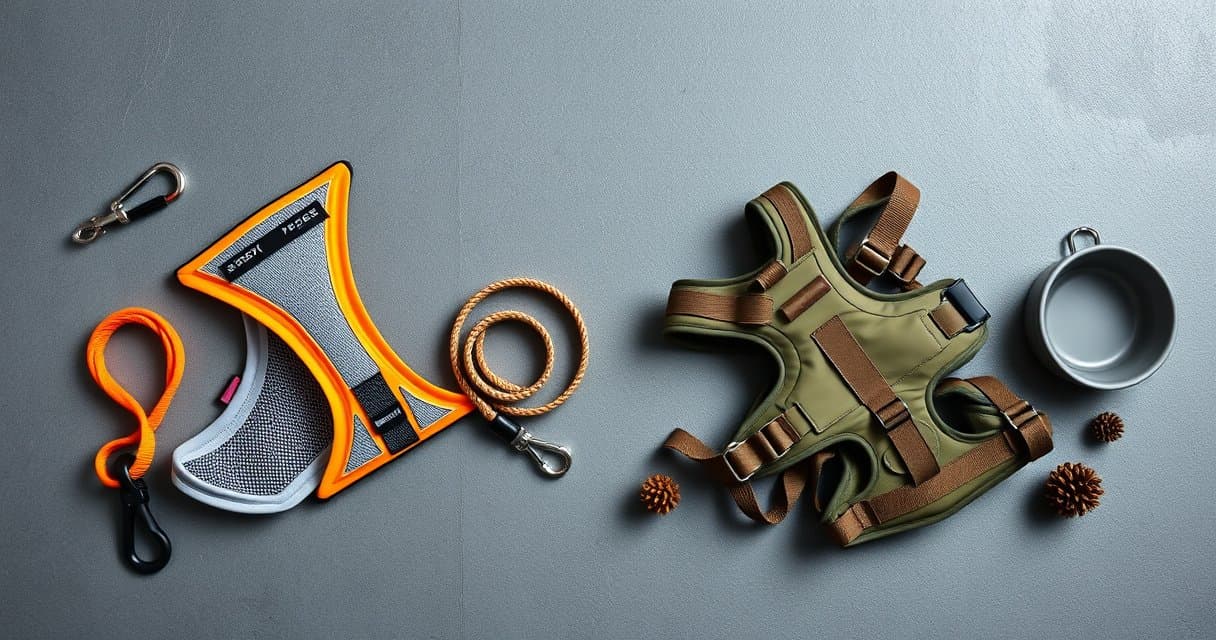
Comfort is not a universal concept. What is perfect for a three-hour birdwatching outing can be a nightmare during a mountain hike. Choosing the right equipment is first about understanding the specific demands of your favorite activity.
Birdwatching and Hide Observation: Stealth Above All
Here, you are often stationary or moving slowly. The weight of the binoculars is supported for a long time. The absolute priority? Silent handling. A clip that snaps or Velcro that rips will scare away any subject dozens of meters away. Prefer models with loops covered in fabric and with smooth mechanisms. Back comfort must be impeccable, with padding that doesn't create a hot spot during long waits. Quick access remains useful for capturing the moment, but it must be fluid and quiet. For me, this is the domain where you should not skimp on quality.
Hiking and Active Walking: Stability and Breathability
The challenge is different. Your torso moves, you might sweat, and the harness must follow these movements without bouncing. The breathability of materials becomes critical – look for airy mesh on the back of the straps. Stability is key: a system with a horizontal or H-shaped back strap will prevent the shoulder straps from slipping with each step. The weight of the harness itself also matters; every gram counts on a steep climb. A model that's too light may sacrifice padding, but one that's too heavy burdens you. You need to find the right balance, often in technical mid-range models.
Maritime Observation and Extreme Conditions
Facing salt, constant moisture, and spray, not all harnesses last long. Materials must be not only waterproof but also corrosion resistant. Beware of untreated metal fasteners that will rust on the first boat trip. High-quality marine plastic or stainless steel buckles and clips are signs of robustness. The fit must also account for layers of technical clothing, which can be thick. A harness designed for this activity will often have a clean design, easy to rinse with fresh water upon return.
Safari and Observation Travel
You often alternate between phases in a vehicle and short walks. Practicality is central. A truly quick attachment/detachment system (one-handed, ideally) is valuable for switching binoculars to the harness and back. The integrated pocket makes perfect sense for storing a small notebook or a filter. Furthermore, in dust or under intense sun, the ease of cleaning the materials is a real plus. One often looks for a versatile compromise: enough comfort for prolonged wear, but enough simplicity to avoid becoming overly complicated.
For light astronomy or with heavy binoculars, the major criterion becomes load capacity and comfort over time, often in a seated or reclining position. Ease of adjustment in the dark, with tactile markers for example, can also be part of the clever details.
Conclusion
Investing in a good binocular harness is much more than buying an accessory. It's choosing pure comfort and regained freedom.
Your experience in the field is completely transformed. You observe longer, more serenely. The fatigue disappears, the pleasure remains.
So, don't underestimate this piece of equipment anymore. Make it your ally for all your explorations.
Frequently Asked Questions
What is the best binocular harness for comfort?
A comfortable harness distributes the weight of the binoculars from the neck vertebrae to the muscles of the torso and shoulders through a triangular strap system. This can multiply the carrying surface area by 10 to 15 times and allows for several hours of observation without fatigue.
How to properly adjust a binocular harness?
Proper adjustment involves tightening the shoulder straps to prevent slipping without compression, and adjusting the binocular attachments so the eyepieces rest 5 to 8 cm below the chin when at rest. Test the stability by doing slight jumps in place.
What material to choose for a binocular harness?
Padded neoprene offers immediate comfort and insulates from the cold, while nylon/polyester is more breathable and robust against abrasion for intensive use. Comfort in this case depends on the quality of the integrated foam.
How to securely attach binoculars to a harness?
Check the compatibility of your binoculars' ring diameters with the harness and prefer a double-security quick-clip system or an eyelet and cord loop, which is quieter and more secure. Test the attachment's strength by firmly pulling in all directions.
Is a binocular harness useful for hiking?
Yes, for hiking, a harness provides stability and breathability by conforming to the body's movements, thanks in particular to a back strap that prevents slipping, and it completely frees the hands while walking.
100% free and independent — All our articles are written independently, without any sponsorship. We may earn a commission on purchases made through our links, at no extra cost to you.
Guides you might like
Astrophotography Telescope Buying Guide
Choose the right telescope for astrophotography to avoid frustration. Key factors depend on your target nebula or object.
Best Binoculars Value Guide
Find value binoculars that match your real needs. Understand specs like 8x42 and key features for the best observation without overspending.
Best Nature Binoculars Kids
Discover how to choose the perfect first binoculars for a child, focusing on lightweight design, ergonomics, and sparking a love for nature observation.
Articles you might like
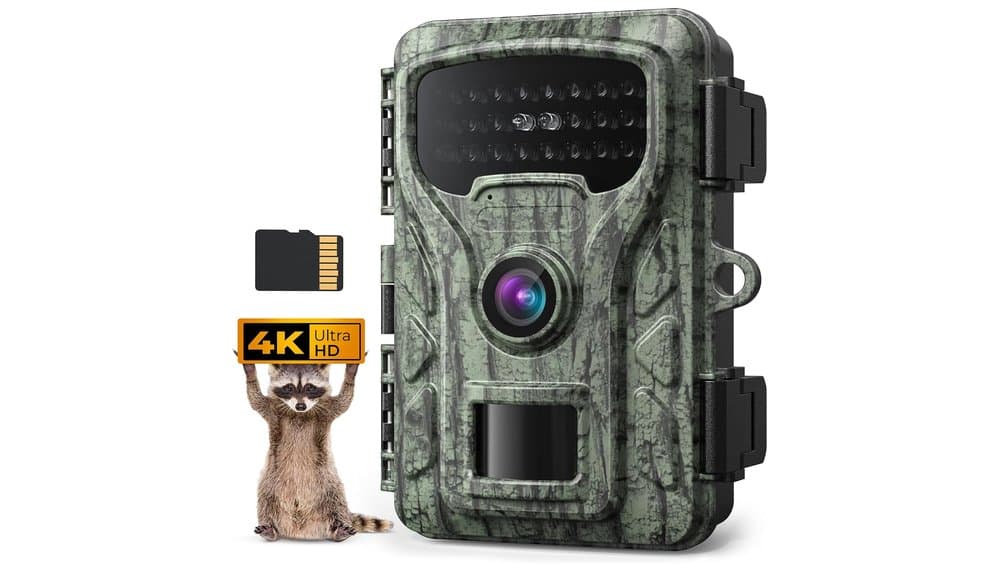
Caytail 4K 48MP Hunting Camera Review & Test
In-depth review of the Caytail 4K 48MP trail camera with included SD card. We analyze specs and real user feedback on its true field performance.
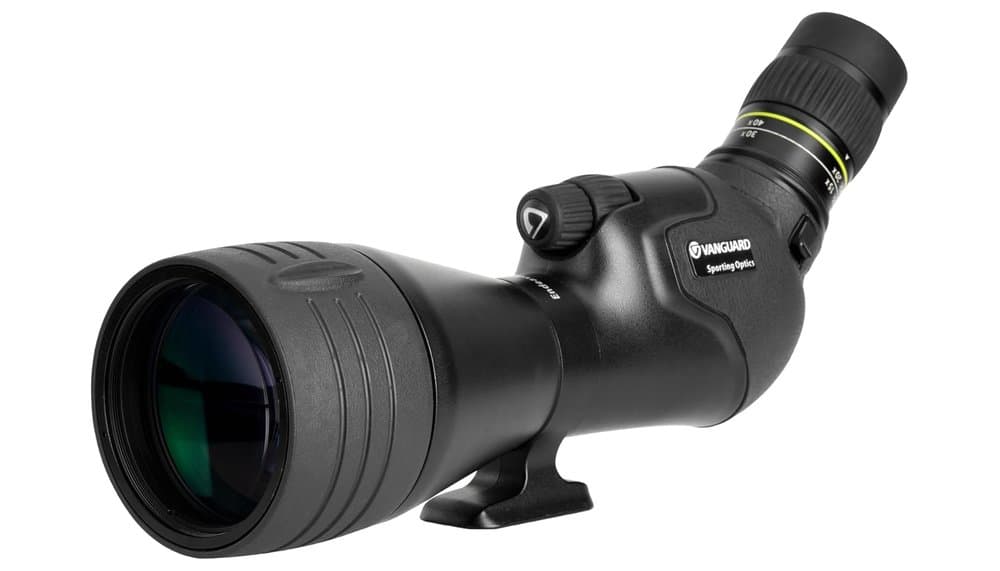
Vanguard Endeavor HD65A Spotting Scope Review
Spotting scope with 65mm ED glass & 15-45x zoom for birding & hiking. Balanced performance & portability for serious nature observers.
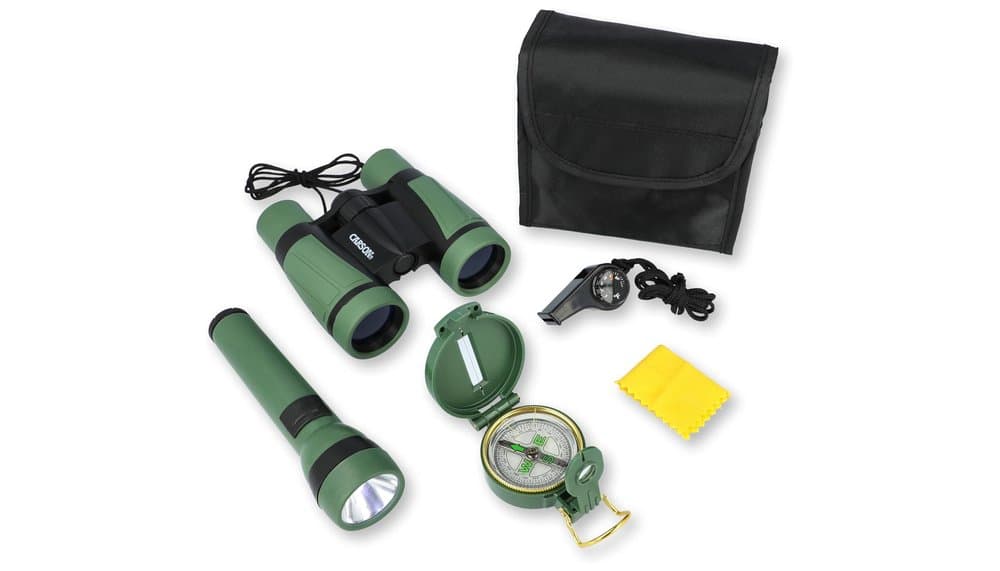
Carson AdventurePak Kids' Exploration Tool Kit Review
Explore nature with this kid's 5-piece tool kit for outdoor adventure and educational discovery. Perfect for young explorers.