Binocular Guide Birdwatching
Guide
You find yourself at dawn, facing a bush where a furtive silhouette is moving. The moment is crucial, but the image remains a shaky blur: it's the eternal drama of unsuitable binoculars. Choosing the right pair isn't just about a series of numbers on a label; it's the key that transforms a blob of color into a bird with brilliant details. Let's unravel this together.
Key Points to Remember
- Opt for 8x42 for the ideal balance of stability, brightness, and versatility, especially if you are a beginner.
- Always prioritize optical quality (BAK-4 prisms, Fully Multi-Coated treatments) over more impressive magnification or lens diameter numbers.
- Choose a magnification/objective lens combination suited to your primary terrain: 8x32 for forest and hiking, 10x42 for open spaces.
- Demand a waterproof and nitrogen-purged construction for durability and to avoid fogging under all conditions.
- Comfort (weight, ergonomics, eye relief) is crucial for prolonged and enjoyable observation.
Deciphering the Specifications: What Do 8x42 and Its Cousins Mean?
It's the first thing you see on a pair, and it's often a source of confusion. Let's take the mythical 8x42 as an example. The first number is the magnification. Eight times, therefore. This means a bird located 80 meters away will appear as if it were 10 meters away. Simple, right? But here's where it gets tricky: a stronger magnification, like 10x or 12x, isn't everything. At 12x, the slightest tremor in your hand is amplified twelve times! The result? An image that constantly dances, unless you have arms of steel or are using a tripod. For handheld birdwatching, 8x is often a perfect compromise. 10x can be tempting for observations in open environments, but honestly, for a first serious pair, it's better to aim for 8x or a maximum of 10x.
The second number is the diameter of the objective lenses, in millimeters. In our 8x42, these are 42 mm diameter objectives. This is the real light reservoir. The larger it is, the brighter the image will be, especially during the magical hours of dusk or under thick forest cover. But be careful, this adds weight and volume. Compare an 8x32 and an 8x42: the second will be brighter, but also bulkier.
This is where a third crucial indicator, calculated from the first two, comes into play: the exit pupil. To find it, divide the objective lens diameter by the magnification. An 8x42 thus gives 42/8 = 5.25 mm. This figure is the diameter of the small circle of light that exits the eyepiece and enters your eye. Why is it so important? Your own pupil, in broad daylight, contracts to about 2 mm. An exit pupil of 5 mm is therefore more than sufficient. But in low light, your pupil dilates (up to 7 mm in a young adult). If the exit pupil of your binoculars is smaller (like on a compact 8x25, which gives 3.1 mm), it becomes the bottleneck. You lose light. For versatile use, aiming for an exit pupil of at least 4 mm (like an 8x32) is a good minimum, and 5 mm or more (8x42, 10x50) will be ideal for dim lighting.
Here is how these numbers translate in the field to find the best birdwatching binoculars for your practice:
| Typical Format | Example | Exit Pupil | Key Strengths | Points of Caution | For Whom? |
|---|---|---|---|---|---|
| Compact & Lightweight | 8x25 | 3.1 mm | Featherweight, fits in a pocket. | Reduced brightness in forest or at dusk. Field of view often limited. | The lightweight hiker, a backup/spare pair. |
| Versatile & Balanced | 8x32 | 4.0 mm | Excellent weight/brightness compromise. Very easy to handle. | Slightly less piercing in very low light than an 8x42. | The active birdwatcher who walks a lot. |
| All-Terrain Reference | 8x42 | 5.25 mm | Excellent brightness, wide field of view, stability. The standard. | Heavier than an 8x32. Can be bulky on a long journey. | The majority of observers, from beginner to experienced. |
| For Light or Wide Open Spaces | 10x42 | 4.2 mm | Superior detail at distance. Good brightness. | Image more sensitive to shaking. Field of view somewhat reduced. | Observers of shorelines, steppes, those with a steadier hand. |
| Light Wells | 10x50 | 5.0 mm | Maximum brightness, distant detail. | Heavy and bulky. Often requires support (monopod, tripod) for prolonged use. | The stationary observer (blind, fixed post), specialist in nocturnal birds. |
So, which one to choose? If you're hesitating between two formats, my advice is simple: always prioritize stability and viewing comfort over the numbers on paper. A well-held 8x42 will let you see more things than a shaky 10x42. And don't forget, these numbers are the foundation, but they are not everything. The quality of the lenses and prisms is what turns good specifications into a sublime image. We'll talk about that right after.
Concrete Optical Quality: Prisms, Lenses, and Anti-Reflective Coatings
Now that we understand the numbers, let's get to the heart of the matter: what happens inside. Because two binoculars labeled 8x42 can offer a radically different experience. One will give you a sparkling image full of detail, the other a dull, colored blur. The key? The optical components.
The Prism Choice: The BAK-4 Battle
Inside, light is folded by prisms. Two technologies dominate: Porro prisms and roof (roof) prisms. Porro prisms, with their zigzag tubes, often offer better value for money and legendary depth perception. But they are bulkier. Roof prisms, with their straight tubes, are more compact and robust, hence omnipresent in modern best birding binoculars.
Regardless of the type, the prism material is crucial. Always demand BAK-4. It's a high-quality glass that offers near-perfect total internal reflection. The alternative, BK-7 (standard borosilicate glass), is cheaper but causes vignetting: against a very bright background, you might see the edges of the prism as a diamond-shaped gray shadow in the exit pupil. It's a sign of cutting corners on a critical point. For serious use, BK-7 is not an option.
The Magic of Coatings: Where Does the Light Come From?
Look at the lenses. If they reflect white light like a mirror, run away! A good lens should appear almost black, absorbing light rather than reflecting it. This is the work of anti-reflective coatings. Here's what to look for on the ring or the manual, in order of increasing performance (and price):
- Coated (C): A single layer on some lenses. Very basic.
- Fully Coated (FC): A single layer on all glass surfaces. The bare minimum acceptable.
- Multi-Coated (MC): Multiple layers on some lenses (often the most critical ones).
- Fully Multi-Coated (FMC): Multiple layers on all glass surfaces. This is what you need. These layers maximize light transmission (for a brighter, higher-contrast image) and reduce stray light reflections.
On high-end models, we talk about phase-correction and dielectric mirror coatings specific to roof prisms. Without diving into the physics, these correct image defects (loss of contrast, lack of sharpness) and further boost transmission. If you see these terms, you're looking at high-end optics.
Special Lenses: Hunting Colored Fringes
Observe a blue jay on a dark branch, with a white sky in the background. If you see an unnatural purple or green glow around the contours of its feathers, that's chromatic aberration. It's the bane of low-end optics. To combat it, manufacturers use low-dispersion glass, called ED (Extra-low Dispersion), HD (High Definition), or other proprietary acronyms.
These special lenses are expensive, but their effect is immediate. They make images "cleaner," sharper, with natural and faithful colors. Is it essential? For a beginner in open terrain, perhaps not. But as soon as you're chasing details in high-contrast areas, or if you're aiming for the best birding binoculars for intensive use, it's an investment that changes everything. A pair with ED glass offers a sharpness that is less tiring for the eyes over time.
My strong opinion? Don't settle for just a magnification/objective size. Insist on knowing which prism (BAK-4 mandatory) and which coating (Fully Multi-Coated minimum) you are buying. That's where 80% of the difference lies between a decent image and one that makes you say "wow."
Our Selection
For nature lovers, amateur birdwatchers, or curious travelers, choosing a suitable pair of binoculars is crucial. Our selection today focuses on two models, each claiming its place in the "all-terrain" category: one with a fixed, very high magnification and another with a variable zoom. We have scrutinized their technical specifications and community feedback to provide you with a clear analysis.
| Product | Magnification | Objective Lens | Key Strengths | Build |
|---|---|---|---|---|
| USCAMEL 20x50 | 20x (fixed) | 50 mm | High magnification, complete waterproofing (nitrogen purged), includes a phone adapter | Rubber armor, 760 g |
| Bushnell Pacifica 10-30x50 | 10-30x (variable) | 50 mm | Versatility of zoom, 20-year warranty, brand reputation | Robust rubber coating, 1002 g |
USCAMEL Binoculars 20x50
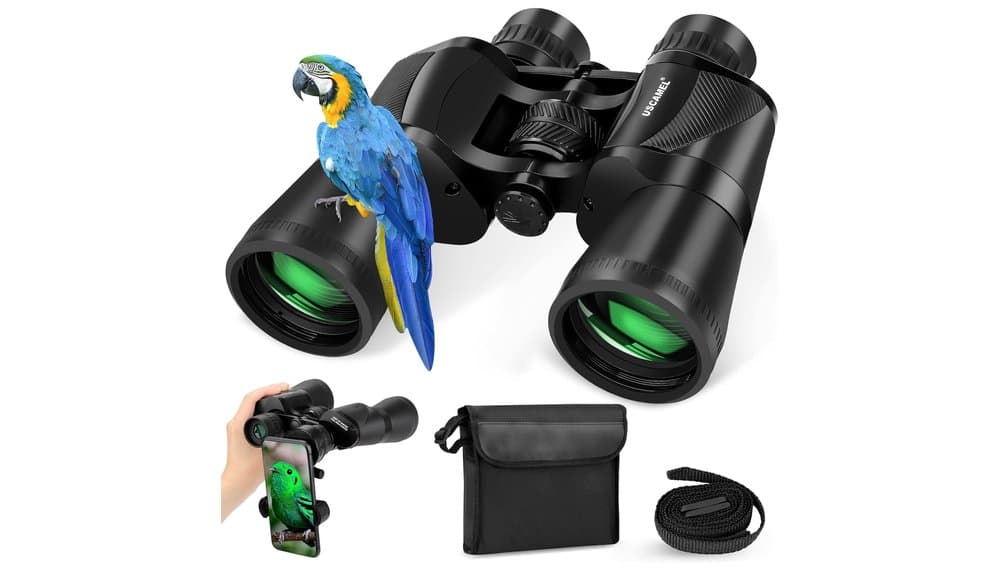
On paper, the specs of the USCAMEL 20x50 suggest a very technical orientation. The fixed 20x magnification promises to bring distant subjects considerably closer, like a bird perched high in a tree. Coupled with 50 mm objective lenses and a BAK-4 prism, one expects good brightness and a detailed field of view. One of its major assets, highlighted in the technical sheet, is its enhanced waterproofing: the housing is nitrogen-purged, protecting it from internal fogging and moisture—a real plus for outings in changing conditions or by the sea.
According to user feedback, these promises are largely met. The community notes that the optical quality is very decent for the segment, offering a clear and bright image in good light conditions. Its weight of approximately 760 grams is often cited as a good compromise, light enough for prolonged observation sessions without being too bulky. The inclusion of a smartphone adapter in the box is highly appreciated for easily capturing images or videos through the eyepieces.
However, reviews also highlight concrete limitations. The fixed 20x magnification makes images very sensitive to hand shake, making the use of a tripod (not included, however) almost essential for stable observation, especially over long periods. Some users also mention that the field of view is relatively narrow at this zoom level, which can make locating and tracking a moving subject more difficult for beginners. The focus, although described as simple, requires some practice to be precise at this power.
Bushnell Pacifica 10-30x50
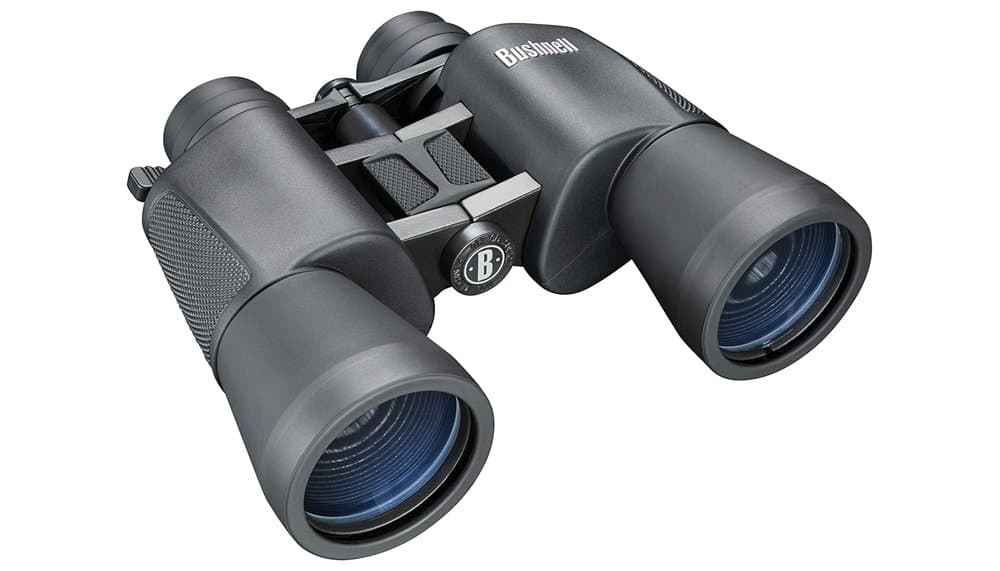
The Bushnell Pacifica bets on versatility with its variable 10-30x magnification. This feature is its main selling point: you can switch from a wide and stable view at 10x to locate a subject, then zoom progressively to observe details. On paper, this makes it a tool suited for various scenarios, from observing a landscape to closely studying wildlife. The reputation of the Bushnell brand and its 20-year warranty inspire confidence and speak of a construction designed to last.
Community feedback confirms the general robustness of the device. Its rubber coating provides a good grip and protects it from minor shocks. The fully multi-coated optics provide a vivid image with natural colors, particularly appreciated at the 10x setting. The ability to zoom in to scrutinize a detail without changing equipment is praised by many users, especially for birdwatching where the distance to the subject can vary.
However, this versatility comes at a cost in terms of user experience. The main drawback highlighted by users concerns stability at maximum zoom. At 30x, shakes are greatly amplified, and the image becomes difficult to stabilize without support. Furthermore, some feedback indicates that beyond 20-25x, brightness and sharpness can decrease noticeably, a common phenomenon on entry-level zooms. Its weight of one kilogram is also noteworthy; it is heavier than the USCAMEL, which can be felt during long walks. Finally, although advertised as splash-resistant, it does not benefit from the same nitrogen-purged waterproof treatment as its competitor.
Conclusion
The choice between these two models will therefore essentially depend on your primary use and your tolerance for instability.
If you are looking for powerful, fixed magnification for static observations (fixed observation post, with a tripod) and you value advanced waterproofing for all conditions, the USCAMEL 20x50 seems a coherent and well-equipped choice. However, be prepared to use it with a support to get the best out of it.
If versatility and the ability to adapt the zoom to the situation are paramount, and you trust the longevity of an established brand, the Bushnell Pacifica 10-30x50 will meet that need. You will, however, have to accept its limitations at maximum zoom and a stability management that will require patience or the use of a support.
For Long Hours of Observation: Comfort, Waterproofing, and Handling
Superb optics are useless if your binoculars give you cramps after twenty minutes or fog up as soon as the air turns cool. Birdwatching is a matter of patience. Your equipment should let you forget it, not constantly remind you of its discomfort. This is what separates a tool of passion from a frustrating gadget.
Waterproofing is Not an Option, It's Insurance
You will be in drizzle, by a damp pond, moving from a warm interior to a cold exterior. Without protection, the lenses will fog up from the inside, and it's irreparable. Demand a waterproof and nitrogen-purged (or argon) construction. This is an industrial standard, not a marketing point. This purge removes all internal moisture and prevents fogging. Check the protection level, often noted as IPX7: this means the device can be temporarily submerged (usually 1 meter for 30 minutes). It is your best insurance for a decade of worry-free observations, no matter the capricious weather.
Physical Comfort: A Matter of Centimeters and Grams
Let's talk ergonomics. Three points are crucial.
- Eye Relief: This is the distance between the eyepiece lens and your pupil. If you wear glasses, you need at least 16 mm, and 18 mm is ideal. Without it, you lose part of the field of view, like looking through a keyhole. Test: good binoculars have soft eyecups that fold down for glasses wearers.
- Weight and Balance: A pair of 42mm binoculars can weigh 600g or 800g. You will feel that 200g difference after an hour of holding them up. But even more important is balance. The best birdwatching binoculars have their center of gravity placed near your hands. They do not tip forward, which reduces muscle fatigue. The body material (lightweight magnesium vs. heavy polymer) plays a huge role in this.
- The Focus Wheel: It should be wide, textured, and turn with perfect fluidity, neither too stiff nor too loose. You will manipulate it hundreds of times per outing. If it squeaks or catches, it's a potential nightmare. A central wheel is often preferable for quick use.
Handling in the Field: The Details That Change Everything
Observe the shape. Models with a contoured body, featuring natural finger grooves, fit the palm of your hand. This is much more comfortable than perfectly smooth tubes. Also check the diopter adjustment knob (the correction for one eye): if it gets knocked out of setting at the slightest brush in your bag, you'll spend your time readjusting it. It should be firm or, ideally, be able to lock.
My advice? Don't rely solely on spec sheets. Go to a store, or order with a return option. Hold the binoculars for ten minutes. Simulate an observation by aiming at different points. If after that time you feel any discomfort, move on. The perfect pair is the one that becomes a natural extension of your gaze, without effort.
What Magnification/Brightness Pair for Your Field of Play?
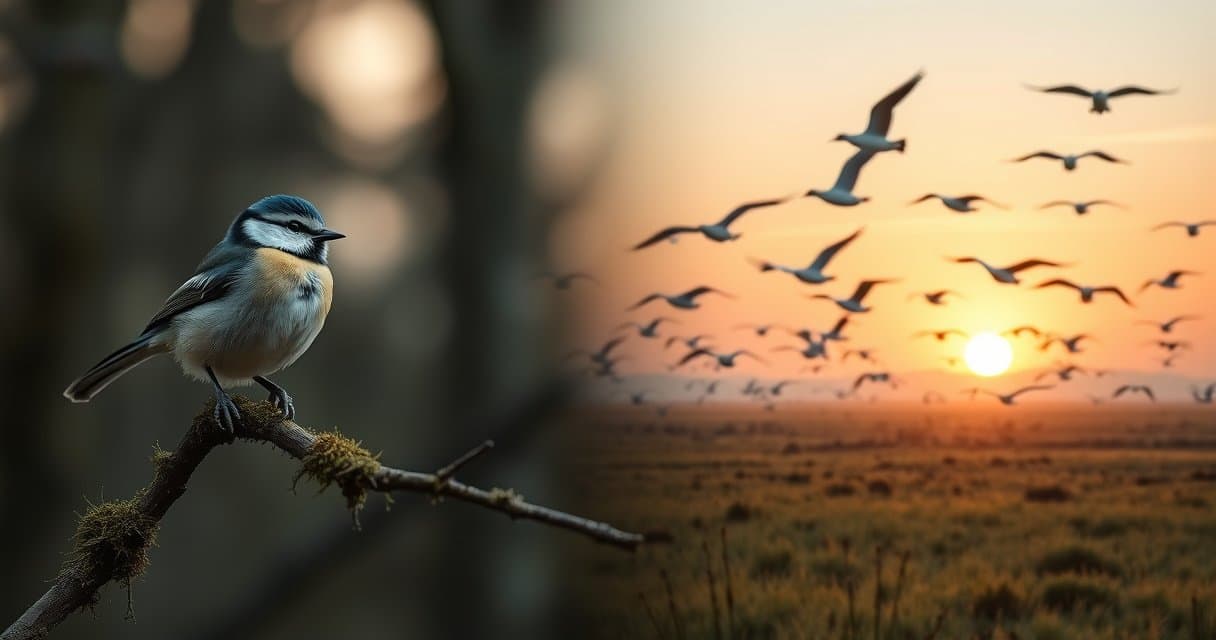
We've talked technique, but it's in the field that the choice truly makes sense. The perfect duo doesn't exist: it's a question of compromise suited to your preferred environment. Your observation style dictates the formula.
In Dense Forest and Undergrowth: The Race for Light and Reactivity
Here, birds are close, lively, and the light is filtered. High magnification is your enemy. It narrows the field of view, making tracking a kinglet in the branches almost impossible, and amplifies every tremor. Prioritize an 8x32 or an 8x42. The 8x is the best ally: powerful enough for plumage details, but stable and wide enough to keep the bird in the circle. The objective lens diameter (the second number) is crucial for brightness under the canopy. An 8x42 will be more versatile at dawn, but an 8x32, lighter and more maneuverable, is a wonder for long hikes in the undergrowth. The minimum focusing distance also becomes a criterion: aim for less than 2 meters to observe an insectivore just a few branches away.
For Large Open Spaces (Marshes, Coastline, Steppe): Power and Stability
Here, distances stretch out. Identifying a distant wader or a raptor in flight requires more power. A 10x42 is the standard here for good reasons. It offers the necessary detail without becoming unmanageable hand-held for most observers. The 42mm diameter ensures a good reserve of brightness, even in the typical grey weather of wetlands. Be careful, frankly, if you have natural tremors, the 10x can be frustrating. In that case, try a 10x with a very stable ergonomic design, or drop back to an 8x42 and rely on optical quality to "zoom" through image clarity.
Twilight Observation and Hunting for Nocturnals
When light fades, everything changes. The absolute priority is to capture maximum photons. This is the realm of generous diameter. An 8x56 or a 10x56 then becomes a remarkable tool. The large objective lens (56mm) offers a large exit pupil, making the image very bright and comfortable for the eye. The compromise? Weight and bulk are significant. This is not a pair for sporty hiking, but for dedicated sessions, posted on watch. For more versatile use including twilight, an 8x50 or 10x50 is already an excellent compromise.
The Compromise Table
| Type of Terrain / Activity | Recommended Pair | Why? | The Compromise to Accept |
|---|---|---|---|
| Hiking & Forest | 8x32 | Lightness, wide field, reactivity. | Less light in very dark conditions. |
| Versatile / All-Terrain | 8x42 or 10x42 | Perfect balance power/brightness/stability. | Slightly higher weight than the 8x32. |
| Large Open Spaces & Shorelines | 10x42 or 10x50 | Power needed for long distances. | Stability required, increased bulk with the 50. |
| Twilight / Low Light | 8x56 or 10x56 | Maximum light captured, eye comfort. | Significant weight and bulk. |
Don't forget: the quality of the lenses and coatings (which we discussed before) can, to a certain extent, transcend these numbers. A high-end optic in 8x42 will often give you a brighter, more contrasted image than a basic optic in 10x50. That's where the magic of the best ornithology binoculars comes into play.
Prioritizing Your Criteria Based on Your Purchase Budget
Setting a budget is good. Knowing where to focus your euros to avoid wasting them is better. Here's how to get the most out of each price bracket, while avoiding common pitfalls.
Below €200: Essential Robustness and Waterproofing
At this level, the watchword is absolute priority on waterproofing and mechanics. You will have to make concessions on optical refinement, but not on durability. Demand a construction that is nitrogen (or argon) purged and a robust rubber armor. Opt for a simple, proven configuration like 8x42. Avoid like the plague models with zoom or exotic magnification (12x and above): the optics will be mediocre and the result very disappointing. Focus on one thing: having binoculars that withstand a downpour, with a smooth focus wheel, and that offer a decent image in the center of the field. Chromatic aberration (those purple fringes on edges) will be present on the periphery; this is normal. At this price, it's a good tool for starting out seriously without breaking the bank.
Between €200 and €500: The Realm of Optimal Value for Money
This is the sweet spot for the majority of birdwatchers. Here, you can (and should) demand everything. Waterproofing is a given. Your money should primarily fund optics and comfort. It's at this level that high-performance multi-coatings, BaK-4 prisms, and sometimes even low-dispersion (ED/HD) glass appear. The gain is palpable: a brighter image, more faithful colors, and sharpness that extends well towards the edges of the field. Ergonomics also improve: more comfortable eyecups, more precise focusing, better balanced weight. My advice? In this range, test several models. The difference is felt in the last light of day: the binoculars that stand out maintain a clear, contrasty image where entry-level models have already sunk into grayness.
Above €500: The Quest for Ultimate Detail and Absolute Comfort
Here, we enter the realm of high-end. You are no longer paying for features, but for a sensory experience. The priority goes to marginal optical perfection and comfort of use over entire days. Fields of view become incredibly wide, giving an "open window" impression. Colors are perfectly neutral, without any yellow or green tint. Weight is often optimized through magnesium chassis. The slightest vibration is dampened by millimeter-perfect ergonomics. Frankly, the difference with a €400 model is not colossal for observation in broad daylight. But if you spend your weekends on watch or are fascinated by the microstructure of feathers, this investment is fully justified. This is the domain of the best birdwatching binoculars, where every component is designed for demanding use.
The Trap to Avoid at All Costs
Do not succumb to the temptation of a large objective lens (like 10x56) or extreme magnification by sacrificing all other quality. A superb 8x42 is better than a mediocre 12x50. The quality of construction and optical finish always take precedence over raw numbers. Is your budget limited? Go for the best-finished model in the most versatile configuration (often 8x42), rather than the poorly executed "special" configuration.
Conclusion
So, there you have it. You now have all the keys in hand to find the ideal pair for your outings. Birdwatching is a passion that deserves a tool that truly serves it. Suitable binoculars are not just a gadget. They are your window to a world of fascinating details.
Don't rush. Think about your terrain, your comfort, and what you really want to see. A model that matches your practice is always better than a model that looks good "on paper".
Take the time to try and compare. Trust your feeling in your hands and before your eyes. The right choice will accompany you for years and years of happy observations.
Happy observing to you!
Frequently Asked Questions
Which magnification should I choose for birdwatching binoculars?
8x magnification is the most versatile and stable for handheld observation, while a 10x can be used for wide open spaces if you have good stability.
What does the number 8x42 mean on binoculars?
The first number (8x) is the magnification, and the second (42) is the diameter of the objective lenses in millimeters, which primarily determines brightness.
What is the best brightness for observing at dusk?
For observation in low light, aim for a large exit pupil of at least 5 mm, typically found on models like the 8x42 (5.25 mm) or the 10x50 (5 mm).
Should I prioritize weight or brightness for hiking?
For forest hiking, an 8x32 model offers an excellent compromise between lightness and brightness, while an 8x42, heavier, provides more light for greater versatility.
What are the minimum optical criteria for quality binoculars?
Demand at minimum BAK-4 glass prisms and a Fully Multi-Coated (FMC) treatment on all lenses for a clear and contrasty image.
Are waterproof binoculars essential for birdwatching?
A waterproof and nitrogen-purged construction (like the IPX7 standard) is essential to prevent internal fogging and protect the optics from moisture during field outings.
100% free and independent — All our articles are written independently, without any sponsorship. We may earn a commission on purchases made through our links, at no extra cost to you.
Guides you might like
Astrophotography Telescope Buying Guide
Choose the right telescope for astrophotography to avoid frustration. Key factors depend on your target nebula or object.
Best Binoculars Value Guide
Find value binoculars that match your real needs. Understand specs like 8x42 and key features for the best observation without overspending.
Best Nature Binoculars Kids
Discover how to choose the perfect first binoculars for a child, focusing on lightweight design, ergonomics, and sparking a love for nature observation.
Articles you might like
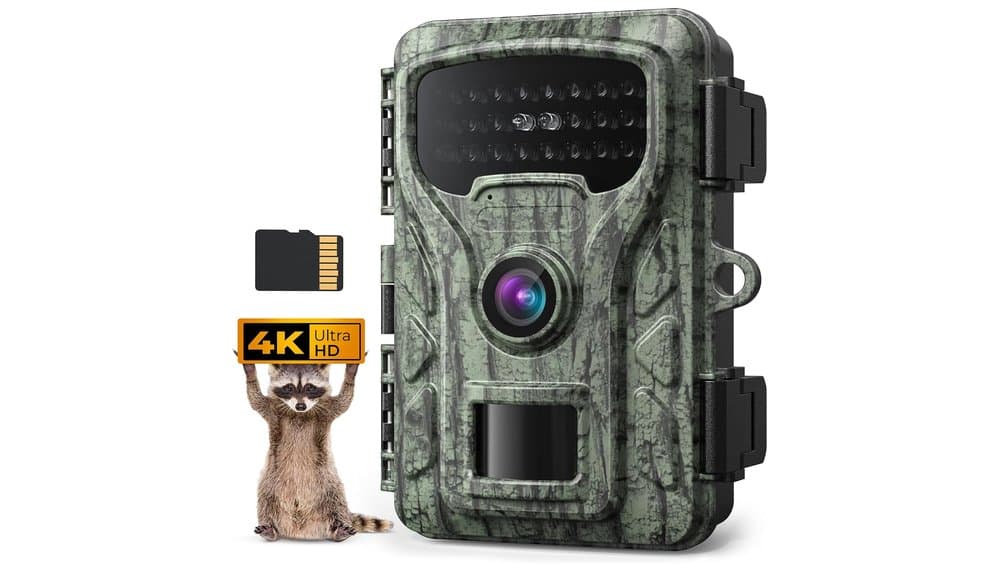
Caytail 4K 48MP Hunting Camera Review & Test
In-depth review of the Caytail 4K 48MP trail camera with included SD card. We analyze specs and real user feedback on its true field performance.
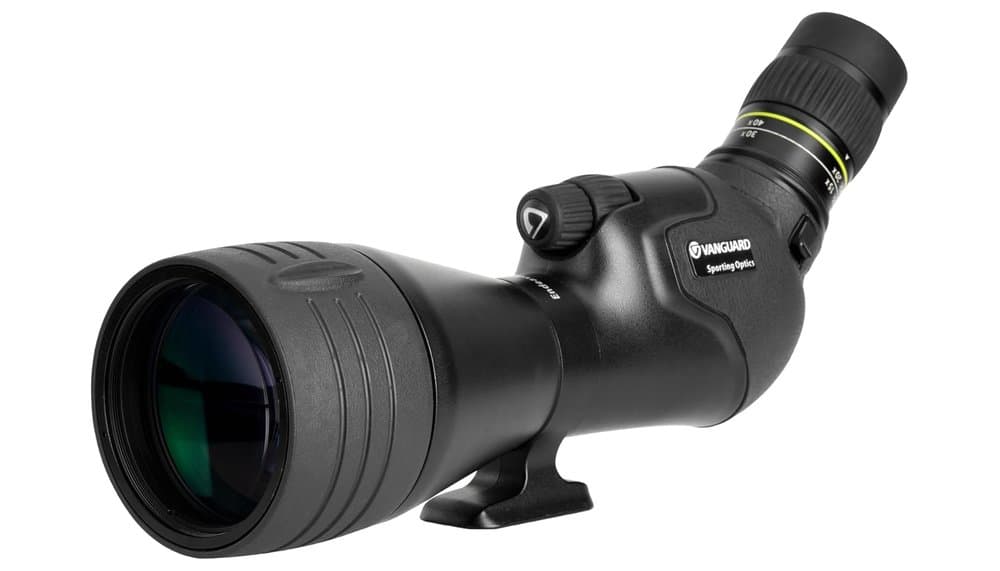
Vanguard Endeavor HD65A Spotting Scope Review
Spotting scope with 65mm ED glass & 15-45x zoom for birding & hiking. Balanced performance & portability for serious nature observers.
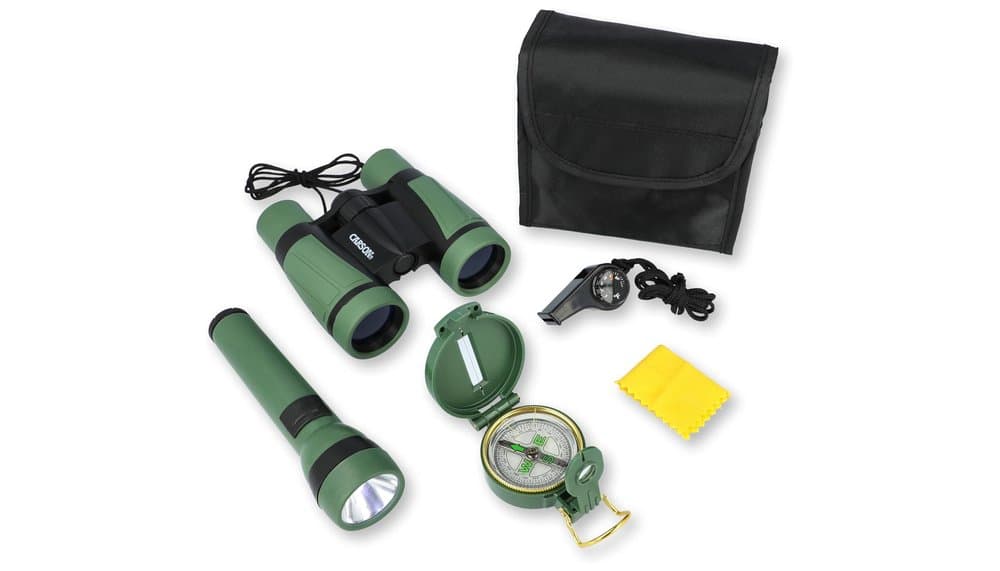
Carson AdventurePak Kids' Exploration Tool Kit Review
Explore nature with this kid's 5-piece tool kit for outdoor adventure and educational discovery. Perfect for young explorers.