Vortex Monocular 8x25 Review & Performance Test
Published on 18 July 2026 · By OptiqueNature
Review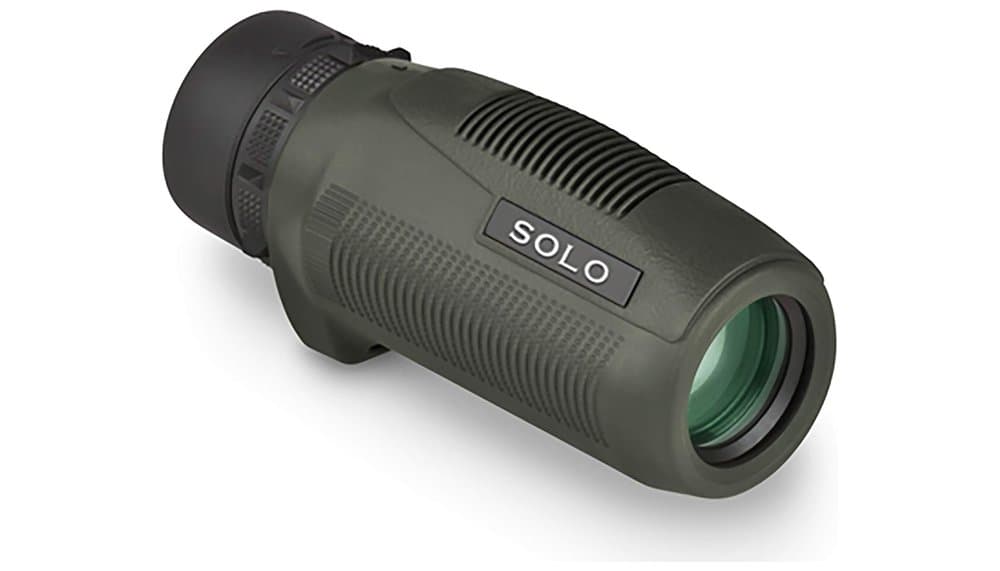
Introduction
In the realm of nature observation, where optical quality and practicality often must balance weight and bulk, monoculars offer a unique compromise solution. The Vortex Monocular 8x25 Monocular (also called Vortex Solo 8x25) positions itself as an ultra-portable instrument, designed for those who refuse to sacrifice performance for the sake of size. But how does this small cylinder actually perform in the field? Through this analysis, we will dissect its specifications, confront technical promises with feedback from the community and experts, and determine for which observers it constitutes the ideal companion.
Strengths and Weaknesses
Strengths
- Extreme compactness and lightness: Its pocket format and featherweight design make it an "always with you" tool.
- Robust and waterproof construction: A rubber armor and assured waterproofing inspire confidence for outdoor use.
- Perceived excellent value for money: Offering Vortex's VIP lifetime warranty, it is considered a reliable and well-finished product for its segment.
- Precise and ergonomic focusing: The focus ring is accessible and allows for quick, sharp adjustment.
Weaknesses
- Restricted field of view: Typical of compact instruments, it can make locating a subject slower than with binoculars.
- Limited stability: The 8x magnification, while moderate, amplifies hand tremors, requiring technique or support.
- Tiring prolonged monocular vision: As with any monocular, extended use can tire the eye compared to binocular vision.
- Absence of objective lens caps: Noted by several users, this omission demands more vigilance to protect the front lens.
Detailed Analysis of the Vortex Solo 8x25
Optical Quality and Field Performance
On paper, the specs of the Solo 8x25 promise an instrument with solid fundamentals. The 25 mm objective lens diameter is standard for compacts. According to expert and user feedback, light transmission is judged to be very good for the category, offering a bright and contrasted image in daytime conditions. The optical formula, while not explicitly using ED glass or dielectric prism coatings like the brand's high-end models, provides a sharp image with natural colors and minimal chromatic aberration, sufficient for general public use.
The twilight factor (√(8x25) ≈ 14.1) and the exit pupil (25/8 = 3.1 mm) indicate an instrument primarily designed for daytime. The 3.1 mm exit pupil is adequate for use in ambient light, but can become limiting in very low-light situations (dawn, dense undergrowth), where instruments with a larger exit pupil (5mm+) would perform better.
A crucial point for a compact is its field of view. The Solo 8x25 offers a field of 126 m at 1000 m (7.2°). Compared to direct competitors in the 8x25 monocular segment, this figure is on the high side of average, even slightly superior. This translates in the field to an appreciable ease of scanning for locating birds or tracking a moving animal. However, it is still mechanically inferior to the field offered by a quality 8x42 binocular pair, for example. For eyeglass wearers, the 15 mm eye relief is generous and allows, according to users, comfortable viewing of the entire field without having to remove glasses.
The advertised minimum focusing distance is 5 meters. Field reports are consistent, allowing for close observation of insects, flowers, or small birds, adding to its versatility.
Construction, Waterproofing, and Ergonomics
This is where the Vortex Solo scores decisive points. Its construction inspires confidence. The rubber armor offers a good grip, even when wet or with light gloves, and protects against minor shocks. Its waterproofing and internal fog-proofing (nitrogen purged) is a major often-highlighted asset. It allows for use in rain, by the sea, or in large temperature variations without worry, a characteristic that distinguishes it from many entry-level monoculars.
Its weight of 158 grams and reduced dimensions (approximately 11 cm long) are its main marketing strengths. Testers and hikers confirm it slips effortlessly into a jacket pocket, a belt pouch, or a small backpack compartment. The supplied neck strap (sometimes judged as average quality) and soft case allow it to be always at hand.
The ergonomics are simple and effective. The focus ring is wide enough and textured for precise adjustment with two fingers. Its placement near the eyepiece may require a slight adaptation period for strictly one-handed use, but the majority of users find it intuitive. The mechanism is described as smooth and well-damped.
Value Comparison and Use Cases
The Vortex Solo 8x25 occupies an interesting position in the optical landscape:
- Versus compact binoculars: It is lighter and significantly less bulky than a pair of 8x25 or 10x25 binoculars. This is a significant gain for ultra-portability. On the other hand, it sacrifices the comfort of binocular vision and, often, a wider field of view.
- Versus digital/zoom monoculars: It is simpler, lighter, needs no battery, and generally offers better instant optical clarity. It is more robust and better suited to harsh conditions.
- Within the Vortex range: The choice between the 8x25 and the 10x25 is strategic. The 8x25, which we are analyzing here, offers a more stable image (less sensitive to shake) and a wider field of view, ideal for scanning in the forest or observing landscapes. The 10x25 brings more power for discerning distant details (plumage, markings) but at the cost of a reduced field and harder-to-maintain stability.
Recommended use cases:
- Hiking and lightweight trekking: Perfect tool for a quick glance at a summit, an animal, or a trail without the weight of binoculars.
- Discreet and rapid observation: For the naturalist who wants to identify a furtive bird or insect without taking out bulky equipment.
- Complement to a telephoto lens: Wildlife photographers can use it to quickly scan a scene before raising their heavy camera.
- Various outdoor activities: Hunting (scouting), outdoor sporting events, sailing.
Less suitable use cases:
- Detailed astronomical observation: The 25mm aperture and lack of stabilization limit its usefulness beyond casual Moon observation.
- Prolonged digiscoping observation sessions: Long monocular viewing is tiring, and adapting a smartphone can be unstable without a dedicated accessory.
- Very low-light situations: Its small objective lens diameter makes it less performant at dawn or dusk than brighter instruments.
Technical Specifications
| Characteristic | Vortex Solo 8x25 Specification |
|---|---|
| Magnification | 8x |
| Objective Lens Diameter | 25 mm |
| Field of View at 1000m | 126 m |
| Angular Field of View | 7.2° |
| Exit Pupil | 3.1 mm |
| Twilight Factor | ~14.1 |
| Minimum Focus Distance | 5 m |
| Eye Relief | 15 mm |
| Waterproofing | Yes (waterproof, nitrogen purged) |
| Armor Material | Rubber |
| Dimensions (L x W) | Approx. 11.2 x 5 cm |
| Weight | 159 g |
| Warranty | VIP Lifetime Warranty (unconditional and transferable) |
What Users and Experts Say
The synthesis of over 5,400 customer reviews (with an average rating of 4.4/5) and expert analyses confirms and nuances our technical assessment.
Recurrent praise focuses on:
- Construction quality: Terms like "solid," "well-finished," "inspires confidence" constantly appear. The Vortex warranty is a strong argument.
- Portability: "Fits in a pocket," "I forget it's in the bag," "Featherweight" are omnipresent mentions. This is its number one asset.
- Image clarity and brightness: For its format and price category, users are generally pleasantly surprised by the sharpness and brilliance of the image in full daylight.
- Versatility and simplicity: It is described as an easy-to-take-out-and-use tool for a quick check, perfectly meeting that need.
Highlighted criticisms and limitations concern:
- Stability: "The image shakes," "you need to brace yourself" is the most frequent remark. This is an inherent physical limitation of any handheld monocular, especially for new users.
- Accessories: The lack of a protective objective lens cap is pointed out by several buyers. The neck strap is sometimes judged as too thin.
- Field of view: Although appreciated for a monocular, some note that it takes longer to "find" the subject compared to binoculars.
- Relative weight: A few isolated comments, often from ultra-light hikers, find the 159 grams a bit heavy for this format, although this is a very contained weight in absolute terms.
Experts from specialized websites corroborate these points, adding that the Solo 8x25 is a safe bet in its segment. It does not claim to rival high-end binoculars, but it excels in its role as a reliable, always-available, and optically decent supplementary tool.
Conclusion
The Vortex Monocular 8x25 Monocular is not a revolutionary product, but it is the archetype of a well-designed tool for a specific purpose. It excels in its main role: being a discreet, robust, and always-ready optical companion for the mobile nature observer.
Our analysis reveals a coherent product. Its optical performance, though limited by the laws of physics imposed by its compact format, is above average for its price category. Its waterproof construction and lifetime warranty make it a durable and reassuring purchase. Its weaknesses – stability, field of view, eye fatigue in long use – are not manufacturing defects, but compromises inherent to the very concept of a compact monocular.
Our verdict is clear: if you are looking for a primary pair of binoculars for dedicated observation sessions, look elsewhere. However, if you want an ultra-portable secondary instrument for hiking, a quality backup tool to slip into an emergency kit, or a lightweight solution for occasional observation without sacrificing robustness and clarity, the Vortex Solo 8x25 is one of the most relevant and balanced choices on the market. It proves that you can go small without going cheap.
100% free and independent — All our articles are written independently, without any sponsorship. We may earn a commission on purchases made through our links, at no extra cost to you.
Articles you might like
Vanguard Endeavor HD65A Spotting Scope Review
Spotting scope with 65mm ED glass & 15-45x zoom for birding & hiking. Balanced performance & portability for serious nature observers.
Carson AdventurePak Kids' Exploration Tool Kit Review
Explore nature with this kid's 5-piece tool kit for outdoor adventure and educational discovery. Perfect for young explorers.
BOSTRON CY 10x50 Monocular Review & Test
Compact 10x50 monocular review: Analyzes optical clarity, field of view & build quality for hiking, nature & astronomy. See its true value.
Guides you might like
WiFi Trail Camera Guide
See wildlife discreetly from your couch! Learn how WiFi trail cameras let you monitor animals without disturbance and how to choose the right one.
Ultimate Travel Telescope Guide
Choose a portable, high-performance travel telescope to explore the universe from your backpack without compromising on essential astronomical views.
Ultimate Guide to Night Vision Binoculars
Choose the perfect night vision binoculars: Gen vs. digital? Unravel the tech to make your nighttime wildlife adventures a total success. Guide inside.