Vanguard Endeavor HD65A Spotting Scope Review
Published on 20 October 2026 · By OptiqueNature
Review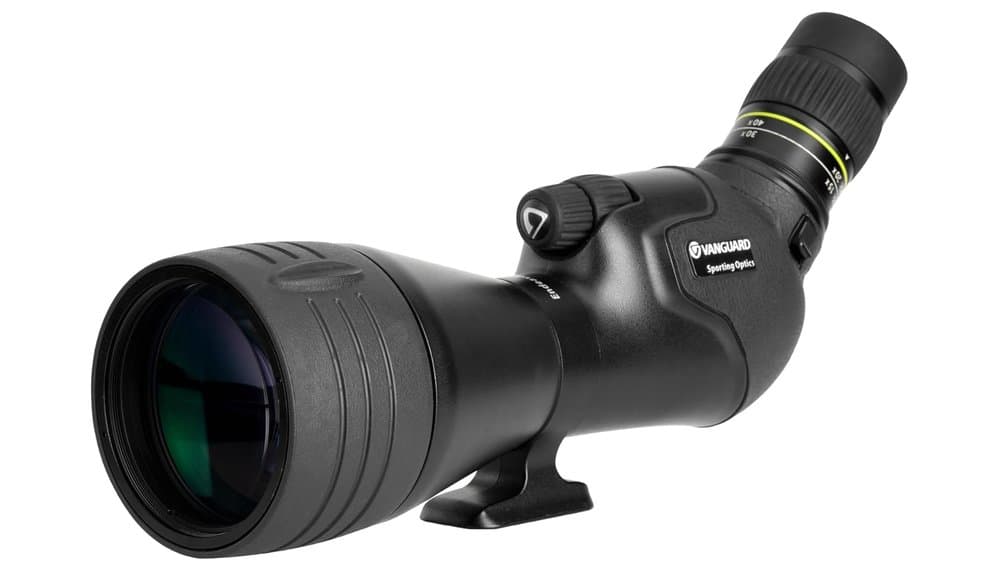
Introduction
In the world of nature observation, choosing a spotting scope is often a compromise between optical performance, ruggedness, and portability. The Vanguard Endeavor HD65A presents itself as an ambitious solution in the mid-range segment, promising technical features often reserved for more expensive products. With its 65mm objective lens, ED (Extra-low Dispersion) glass, and an integrated 15-45x zoom, it directly targets the serious birder, passionate hiker, or amateur digiscoping photographer. Our analysis will dissect this product by cross-referencing its technical specifications with concrete user feedback and expert opinions, to determine where it truly stands in the landscape of observation instruments.
Strengths
- ED Optics at a Competitive Price/Performance Ratio: The presence of ED glass is a major argument, limiting chromatic aberrations and improving color fidelity, a feature generally associated with more expensive models.
- Robust and Waterproof Construction: The lightweight magnesium housing and Hydroguard treatment ensuring waterproof and fogproof resistance (nitrogen purged) make it a reliable instrument for the field, regardless of the weather.
- Versatility of Zoom and Short Close Focus Distance: The 15-45x zoom range offers great flexibility of use, from scanning to observing details. The excellent minimum focus distance, often highlighted, is an asset for observing insects or nearby wildlife.
- Ergonomics and Included Accessories: The dual focus wheel (coarse and fine) is highly appreciated for its precision. The presence of a built-in sunshade and a neoprene case with strap is a notable plus for transport and protection.
Weaknesses
- Optical Degradation at High Magnifications: This is the most frequently mentioned critical point. As soon as you exceed 40x, the image noticeably loses sharpness, contrast, and brightness, limiting the practical usefulness of the maximum zoom in demanding conditions.
- Reduced Field of View at High Magnification: Like most zooms in this segment, the field of view narrows significantly at high magnifications, making tracking moving subjects more difficult.
- Limited Accessory Ecosystem: Although compatible with a digiscoping adapter (PA-202), the proprietary bayonet system limits possibilities for changing eyepieces compared to more open standards.
- Tripod Essential: Its use without a stable support is impossible at medium and high magnifications, which is normal for this type of instrument but is a factor to budget for.
Detailed Analysis of the Vanguard Endeavor HD65A
Optical Quality and Performance
On paper, the specifications of the Vanguard Endeavor HD65A are enticing for its segment. The 65mm objective lens is a balanced diameter, offering a good compromise between light gathering and size. The ED (Extra-low Dispersion) glass is the key element: its role is to minimize chromatic aberration, those colored fringes (often purple) visible on high-contrast edges. According to user feedback, this promise is generally met. Observers note good color fidelity and a clear, contrasted image, especially at low and intermediate magnifications.
The light transmission, although not precisely quantified by the manufacturer, is described as very decent for observations in early morning or late afternoon. One can estimate its twilight factor (√(65 x 45) ≈ 54) and its exit pupil (65/45 ≈ 1.44mm at max zoom) which confirm it is an instrument that performs well in daylight, but whose performance will decline significantly in low light at high magnification.
The advertised field of view is typical of entry-level zooms. It is judged wide and comfortable at 15x for scanning, but reduces considerably at 45x. Testers emphasize that for prolonged observation or tracking birds in flight at high magnification, premium models with wide-angle eyepieces offer a noticeably superior experience.
Construction, Waterproofing, and Ergonomics
The construction is unanimously praised. The magnesium housing provides a perceived high level of robustness while maintaining a contained weight (1.45 kg). The waterproofing ensured by the Hydroguard treatment and nitrogen purge guarantee a fogproof and waterproof instrument, essential for resisting temperature changes and field humidity.
Ergonomics is another strong point. The spotting scope adopts a 45° angle, more comfortable for prolonged observations, especially from a bench or blind. The dual focus wheel is consistently cited as a major asset: a large wheel for quick focusing and a small one for precise adjustment, ideal for digiscoping or observing fine details.
The excellent minimum focus distance, according to specifications, is confirmed by users who use it to observe butterflies or insects just a few meters away.
Typical Uses and Applications
- Birdwatching: This is its preferred domain. Its versatility, relative lightness, and good optics up to 40x make it an ideal companion for field trips. The need for a stable tripod must be planned for.
- Hiking and Wildlife Observation: Its weight and dimensions make it a good candidate for mobile observers who don't want to sacrifice power. The provided neoprene case is a plus for transport in a backpack.
- Digiscoping: The Vanguard Endeavor HD65A is often cited for its good digiscoping results. The optional adapter for a smartphone or camera allows capturing amazing images of the Moon or birds. Users highlight the sharpness and contrast obtained at moderate magnifications (20x-40x). The fine focus wheel is crucial here.
- Occasional Astronomical Observation: It can be used to observe the Moon or bright planets with satisfactory results, but its design and optics are optimized for terrestrial observation.
- Sport Shooting: Some users employ it for spotting at the shooting range. Its ability to distinguish impacts at 100m is noted, although, as one user points out, light conditions and contrast with the target are determining factors.
Price/Performance Ratio and Positioning
The Vanguard Endeavor HD65A occupies an interesting place in the market. It clearly positions itself above entry-level models by incorporating ED glass and high-end construction (magnesium, waterproofing). Compared to premium references (Swarovski, Zeiss, Leica), it obviously concedes ground on optical finesse at high magnifications, absolute brightness, and field of view width. However, for a fraction of the cost, it approaches their performance under standard usage conditions.
Its value lies in this intelligent compromise: it offers 80 to 90% of the perceived performance of a high-end model under optimal conditions (up to 40x), all in a robust and well-designed housing. It is an excellent choice for the passionate observer looking to upgrade in quality without taking the financial leap to professional equipment, or as a second, lighter spotting scope for an owner of a larger model.
Technical Specifications
| Feature | Detail |
|---|---|
| Model | Vanguard Endeavor HD 65A |
| Objective Diameter | 65 mm |
| Magnification | 15-45x (with supplied zoom eyepiece) |
| Optical Design | ED (Extra-low Dispersion) glass, multi-coated |
| Prism | Not specified (likely roof prism with dielectric coating for good transmission) |
| Field of View | Data not provided in analyzed specs, to be verified per eyepiece |
| Exit Pupil | From 4.3 mm (at 15x) to 1.44 mm (at 45x) |
| Minimum Focus Distance | Excellent (exact value not specified, but highlighted as a strength) |
| Eye Relief | Not specified, but the eyepiece is described as "extremely wide" and glasses-compatible |
| Design | Magnesium body, 45° angle |
| Waterproofing | Hydroguard treatment, nitrogen purged (Waterproof & Fogproof) |
| Focus | Manual, dual wheel (coarse and fine) |
| Eyepiece Mount | Interchangeable bayonet |
| Digiscoping Compatibility | Yes, with optional Vanguard PA-202 adapter (cameras) or VEO PA-65 (smartphones) |
| Included Accessories | Neoprene case with strap, built-in sunshade |
| Weight | 1.45 kg |
| Warranty | 2 years |
What Users Say
The synthesis of over 300 customer reviews and expert analyses reveals a strong consensus around several points.
The recurring positive points are:
- Price/performance ratio perceived as excellent: The expressions "unbeatable" or "excellent value for money" come back like a leitmotif. Users feel they receive much more than they expected for the money spent.
- Remarkable image quality up to 40x: At low (15x-20x) and medium (40x) magnifications, feedback is extremely positive. The words "bright", "sharp", "clarity", and "contrast" are often used. The build quality and finish are also praised.
- Appreciated robustness and waterproofing: The feeling of owning a solid and reliable instrument, capable of facing the elements, is widely shared.
- Satisfaction in digiscoping: Several users show impressive results, especially for photographing the Moon with an adapted smartphone, thus validating the optical performance for this use.
- Successful ergonomics: The dual focus wheel and 45° angle are cited as major assets for comfort and precision of use.
The highlighted negative points or limitations are:
- Quality drop starting at 45x: This is THE most frequent criticism. Beyond 40-45x, users describe an image that "degrades," loses "sharpness," becomes "saturated" or "blurry." The majority agree that optimal use is below this threshold.
- Imperative need for a stable tripod: All agree that a quality support is essential, especially at high magnifications, otherwise any vibration makes observation impossible.
- Proprietary ecosystem: The impossibility of changing the eyepiece for other models (fixed or wider-angle) is mentioned as a limitation for some advanced users.
- Isolated quality control issues: A few reviews mention defects (internal dust, sharpness issues at all magnifications), but these seem to be in the minority, and the 2-year warranty as well as Vanguard's customer service are described as responsive in these cases.
Conclusion
The Vanguard Endeavor HD65A is not a miracle spotting scope that rivals the best in class, but it unquestionably constitutes a solid value in its segment. Its main asset is to offer superior quality optics, thanks to its ED glass, in a robust and well-designed chassis, all at a very competitive price point.
It excels in its primary uses: birdwatching in the field, wildlife observation, and occasional digiscoping, as long as the user remains aware of its limitations beyond 40x magnification. For the passionate observer looking to move up from entry-level equipment, or for the demanding amateur wanting a second, more transportable spotting scope, the Endeavor HD65A represents a particularly judicious choice. It offers a large part of the pleasures of high-end observation, simply asking its owner to manage expectations regarding the maximum zoom range and to pair it with a good tripod. It is a product that honors its main promises and which, according to the user community, provides largely justified satisfaction.
100% free and independent — All our articles are written independently, without any sponsorship. We may earn a commission on purchases made through our links, at no extra cost to you.
Articles you might like
Caytail 4K 48MP Hunting Camera Review & Test
In-depth review of the Caytail 4K 48MP trail camera with included SD card. We analyze specs and real user feedback on its true field performance.
Carson AdventurePak Kids' Exploration Tool Kit Review
Explore nature with this kid's 5-piece tool kit for outdoor adventure and educational discovery. Perfect for young explorers.
BOSTRON CY 10x50 Monocular Review & Test
Compact 10x50 monocular review: Analyzes optical clarity, field of view & build quality for hiking, nature & astronomy. See its true value.
Guides you might like
WiFi Trail Camera Guide
See wildlife discreetly from your couch! Learn how WiFi trail cameras let you monitor animals without disturbance and how to choose the right one.
Ultimate Travel Telescope Guide
Choose a portable, high-performance travel telescope to explore the universe from your backpack without compromising on essential astronomical views.
Ultimate Guide to Night Vision Binoculars
Choose the perfect night vision binoculars: Gen vs. digital? Unravel the tech to make your nighttime wildlife adventures a total success. Guide inside.