VOOPEAK TC37 Dual Lens Solar Camera Review
Published on 12 October 2026 · By OptiqueNature
Review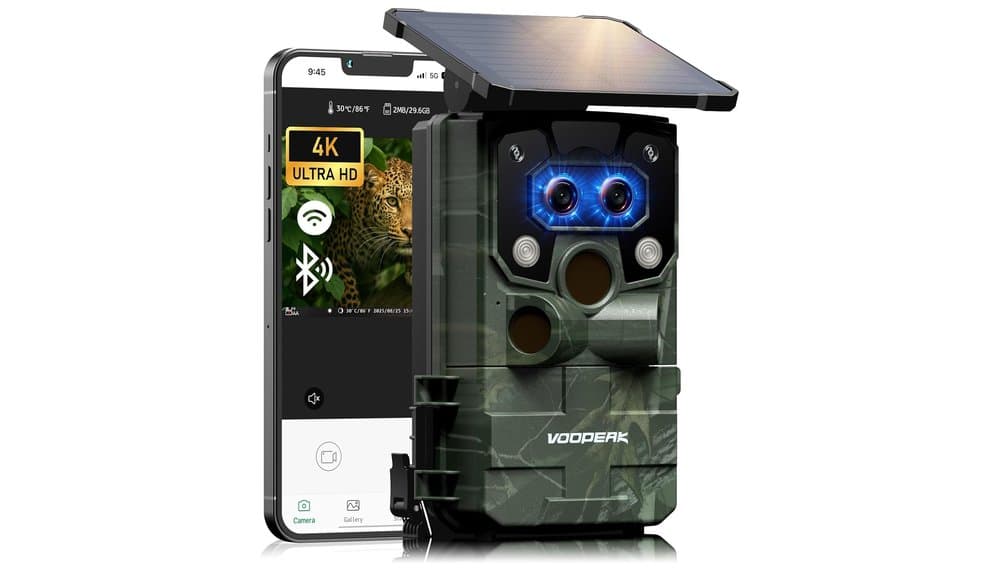
Introduction: An Innovative Trail Camera?
In the world of hunting and wildlife observation cameras, battery life, discretion, and image quality are the holy trinity. The VOOPEAK TC37 Dual Lens Solar Hunting Camera presents itself as an ambitious solution, integrating an original technical approach with its dual lens and solar power. Does it hit the mark for naturalists and casual observers? We analyze this camera in detail, not based on a physical test, but by cross-referencing its announced technical specifications, feedback from a user community, and available expert analyses. Our goal: to determine if it lives up to its promises and where it positions itself in the trail camera landscape.
Strengths
- Revolutionary Battery Life: The integrated solar panel and 4400 mAh battery promise exceptional energy independence, practically eliminating battery change worries for installations in sunny locations.
- Remote Connectivity and Control: The Wi-Fi/Bluetooth connection and dedicated app allow for configuring the camera, previewing the field of view, and retrieving media without having to dismantle it, a major gain in time and discretion.
- Asserted Robustness and Waterproofing: The housing benefits from an IP66 protection rating, suggesting good resistance to dust and powerful water jets, essential for a device left outdoors in all weather conditions.
- Modern Video Codec: The use of the H.265 codec for 4K recording is a real technical advantage, allowing for more compressed files without quality loss and saving space on the memory card.
Weaknesses
- Controversial Night Image Quality: Despite the "Starlight Night Vision" label, some user feedback indicates that night captures remain in black and white with quality judged as average, partly contradicting the "color in low light" claim.
- Real Resolution Questioned: A doubt hangs over the effective photo resolution, with one user reporting that images seem limited to 15 megapixels despite a 60MP setting, which could indicate software interpolation rather than native optical resolution.
- Limited Wi-Fi Range: The wireless connection for smartphone control is restricted to a distance of about 10 meters, forcing the user to physically approach the camera, which can be inconvenient and not very discreet.
- Sometimes Imprecise Detection: A few users note that motion detection can be less relevant, sometimes capturing subjects too late (already in the center of the frame) or triggering on the background.
Detailed Analysis by Use Case
For Ornithology and Wildlife Observation
On paper, the dual lens and high resolution promise fine details for identifying species. The 0.1s trigger speed is an asset for capturing fast animals. However, for demanding scientific use, the question of the real image resolution and color fidelity in low light, mentioned in feedback, could be a drawback. It is more suitable for recreational observation and general inventory than for precision naturalist photography.
For Property Surveillance and Security
This is an area where the TC37 seems to excel. The solar autonomy allows for permanent installation without infrastructure. The IP66 waterproofing ensures reliability. The smartphone connectivity is perfect for quickly checking alerts. The AI recognition function (humans/animals) mentioned by users reduces false alerts related to foliage. It is a robust choice for monitoring a garden, a remote cabin, or a vegetable patch.
For "Digiscoping" and Photography
This is not digiscoping in the classic sense (adapting a smartphone to a scope), but the camera is a standalone photo device. The 4K/60MP specifications are attractive. However, the lack of details on the optical quality of the lenses (multicoating, aberration reduction) and the doubts about the effective resolution lead us to classify it as a documentary capture tool rather than an artistic photographic creation tool. Dynamic range management in backlight is not documented.
For Hiking and Expeditions
Its weight of 680g and compactness make it portable. Solar autonomy is an undeniable asset for setups lasting several days. However, the need to stay within 10m for Wi-Fi and the possible consumption of backup batteries in cloudy weather require planning. It is a good companion for a fixed exploration (base camp), less so for daily mobile tracking.
Technical Specifications
| Characteristic | VOOPEAK TC37 Detail |
|---|---|
| Photo Resolution | Announced 60 MP (verify effective resolution) |
| Video Resolution | 4K Ultra HD (with H.265 codec) |
| Lens | Dual lens, wide-angle lens with 6 glass layers |
| Night Vision | Starlight sensors, IR illumination (announced range: 20m) |
| Viewing Angle | 120° (Diagonal) |
| Motion Detection | Yes, with adjustable sensitivity |
| Trigger Speed | 0.1 second |
| Battery Life | Integrated 4400mAh battery + Integrated Solar Panel + Support for 8 AA batteries (backup) |
| Connectivity | 2.4GHz Wi-Fi (range ~10m), Bluetooth |
| Storage | SD Card (up to 256GB, U3 recommended) |
| Waterproofing | IP66 (Protected against dust and powerful water jets) |
| Material | Reinforced plastic |
| Weight | 680 grams |
| Special Functions | Loop recording, Time-Lapse, Preview on front LCD screen, Mobile application |
What Users and Testers Say
The synthesis of dozens of customer reviews and expert analyses reveals a mostly positive, but nuanced picture.
Recurrent praise focuses on:
- Battery life and solar power: Users are "impressed" by the energy independence. "No more need to constantly change batteries" is a recurring theme. Even in winter or cloudy weather, the solar/battery/backup battery combination ensures appreciated service continuity.
- Ease of use: Setup is judged as "quick" and "intuitive". The mobile app, well translated, is cited as a strong point for configuration and file retrieval. The front LCD screen is particularly praised for easy scene framing.
- Robustness: Feedback confirms good performance in bad weather ("handled heavy rain well"), thus validating the IP66 rating in real conditions.
- Daytime quality: The majority agrees on the good sharpness of daytime images and videos, with sufficient details to identify animals.
Frequent criticisms and reservations concern:
- Night vision: This is the clearest point of divergence. While the brand mentions "color" vision, almost all users report black and white videos and photos at night, with quality that can be "barely usable" in some cases, calling into question the "Starlight" label in the professional sense of the term.
- Wi-Fi connectivity: The 10-meter limit is often mentioned. It is perceived as a constraint, forcing one to get very close to the camera, which can scare away wildlife or be impractical.
- Detection accuracy: Some note triggers that are too late or on irrelevant elements, suggesting a fine and sometimes tedious adjustment of sensitivity and detection zones.
Conclusion: Who is the VOOPEAK TC37 Really For?
The VOOPEAK TC37 Dual Lens Solar Hunting Camera is a convincing proposition that stands out through its almost unmatched autonomy and well-implemented smartphone connectivity. It excels in roles of fixed and discreet surveillance (property, garden, feeding area) where its robustness and energy independence are decisive assets.
On the other hand, for the demanding naturalist observer or the photographer seeking optical perfection and true color night vision, the doubts raised by the community about the real resolution and very low-light performance call for caution. It thus positions itself as a high-end product in the "informed general public" segment, but not quite at the level of a professional trail camera where optics and sensors would be the absolute priority, often at a much higher price.
Its main merit is to offer a complete technological package (solar, 4K H.265, Wi-Fi, app) in a well-finished housing, brilliantly meeting the primary need of many users: setting up a reliable camera, forgetting battery problems, and getting clear images of what's happening in a given location, day and night.
100% free and independent — All our articles are written independently, without any sponsorship. We may earn a commission on purchases made through our links, at no extra cost to you.
Articles you might like
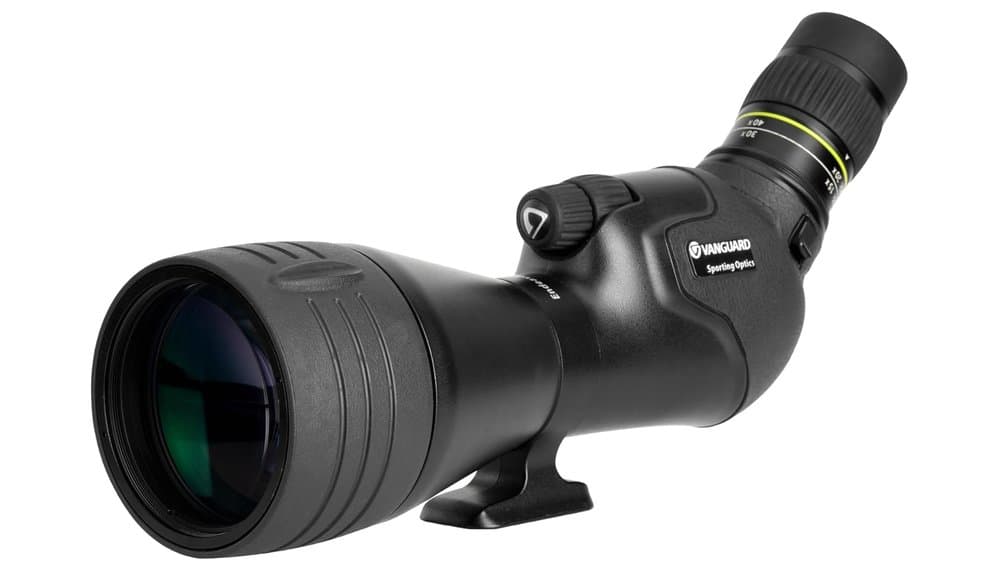
Vanguard Endeavor HD65A Spotting Scope Review
Spotting scope with 65mm ED glass & 15-45x zoom for birding & hiking. Balanced performance & portability for serious nature observers.
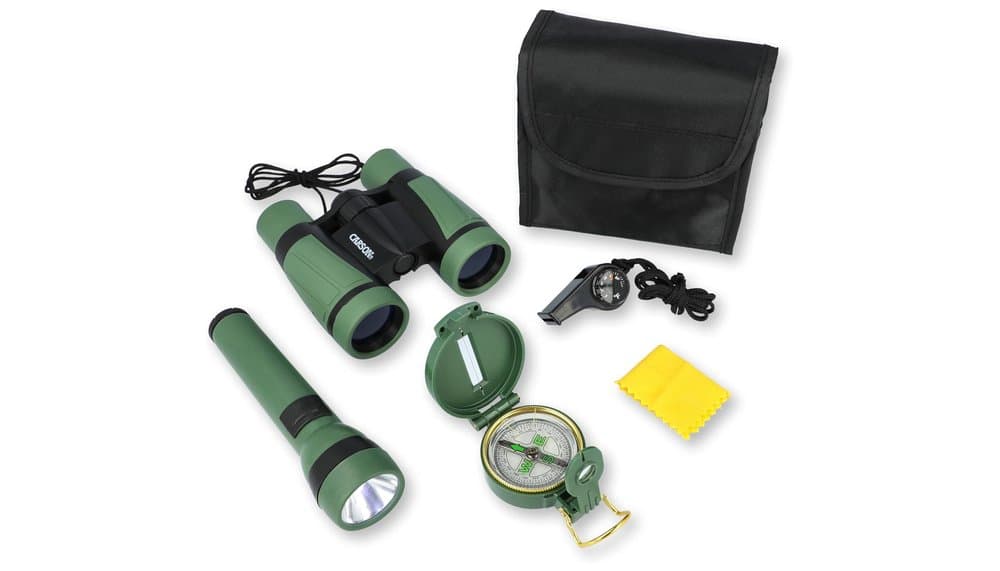
Carson AdventurePak Kids' Exploration Tool Kit Review
Explore nature with this kid's 5-piece tool kit for outdoor adventure and educational discovery. Perfect for young explorers.
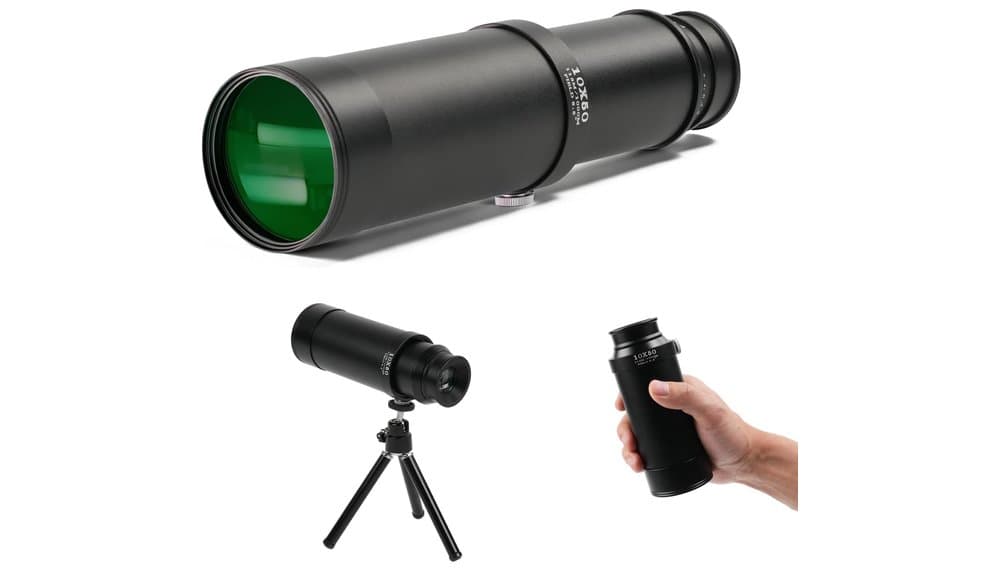
BOSTRON CY 10x50 Monocular Review & Test
Compact 10x50 monocular review: Analyzes optical clarity, field of view & build quality for hiking, nature & astronomy. See its true value.
Guides you might like
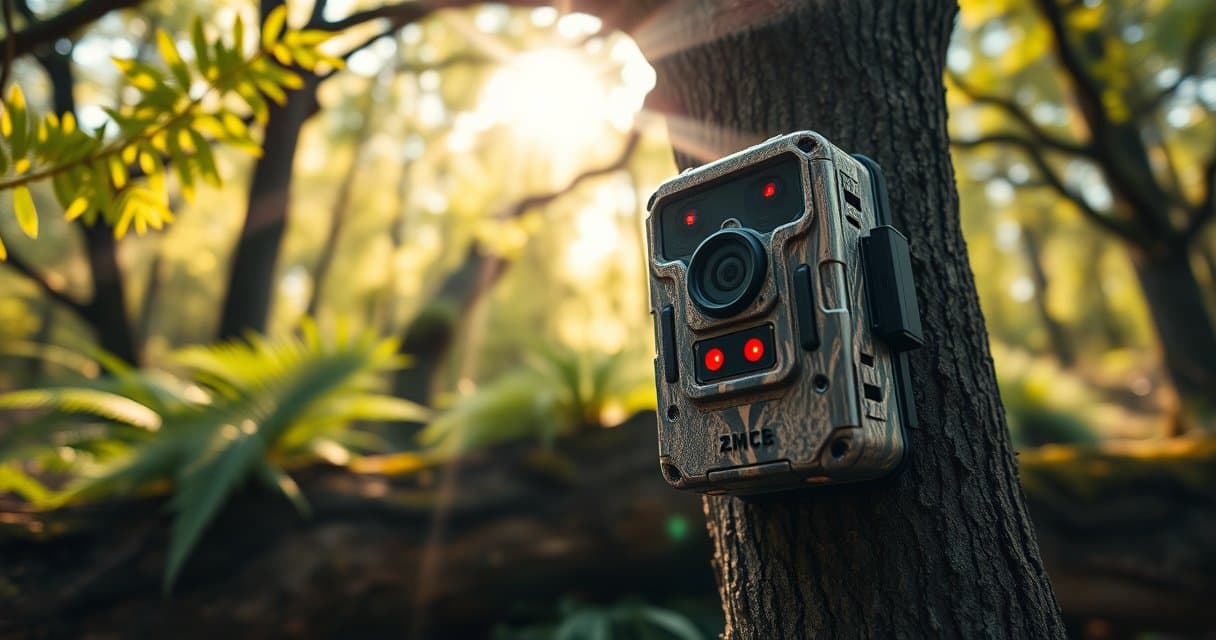
WiFi Trail Camera Guide
See wildlife discreetly from your couch! Learn how WiFi trail cameras let you monitor animals without disturbance and how to choose the right one.

Ultimate Travel Telescope Guide
Choose a portable, high-performance travel telescope to explore the universe from your backpack without compromising on essential astronomical views.
Ultimate Guide to Night Vision Binoculars
Choose the perfect night vision binoculars: Gen vs. digital? Unravel the tech to make your nighttime wildlife adventures a total success. Guide inside.