Nikon Prostaff 3 16-48x60 Spotting Scope Review
Published on 6 September 2026 · By OptiqueNature
Review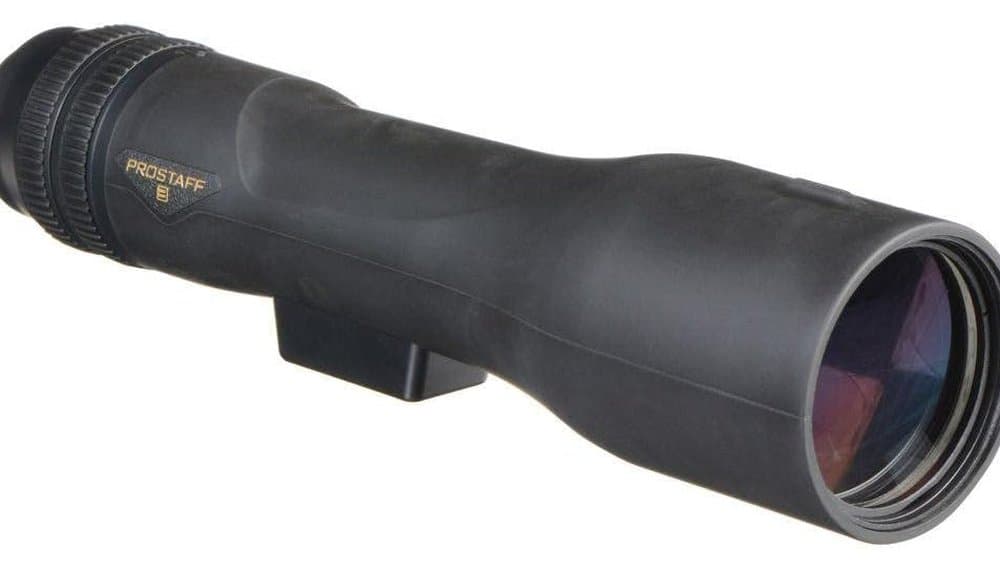
Introduction
In the vast world of spotting scopes designed for nature observation, entry-level and mid-range models must strike a delicate balance between performance, durability, and affordability. The Nikon Prostaff 3 16-48x60 fits precisely into this category, presenting itself as a versatile instrument for the amateur birder, the curious hiker, or the hunter. Our analysis aims to dissect this spotting scope not through personal testing, but by cross-referencing its technical specifications, expert reviews from the web, and concrete feedback from its user community. The goal is to determine what compromise this Nikon product truly offers and which types of observers it might suit.
Strengths and Weaknesses: A Clear Summary
Major Strengths
- Remarkable Compactness and Lightweight: With an advertised weight of 620 grams and a length of 31.3 cm, it stands out as an instrument that's easy to carry in the field.
- Durability and Weatherproofing: Its waterproof and fogproof (nitrogen filled) construction is widely validated by users for facing inclement weather.
- Image Quality Considered Excellent for its Category: Feedback consistently describes a clear, bright, and sufficiently sharp image across most of its zoom range.
- Perceived Good Value for Money: For many, it offers a good level of Nikon optical performance at an entry-level price point.
Identified Limitations
- Minimal Eye Relief for Eyeglass Wearers: This is the most recurring downside. While technical, it can impact comfort during prolonged observation for those who wear glasses.
- Standard Optics (Non-ED): The absence of Extra-low Dispersion (ED) glass limits the correction of chromatic aberrations (color fringing) at high magnifications.
- Performance in Very Low Light: The 60 mm objective lens, while decent, gathers less light than 80 mm or larger models, which is noticeable in twilight conditions.
- Irregular Quality of Some Accessories: The "see-through" case is appreciated, but the zoom and focus mechanisms can, depending on the unit, exhibit stiffness or play.
Detailed Analysis of the Nikon Prostaff 3 16-48x60
Optical Performance: Clarity, Brightness, and Field of View
On paper, the specifications announce a versatile instrument. The 60 mm diameter objective lens is the light-gatherer. With an integrated zoom from 16x to 48x, it covers a wide range of situations, from wide-area scanning (16x) to fine detail identification (48x). The lenses benefit from multi-layer coatings, a standard Nikon technology to increase light transmission and contrast. However, it is important to note the absence of the brand's high-end technologies: no ED glass, nor dielectric-coated prisms or phase-correction coatings. This clearly positions it in the brand's entry-level range.
Expert testers and users confirm this analysis: the image is generally described as clear, bright, and with good contrast up to approximately 35x-40x. Beyond that, at 48x, a loss of brightness and some softness in the image are frequently reported, a classic phenomenon when pushing the zoom to its limits. The field of view at 16x is about 56 meters at 1000 m, which is comparable, or even slightly superior, to some direct competitors in this range. The exit pupil varies from 3.75 mm at 16x (comfortable) to only 1.25 mm at 48x (very demanding on stability and eye alignment). The minimum focusing distance of about 5-6 meters, mentioned in tests, makes it a usable instrument for observing insects or very close birds.
Construction, Ergonomics, and Field Use
This is where this product finds its justification. Its light weight (620g) and compactness are consistently praised. It's a decisive advantage for anyone who must carry it in a backpack for hours. The construction is described as solid, with a rubber armor coating providing a good grip and protection against minor shocks. The waterproofing is proven and reliable according to the majority of feedback, allowing for use in the rain without worry.
Ergonomics receives a more mixed assessment. While the majority find the zoom and focus knobs precise, several user reviews point to stiff zoom or play in the focus ring, which can hinder the fluidity of observation. The main sticking point remains the eye relief. Advertised at around 15-16 mm, it is considered just sufficient for eyeglass wearers. Many have to adjust their eye positioning or fold down the eyecup to see the entire field, which can be uncomfortable during long sessions.
Use Cases: Who Is It For?
- Birding and Wildlife Observation: This is its primary domain. It excels for static observation from a blind or a fixed point, mounted on a sturdy tripod. Its zoom range allows for spotting and identification.
- Hiking and Travel: Its compact and lightweight format makes it an ideal companion when weight is critical.
- Occasional Astronomical Observation: It will provide interesting views of the Moon, but its 60 mm aperture and lack of a dedicated azimuth mount limit it for planets and deep-sky objects.
- Basic Digiscoping: With a smartphone adapter (such as the compatible WP-N1 mentioned), it is possible to take souvenir photos. However, the limited optical quality at high magnifications and reduced eye relief make the practice tricky and well below results obtained with dedicated models.
Value Comparison
The Nikon Prostaff 3 16-48x60 occupies a pivotal position. Compared to premium models (Nikon Monarch, Swarovski, Kowa with ED glass), it logically falls short on absolute sharpness, chromatic correction, and light transmission in extreme conditions. On the other hand, compared to absolute entry-level models from less established brands, the community and experts generally acknowledge its superior image quality, better finish, and the reliability of the Nikon brand. It thus represents a "reasonable" choice for someone wanting a first quality spotting scope without breaking the bank, while accepting its inherent limitations for the range.
Summary Technical Specifications
| Feature | Nikon Prostaff 3 16-48x60 Specification |
|---|---|
| Magnification | 16 - 48x (continuous zoom) |
| Objective Lens Diameter | 60 mm |
| Prism | Porro (likely) |
| Optical Coatings | Multi-coated (no mention of ED or Dielectric) |
| Field of View (at 1000m) | Approx. 56 m at 16x |
| Exit Pupil Diameter | 3.75 mm (16x) to 1.25 mm (48x) |
| Eye Relief | Approx. 15-16 mm |
| Minimum Focusing Distance | ~ 5-6 m (according to tests) |
| Weatherproofing | Yes, nitrogen filled |
| Weight | 620 g (body only) |
| Length | 31.3 cm |
| Digiscoping Compatibility | Nikon WP-N1 smartphone adapter (sold separately) |
| Included Accessories | "Vue-thru" case, objective and eyepiece protectors |
What Users Say: Review Synthesis
Analyzing customer feedback and expert reviews reveals a consistent and nuanced picture.
Praise is recurrent on several points:
- Optical quality perceived as excellent for the price: Terms like "clear," "bright," "good contrast" often describe the image up to 40x. One user notes "a truly remarkable image quality" in difficult lighting conditions.
- Appreciated compactness and lightweight: This is a key argument for hikers. "A lightweight for all occasions," summarizes a German user.
- Reliable durability and weatherproofing: The construction inspires confidence and withstands outdoor conditions.
- Value for money: For many, it represents a "good compromise" and a "reliable field companion."
Criticisms focus on specific points:
- Eye Relief: This is the number one complaint. A tester notes that "the eyecup is practically non-existent" and that you have to "accommodate" your eye, a sentiment shared by other eyeglass wearers.
- Irregularity of controls: Several reviews mention a zoom that is too stiff ("impossible to zoom smoothly") or play in the focus. This seems to vary from unit to unit.
- Quality drop at 48x: "Loss of contrast at maximum magnification" and "image a bit soft at full zoom" are common comments confirming the optical limits.
- Accessories: The "Vue-thru" case is popular, but some regret the basic quality of the lens caps or would have preferred a more protective carrying case.
Conclusion
The Nikon Prostaff 3 16-48x60 does not claim to be a high-end spotting scope. It perfectly assumes its status as an accessible initiation or mid-range product within the Nikon catalog. Our cross-analysis of specs and field feedback paints the portrait of a remarkably versatile and portable instrument, offering very decent image quality that will satisfy most casual users or knowledgeable amateurs for observations in decent light.
Its main flaw, the limited eye relief, makes it a choice to consider cautiously for eyeglass wearers who will likely have to compromise on comfort. Similarly, amateur astronomers or demanding digiscopers will need to look elsewhere.
Ultimately, if you are looking for a first reliable, waterproof, easy-to-carry spotting scope with the optical credibility of Nikon for observing wildlife on your outings, the Prostaff 3 16-48x60 constitutes a serious and coherent option. It embodies the field compromise: sufficient performance in a format that won't burden you.
100% free and independent — All our articles are written independently, without any sponsorship. We may earn a commission on purchases made through our links, at no extra cost to you.
Articles you might like
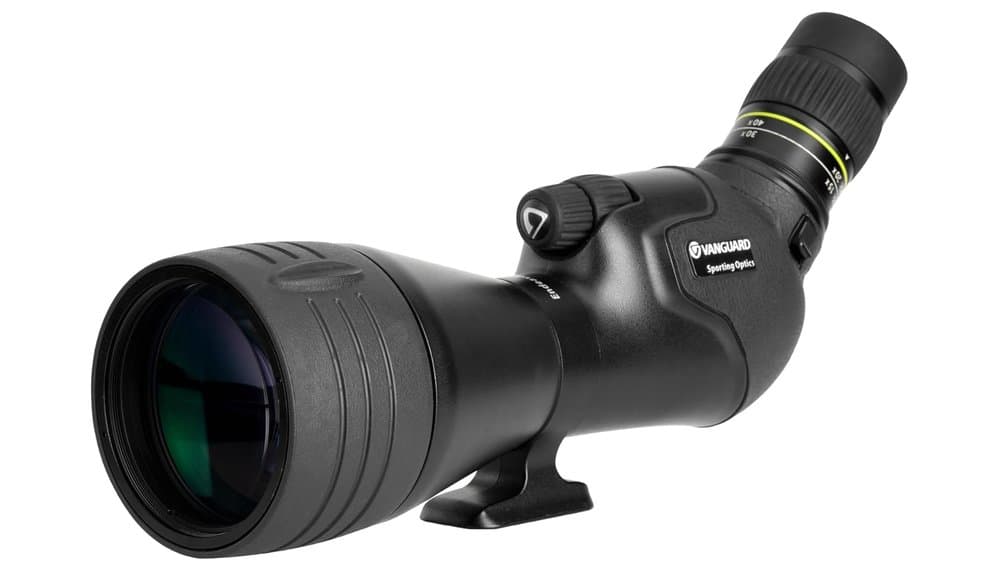
Vanguard Endeavor HD65A Spotting Scope Review
Spotting scope with 65mm ED glass & 15-45x zoom for birding & hiking. Balanced performance & portability for serious nature observers.
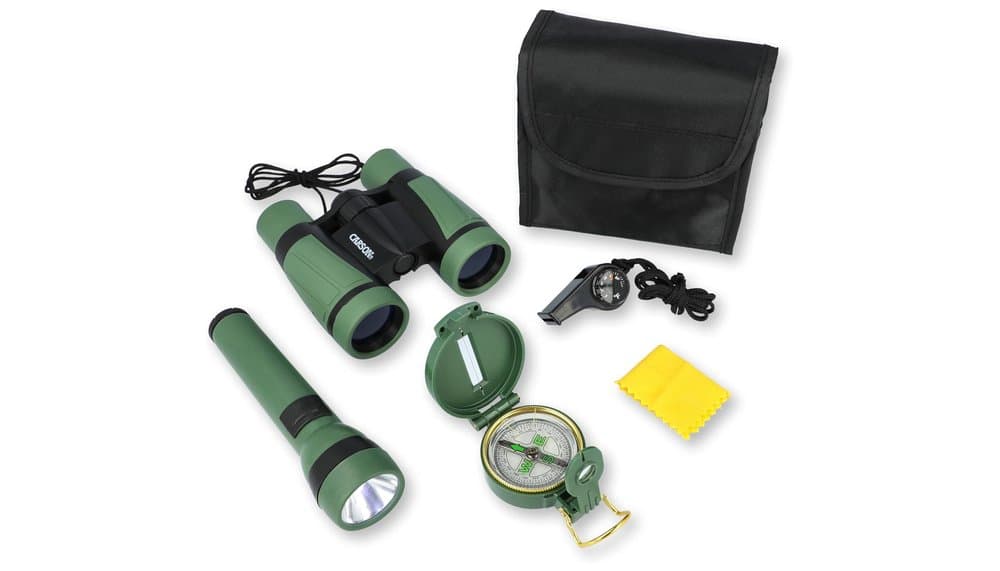
Carson AdventurePak Kids' Exploration Tool Kit Review
Explore nature with this kid's 5-piece tool kit for outdoor adventure and educational discovery. Perfect for young explorers.
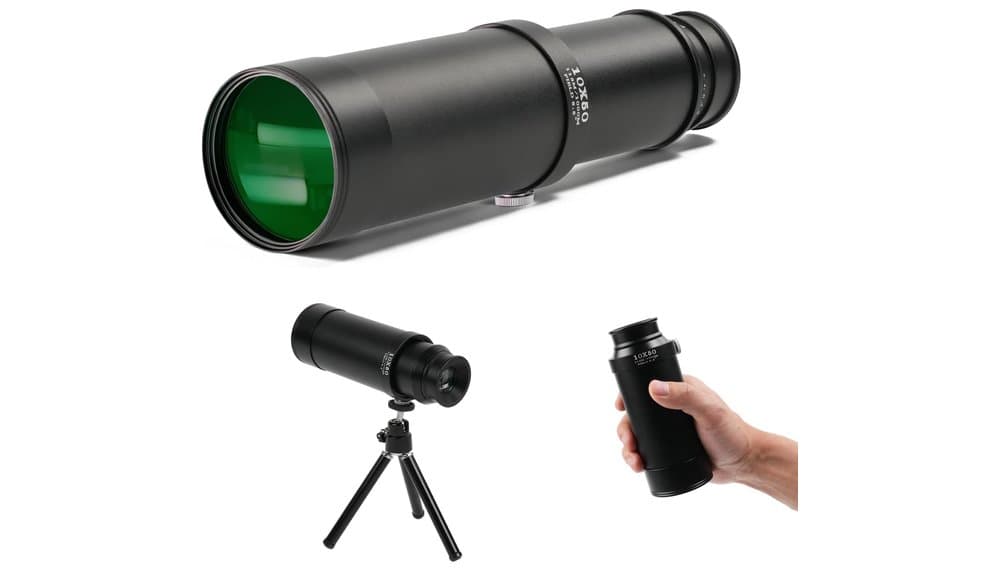
BOSTRON CY 10x50 Monocular Review & Test
Compact 10x50 monocular review: Analyzes optical clarity, field of view & build quality for hiking, nature & astronomy. See its true value.
Guides you might like
WiFi Trail Camera Guide
See wildlife discreetly from your couch! Learn how WiFi trail cameras let you monitor animals without disturbance and how to choose the right one.
Ultimate Travel Telescope Guide
Choose a portable, high-performance travel telescope to explore the universe from your backpack without compromising on essential astronomical views.
Ultimate Guide to Night Vision Binoculars
Choose the perfect night vision binoculars: Gen vs. digital? Unravel the tech to make your nighttime wildlife adventures a total success. Guide inside.