Mulcort Night Vision Monocular Review
Published on 24 June 2026 · By OptiqueNature
Review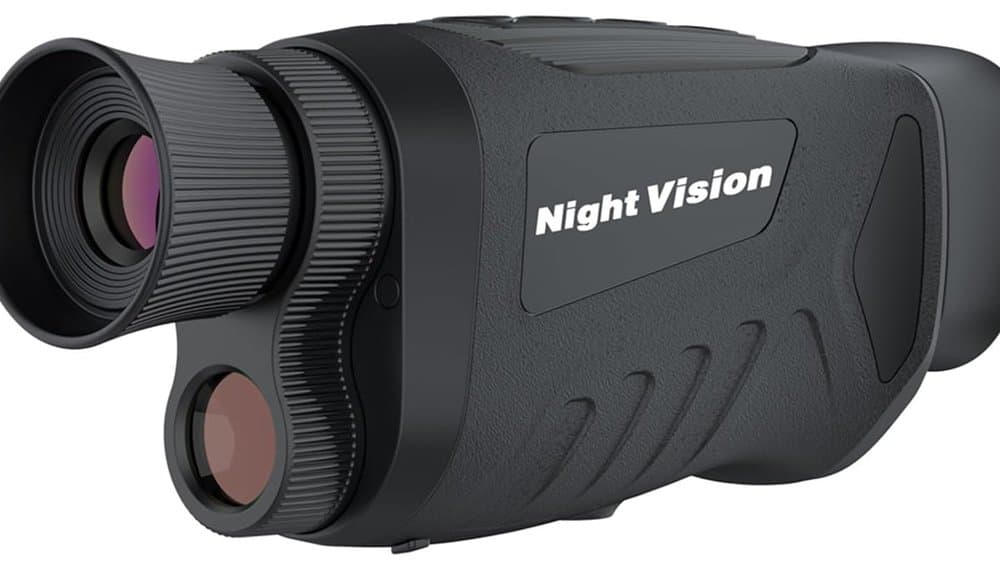
Introduction
The Mulcort Night Vision Monocular presents itself as an all-in-one device aimed at night observation enthusiasts. On paper, it combines digital night vision, photo capture, and video recording functions in a compact format. Does it successfully target naturalists and outdoor enthusiasts, or is it a tool with performance limited by its design? Our technical analysis and synthesis of user feedback will give you a clear view of its real capabilities.
Strengths
- Integrated Multimedia Features: The ability to capture 40MP photos and 2.5K videos directly from the monocular is a major selling point, avoiding the need to add a smartphone or camera.
- Versatile IR Illumination: The built-in 3W/850nm infrared system with three adjustable brightness levels offers some adaptability to total darkness conditions.
- Compact and Portable Design: With an advertised weight of approximately 245g and reduced dimensions, the device is designed to be easily taken into the field.
- Advertised Robustness: The TPU+ABS construction and the claim of being waterproof and dustproof position it as a tool resistant to the rigors of the outdoors.
- Multilingual Interface: Support for many languages, including French, facilitates setup for an international audience.
Weaknesses
- Basic Optics: A 25mm objective lens and 6x optical magnification seriously limit brightness, field of view, and detail, especially compared to traditional optical binoculars or monoculars.
- Very Narrow Field of View: A 10° field of view is extremely restrictive for locating and tracking animals or observing landscapes. This is a critical point for nature observation.
- Digital Image Quality: User feedback points to an actual resolution lower than advertised and image quality degraded with digital zoom.
- Perfectible User Experience: The problematic startup mentioned in reviews and a likely basic interface on the 2-inch IPS screen can hinder the field experience.
- Accessories Not Included: The absence of a TF/microSD card in the package requires an immediate additional purchase to use the recording functions.
Detailed Analysis
Optical Quality and Image Performance
Here, we must distinguish between traditional optical vision and the digital vision offered by the Mulcort. On paper, the optical specs are modest. A 25mm diameter objective lens captures little light. Coupled with 6x magnification, this gives a theoretical exit pupil of about 4.2mm, which is acceptable but does not exploit the full potential of the human eye in darkness. The real limiting factor is the narrowness of the field of view (10°). To give an idea, standard 8x42 binoculars often offer a field of 6.5 to 8° per eyepiece... but you have two eyes. With 10° total, locating a bird in a tree or following a moving animal becomes an exercise in patience.
The image quality itself is generated by a digital sensor and displayed on a 2-inch IPS screen. According to user feedback, the effective resolution is often lower than the advertised 40MP, a common trend with this type of device where the figure is a theoretical maximum from software interpolation. The light transmission concept, specific to prism optics, does not apply here; it is the sensitivity of the sensor and the power of the IR illumination that are key.
Construction, Ergonomics, and Field Use
The technical sheet boasts a robust TPU+ABS construction and a waterproof certification. These claims, if true, are a real plus for camping, fishing, or night hiking use. The light weight is also an asset for prolonged use.
However, the ergonomics revolve around a small screen and physical buttons. For a nature observer used to the direct immersion of an optical eyepiece, looking at a screen can create a distance from the subject and be less comfortable over long sessions. The presence of a wrist strap is essential given the small size of the device.
Battery life, dependent on an integrated 2500 mAh lithium battery, is not specified in the specs. This is a major point of uncertainty, especially if the IR illumination is used intensively.
Use Cases: For Whom and For What?
This analysis allows us to target uses where the Mulcort may be relevant, and those where it will be disappointing:
- Nocturnal Wildlife Observation at Short/Medium Distance: To identify the presence of an animal near a blind, check what is moving in the garden at night, it may suffice. The adjustable IR is an asset.
- Camping & Night Hiking: Its compactness and versatility (vision + souvenir photo) make it an interesting gadget for curious and occasional hikers.
- Basic Digiscoping: It directly integrates the photo/video function, avoiding complex adapters. The quality will be that of a small sensor.
- Avoid for: Serious birdwatching (field of view too narrow, limited responsiveness), astronomy (insufficient magnification and brightness), and any situation where high-fidelity image and a wide field are paramount.
Value for Money and Competition
Positioned in the budget segment, the Mulcort Night Vision Monocular faces two worlds. Compared to a traditional optical monocular in its price range, it surpasses it in features (photo, video, pitch darkness) but will be far behind in daytime image quality, brightness, and field of view. Compared to other digital night vision monoculars with similar specs, the competition is fierce and performance is often homogeneous: modest sensors, noisy digital imaging in darkness, and ambitious marketing claims.
Its real plus is the complete package: digital night vision, photo/video capture, compact and advertised robust design. Its main flaw is promising a "telescope" or "high-resolution" experience that the optics and embedded electronics cannot materially deliver at the level of expectations created by the "40MP" and "2.5K" mentions.
Synthetic Technical Sheet
| Characteristic | Mulcort Specification |
|---|---|
| Type | Digital Night Vision Monocular |
| Optical Magnification | 6x |
| Objective Diameter | 25 mm |
| Digital Zoom | 8x |
| Field of View | 10° |
| Photo Sensor | Advertised max resolution: 40 MP |
| Video Recording | Max resolution: 2.5K (2560x1440) |
| Screen | IPS, 2 inches |
| Infrared Illumination | 3W, 850nm Wavelength, 3 levels |
| Night Vision Range | Advertised: up to 300m |
| Material / Construction | TPU + ABS, advertised as waterproof and dustproof |
| Battery | Integrated 7.4V 2500 mAh Li-ion |
| Storage | TF/microSD card (not included), up to 128 GB |
| Connectivity | USB Type-C for charge/data |
| Weight | ~245 g |
| Dimensions (LxHxD) | ~170 x 75 x 65 mm |
What Users Say
The synthesis of available customer feedback (notably reviews on marketplaces) paints a contrasting picture, with recurring friction points that temper the technical promises.
Users generally appreciate the device's compactness and the fact of having an integrated photo/video function without needing an additional accessory. The presence of adjustable IR illumination is also seen as an asset for uses in very low light conditions.
However, criticism is strong on several aspects. Several testimonials report startup problems or erratic operation upon receipt, as noted by a user stating the device "only works on direct current" and seems to have a battery issue. Image quality is frequently described as disappointing, far from the advertised ultra-high resolutions, with a clear degradation when using digital zoom. The navigability of menus on such a small screen is sometimes judged as not intuitive.
Finally, the absence of a memory card in the package is consistently mentioned as a negative point, forcing the user to finalize their equipment before any use of the main functions.
Conclusion
The Mulcort Night Vision Monocular is a two-faced product. It groups interesting features – digital night vision, multimedia capture, compact format – into a single housing at an accessible price. For someone curious about nocturnal life, a hiker or camper wanting to simply document their outings in the dark, it can fulfill a basic role.
However, our technical analysis and the synthesis of user feedback converge on its intrinsic limitations. Its modest optics and very narrow field of view make it poorly suited for serious nature observation where subject tracking and image quality are paramount. The real-world photo/video resolution performance seems below the marketing figures. Finally, the reliability issues reported by some early users raise questions about its long-term durability.
In summary, consider it as a versatile gadget for an introduction to night observation, and not as a precision optical instrument. For any demanding use in terms of detail, field of view, or reliability, investing in a quality traditional optical monocular or in higher-segment night vision equipment will be a wiser decision.
100% free and independent — All our articles are written independently, without any sponsorship. We may earn a commission on purchases made through our links, at no extra cost to you.
Articles you might like
Vanguard Endeavor HD65A Spotting Scope Review
Spotting scope with 65mm ED glass & 15-45x zoom for birding & hiking. Balanced performance & portability for serious nature observers.
Carson AdventurePak Kids' Exploration Tool Kit Review
Explore nature with this kid's 5-piece tool kit for outdoor adventure and educational discovery. Perfect for young explorers.
BOSTRON CY 10x50 Monocular Review & Test
Compact 10x50 monocular review: Analyzes optical clarity, field of view & build quality for hiking, nature & astronomy. See its true value.
Guides you might like
WiFi Trail Camera Guide
See wildlife discreetly from your couch! Learn how WiFi trail cameras let you monitor animals without disturbance and how to choose the right one.

Ultimate Travel Telescope Guide
Choose a portable, high-performance travel telescope to explore the universe from your backpack without compromising on essential astronomical views.
Ultimate Guide to Night Vision Binoculars
Choose the perfect night vision binoculars: Gen vs. digital? Unravel the tech to make your nighttime wildlife adventures a total success. Guide inside.