MABEF Wooden Pocket Tripod Easel Review
Published on 5 August 2026 · By OptiqueNature
Review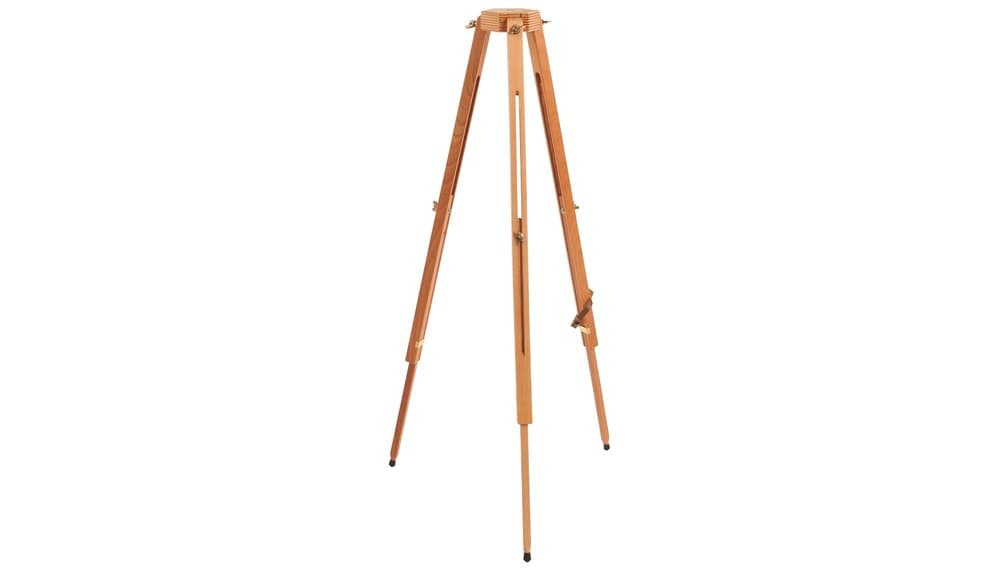
Introduction: A Travel Easel, Truly Made for Nature Observation?
On a website dedicated to nature observation, where we usually talk about telescopes, binoculars, and their advanced optics, analyzing the MABEF Wooden Pocket Tripod Easel may come as a surprise. We will not discuss light transmission, ED glass, or dielectric coatings here. This product is a folding wooden easel, and that is precisely the angle that interests us. To what extent can equipment designed for artists find its place in the toolkit of the nature observer, wildlife photographer, or amateur astronomer? We will dissect this object based on its technical specifications, community feedback, and expert opinions, to determine its real utility in our field.
Strengths and Weaknesses: A Clear Compromise
Before diving into the details, here is what immediately emerges from the analysis of the available data.
Strengths
- Exceptional Compactness and Portability: Once folded, its minimal footprint makes it a discreet and easy-to-carry field companion.
- Robust Stability for its Format: According to user feedback, its wooden structure and tripod design offer remarkable stability, especially on flat ground, capable of supporting significant loads.
- Build Quality and Noble Materials: The construction in oiled solid beech is consistently praised for its finish, durability, and aesthetics.
- Simple and Quick Deployment: No complex assembly; it deploys and adjusts intuitively, an advantage outdoors.
Weaknesses
- Limited Working Height: As a "pocket" or table easel, it places equipment at a low height, often requiring a seated or crouched position, poorly suited for prolonged standing observation.
- No Stated Weather Resistance: The wood, although oiled, is not specified as waterproof or insensitive to hygrometric changes, a crucial point for use in damp nature settings.
- Zero Optical Versatility: It is a passive support. It brings no optical function in itself; its utility depends entirely on what is placed on it.
- Relative Stability in Extreme Conditions: As experts note, in strong wind or on soft ground, its stability, although good, remains inferior to that of a massive photo tripod.
Detailed Analysis: The MABEF Easel Under the Observer's Lens
Construction and Handling: Wood as an Asset
The MABEF Wooden Pocket Tripod Easel bets everything on traditional materials and robust construction. The oiled beech used is not simple veneer; it is solid wood. This gives it a rigidity and quality feel that plastics or light alloys cannot offer. Reviews, like that of Eleazar Álvarez, highlight the sturdiness of the nuts and fasteners, as well as the presence of rubber pads to protect both the easel and the supporting surface. With a weight of 1.9 kg, it finds a good balance between sturdiness and relative lightness. However, one must be aware that it is not "all-terrain" equipment in the sense understood by the optics world: there is no waterproof or fogproof certification, and the frame is... wood. Its shock resistance is probably good, but its longevity in constantly damp environments is an unknown.
Stability and Load Capacity: The Reliable Base
This is where the product excels for its segment. The proven tripod form and the base width of 70 cm when open give it a wide polygon of support. The stated capacity of 8 kg is well above the weight of most lightweight equipment a naturalist might place on it. One user confirms it supports "perfectly" a 5-7 kg paint box. For us, this means it can easily accommodate a compact spotting scope mounted on its photo fork, a camera with a large lens, or even a small, lightweight guide telescope. Horizontal stability, crucial for painting, is just as crucial for precise visual observation or for digiscoping.
Ergonomics and Adaptation to "Nature" Uses
Ergonomics is the most obvious point of compromise. The maximum working height is limited by its design. For a painter, it's a table easel. For an observer, it can become a low support for a seated observation session or for placing equipment at an adjustable height if the easel itself is on a table or rock. Eye relief and close focus distance are not parameters here; on the other hand, the ability to tilt the tray is a valuable asset. It allows adjusting the angle of a camera or scope for prolonged viewing comfort, something a standard photo tripod does not always allow as simply.
Its main asset for the field is its compactness when folded. It easily slips into a backpack or car trunk, making it a backup option or a dedicated support for a lightweight setup, much nicer to carry than a bulky photo tripod.
Synthetic Technical Sheet
| Characteristic | Detail MABEF Wooden Pocket Tripod Easel |
|---|---|
| Main Material | Oiled solid beech |
| Weight | 1.9 kg |
| Max. Load Capacity | 8 kg |
| Dimensions (base) | 70 cm (when open) |
| Support Type | Manually adjustable tilting tray |
| Tilt Range | Up to about 15° (according to similar models) |
| Special Features | Rubber pads, strap for transport |
| Weather Resistance | Not specified (oil-treated wood) |
| Primary Target | Outdoor/studio artists (painters, draftspeople) |
What Users and Experts Say: A Solid Reputation
The synthesis of available customer reviews and expert tests paints a consistent and largely positive picture, while confirming the product's intrinsic limits.
The user community, mostly artists, unanimously praises its stability. Phrases like "Great stability!" or "el viento no lo vuelca" (the wind does not knock it over) recur. They appreciate its ability to maintain a perfectly horizontal and stable platform, even in slightly windy conditions. Build quality is also a recurring theme: the wood is well finished, the metal parts are sturdy, and the product gives an impression of durability.
Experts, on the other hand, contextualize its utility. They present it as a compact and foldable solution, ideal for itinerant use or confined spaces. They highlight its minimal footprint when folded as a major strength for transport. However, they rightly recall its limitations: it is a "pocket" easel intended for modest formats, and its stability, although good, can be inferior to that of heavier floor easels or tripods in extreme conditions (strong wind, unstable ground). This is the expected compromise for portability.
No major or recurring negative feedback emerges on intrinsic quality. Criticisms, when they exist, generally stem from a misunderstanding of the product: expecting a large studio easel or a highly adjustable photo tripod.
Conclusion: An Unexpected Ally for Specific Setups
The MABEF Wooden Pocket Tripod Easel is not an optics product, and it does not claim to be. However, analyzing it from our perspective reveals a real niche of utility.
It is an exceptionally stable and well-made support for those seeking a fixed, low, and tiltable platform. It excels in scenarios where compactness and rapid deployment take precedence over working height: in a fixed blind for placing a secondary spotting scope or a lightweight surveillance camera, as a table support for image sorting or equipment control in the field, or as an elegant and robust solution for displaying equipment during demonstrations.
However, it will not replace a dedicated photo or observation tripod for conventional standing uses. Its lack of guaranteed weather resistance and limited height make it a complementary tool, to be chosen with full awareness of these constraints.
In summary, if your observation practice includes static sessions where a low and ultra-stable support is a plus, and you value the compactness and aesthetics of a well-made wooden object, the MABEF pocket easel deserves your full attention. It is a specialist tool that, outside the beaten path of pure optics, can prove remarkably effective and pleasant to use.
100% free and independent — All our articles are written independently, without any sponsorship. We may earn a commission on purchases made through our links, at no extra cost to you.
Articles you might like
Vanguard Endeavor HD65A Spotting Scope Review
Spotting scope with 65mm ED glass & 15-45x zoom for birding & hiking. Balanced performance & portability for serious nature observers.
Carson AdventurePak Kids' Exploration Tool Kit Review
Explore nature with this kid's 5-piece tool kit for outdoor adventure and educational discovery. Perfect for young explorers.
BOSTRON CY 10x50 Monocular Review & Test
Compact 10x50 monocular review: Analyzes optical clarity, field of view & build quality for hiking, nature & astronomy. See its true value.
Guides you might like
WiFi Trail Camera Guide
See wildlife discreetly from your couch! Learn how WiFi trail cameras let you monitor animals without disturbance and how to choose the right one.
Ultimate Travel Telescope Guide
Choose a portable, high-performance travel telescope to explore the universe from your backpack without compromising on essential astronomical views.
Ultimate Guide to Night Vision Binoculars
Choose the perfect night vision binoculars: Gen vs. digital? Unravel the tech to make your nighttime wildlife adventures a total success. Guide inside.