Lisciani I'm A Genius Micro-Telescope Toy for Kids Review
Published on 25 June 2026 · By OptiqueNature
Review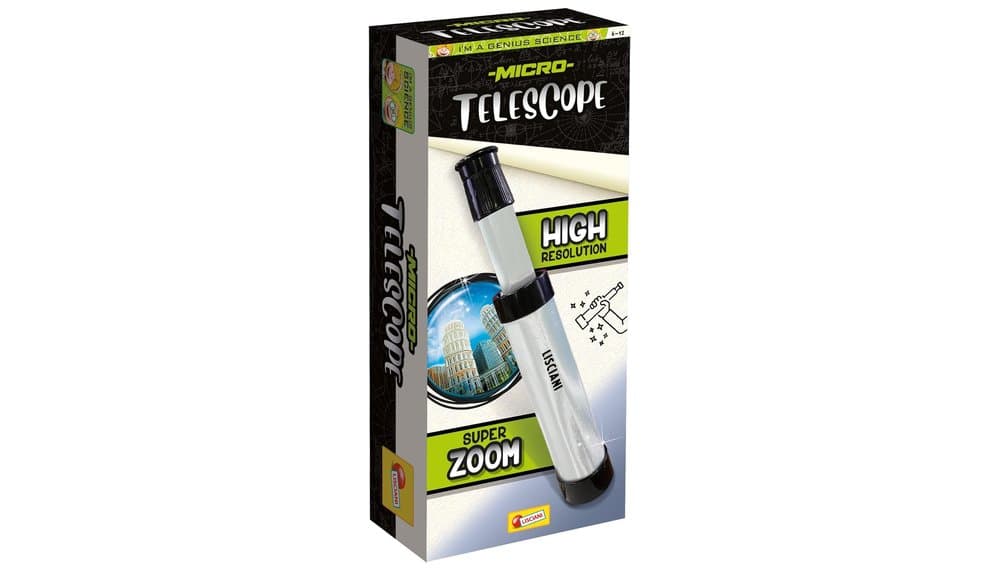
Introduction
On our nature observation site, we usually scrutinize binoculars, spotting scopes, and telescopes for adults, with specific optical and build criteria. Today, our analysis focuses on a different product: the Lisciani I'm A Genius Micro-Telescope. What we are examining here is not a professional optical instrument, but a scientific toy intended for children aged 7 to 12. The goal is to understand what this portable "micro-telescope" actually offers, how it positions itself in the landscape of observation for young people, and whether it fulfills its mission of scientific awakening without creating frustration. We will evaluate its claims in light of technical specifications, but above all based on concrete user feedback, as it is often in this gap that the truth about a product lies.
Strengths
According to product sheets and positive feedback from the community, the Lisciani I'm A Genius Micro-Telescope has several assets for its target audience.
Its main selling point is its extreme portability. With dimensions of 8 x 19.5 x 4.3 cm and a weight of only 80 grams, it is designed to be taken anywhere. Users emphasize that it fits in a pocket or a small bag, making it an ideal companion for a family hike, a zoo visit, or an afternoon in the park. This permanent accessibility perfectly matches the impulsiveness and curiosity of a child.
The second strength is its clear educational concept. It is marketed as a tool to "stimulate curiosity" and introduce concepts of physics and astronomy. The fact that it is presented as a scientific experience, with included instructions, gives it added value compared to a simple toy. Some parents note that it can indeed spark a first interest in observation and exploration.
Finally, some reviews mention adequate ease of use for a child. Once the principle of focusing is understood (by turning a knob), young users manage to observe their surroundings. For a very basic first contact with a magnifying device, it therefore fulfills an introductory function.
Weaknesses
Analysis of user feedback reveals recurrent and significant weaknesses, which largely explain the product's overall average rating.
The major and most cited flaw concerns the mediocre optical quality, very far from even entry-level standards for adults. Many testers describe an consistently blurry image, with imprecise and limited focusing. One of them compares the experience to "looking through a simple tube," where the useful image is reduced to a small, blurry circle at the center of the field of view. The terms "all blurry" and "scant sharpness" appear systematically.
Construction and durability are also criticized. The entire product is made of lightweight plastic, which is understandable for the weight, but several users report that the device broke after very short use. The sturdiness does not seem suited to handling that can sometimes be rough by children, calling into question its longevity even as a toy.
Finally, the user experience is often disappointing. The field of view is described as extremely narrow, and the rudimentary focusing system can frustrate a child who cannot obtain a clear image. This runs counter to the stated educational objective, as successful observation is the basis for stimulating curiosity.
Detailed Technical Analysis
Let's now break down the specifications and compare them with reported usage realities, keeping in mind that we are talking about a toy, not an optical instrument.
Optical Performance: A Promise Not Kept On paper, the specs announce a 40 mm objective lens and 8x magnification. Theoretically, this could offer correct brightness and interesting close-up power for a compact. However, the user community is unanimous: these figures do not translate into real performance. Sharpness is absent. No mention is made of optical coatings (like anti-reflective coatings), glass quality, or eyepiece design (the term Plossl is mentioned in the specs but seems to be a generic term here). Light transmission and the twilight factor are not relevant parameters for this product, the image being described as dark and of poor definition. The field of view is, according to feedback, much more reduced than one would expect even from 8x magnification, which hinders observation.
Construction and Ergonomics: Lightweight, but Fragile The all-plastic construction and featherweight of 80g are assets for portability but become weaknesses for robustness. No features like waterproofing or fogproof resistance are mentioned, and this is normal for this price category. The product is clearly not designed for demanding weather conditions. Ergonomics seem basic. The minimum focusing distance is not communicated, but feedback does not mention an ability to observe very close objects (advertised "microscope" mode). Eye relief for eyeglass wearers is obviously not a design criterion here.
Mounting and Compatibility The product is supplied without a tripod but has a threaded base for tripod mount. This indicates a possibility of attachment, useful for stabilizing the image, especially with magnification. It is also advertised as compatible with a camera, suggesting a possible use for digiscoping (photography through scope), but the very limited optical quality makes this functionality highly unlikely in practice.
Technical Specifications
| Feature | Detail |
|---|---|
| Product Name | Lisciani I'm A Genius Micro-Telescope |
| Target Audience | Children aged 7 and up |
| Type | Scientific toy / Portable monocular |
| Objective Diameter | 40 mm |
| Magnification | 8x |
| Tube Length | ~20 inches (approx. 50 cm extended) |
| Eyepiece Type | Mention "Plossl" (generic design) |
| Focusing | Manual, by rotation |
| Construction Material | Plastic |
| Weight | 80 grams |
| Dimensions (stored) | 8 x 19.5 x 4.3 cm |
| Tripod Compatibility | Yes, threaded base |
| Power Supply | None (fully mechanical) |
| Included Accessories | Instructions |
What Users Say
The synthesis of 29 customer reviews (average rating of 2.9/5) and available expert feedback paints a contrasting picture, but with a clear trend towards disappointment.
Positive feedback (about 1 in 3 reviews) highlights the compact, lightweight, and practical aspect. Parents appreciate that it is an easy-to-carry object that "looks the part" for a child. Some children were happy to receive this gift and were able to observe buildings or animals at the zoo with relative success. One review mentions "very good quality," but it stands as an exception.
Negative feedback (the majority) is much more specific and severe. It converges on three main complaints:
- Poor optical quality: "all blurry," "small blurry circle," "scant sharpness." The inability to obtain a sharp image is the number one grievance.
- Fragility: "Fell apart after short use." The plastic construction does not withstand normal use by a child.
- Disappointment relative to expectations: Several express it clearly: it's a "toy telescope" of "inferior quality," and you can "offer a child something much better." The gap between the marketing ("high resolution") and reality creates frustration for the buyer.
Analysis of available expert reviews and forums confirms that it is essentially a product described by its marketing sheets, touting its portability and educational aspect. No in-depth technical tests or comparisons with alternatives are noted in the provided context, which leaves customer reviews as the primary and very revealing source of information.
Conclusion
The Lisciani I'm A Genius Micro-Telescope presents itself as a tool for introducing children to scientific observation. Our analysis, based on its specifications and, above all, on the feedback from its users, leads to a mixed conclusion.
As a compact and lightweight educational toy, it can have some utility. Its pocket-sized format can encourage a child to take it on outings and look at their environment in a different, albeit basic, way. It is a gift item that has the merit of existing and proposing a first approach.
However, as an observation instrument, even a rudimentary one, it fails on fundamental criteria. The mediocre optical quality and the fragility of its construction, widely documented by users, make it a product with a high risk of disappointment. For a site like ours, used to recommending equipment that offers real visual satisfaction, it is difficult to recommend it if one seeks to give a child a positive and engaging first experience with optics.
In short, this micro-telescope meets a need for symbolism and portability for a very young audience. But for parents wishing to give a real first monocular that works correctly and could durably spark a passion, it seems preferable to look towards more robust alternatives with proven optics, even at a slightly higher price. The game may not be worth the candle if the goal is to discover the joys of observation rather than the limits of an optical toy.
100% free and independent — All our articles are written independently, without any sponsorship. We may earn a commission on purchases made through our links, at no extra cost to you.
Articles you might like
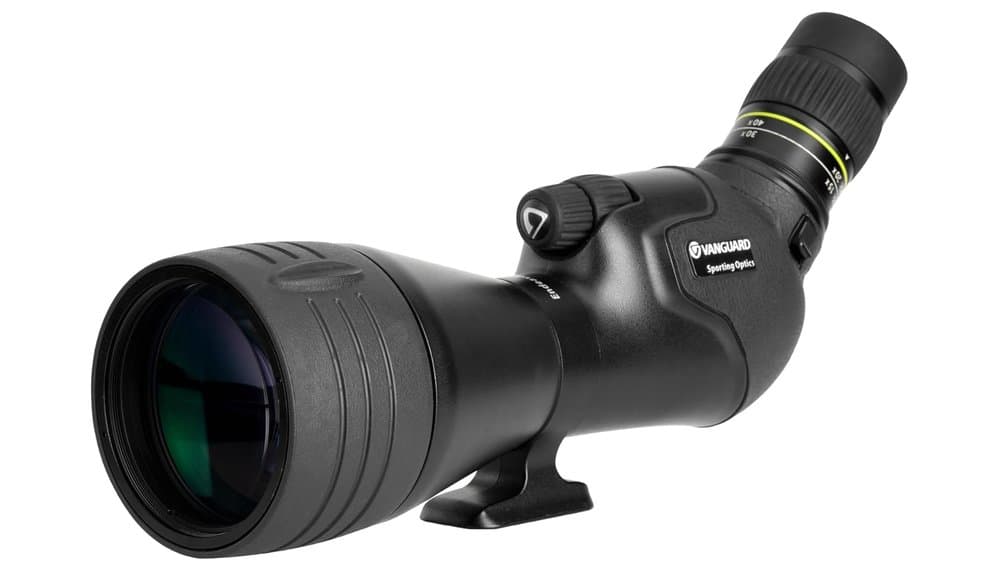
Vanguard Endeavor HD65A Spotting Scope Review
Spotting scope with 65mm ED glass & 15-45x zoom for birding & hiking. Balanced performance & portability for serious nature observers.
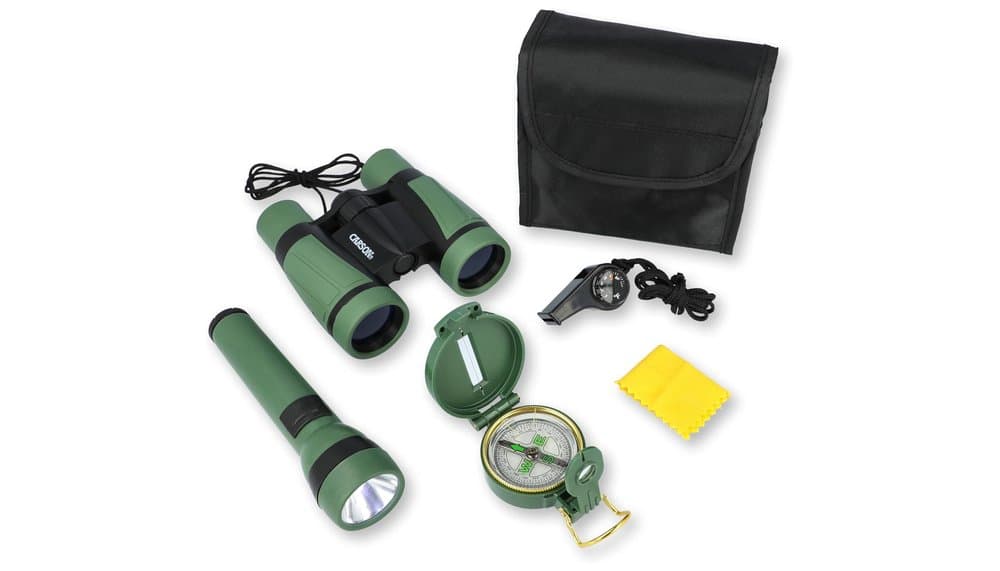
Carson AdventurePak Kids' Exploration Tool Kit Review
Explore nature with this kid's 5-piece tool kit for outdoor adventure and educational discovery. Perfect for young explorers.
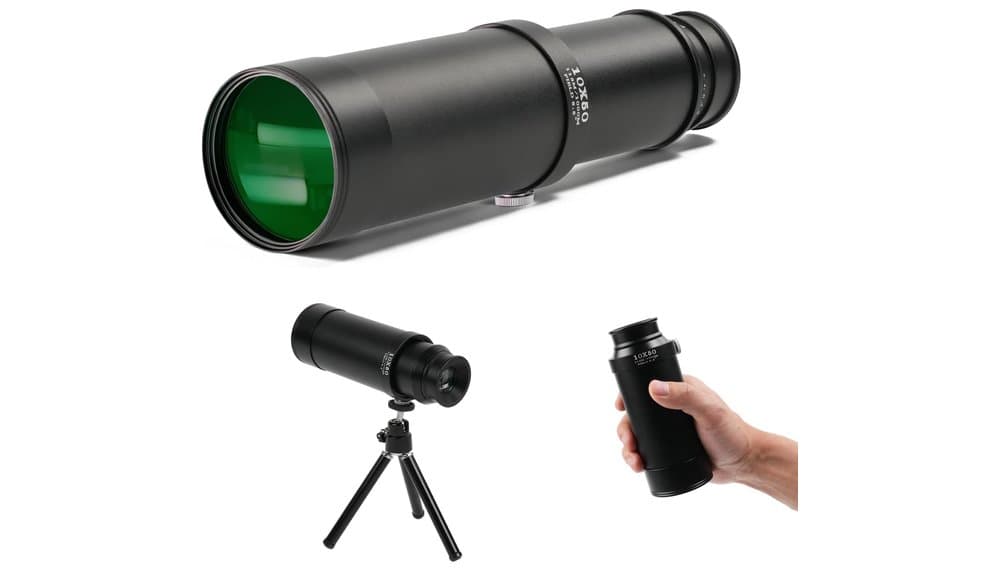
BOSTRON CY 10x50 Monocular Review & Test
Compact 10x50 monocular review: Analyzes optical clarity, field of view & build quality for hiking, nature & astronomy. See its true value.
Guides you might like
WiFi Trail Camera Guide
See wildlife discreetly from your couch! Learn how WiFi trail cameras let you monitor animals without disturbance and how to choose the right one.
Ultimate Travel Telescope Guide
Choose a portable, high-performance travel telescope to explore the universe from your backpack without compromising on essential astronomical views.
Ultimate Guide to Night Vision Binoculars
Choose the perfect night vision binoculars: Gen vs. digital? Unravel the tech to make your nighttime wildlife adventures a total success. Guide inside.