Kowa BDII 8x42 ED Binoculars Review: Compact Optics Test
Published on 3 May 2026 · By OptiqueNature
Review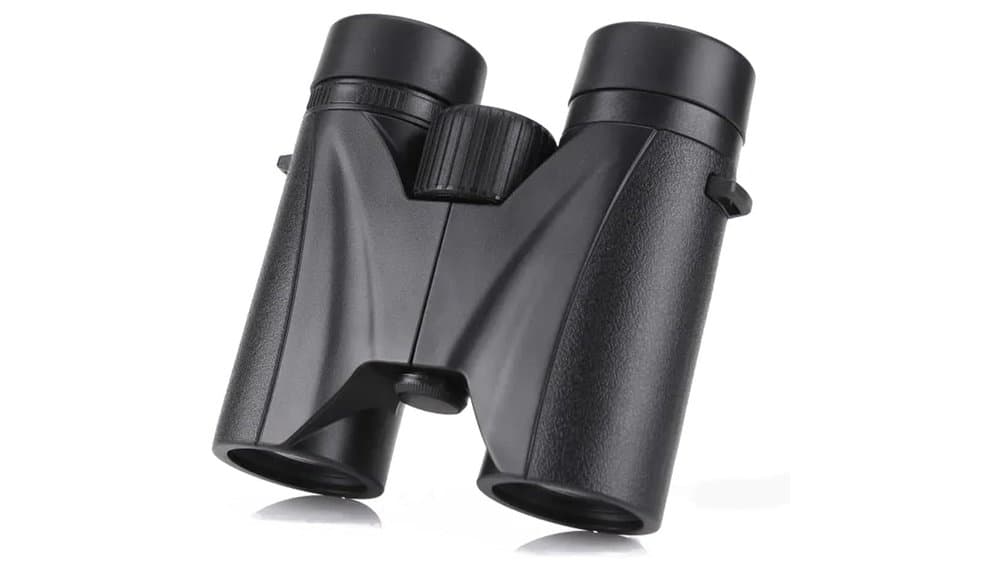
Introduction
In the world of nature observation, the 8x42 format has established itself as a true standard, offering an ideal balance between brightness, stability, and field of view. The Compact 8x42 Binoculars with ED Glass position themselves in this niche, promising the benefits of high-end optics – the renowned Extra-low Dispersion (ED) glass – in an accessible format. On paper, the specifications are enticing: fully multi-coated optics, BAK4 prisms, waterproofing, and a design tailored for eyeglass wearers. But how do they truly stack up against the competition and the demanding needs of observers? We will dissect this pair of binoculars based on its advertised specifications and by comparing them to market expectations, to determine if it delivers on its promises and which type of user it best suits.
Strengths
Based on the provided specifications, the Compact 8x42 Binoculars with ED Glass present several notable technical strengths that justify the interest they may generate.
- ED (Extra-low Dispersion) Glass: This is the main selling point. This type of glass is designed to significantly reduce chromatic aberration, those colored fringes (often purple or green) visible on high-contrast edges. On paper, this translates to a sharper image with more accurate colors and better contrast, especially in bright light conditions.
- Fully Multi-Coated Optics and BAK4 Prisms: The combination of fully multi-coated optics on all air-to-glass surfaces and BAK4 prisms (of higher optical quality than BK7) is a guarantee of high light transmission. This means more light reaches the eye, which is crucial for observation in low light, at dawn or dusk.
- Waterproof and Fogproof Construction (Nitrogen Purged): The specifications indicate a robust construction with a nitrogen-purged chassis. This theoretically makes them waterproof and resistant to humidity, and prevents internal fogging during rapid temperature changes. An essential feature for hikers, birdwatchers, and all users in variable outdoor conditions.
- Ergonomics for Eyeglass Wearers: The presence of twist-up eyecups and, potentially, generous eye relief (to be confirmed by the exact value) is a crucial point for observers who wear glasses. This allows them to see the entire field of view without removing their corrective lenses.
Weaknesses
An analysis of the available data and market context reveals some potential areas of concern or challenges for this model.
- Lack of Details on Prism Coatings: While the lenses are described as "fully multi-coated", nothing is specified regarding the prism treatments. In the industry, dielectric or high-reflectivity coatings on roof prisms (likely the configuration here, given the compact design) are essential to maximize brightness and contrast. The absence of mention on this subject raises questions about the ultimate light transmission performance.
- Advertised Weight of 700g: For binoculars labeled as "compact", a weight of 700 grams is on the high end, or rather standard, for an 8x42. This could be a factor for hikers or observers seeking very lightweight equipment for long handheld sessions.
- Lack of Consolidated User Feedback: At the time of this analysis, there is no solid base of user reviews or independent expert tests available for this specific model from the PETSTIBLE brand. This makes it difficult to concretely assess long-term durability, focus mechanism accuracy, or the perceived real-world image quality.
- Fierce Competition in the Segment: The 8x42 with ED glass niche is extremely competitive, with established models from renowned optics brands. These Compact 8x42 Binoculars with ED Glass will need to prove that their optical quality and finish justify their place against these benchmarks.
Detailed Analysis by Criterion
Optical Quality and Visual Performance
The optical promise rests on three pillars: ED glass, fully multi-coated optics, and BAK4 prisms. Theoretically, this combination should deliver a clear, bright image with good color rendition. The 8x magnification is a judicious choice, offering good detail while remaining sufficiently stable for handheld use. The 42mm objective lens diameter provides an exit pupil of 5.25mm (42/8), which is excellent for low-light use, allowing a lot of light to reach the retina even with a dilated pupil.
However, without data on the twilight factor (which would be √(8x42) ≈ 18.33 here, a decent value) or the exact light transmission rate (often around 90%+ on good ED models), it is impossible to precisely quantify its advantages. The real question will be whether the ED glass is implemented effectively to control aberrations across the entire field, and whether the coatings are up to par.
Field of View and Ergonomics
The stated dimensions (135mm long) indeed make it a relatively compact model for an 8x42. The field of view is unfortunately not specified in the data. This is a critical parameter: for birdwatching or observing moving animals, a wide field (above 130m at 1000m, for example) is a major asset. Competing models often use this figure as a selling point.
The ergonomics seem to have been considered: the textured central focus wheel is a standard appreciated for precise adjustment. The twist-up eyecups are indispensable for eyeglass wearers. The advertised rubber armoring should offer a good grip, even when wet, and protection against minor impacts.
Durability and Weatherproofing
The claims of weather resistance and nitrogen purging are standard for mid-range and high-end models. On paper, this means protection against rain and dust, and resistance to internal fogging. The long-term durability of the chassis and mechanisms (like the focus) can only be evaluated through user feedback over time. The absence of a specified waterproof rating (like IPX7 or a waterproof certification) is noteworthy, although nitrogen purging is in itself a guarantee of protection.
Included Accessories
The list of accessories is very comprehensive, even surprising for a pair of binoculars: soft case, neck strap, cleaning cloth, objective and ocular lens caps are expected. The inclusion of an L-adapter and a smartphone holder clearly indicates that the manufacturer is targeting digiscoping – adapting a smartphone to take pictures through the eyepiece. The inclusion of a tripod (likely a small tabletop model) is a notable plus for extended astronomical observation sessions or for perfect stability in digiscoping.
Technical Specifications
| Characteristic | Detail |
|---|---|
| Model | Compact 8x42 Binoculars with ED Glass (PETSTIBLE) |
| Magnification | 8x |
| Objective Lens Diameter | 42 mm |
| Exit Pupil | 5.25 mm |
| Prisms | BAK4 (likely type: roof, given the compact design) |
| Optical Coatings | Fully multi-coated lenses. ED (Extra-low Dispersion) Glass. |
| Waterproofing | Nitrogen-purged chassis (fogproof). Advertised weather resistance. |
| Eye Relief | Twist-up eyecups (exact value not specified) |
| Focus | Central wheel |
| Minimum Focus Distance | Not specified |
| Field of View at 1000m | Not specified |
| Dimensions (L x W x H) | Approx. 135 x 130 x ? mm (according to data) |
| Weight | 700 g |
| Main Accessories | Case, strap, cloth, lens caps, phone holder, L-adapter, small tripod. |
What Users and Experts Say
It is important to emphasize that, according to the data provided, there are currently no published and accessible customer reviews or expert tests for this specific model. This complete absence of user feedback is an analytical element in itself.
This means we cannot verify several crucial points through testimonials:
- The actual color fidelity and effectiveness of the ED glass in real-world observation conditions.
- The smoothness and precision of the focus mechanism.
- The build quality and long-term feel in hand.
- The reliability of the claimed waterproofing.
- The performance in digiscoping with the provided holder.
In a market where established models benefit from hundreds of detailed reviews, this absence places the Compact 8x42 Binoculars with ED Glass in the category of products to be discovered. For a buyer, this implies relying more on the spec sheet than on proven community feedback. The first reviews, when they appear, will need to be scrutinized carefully on the points mentioned above.
Conclusion
On paper, the Compact 8x42 Binoculars with ED Glass present a very comprehensive and ambitious spec sheet for their segment. The inclusion of ED glass, BAK4 prisms, and fully multi-coated optics meets the minimum requirements to claim superior image quality, with increased sharpness and beautiful colors. The waterproof construction and ergonomics tailored for eyeglass wearers make it a tool theoretically well-suited for outdoor activities like birdwatching, hiking, or wildlife observation.
However, the analysis hits two major obstacles: the absence of user reviews which prevents any real-world validation of the promised performance, and certain omissions in technical details (field of view, prism coatings, waterproof rating). The weight of 700g places them in the average range but does not make them suitable for ultralight enthusiasts.
So, who should consider this model? A technically savvy observer, attracted by the promise of ED glass at a potentially attractive price, and who is willing to be an "early adopter" in the absence of a tester community. For occasional use or for a first piece of equipment where trust in an established brand is paramount, it will undoubtedly be more reassuring to turn to models with a long track record of reviews and comparative tests. The final verdict on these binoculars can only be rendered once the user community has been able to test them in real conditions and share their experience.
100% free and independent — All our articles are written independently, without any sponsorship. We may earn a commission on purchases made through our links, at no extra cost to you.
Articles you might like
FunKind HC600Pro 4G Trail Camera Review
FunKind HC600Pro solar-powered 4G trail camera review. Analyzes real-time wildlife monitoring specs, solar/battery power, and performance data.
Haokoo Vision Nocturne 4K Night Vision Binoculars Review
Haokoo 4K Night Vision Binoculars review: See & record in total darkness. Compact, versatile for nature observation. High-definition digital performance.
Celestron Astro-FI 102 WiFi Reflector Telescope Review
Wireless Celestron Astro-FI 102 telescope review: Does smartphone control simplify stargazing for beginners or add unnecessary complication?
Guides you might like
WiFi Trail Camera Guide
See wildlife discreetly from your couch! Learn how WiFi trail cameras let you monitor animals without disturbance and how to choose the right one.
Ultimate Travel Telescope Guide
Choose a portable, high-performance travel telescope to explore the universe from your backpack without compromising on essential astronomical views.
Ultimate Guide to Night Vision Binoculars
Choose the perfect night vision binoculars: Gen vs. digital? Unravel the tech to make your nighttime wildlife adventures a total success. Guide inside.