HAZA DL11T2 4K Connected Trail Camera Review
Published on 11 April 2026 · By OptiqueNature
Review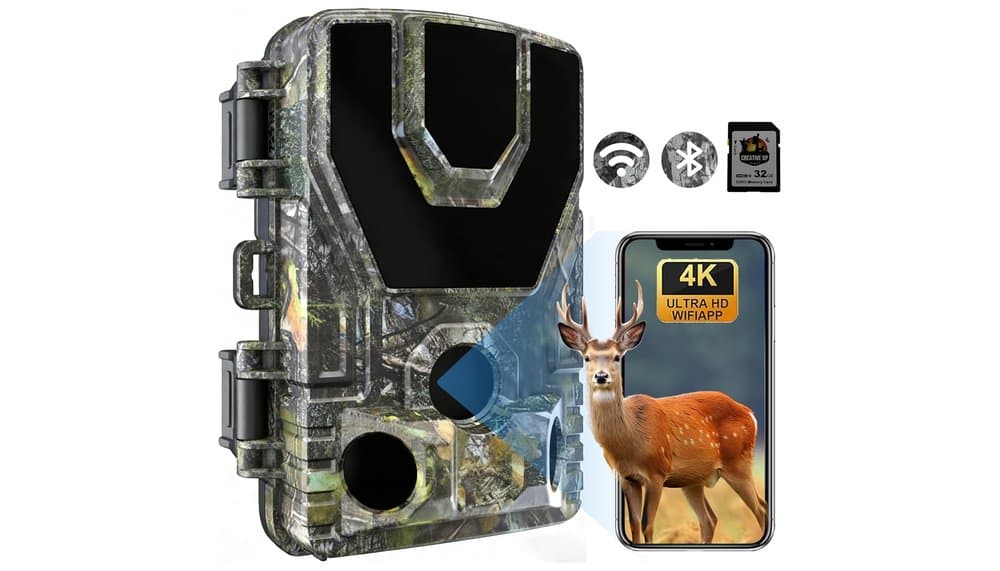
Introduction
The trail camera, long confined to the role of a simple passage detector, has become a true instrument of naturalistic observation, capable of documenting wildlife with remarkable precision. The HAZA DL11T2 4K Connected Trail Camera fits into this trend by promising high image quality, simplified connectivity, and total discretion. We analyze this camera here based on its technical specifications, feedback from the user community, and expert opinions, to determine its real potential for nature observation, ecological monitoring, and perimeter security of land.
Strengths & Weaknesses
Strengths
- 4K Image Quality and Daytime Details: Feedback agrees on video and photo output with great clarity in full daylight, allowing for fine identification of plumage or fur details.
- Completely Invisible Night Vision (940nm): A crucial feature for not disturbing animals. The 940nm infrared LEDs emit no glow, guaranteeing absolute discretion.
- Practical Connectivity via Built-in WiFi and Bluetooth: The ability to retrieve media and adjust the camera remotely via smartphone, without opening the case, is hailed as a major time-saving and practical advantage.
- Robustness and Battery Life: The IP66 certification (water jet and dust proof) and the announced battery life of several months make it a device designed to withstand weather and long-term installations.
- Ultra-Fast Trigger (0.1s): A reaction time that allows capturing fast-moving animals without missing them.
Weaknesses
- Inconsistencies on Actual Resolutions: A major and documented user report raises serious doubt about the effective video and photo resolution, questioning the "native 4K" and "48MP" claims.
- Sometimes Confusing App Interface: Some users report initial setup difficulties or a smartphone app user experience that could be improved for the less tech-savvy.
- Lack of Security Cable Attachment Point: Unlike other models from the brand or competitors, the case does not allow for attaching an anti-theft cable, which can be a drawback for installations in accessible areas.
- Variable Night Vision Range: While the specs announce 40m, expert context suggests an effective range closer to 20-30m, which remains decent but must be considered for placement.
Detailed Analysis
Optical Quality and Image Performance
The analysis here is mixed. On paper, the HAZA DL11T2 relies on a 4K UHD sensor and a 48MP photo resolution. Positive feedback, such as from a user who appreciates being able to "see the smallest details, like the hairs of a roe deer," confirms that the camera produces sharp and very detailed images in daytime and twilight conditions. The wide 135° angle (or 120° depending on sources) offers a broad field of view, ideal for monitoring a clearing or a trail without needing millimeter-precise aiming.
However, an in-depth user test tempers this reading. According to this analysis, the generated video files would not exceed a resolution of 1920x1088 pixels (i.e., Full HD), even when settings are set to 2.7K or 4K. For photos, interpolation artifacts would be visible from the base resolution, suggesting a physical sensor resolution well below the advertised 48MP. This practice, unfortunately common in the budget trail camera segment, involves digitally "stretching" an image to reach a marketing definition. For the naturalist observer, this means that while the image is generally good for identification, it might lack the absolute finesse and extreme cropping capability promised by true 4K/48MP.
The night vision is, on the other hand, a unanimously praised point. The use of 940nm infrared LEDs is the ideal choice for non-intrusive observation. Unlike 850nm models that produce a visible reddish glow, this technology is completely invisible to the human and animal eye. Testers confirm it works: animals are not startled by the flash. The effective range, although potentially below the announced 40m, is considered sufficient for most scenarios in the forest or at the edge.
Construction, Ergonomics, and Durability
The build is a strong asset. The IP66 certification is not just a marketing argument; it guarantees real protection against dust and powerful water jets. Users report the device withstanding "heavy downpours" without issue. The military camouflage case makes it discreet in its natural environment. Its weight of 490g makes it a solid device without being excessively heavy to mount on a tree.
Ergonomics are mainly managed via the smartphone app, which simplifies settings once the connection is established. The weak point noted by the community concerns physical security: the lack of a dedicated attachment point for an anti-theft cable is a reported regret, especially for areas with foot traffic. The general reliability of the electronics and component longevity seem good based on short and medium-term feedback.
Connectivity and User Experience
This is an area where the HAZA DL11T2 innovates compared to more basic models. The combination of built-in WiFi (with the camera's own access point) and Bluetooth for initial setup is very convenient. The typical workflow involves approaching the camera, connecting via Bluetooth to turn it on and activate its WiFi hotspot, then connecting to this local network from the "HAZA" app to view and download media. This avoids handling the SD card in the field, reducing the risk of error and exposure to the elements.
Web experts highlight the use of recent standards (WiFi 6, Bluetooth 5.2) which should ensure a stable connection and fast transfers. However, the community notes that this fluidity can depend on the environment and that getting used to the app may require an adaptation period for some.
Battery Life and Use Cases
The advertised battery life of up to 8 months with 8 AA batteries is usage-dependent. It is achievable in standard detection mode with moderate wildlife activity. Conversely, intensive use of video streaming via WiFi, a PIR sensitivity set too high on a heavily trafficked site, or very low temperatures will reduce this duration. Experts recommend using lithium batteries for cold environments or considering an external power supply for fixed and very active installations.
The use cases are vast:
- Naturalistic observation & ecological studies: Its discretion (940nm) and image quality make it a tool of choice for documenting animal behavior without intrusion.
- Monitoring reserves or properties: The fast trigger and motion detection alerts make it a reliable perimeter security tool.
- Hunting and scouting: For spotting game and its habits, with the advantage of not scaring it away with visible light at night.
Technical Specifications
| Feature | Detail |
|---|---|
| Maximum Video Resolution | Advertised 4K UHD (to verify in output file) |
| Maximum Photo Resolution | Advertised 48 MP (sensor likely lower) |
| Night Vision | 940nm Infrared LEDs (invisible) |
| Night Vision Range | Up to 40m (advertised) / 20-30m (estimated effective) |
| Viewing Angle | 135° (wide angle) |
| Motion Detector (PIR) | Adjustable sensitivity, 0.1s trigger |
| Connectivity | Built-in WiFi (hotspot) + Bluetooth |
| Weatherproofing | IP66 Certification (dust-tight and protected against powerful water jets) |
| Battery Life | Up to 8 months (8 AA batteries, typical use) |
| Screen | None (managed via smartphone app) |
| Storage | microSD card (not included, 32G max recommended by the brand) |
| Power Supply | 8 AA batteries or external 6V power cable (optional) |
| Dimensions (LxWxH) | 15 x 11 x 9 cm |
| Weight | 490 g |
What Users Say
The synthesis of customer feedback and expert analysis reveals a mixed opinion, with an overall rating of 3.7/5 reflecting this dichotomy.
The praise focuses mainly on three aspects: the perceived excellent image quality during the day, the total discretion of the night vision (940nm), and the immense convenience of the WiFi/Bluetooth connection for retrieving files. The robustness (IP66) and battery life are also very frequently cited as convincing strengths. For many users, these features perfectly meet their expectations.
The criticisms focus on two recurring and potentially serious issues. First, serious doubts about the truthfulness of the advertised resolutions (4K, 48MP) are raised by precise technical tests showing Full HD files and interpolated images. Second, several users encounter difficulties with the mobile app or connection, noting an interface that can be confusing. Finally, the lack of a security cable attachment point is noted as a regrettable oversight for a device meant to stay outdoors.
Conclusion
The HAZA DL11T2 4K Connected Trail Camera is a product with contrasting characteristics. It offers a very attractive set of high-end features for the nature observer: practical and modern wireless connectivity, perfectly invisible night vision, robust construction, and a fast trigger. For the user primarily seeking a reliable, discreet, and easy-to-use tool to document wildlife without claims to cinematic production, this camera presents a solid case.
However, our objective analysis based on technical feedback from the community warns against potentially misleading marketing claims regarding the actual image definition. If you have an absolute need for native 4K video resolution or ultra-high-definition photos for heavy cropping or fine scientific analysis, the evidence provided by some testers calls for the utmost caution. We recommend considering this camera for its practical advantages and discretion, while awaiting official clarification on its real imaging specifications, rather than as an absolute benchmark in terms of pure resolution.
100% free and independent — All our articles are written independently, without any sponsorship. We may earn a commission on purchases made through our links, at no extra cost to you.
Articles you might like
FunKind HC600Pro 4G Trail Camera Review
FunKind HC600Pro solar-powered 4G trail camera review. Analyzes real-time wildlife monitoring specs, solar/battery power, and performance data.
Haokoo Vision Nocturne 4K Night Vision Binoculars Review
Haokoo 4K Night Vision Binoculars review: See & record in total darkness. Compact, versatile for nature observation. High-definition digital performance.
Celestron Astro-FI 102 WiFi Reflector Telescope Review
Wireless Celestron Astro-FI 102 telescope review: Does smartphone control simplify stargazing for beginners or add unnecessary complication?
Guides you might like
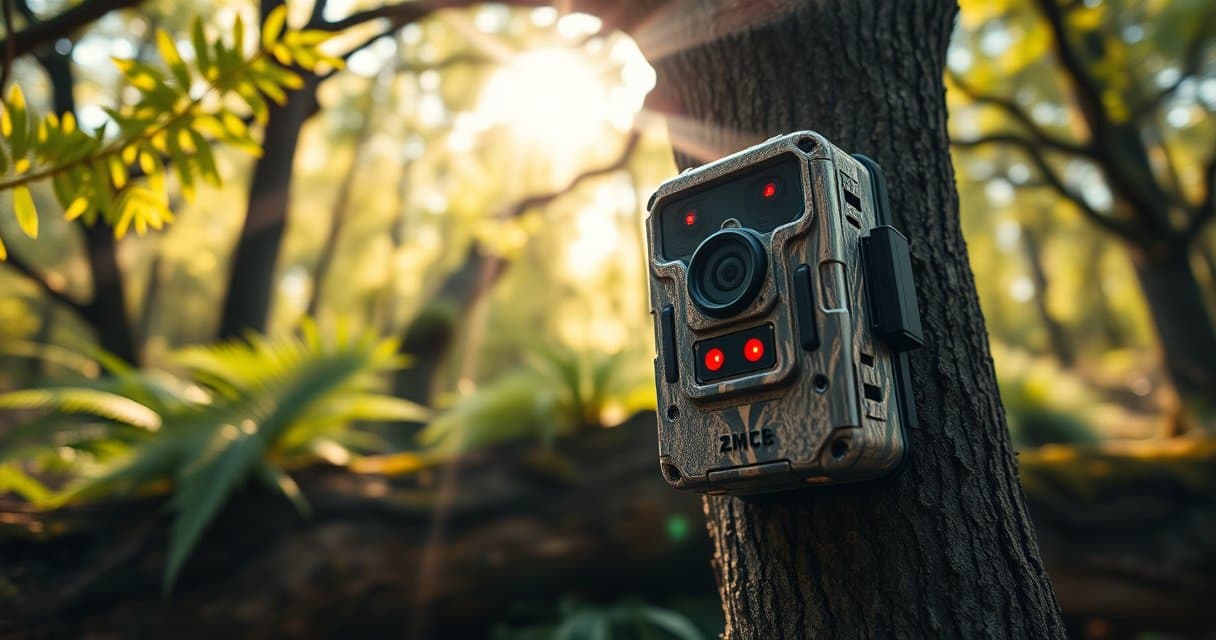
WiFi Trail Camera Guide
See wildlife discreetly from your couch! Learn how WiFi trail cameras let you monitor animals without disturbance and how to choose the right one.

Ultimate Travel Telescope Guide
Choose a portable, high-performance travel telescope to explore the universe from your backpack without compromising on essential astronomical views.
Ultimate Guide to Night Vision Binoculars
Choose the perfect night vision binoculars: Gen vs. digital? Unravel the tech to make your nighttime wildlife adventures a total success. Guide inside.