LUXUN 8x32 Compact Binoculars Review: Specs & Analysis
Published on 19 April 2026 · By OptiqueNature
Review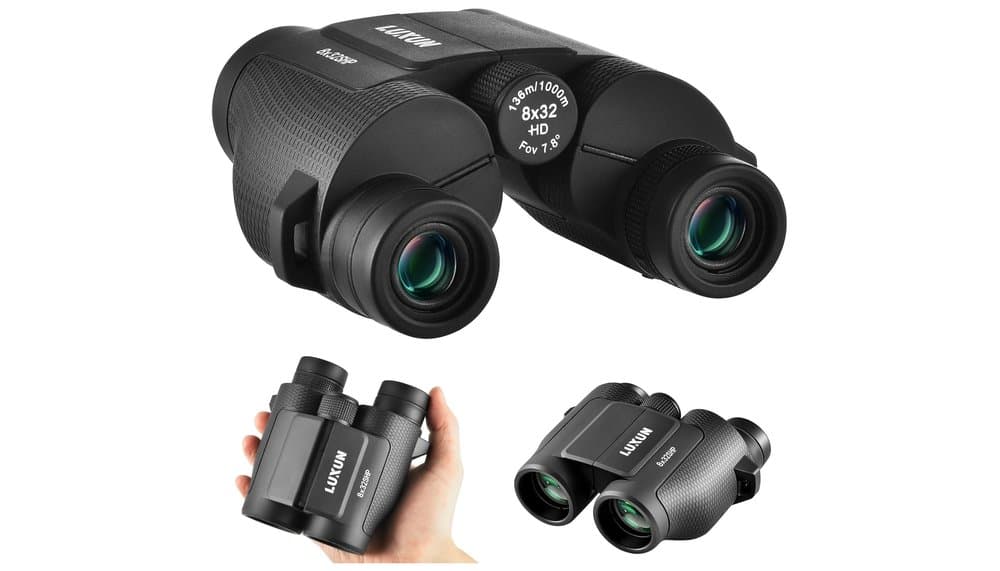
Introduction
In the very dense world of entry-level compact binoculars, the brand LUXUN offers the 8x32 Compact Binoculars model. This 8x32 format is appealing due to its theoretical balance between power, brightness, and compact size. But beyond marketing promises, what is this instrument really worth? We have not tested them hands-on here; our analysis is therefore based entirely on a rigorous dissection of the technical specifications provided by the manufacturer and on the synthesis of user feedback and available online tests. Our goal is to determine whether these binoculars are a good companion for your outdoor activities or remain a product with too many compromises.
Strengths
- Decent optics for the price: The combination of a BAK-4 prism and FMC coating promises a bright image with good contrast.
- Asserted compactness and lightness: With an announced weight of less than 500g and reduced dimensions, they clearly target mobile observers.
- Wide field of view: The specifications highlight a wide field, a major asset for tracking birds or moving animals.
- Perceived good value for money: The buyer community regularly emphasizes that the product offers satisfactory performance for its price segment.
Weaknesses
- Lack of water resistance (IPX): The technical sheet clearly states "Not Water Resistant". This is a major shortcoming for outdoor use in changing conditions.
- Individual focus (IF): Each eyepiece must be adjusted separately, which is slower and less convenient than a central focus (CF) system for dynamic observations.
- Build quality and quality control: Some feedback mentions variations in finishes or colors not matching the description, pointing to possible irregular quality control.
- Optics limited in low light: With an exit pupil of 4mm and a relative brightness of 16, its performance drops significantly at dawn or dusk compared to models with larger objectives.
Detailed Analysis of the LUXUN 8x32 Product
Optical Quality and Field Performance
On paper, the optical specifications of the LUXUN 8x32 rely on common foundations in the economic segment: a roof prism made of BAK-4 glass and fully multi-coated (FMC) lenses. BAK-4 glass, of better quality than BK7, limits light loss and aberrations. FMC coating reduces reflections and improves light transmission. However, it is crucial to note that the manufacturer mentions neither dielectric coating on the prisms, nor extra-low dispersion (ED) glass, nor phase coatings. These elements, absent here, are nonetheless essential for achieving maximum contrast, perfect color fidelity, and pixel-level resolution, characteristics of higher-end ranges.
The 8x magnification is a very versatile standard, offering good detail without sacrificing too much image stability when hand-held. The 32mm objective (or 30mm according to conflicting data) determines the amount of light collected. The calculation gives an exit pupil of 4mm (32/8), which is fine for daytime use. The relative brightness is 16 (exit pupil squared). These figures indicate binoculars designed for daytime. According to user feedback, "brightness is decent in daylight," but it becomes insufficient in dim lighting, which is consistent with this technical data.
The field of view is often cited as a strength in reviews ("wide field of view which provides good image stability"). A wide field is indeed an asset for easily locating a subject and tracking it, especially in birdwatching. This seems to be one of the points where this model stands out favorably from some similarly priced competitors.
Design, Build, and Ergonomics
The promise here is one of compactness and lightweight design. Reviews confirm this impression: "small compact and light binoculars". The rubber armor is mentioned for its comfort and non-slip grip. However, the build quality encounters criticism regarding consistency: one user notes a discrepancy between the advertised color (green) and the actual color (gray-black), pointing to a quality control or communication issue.
The most controversial point in terms of design is undoubtedly the individual focus (IF) system. Each eyepiece must be adjusted independently, once and for all, according to the user's vision. This method, although very robust and sealed (which is not the case here), is considered impractical for observers who frequently need to refocus at different distances, such as in birdwatching. A central focus (CF) system is almost universally preferred for these uses.
The complete lack of water and fog resistance (nitrogen purged waterproofing) is the most serious construction flaw. The technical sheet states it unequivocally: "Not Water Resistant". This means these binoculars are vulnerable to rain, high humidity, and thermal shocks that can cause internal fogging. This seriously limits their use to perfectly dry and stable weather conditions.
The twist-up eyecups are present and seem suitable for eyeglass wearers according to the product description, although few users explicitly confirm this. The minimum focusing distance is not specified in the specs, a notable lack of information for enthusiasts of insects or close-up details.
Value for Money and Market Segments
It is essential here to position the LUXUN 8x32 within the competitive landscape. They clearly belong to the budget segment, even ultra-budget. At this level, compromises are inevitable.
Compared to budget competition (other generic brands), they seem to hold their own thanks to the BAK-4/FMC optics and the wide field of view. Many users describe them as "good for the price" or a "Best Buy" compared to more expensive models they own. Their main strength is to provide a clear and usable image for a modest investment.
Compared to the mid-range segment (established brands like Olympus, Kowa SV, or certain entry-level models from Nikon/Celestron), the shortcomings become glaring. The lack of waterproofing, individual focus, and absence of advanced optical coatings (phase, dielectric) create a gap in terms of versatility, durability, and image finesse. These brands usually offer longer warranties and identified after-sales service.
In the premium segment (Swarovski, Zeiss, Leica in compact format), the comparison is no longer relevant. We are then talking about instruments for a lifetime, with exceptional light transmission, all-terrain robustness, and refined ergonomics.
Recommended (and Discouraged) Use Cases
- Ideal for: Occasional hiking, daytime sporting events, theater. One user sums it up well: "intended for occasional family use". It is an instrument for initiation or backup.
- Suitable under conditions for: Birdwatching in daytime under good weather, thanks to its wide field of view. But individual focus can be a hindrance.
- Not recommended for: Any outing in wet or rainy weather, observation by the sea, expeditions in tropical forests, or any activity where durability is crucial. Astronomy is possible for viewing the Moon, but low-light performance will be very limited for deep-sky objects.
- Avoid for: Digiscoping (smartphone mounting) due to the probable lack of a dedicated adapter and possibly insufficient optical quality, and low-light observation (dusk, dawn, dense forest).
Summary Technical Specifications
| Characteristic | LUXUN 8x32 Detail | Notes / Analysis |
|---|---|---|
| Magnification | 8x | Versatile standard, good hand-held stability. |
| Objective Diameter | 32 mm (30 mm according to one data point) | Compact size, 4mm exit pupil. |
| Prism | Roof, BAK-4 glass | Better than BK7 for brightness and eye-relief shape. |
| Optical Coatings | Fully Multi-Coated (FMC) | Standard coating on all air-to-glass surfaces. Absence of dielectric/phase coating. |
| Field of View | Wide (angular value not specified) | Highlighted as a strength by users. |
| Focusing | Individual Focus (IF) | Robust system but less practical for frequent adjustments. |
| Waterproofing | Not waterproof ("Not Water Resistant") | Major weakness. Usage limited to dry weather. |
| Eyecups | Twist-up | Suitable for eyeglass wearers according to the description. |
| Weight | ~480 g (with case) | Light and portable, confirmed by reviews. |
What Users and Testers Say
The synthesis of 21 customer reviews (with an overall rating of 4.6/5) and online feedback reveals a clear consensus, with recurring points of satisfaction and criticism.
The recurring positive points are:
- Perceived excellent value for money: This is the recurring theme. Formulations range from "good for the price" to "Best Buy!". Users who own more expensive brand models are sometimes surprised by the performance of these low-priced binoculars.
- Clear and sharp image in daytime conditions: Terms like "ultrasharp", "tadellose bildschärfe" (impeccable image sharpness), "clear and sharp images" often come up. Sharpness in the center of the field is generally appreciated.
- Compactness and lightness: "Compact and lightweight design", "small compact and light binoculars" are systematically mentioned as major assets for transport.
- Wide field of view: Several users explicitly note it as a factor of comfort and stability.
The negative points or points of attention are:
- The lack of waterproofing: Although rarely cited in reviews (as users probably test them in good weather), it is an unavoidable technical limitation that any potential buyer must be aware of.
- The individual focus (IF): An experienced tester notes: "With the binoculars it takes some getting used to until the two images appear congruent." This system is considered less intuitive.
- Quality control inconsistencies: The case of the color (advertised green vs received gray-black) is glaring. This suggests there may be variations between batches or misleading marketing communication.
- Limited low-light performance: In line with expectations for this diameter, but to be considered based on intended use.
Conclusion
The LUXUN 8x32 Compact Binoculars present themselves as a clear proposition: offering the bare optical essentials in an ultra-portable format at a minimal price. Our analysis, cross-referencing specifications and field feedback, confirms that they keep this basic promise. The image is considered clear and sharp in full daylight, the field of view is appreciated, and their lightness makes them an accessory easy to slip into a bag.
However, the compromises are significant and decisive for the choice. The complete lack of waterproofing makes it a "fair-weather only" instrument, excluding its use in wet or volatile conditions. The individual focus system requires adaptation and can slow down active observation. Finally, build quality seems to be variable.
Ultimately, these binoculars can be recommended as a backup or initiation tool for strictly occasional use in dry weather: a sunny hiking trip, an outdoor concert, a day at the zoo. For the dedicated nature observer, who faces wind, rain, or damp dawn, and for whom focus reactivity is paramount, investing more in a waterproof model with central focus, even from the entry-level of established brands, will be a more sustainable and satisfying choice. The LUXUN 8x32 do well what they advertise, but they advertise little. Their main merit is to remind us that, in the world of optics, versatility and robustness come at a cost.
100% free and independent — All our articles are written independently, without any sponsorship. We may earn a commission on purchases made through our links, at no extra cost to you.
Articles you might like
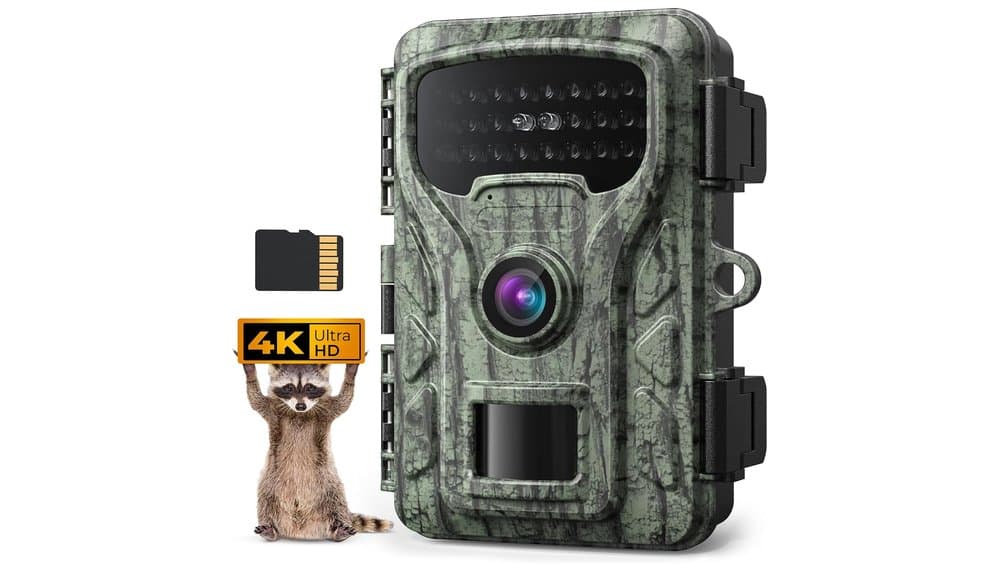
Caytail 4K 48MP Hunting Camera Review & Test
In-depth review of the Caytail 4K 48MP trail camera with included SD card. We analyze specs and real user feedback on its true field performance.
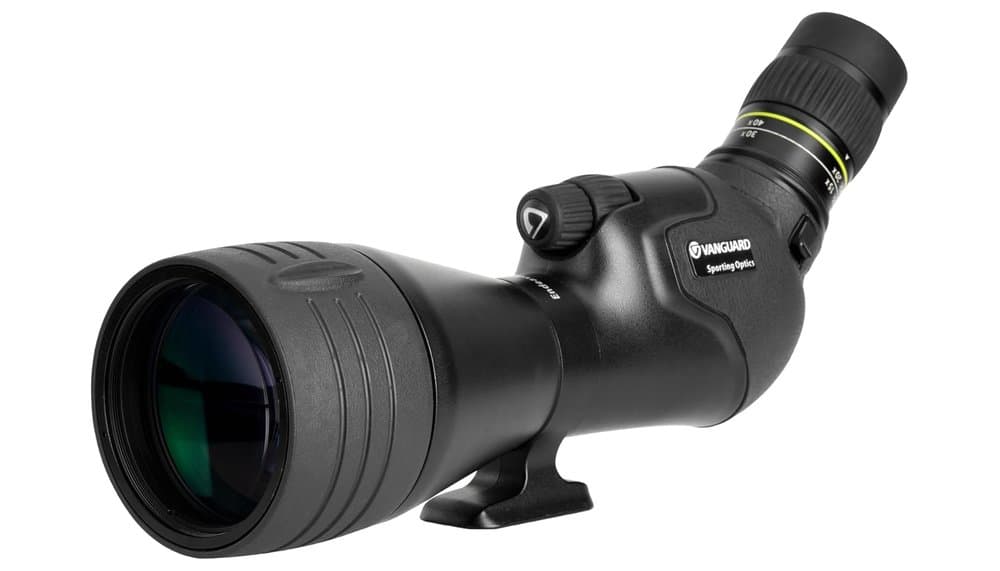
Vanguard Endeavor HD65A Spotting Scope Review
Spotting scope with 65mm ED glass & 15-45x zoom for birding & hiking. Balanced performance & portability for serious nature observers.
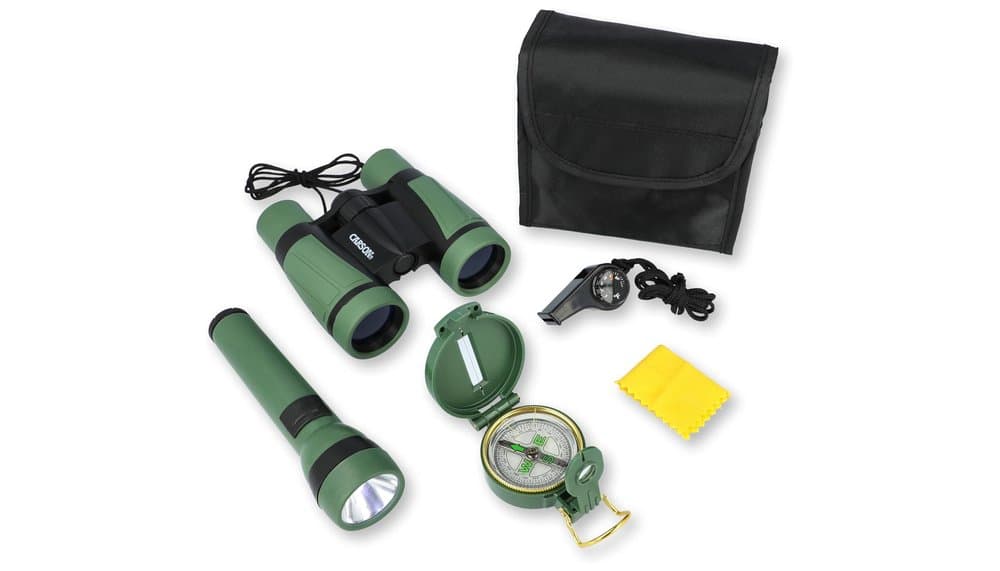
Carson AdventurePak Kids' Exploration Tool Kit Review
Explore nature with this kid's 5-piece tool kit for outdoor adventure and educational discovery. Perfect for young explorers.
Guides you might like
WiFi Trail Camera Guide
See wildlife discreetly from your couch! Learn how WiFi trail cameras let you monitor animals without disturbance and how to choose the right one.
Ultimate Travel Telescope Guide
Choose a portable, high-performance travel telescope to explore the universe from your backpack without compromising on essential astronomical views.
Ultimate Guide to Night Vision Binoculars
Choose the perfect night vision binoculars: Gen vs. digital? Unravel the tech to make your nighttime wildlife adventures a total success. Guide inside.