Zoomion Genesis 200-800 EQ-4 Telescope Review
Published on 17 May 2026 · By OptiqueNature
Review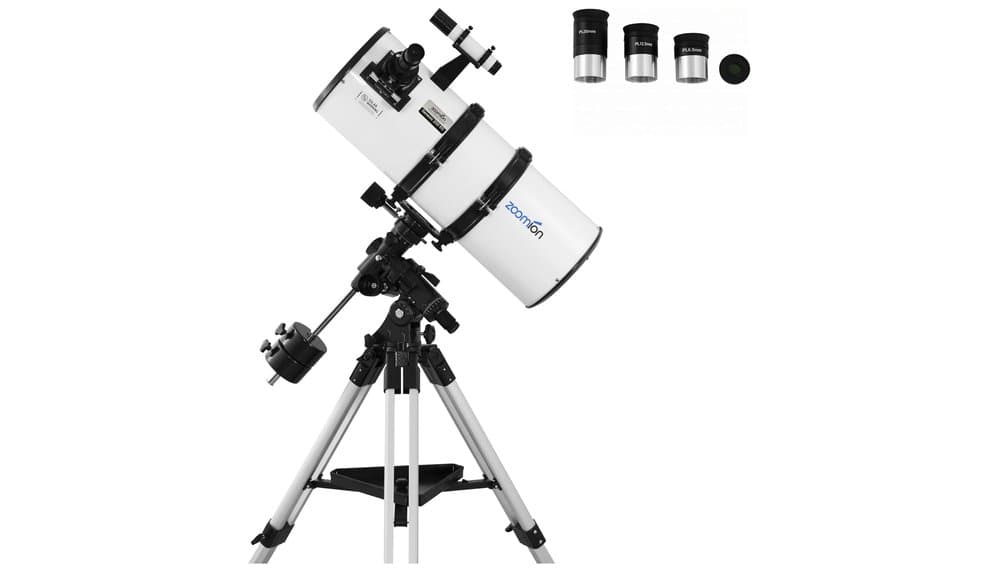
Analysis of the Zoomion Genesis 200-800 EQ-4: A Newtonian Telescope for Ambitious Beginners?
The Zoomion Genesis 200-800 EQ-4 immediately stands out as a product that makes an impression. On paper, its specifications are enticing: a 200mm diameter primary mirror paired with an EQ-4 type equatorial mount, all at a very accessible price. This is a typical proposition in the ambitious entry-level segment, targeting the amateur astronomer beginner eager to quickly access large apertures. But what interests us here is to dissect the reality behind the marketing promises. Through the analysis of technical specifications, community feedback, and expert opinions, we will determine for which user profiles this telescope is truly suited, and what are the compromises inherent to its price.
Strengths and Weaknesses
Strengths
- A generous 200mm aperture: This is the main argument. This mirror size captures a lot of light, allowing in theory the observation of faint deep-sky objects (nebulae, galaxies).
- A fast focal ratio (f/4): The f/4 design allows for shorter exposure times in astrophotography and offers a relatively wide field of view, which is an advantage for observing large objects like the Orion Nebula.
- An EQ-4 equatorial mount: It allows for manual tracking of celestial objects via a simple motion (the right ascension slow-motion control), once properly polar-aligned.
- A complete kit: The inclusion of three eyepieces, a polar finder, and a lunar filter offers a turnkey solution to get started.
Weaknesses
- A light and shaky mount: User feedback consistently agrees that the EQ-4 mount, while functional, is undersized for a 200mm f/4 tube. It is known to be unstable, prone to vibrations, and limits the useful magnification.
- Critical and demanding collimation: An f/4 Newtonian has an extremely low collimation tolerance. Without dedicated tools (a laser collimator is almost essential) and without experience, obtaining a sharp image is a major challenge for a beginner.
- Accessories of modest quality: The supplied eyepieces (typically basic Kellner or Plössl) and the finder scope are considered entry-level. Their performance often limits the real potential of the optics.
- Significant weight and bulk: At over 25kg, this is not a portable instrument. Its setup requires space and some physical strength.
Detailed Analysis by Criteria
Optical Quality and Visual Performance
The 200mm primary mirror is the centerpiece. On paper, it promises excellent light-gathering capability for its price segment. However, the optical figure quality (the regularity and polish of the mirror) is a variable factor on these entry-level products. According to community feedback, it can range from acceptable to poor, directly affecting image sharpness.
The f/4 focal ratio is a double-edged sword. While it is fast and bright, it exacerbates optical aberrations, notably coma (stars at the edge of the field take on a comet-like shape). This flaw is inherent to the f/4 Newtonian design and not specific to Zoomion. It is very noticeable with low-end wide-field eyepieces. Testers also emphasize that this telescope is exclusively designed for deep-sky observation (nebulae, star clusters, galaxies). Its use for planetary observation (Jupiter, Saturn) will be disappointing without high-quality accessories (high-performance eyepieces, a good Barlow lens) due to chromatic aberrations and internal turbulence worsened by the open tube.
Build Quality and Ergonomics
The overall construction is described as rudimentary but functional. The aluminum tube is standard. The main point of contention, recurring in all the analyzed reviews, is the EQ-4 mount. It is unanimously considered too weak for the tube. The movements are described as less smooth than on high-end mounts, the locking mechanisms can be insufficient, and vibrations take a long time to dampen after an adjustment. This significantly hinders the high-magnification observing experience.
The frequent lack of a detailed manual in French is another major obstacle for French-speaking beginners, as reported by several buyers. Assembling the equatorial mount and the polar alignment procedures are not intuitive without a guide.
Regarding portability, with a total weight of over 25kg, this telescope is clearly a sedentary instrument. It is better suited for installation on a terrace or in a garden than for field trips.
Typical Use Cases
- Astronomical Observation (Deep Sky) - Primary Use: This is its reason for being. Under a dark sky far from light pollution, and in the hands of a patient user capable of collimating it, it can show many Messier objects. It is a powerful learning tool for galaxies and nebulae.
- Astronomical Observation (Planets & Moon) - Secondary Use: Limited performance. The Moon will be impressive at low and medium magnification, but planets will lack sharpness and contrast without high-performance accessories.
- Astrophotography - Possible but very limited: The manual, non-motorized EQ-4 mount makes photography beyond the Moon very difficult. It can support a light camera for short exposures, but it is a path full of pitfalls. This is not an astrophotography kit.
- Terrestrial Observation - Unsuitable: A Newtonian telescope gives an inverted, non-corrected image, making it impractical for this use.
Value for Money and Competition
The Zoomion Genesis 200-800 positions itself as an aggressively priced offer for a 200mm aperture. This is its main asset. However, this low price implies major compromises, mainly on mount stability and accessory quality.
Faced with the competition:
- Budget Segment (Dobsonian): A 200mm Dobsonian (like a Sky-Watcher Skyliner 200P) offers the same aperture on a much more stable, user-friendly azimuth mount, and often with better overall optical quality. It will be easier to handle for a true beginner, at the expense of the manual tracking facilitated by the equatorial mount.
- Mid-Range Segment (Newtonian on EQ mounts): Brands like Sky-Watcher or Orion offer packages with more robust mounts (e.g., EQ-5) and overall superior build quality, but at a significantly higher cost.
- Premium Segment: It is not in competition.
The "real" price of this telescope is often higher than its initial purchase price, as many users end up investing in a quality laser collimator, better eyepieces, and sometimes even reinforcing the mount.
What Users and Experts Say
Synthesizing hundreds of customer reviews and expert feedback on forums reveals very clear trends.
The recurring positive points mainly focus on the optical potential. Users who have managed to correctly collimate the telescope and use it under a dark sky report satisfaction with the deep-sky views. They appreciate the low entry cost for a large aperture. The presence of an equatorial mount is also seen as a plus for learning the principles of celestial tracking.
The negative points are numerous and highlight the challenges:
- Difficulty of setup for complete beginners: Many comments warn: this is not a "plug and play" telescope. Collimation is the main pitfall. An experienced user clearly writes: "If you buy an f/4 equatorial Newtonian, it's because you already know how to use a laser collimator. Otherwise, it's not your telescope."
- Mount instability: This is the most frequent complaint. "The mount is not the best," "it vibrates easily," "the locks don't hold well." This instability makes high-magnification observation frustrating.
- Insufficient accessory quality: The supplied eyepieces are consistently described as the first item to be replaced. The finder scope is often described as basic and imprecise.
- Lack of documentation in French: Several French-language reviews mention this as a significant problem for initial setup.
Web experts agree that this telescope can be a good deal for a somewhat seasoned amateur, willing to invest time in collimation and a few extra euros in basic accessories (collimator, decent eyepiece). However, they often advise against it as a first telescope for a total novice, who risks getting discouraged quickly.
Technical Specifications
| Criterion | Zoomion Genesis 200-800 EQ-4 Specification |
|---|---|
| Type | Newtonian Telescope (Reflector) |
| Diameter (Aperture) | 200 mm |
| Focal Length | 800 mm |
| Focal Ratio (f/) | f/4 |
| Mount | German Equatorial EQ-4 (Manual) |
| Tripod | Extendable aluminum leg tripod |
| Included Eyepieces | 3 eyepieces (typically 25mm, 10mm, 6mm) |
| Other Accessories | Polar finder, Lunar filter |
| Focusing | Manual via rack-and-pinion |
| Total Weight (Approx.) | 25 - 26 kg |
| Warranty | 2 years |
Conclusion
The Zoomion Genesis 200-800 EQ-4 is a product with a clear and attractive commercial proposition: to offer the light-gathering power of a 200mm at a minimal price. Our analysis confirms that it keeps this promise, but with significant reservations.
This telescope is not an instrument for absolute beginners, despite what its marketing may suggest. It is rather an exciting project for the motivated amateur ready to learn. Its successful use absolutely requires acquiring fine collimation skills and often assumes an additional budget for a collimator and better eyepieces. Its mount, the major weak point, will always limit its stability potential.
Consequently, we recommend it primarily to two profiles: the highly motivated and tech-savvy beginner astronomer, who sees these challenges as a learning opportunity, or the amateur with a very tight budget to access deep-sky objects, but aware of the compromises. For the observer seeking a smoother and more immediate experience, a 200mm Dobsonian or a package with a more robust mount often represent more satisfying long-term alternatives, even at an equal or slightly higher investment. The Genesis 200-800 is a gateway to deep-sky observing, but a door that requires pushing with force and patience.
100% free and independent — All our articles are written independently, without any sponsorship. We may earn a commission on purchases made through our links, at no extra cost to you.
Articles you might like
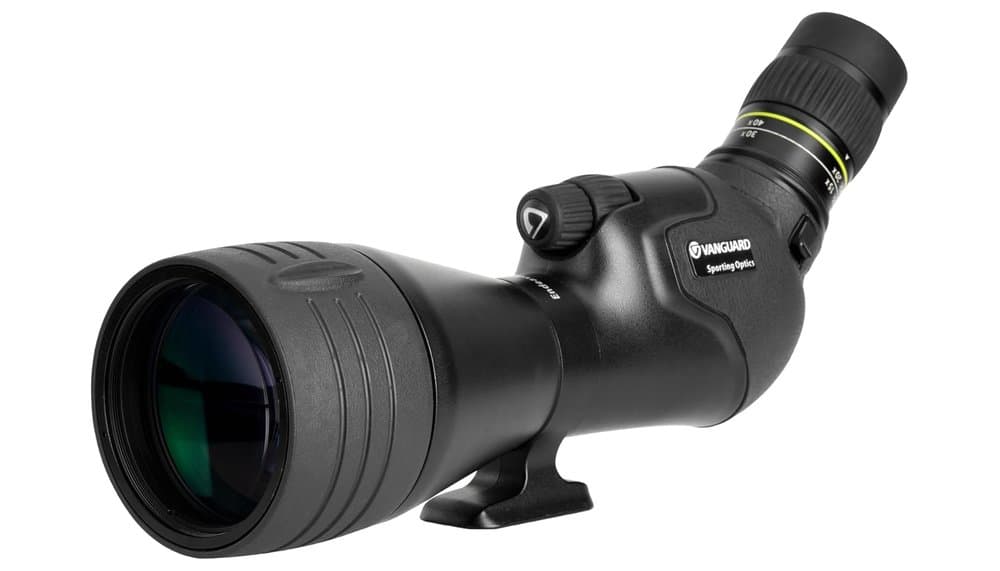
Vanguard Endeavor HD65A Spotting Scope Review
Spotting scope with 65mm ED glass & 15-45x zoom for birding & hiking. Balanced performance & portability for serious nature observers.
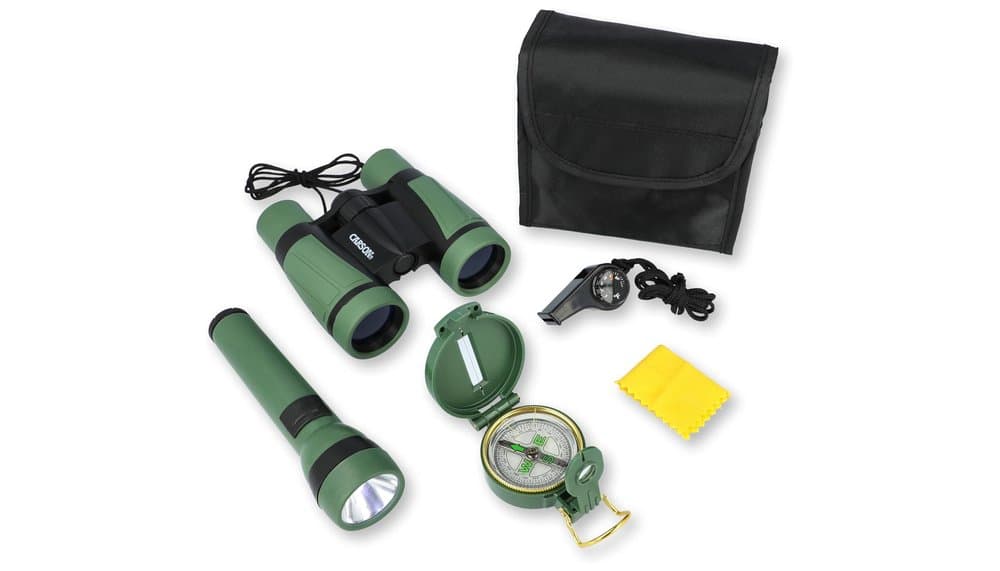
Carson AdventurePak Kids' Exploration Tool Kit Review
Explore nature with this kid's 5-piece tool kit for outdoor adventure and educational discovery. Perfect for young explorers.
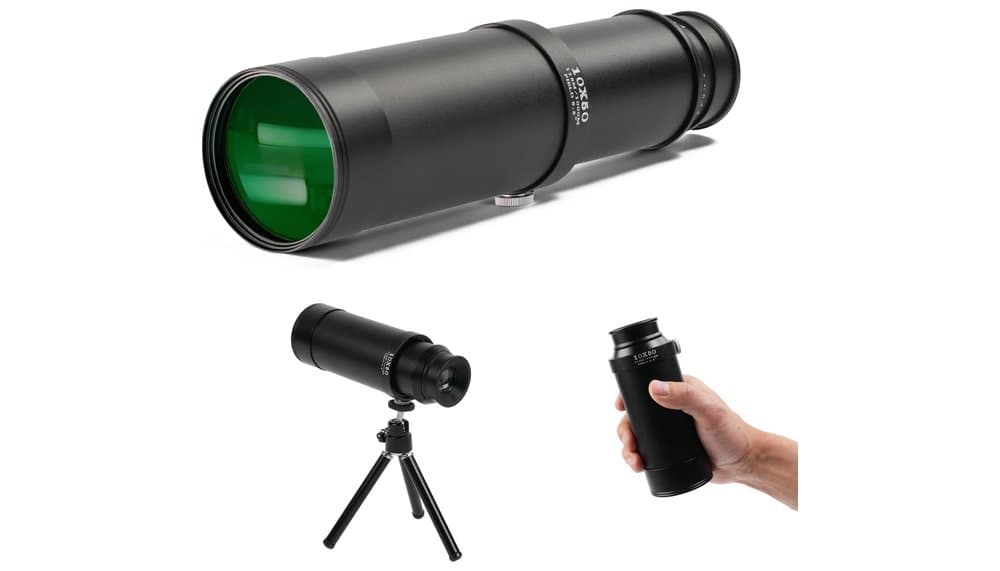
BOSTRON CY 10x50 Monocular Review & Test
Compact 10x50 monocular review: Analyzes optical clarity, field of view & build quality for hiking, nature & astronomy. See its true value.
Guides you might like

WiFi Trail Camera Guide
See wildlife discreetly from your couch! Learn how WiFi trail cameras let you monitor animals without disturbance and how to choose the right one.

Ultimate Travel Telescope Guide
Choose a portable, high-performance travel telescope to explore the universe from your backpack without compromising on essential astronomical views.
Ultimate Guide to Night Vision Binoculars
Choose the perfect night vision binoculars: Gen vs. digital? Unravel the tech to make your nighttime wildlife adventures a total success. Guide inside.