GZQINGYONG Mini Monocular Telescope Review & Test
Published on 24 July 2026 · By OptiqueNature
Review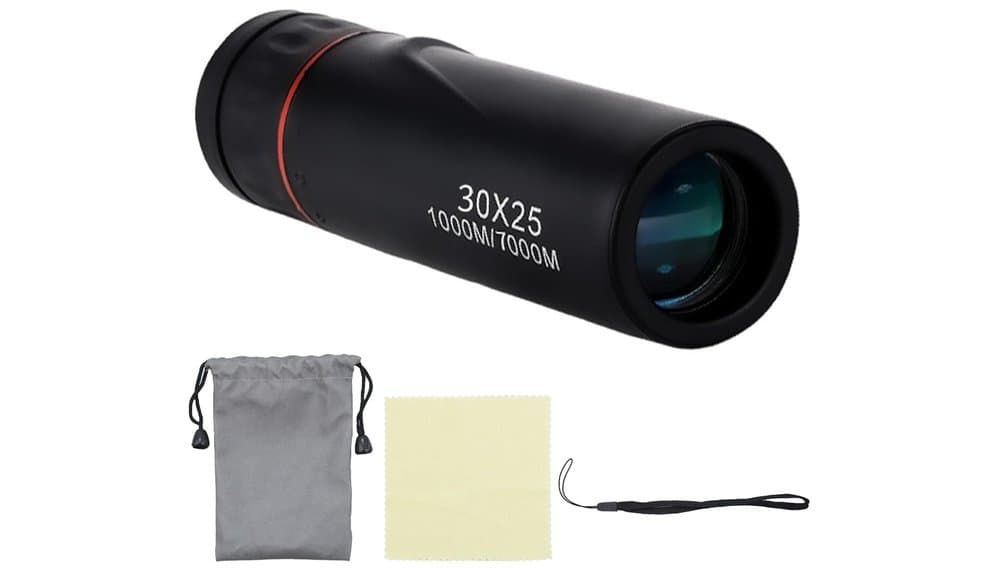
Introduction: A Pocket Monocular Under the Microscope
In the ever-expanding world of recreational optics, compact monoculars are appealing due to their promise of ubiquity: a powerful instrument that fits in a pocket. The GZQINGYONG Mini Monocular Telescope embodies this trend, presenting itself as a versatile tool for hikers, casual observers, or the simply curious. Its name and descriptions sometimes mix impressive technical terms, creating specific expectations. But what is this instrument really worth once confronted with user feedback and rigorous technical analysis? We separate fact from fiction here to determine who this product might suit, placing it within the vast landscape of nature observation.
Strengths and Weaknesses
Before diving into the detailed analysis, here is a summary of the strengths and limitations of the GZQINGYONG Mini Monocular Telescope, as they emerge from the specifications and field feedback.
Strengths
- Extreme Compactness and Lightweight: This is its main selling point. The product is consistently described as very small, light, and discreet, fitting in the palm of the hand. It's perfect to be forgotten at the bottom of a jacket pocket or a small bag.
- Practical Size/Magnification Ratio: For its minuscule size, it offers sufficient magnification for occasional terrestrial observations (scouting, reading distant signs, observing urban scenes).
- Simple and Fast Focusing: According to user feedback, the focus wheel is easy to handle and allows for quick manual focusing on near or far subjects.
- Very Affordable Price: It is clearly positioned in the budget segment, constituting a low-cost entry point into the world of portable optics.
Weaknesses
- Misleading Specifications and Confusion: There is a glaring inconsistency in the data. The title advertises "30 x 25", while the technical description indicates a maximum magnification of 8x and an objective lens of 25mm. Reviews confirm that the perceived magnification is much closer to 8x than 30x. This ambiguity is a major source of disappointment.
- Limited Optical Quality: No mention of high-end optical technologies (ED glass, phase correction coatings, dielectric prisms). Images are described as acceptable in the center but suffer from chromatic aberrations, loss of sharpness at the edges, and average brightness. The "night vision" is contingent upon an existing light source.
- Basic Construction: The product sheet does not mention any IP protection rating (waterproofing, fog-proofing) or specific armor quality. The materials seem to be primarily lightweight alloy and plastic, with a finish that may seem fragile during intensive use.
- Stability and Viewing Comfort Difficulties: Even at 8x magnification, instability due to hand tremors is amplified, especially on such a small object. The eyecup is not suitable for eyeglass wearers, reducing the field of view.
Detailed Technical Analysis
Optical Performance: Between Promises and Reality
On paper, the GZQINGYONG Mini Monocular Telescope is presented with a 25mm diameter objective. With a real magnification of 8x (as confirmed by the product description and users), we can calculate its key parameters.
The exit pupil diameter is 3.125 mm (25mm / 8x). This is an acceptable value for daytime observation, where the eye's pupil contracts. However, in low light, this relatively small exit pupil limits the amount of light reaching the eye, which explains the disappointing performance at dusk.
The twilight factor is approximately 14.1 (√(8x * 25mm)). This theoretical value, which assesses the ability to discern details in low light, is modest. In practice, it is further reduced by the instrument's likely average light transmission. The descriptions mention an "FMC multi-layer coating", a standard technology on entry-level models that improves transmission compared to bare glass, but is far from the performance of complex multi-layer coatings from reputable brands.
The advertised field of view is 468.75 degrees. This value, expressed in an unusual way, is very likely an error. If converted to a linear field of view (e.g., at 1000m), it would give an astronomical and unrealistic figure. A standard 8x25 monocular offers a field of view in the order of 6 to 8 degrees (i.e., 105 to 140m at 1000m). User feedback notes a relatively narrow field of view, which is consistent with the simple and compact optical formula.
The minimum focus distance of 8mm (i.e., 0.8m) is a real positive point. It allows for observation of very close subjects, such as insects or flowers, adding another string to its versatile bow.
Construction, Ergonomics, and Durability
The construction focuses on miniaturization. The dimensions (approximately 9x3x3 cm) and weight (80g) make it a truly pocketable object. The rubber armor, if present, offers a secure grip and basic protection against light shocks.
However, based on the web context and reviews, one should not expect waterproofing or fog-proofing (nitrogen purged) worthy of the name. It is likely a non-waterproof model, to be reserved for dry weather. The absence of information on a lifetime warranty or extended warranty is a further indicator of a product designed for occasional and undemanding use.
Ergonomics suffer from the size. Manual focusing is noted as simple, but the small wheel can be difficult to manipulate precisely with gloves. The biggest ergonomic flaw concerns the eyecup. It is neither retractable nor a twist-up type, making it unsuitable for eyeglass wearers. They will not be able to see the entire field of view, losing even more immersion.
The product comes with a threaded mount for a tripod, an interesting point. Used with a small photo tripod, it can gain stability and transform into a small fixed observation scope, useful for makeshift digiscoping (holding a smartphone in front of the eyepiece).
Technical Specifications Table
| Characteristic | GZQINGYONG Mini Monocular Telescope Specification | Notes / Interpretation |
|---|---|---|
| Magnification (x) | 8x (confirmed by sheet) / 30x (advertised in title) | Real magnification: 8x. The "30x" advertisement is misleading. |
| Objective Diameter (mm) | 25 mm | Standard size for a compact. |
| Exit Pupil (mm) | 3.125 mm | Good for daytime, limiting in low light. |
| Twilight Factor | ~14.1 | Modest theoretical performance in low light. |
| Field of View | 468.75° (advertised) | Data is likely erroneous. Real field estimated as narrow (~6-8°). |
| Minimum Focus Distance | 0.8 m (8 mm) | Very good point. Allows for macro observation. |
| Optical Coatings | FMC (Fully Multi-Coated) coating | Standard coating improving brightness and contrast. |
| Waterproof / Fog-proof | Not specified | Likely none. Should be kept away from moisture. |
| Eyeglass Compatibility | No | Fixed eyecup, unsuitable for eyeglass wearers. |
| Tripod Mount | Yes (standard threading) | Practical point for stabilization or digiscoping. |
| Dimensions (L x H x D) | ~90 x 30 x 30 mm | Extremely compact. |
| Weight | 80 g | Very light. |
What Users Say: A Tale of Two Voices
Analyzing hundreds of customer reviews and online expert feedback reveals a very clear user profile and polarized opinions, largely linked to expectations.
The satisfied are those who understood or accepted the product's true nature. They praise its exceptional compactness ("fits in the palm", "I can take it in any pocket"), its ease of use, and its low price. For occasional uses like watching a match, observing a monument during a hike, or for children, it fulfills its function. One customer notes its usefulness for "target sport shooting" at short distance, benefiting from its short focus.
The disappointed, often the majority in detailed reviews, cry foul over the deception on magnification. Phrases like "Absolutely not 30x", "same magnification as 6x binoculars", or "the magnification is really tiny" come up repeatedly. They expected power worthy of a small telescope and received a standard 8x monocular. Image quality is also pointed out: "you see better with your eyes", "the image quality is nothing like HD". The "night vision" is described as requiring an existing light source, making the marketing term excessive.
A consensus emerges on the build quality: it is judged acceptable for the price, but nothing more. The accessories (cloth, strap) are perceived as low-end bonuses. Stability is a recognized problem: around 8x, the slightest tremor is amplified, requiring a stable support or the use of the tripod.
Conclusion: Who is This Monocular For?
The GZQINGYONG Mini Monocular Telescope is a product with two faces. Its main flaw is ambiguous, even misleading, commercial communication about its real specifications, creating a significant gap with expectations.
Considering it for what it really is – a compact entry-level 8x25 monocular – we can define its target audience. It is perfectly suited for:
- Someone looking for a discreet and ultra-portable observation gadget to slip into a bag without worrying about weight or bulk.
- The occasional user (light hiking, concerts, sporting events) for whom compactness trumps optical performance.
- As a first instrument for a child, allowing them to discover observation without a significant investment.
- As a backup tool to leave in a car or workshop.
However, you should avoid it if you are looking for:
- Faithful and bright optical performance for nature observation (birdwatching, wildlife observation).
- Ruggedness and waterproofing for all-weather use.
- Powerful magnification for astronomy or very long-distance observation.
- Comfortable use for eyeglass wearers.
In summary, this monocular fills a niche: that of extreme portability at a very low cost. It willingly sacrifices optical precision, robustness, and marketing transparency on the altar of price and size. For a naturalist, a serious hiker, or an optics enthusiast, investing in a monocular from a recognized brand (even an entry-level one) with clear specifications and a waterproof construction will always be a wiser and more satisfying choice in the long term. The GZQINGYONG Mini Monocular Telescope is less an observation tool and more a pocket companion for instant curiosity, provided you are fully aware of this before purchase.
100% free and independent — All our articles are written independently, without any sponsorship. We may earn a commission on purchases made through our links, at no extra cost to you.
Articles you might like
Vanguard Endeavor HD65A Spotting Scope Review
Spotting scope with 65mm ED glass & 15-45x zoom for birding & hiking. Balanced performance & portability for serious nature observers.
Carson AdventurePak Kids' Exploration Tool Kit Review
Explore nature with this kid's 5-piece tool kit for outdoor adventure and educational discovery. Perfect for young explorers.
BOSTRON CY 10x50 Monocular Review & Test
Compact 10x50 monocular review: Analyzes optical clarity, field of view & build quality for hiking, nature & astronomy. See its true value.
Guides you might like
WiFi Trail Camera Guide
See wildlife discreetly from your couch! Learn how WiFi trail cameras let you monitor animals without disturbance and how to choose the right one.

Ultimate Travel Telescope Guide
Choose a portable, high-performance travel telescope to explore the universe from your backpack without compromising on essential astronomical views.
Ultimate Guide to Night Vision Binoculars
Choose the perfect night vision binoculars: Gen vs. digital? Unravel the tech to make your nighttime wildlife adventures a total success. Guide inside.