Goetland AOEG 6-24x50 Riflescope Review
Published on 20 May 2026 · By OptiqueNature
Review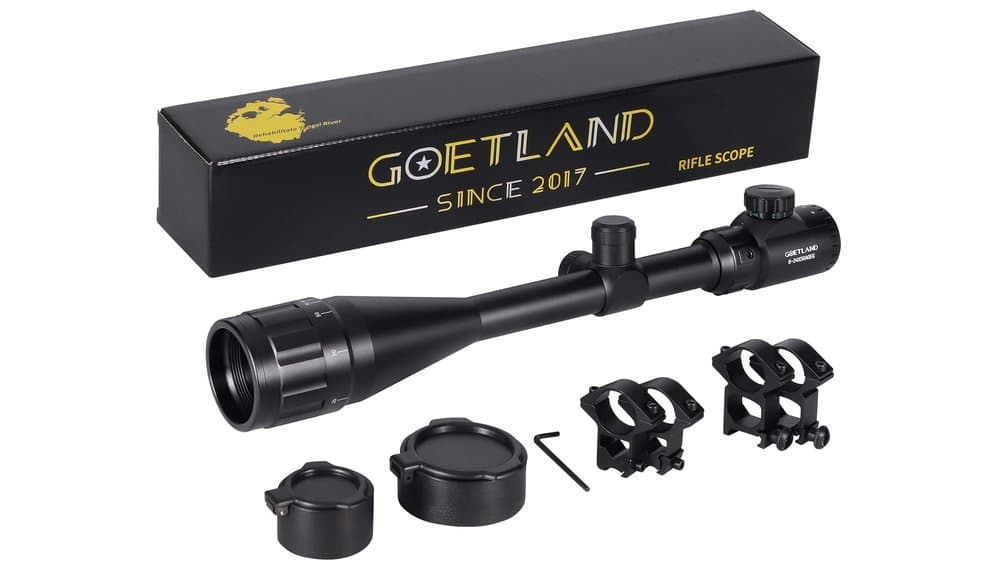
Introduction: A Long-Range Zoom on a Budget for the Demanding Observer?
In the world of long-distance optics, products offering high magnification at a contained price always generate excitement. The Goetland AOEG 6-24x50 Illuminated Rangefinding Riflescope is a perfect example. With its extended zoom range from 6x to 24x, its 50 mm objective lens, and its illuminated rangefinding reticle, it promises top-tier versatility for precision at a distance.
But in the field of optics, specifications on paper are not everything. We will dissect this scope to determine if it represents a good deal for nature observers, wildlife photographers, or digiscoping enthusiasts, or if its compromises confine it to very specific and limited uses.
Strengths & Weaknesses: A Frank Summary
Strengths
- Extremely versatile magnification range (6-24x), ideal for observing details at very long range.
- Illuminated rangefinding reticle (Mil-Dot) with red/green settings and 5 brightness levels, appreciated in low light.
- Complete mount and adjustment tools included (11mm and 20mm rings, sunshade, lens caps, tool).
- Overall construction perceived as solid with an aeronautical aluminum alloy tube and a rubberized finish.
- Initial price-to-performance ratio considered very interesting by a majority of users for the level of features offered.
Weaknesses
- Average optical quality, especially at maximum magnification (24x) and in low-light conditions (dull image, lack of contrast).
- Long-term durability and holding of adjustments questioned, particularly under repeated recoil.
- Sometimes misleading zoom designation: several users report that the effective maximum magnification seems lower than the advertised 24x.
- Absence of Extra-low Dispersion (ED) glass and high-end optical coatings, explaining the limitations in resolution and light transmission.
- Very small exit pupil at high magnification (2.1mm), making observation uncomfortable and requiring perfect eye alignment.
Detailed Analysis of the Goetland AOEG 6-24x50
Optical Quality and Visual Performance
On paper, the specs advertise a 50mm lens with a "blue film" coating. This generic term indicates a basic anti-reflective coating, often single-layer. This is a major point of divergence with optics dedicated to nature observation. Here, one finds neither ED (Extra-low Dispersion) glass to limit chromatic aberrations (color fringing), nor high-performance multi-coatings, nor dielectric prisms. This has a direct impact on performance.
Light transmission is not quantified by the manufacturer, but the user community unanimously notes that the image becomes dull, low-contrast, and lacking sharpness as soon as the light drops or at maximum magnification. The theoretical twilight factor is high (≈24.5 at 24x), but it is completely undermined by the mediocre quality of the glass and coatings. In practice, this figure is therefore not representative of the real-world experience in low light.
The exit pupil, which determines perceived brightness and ease of eye placement, varies from 8.3mm (at 6x, very comfortable) to only 2.1mm (at 24x). Such a small exit pupil requires a perfectly aligned and steady eye, making prolonged observation tiring and sensitive to vibrations. The field of view is 13.41m at 100m (4.0° at 6x) to 40.38m at 100m (1.2° at 24x). At high magnification, this field is very narrow, making it difficult to locate an animal or bird.
Construction, Ergonomics, and Durability
The technical sheet boasts a construction of 6063-T6 aeronautical aluminum alloy, with O-ring seals and nitrogen purging for waterproofing and internal fogproofing. The weight of 610g for a length of 40cm makes it a relatively heavy model for its price category.
User feedback confirms an initial impression of solidity and good finish. However, expert testers warn against its use on firearms with strong recoil (beyond .22LR). Its long-term mechanical reliability and the holding of turret adjustments (click value of 1/4" at 100m) are pinpointed as its Achilles' heel. For static observation (on a suitable tripod), this robustness might be sufficient, but it clearly is not at the level of professional optics.
The eye relief of 3 inches (≈76mm) is very generous and constitutes a real strong point, especially for observers wearing glasses. The minimum focus distance of 15m is standard for this type of product but limits its use for observing very small, close subjects (like insects).
Reticle and Features
The Mil-Dot type rangefinding reticle is one of the flagship features. It allows for distance estimation and shot or zoom corrections in digiscoping. Its adjustable red and green illumination with 5 levels is highly appreciated by users against dark targets or in subdued lighting conditions. It is important to note that it is a Second Focal Plane (SFP) reticle, meaning the value of the graduations (Mil-Dots) is accurate only at one specific magnification (usually the maximum). This requires some familiarization for precise use of the rangefinding feature.
Value Comparison and Typical Use Cases
The value of the Goetland AOEG 6-24x50 must be evaluated by segment:
- Budget Segment: It positions itself at the high end of the low-end. It offers more features (24x zoom, illuminated reticle) than a basic scope, but its optical quality and durability remain in this class.
- Mid-Range Segment: It does not compete. Mid-range optics (Brands like Vortex Diamondback, Bushnell Trophy) offer far superior clarity, construction, and warranty for a higher investment.
- Premium Segment: No comparison possible.
Recommended use cases:
- Introduction to long-range observation without a heavy investment.
- Daytime observation of stationary or slow-moving subjects at very long range (wildlife observation posts, surveillance).
- Occasional digiscoping with a smartphone, accepting limitations in image quality, especially in low light.
- Use on devices with minimal recoil (certain air rifles, fixed mounts).
Discouraged use cases:
- Observation in low light (dusk, dense forest).
- Demanding nature photography or digiscoping where sharpness and contrast are paramount.
- Hiking with active observation (weight, perceived fragility).
- Astronomy (poor light transmission, narrow field at high magnification).
What Users Say: Summary of Customer and Expert Reviews
The over 800 reviews, with an average rating of 4.1/5, paint a clear consensus. Users are largely satisfied for the price paid. The recurring positive points are: the versatility of the zoom, the ease of adjustment of the turrets, the clarity deemed acceptable for standard daytime use, and the complete equipment provided. Many recommend it for light calibers (.22LR, airsoft).
However, the negative criticisms are instructive and align with technical analyses. Several users note that the effective magnification does not seem to reach the advertised 24x, some estimating it around 12x-16x. The long-term holding of adjustments is sometimes questioned after several hundred shots. The most frequently cited flaw is the significant drop in image quality from 16x-20x upwards, described as "blurry," "lacking sharpness," or "dull." Finally, the absence of a CR2032 battery in the pack, although explained by the seller, is regularly mentioned as an inconvenience.
Experts and specialized forums summarize it thus: it is a good entry-level product for recreational or low-intensity uses, but one should not expect the performance, robustness, and color fidelity of higher-quality optics.
Technical Specifications
| Characteristic | Detail |
|---|---|
| Model | Goetland AOEG 6-24x50 Illuminated Rangefinding Riflescope |
| Magnification | 6x - 24x |
| Objective Diameter | 50 mm |
| Prism Type | Not specified (generally Porro or Roof) |
| Optical Coatings | "Blue Film" coating (basic anti-reflective) |
| Reticle | Illuminated Mil-Dot rangefinding (red/green, 5 levels) |
| Reticle Focal Plane | Second Focal Plane (SFP) |
| Eye Relief | 76 mm (3 inches) - Very generous |
| Exit Pupil | 8.3 mm (at 6x) to 2.1 mm (at 24x) |
| Field of View at 100m | 13.41 m (at 6x) to 40.38 m (at 100m) |
| Angular Field of View | 4.0° (at 6x) to 1.2° (at 24x) |
| Minimum Focus Distance | 15 m |
| Adjustments (click) | 1/4 MOA per click |
| Waterproofing | Nitrogen purged, advertised as waterproof & fogproof |
| Tube Material | 6063-T6 Aeronautical Aluminum Alloy |
| Weight | 610 g |
| Length | 40 cm |
| Included Mount | Rings for 20mm Weaver rail and 11mm Dovetail |
| Supplied Accessories | Sunshade, objective and ocular lens caps, cloth, Allen key |
Conclusion: For Whom Is It a Wise Choice?
The Goetland AOEG 6-24x50 Illuminated Rangefinding Riflescope is the perfect example of a product that offers a maximum of advertised features for a minimal budget. Its very wide zoom range, sophisticated illuminated reticle, and complete equipment are enticing on paper.
However, our analysis reveals that these promises come with significant compromises, primarily on optical sharpness at high magnification, long-term robustness, and low-light performance. It fills a precise need: that of a beginner or occasional observer who wants to explore very high magnifications and rangefinding reticles without investing hundreds of euros, and who accepts that image quality and durability will not be exceptional.
In summary, it is an economical gateway to long-range observation, but not a durable solution for demanding nature observation practice. For regular use, in varying light conditions, or for qualitative digiscoping, investing in optics with better glass and coatings will, in the long term, be more satisfying and reliable.
100% free and independent — All our articles are written independently, without any sponsorship. We may earn a commission on purchases made through our links, at no extra cost to you.
Articles you might like
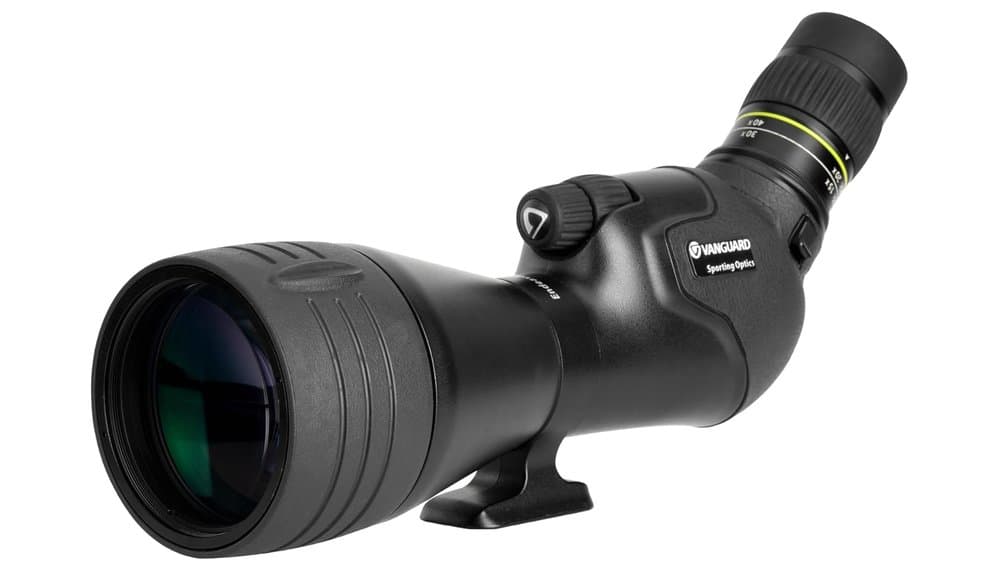
Vanguard Endeavor HD65A Spotting Scope Review
Spotting scope with 65mm ED glass & 15-45x zoom for birding & hiking. Balanced performance & portability for serious nature observers.
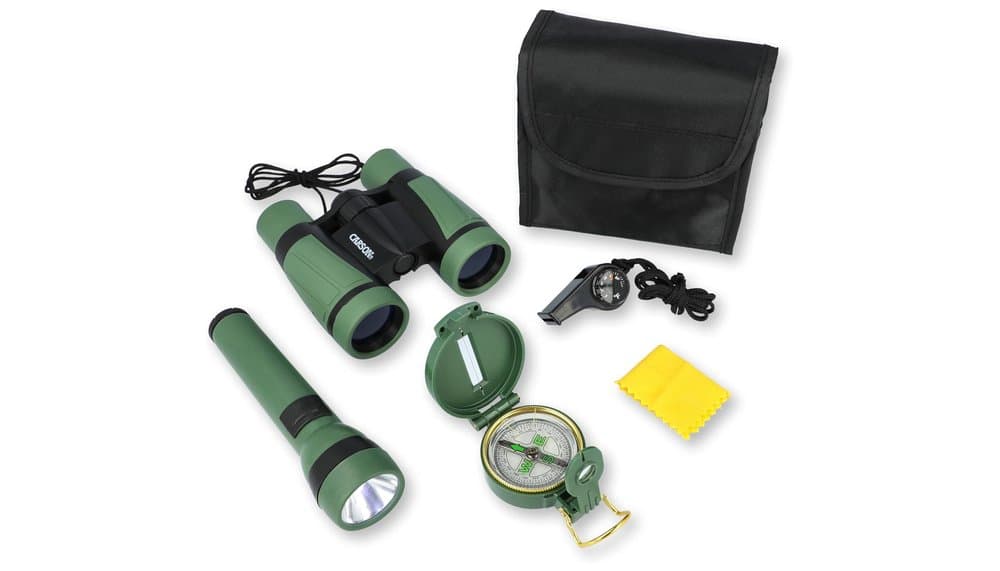
Carson AdventurePak Kids' Exploration Tool Kit Review
Explore nature with this kid's 5-piece tool kit for outdoor adventure and educational discovery. Perfect for young explorers.
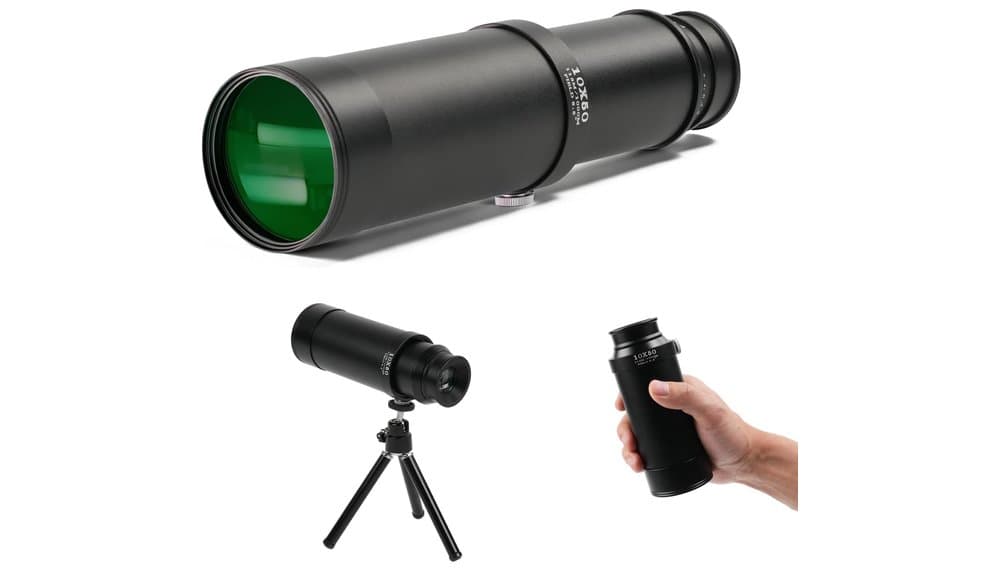
BOSTRON CY 10x50 Monocular Review & Test
Compact 10x50 monocular review: Analyzes optical clarity, field of view & build quality for hiking, nature & astronomy. See its true value.
Guides you might like
WiFi Trail Camera Guide
See wildlife discreetly from your couch! Learn how WiFi trail cameras let you monitor animals without disturbance and how to choose the right one.
Ultimate Travel Telescope Guide
Choose a portable, high-performance travel telescope to explore the universe from your backpack without compromising on essential astronomical views.
Ultimate Guide to Night Vision Binoculars
Choose the perfect night vision binoculars: Gen vs. digital? Unravel the tech to make your nighttime wildlife adventures a total success. Guide inside.