Celestron PowerSeeker 127EQ Telescope Review and Test
Published on 21 March 2026 · By OptiqueNature
Review
Introduction
The Celestron PowerSeeker 127EQ is a telescope that sparks a lot of discussion in the amateur astronomy community. Presented as an ideal gateway into astronomy, this 127mm Newtonian reflector promises serious performance on a tight budget. On paper, its specifications seem generous, but what is the reality once faced with user feedback and technical analysis? We will dissect this instrument to understand what it really offers, who it is for, and what its true strengths and limitations are in the landscape of entry-level telescopes.
Strengths
Based on the specifications and positive feedback from the community, several qualities stand out for the PowerSeeker 127EQ.
A generous aperture for the price. With its 127 mm (5 inch) primary mirror, this telescope captures a significant amount of light. This characteristic is fundamental, as it determines the ability to observe faint objects like nebulae and galaxies, as well as the level of detail on planets. On paper, this aperture places the 127EQ in a category above entry-level models at 70 or 80 mm.
A complete accessory kit to get started. The telescope comes with two eyepieces (20mm and 4mm) and a 3x Barlow lens. Testers note that this set allows for experimenting with a wide range of magnifications right out of the box, avoiding immediate additional purchases for first observations. The included astronomy software is also seen as a useful bonus for navigating the sky.
An equatorial mount for learning. The presence of a manual German equatorial mount is an important point. Although its handling requires learning, it is designed to track the apparent motion of the stars by rotating only a single axis. For a motivated beginner, learning to use this type of mount is educational and prepares for using more advanced instruments.
Weaknesses
Analysis of user feedback reveals recurring weaknesses that temper the enthusiasm generated by the specifications.
Contested stability and finish. The most frequent point of friction concerns the overall stability of the assembly. Many users describe a tripod and mount that lack rigidity, causing prolonged vibrations at the slightest touch or breath of wind, which greatly hinders observing comfort and image sharpness at high magnification.
Accessories of limited quality. While the kit is complete, its quality is often questioned. The finder scope is regularly described as difficult to adjust and of low utility. The supplied eyepieces, especially the 4mm, are considered difficult to use (narrow field of view, uncomfortable eyecup) and offer poor optical quality. The 3x Barlow, while practical, often degrades image clarity.
A demanding adjustment (collimation) process. As a mirror telescope (Newtonian), the PowerSeeker 127EQ requires precise alignment of the optics, called collimation. Feedback indicates that the telescope often arrives poorly adjusted after transport, and that the process of realigning it can be discouraging for a complete beginner without an external tutorial. Poor collimation directly explains the disappointment of users who see "nothing sharp".
Detailed Analysis by Criterion
Optical Quality and Performance
On paper, the specs advertise a 127 mm aperture and a 1000 mm focal length, giving a bright focal ratio of f/7.9. In theory, this makes it a versatile instrument, bright enough for deep sky and with sufficient focal length for planetary. The optical coatings are described as standard "high transmission" coatings, with no mention of premium technologies like ED glass or dielectric coatings.
Light transmission is directly linked to aperture and mirror coatings. For a Newtonian in this category, one can expect correct performance, but inferior to a higher-range instrument with optimized multi-coatings. Exit pupil and twilight factor are more relevant concepts for binoculars; here, what interests us is the resolving power (theoretically about 0.9 arcseconds) and the limiting magnitude (about 13), which effectively allow targeting the Moon, planets, and the brightest deep-sky objects like the Orion Nebula or the Hercules Cluster.
However, the community notes that the actual optical quality is highly dependent on collimation and mechanical stability. An experienced user who takes the time to properly adjust the mirrors can get satisfying images of the Moon and planets, as confirmed by some reviews. But testers point out that the advertised maximum magnification (up to 300x or 450x) is largely theoretical and rarely usable in practice due to atmospheric turbulence and the limitations of the mount's stability. A magnification of 150x to 200x is often more realistic and useful.
Build Quality and Ergonomics
The technical sheet indicates a total weight of about 13.5 kg. While the optical tube itself is portable, the mount and tripod assembly is described as heavy and bulky for its level of stability. The construction makes extensive use of plastic, particularly for the mount gears and tripod parts, which partly explains the criticism about robustness and the precision of fine movements.
There is no mention of waterproofing or fogproofing, which is standard for entry-level telescopes. It must be handled with care and stored dry. Ergonomics are mixed: the tripod height is adjustable, but the mount controls and finder scope positioning are often cited as unintuitive. Interpupillary distance is not a concept that applies here, but the eye relief of the supplied lenses, especially the 4mm, is short, making them uncomfortable, particularly for observers wearing glasses.
Typical Use Cases
- Astronomical observation (main use): This is its stated purpose. With good collimation and under stable skies, it allows rewarding observations of the Moon, Jupiter (cloud bands, Galilean moons), Saturn (rings), and Mars. For deep sky (galaxies, nebulae), its 127 mm aperture is an asset, but performance will be limited by light pollution and the quality of the eyepieces.
- Terrestrial observation: Theoretically possible, but impractical. The image is inverted (no image corrector supplied) and the equatorial mount is not suited for this use. It is not a recommended instrument for birdwatching or surveillance.
- Hiking / Travel: Its weight and bulk make it poorly portable. It is not a travel telescope.
- Astrophotography: The manual mount, lack of motorized tracking, and limited stability make it completely unsuitable for astrophotography, except perhaps for simple smartphone photos of the Moon held by hand in front of the eyepiece (basic digiscoping).
Value for Money and Comparison
The Celestron PowerSeeker 127EQ occupies an ambiguous position. Its 127 mm aperture gives it a theoretical advantage over entry-level models under €200 (often 70-80mm refractors). However, based on community feedback, this advantage is often canceled out by the savings made on the mount, tripod, and accessories, whose insufficient quality prevents the optics from expressing their potential.
Faced with competitors in the same price range, the debate is lively. Some experts and experienced amateurs on forums often advise, for an equivalent budget, to look towards a 150 mm (6 inch) Dobsonian telescope. A Dobsonian offers an even larger aperture, superior stability thanks to its simple and robust altazimuth mount, and immediate ease of use, at the expense of learning the equatorial mount and portability. The choice therefore often boils down to: prioritize simplicity and light gathering (Dobsonian) or accept mechanical compromises to have an educational equatorial mount (PowerSeeker 127EQ).
Technical Specifications
| Characteristic | Detail |
|---|---|
| Optical Type | Newtonian Reflector |
| Aperture (Diameter) | 127 mm (5 inches) |
| Focal Length | 1000 mm |
| Focal Ratio (f/) | f/7.9 |
| Mount | Manual German Equatorial |
| Tripod | Adjustable height steel |
| Included Eyepieces | 20 mm (50x) and 4 mm (250x) |
| Included Accessories | 3x Barlow Lens, 5x24 Finder Scope, Photo Adapter, "TheSky" Software |
| Approximate Total Weight | 13.5 kg |
| Theoretical Limiting Magnitude | 13 |
What Users Say
The synthesis of over 12,000 global reviews (average rating 4.3/5) and forum discussions reveals a contrasting landscape, explaining both the high ratings and the disappointments.
Recurrent positive feedback often comes from users who have overcome the learning curve. They emphasize the satisfaction of seeing Saturn's rings or lunar craters on a tight budget. Comments like "really great", "perfect for beginners" or "good first experience" appear when the telescope is correctly adjusted and used with patience. Some note that the Moon's image is "very sharp". Users who are tinkerers or patient and did not hesitate to follow tutorials for collimation and balancing seem to have a better experience with it.
Negative criticisms are targeted and frequent. They almost systematically point out:
- Stability: "Unstable tripod", "extremely heavy" for the stability offered, "too much vibration".
- Difficulty setting up: "Even the moon [...] is not visible!" (typical collimation or finder scope adjustment problem). "Look elsewhere" summarizes the frustration of those who failed to make it work properly.
- Accessory quality: The finder scope and basic eyepieces are regularly criticized. A detailed review in English, very representative of expert discussions, sums up the situation well: this telescope requires "tinkering". It explains step by step how to solve collimation, balancing, and finder scope usage problems, concluding that for under $200, it is a worthwhile instrument provided one accepts spending time adjusting it and learning its operation.
Conclusion
The Celestron PowerSeeker 127EQ is a telescope with a strong personality. Its analysis reveals a product with theoretically attractive optical specifications but severely limited by its mechanical execution and entry-level accessories.
It cannot be recommended as a "plug and play" for a child or adult wanting an immediate and frustration-free experience. Its acquisition represents a commitment: you will very likely need to learn to collimate it, balance the mount, patiently adjust the finder scope, and possibly replace the most basic eyepieces. For the motivated, tinkering beginner who is ready to consult tutorials, it can become a learning tool that offers, with perseverance, beautiful planetary observations.
However, for the same budget, a larger aperture Dobsonian telescope generally offers a simpler, more stable, and brighter initiation experience, while forgoing the equatorial mount. The choice of the PowerSeeker 127EQ is therefore mainly justified if one specifically wants to learn the operation of an equatorial mount while having a decent aperture, while accepting its inherent compromises. It is a telescope that rewards patience and meticulousness, but can easily discourage the impulsive.
100% free and independent — All our articles are written independently, without any sponsorship. We may earn a commission on purchases made through our links, at no extra cost to you.
Articles you might like
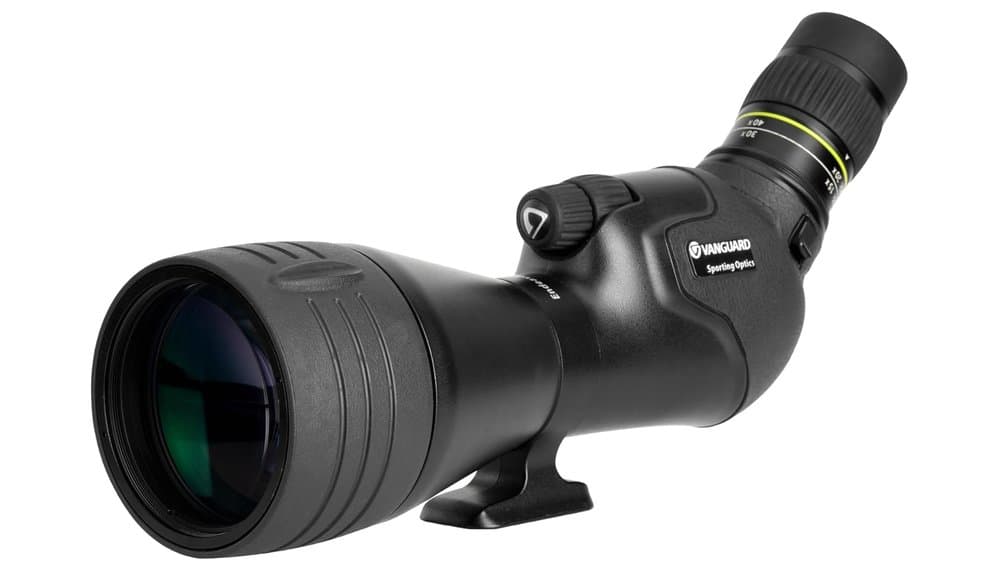
Vanguard Endeavor HD65A Spotting Scope Review
Spotting scope with 65mm ED glass & 15-45x zoom for birding & hiking. Balanced performance & portability for serious nature observers.
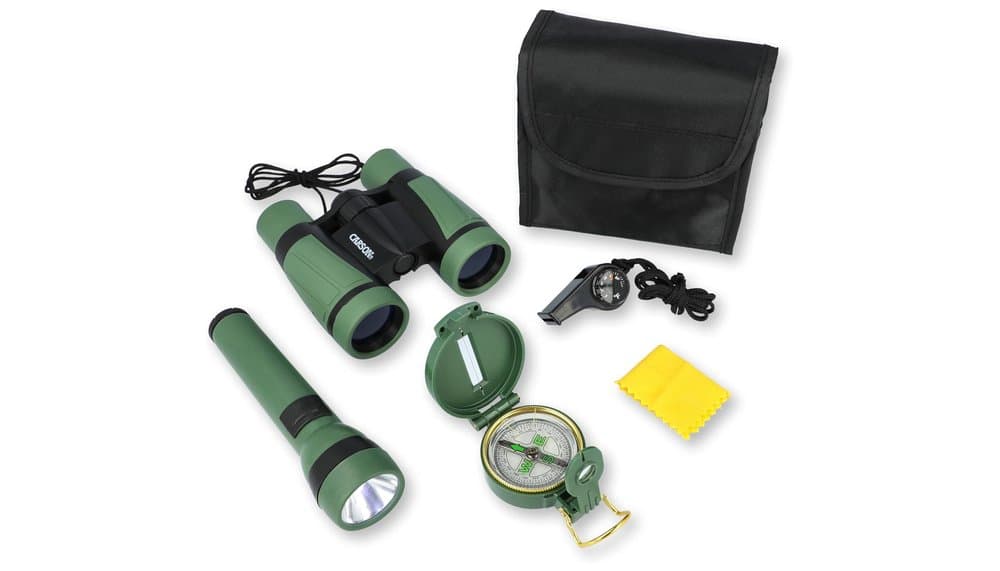
Carson AdventurePak Kids' Exploration Tool Kit Review
Explore nature with this kid's 5-piece tool kit for outdoor adventure and educational discovery. Perfect for young explorers.
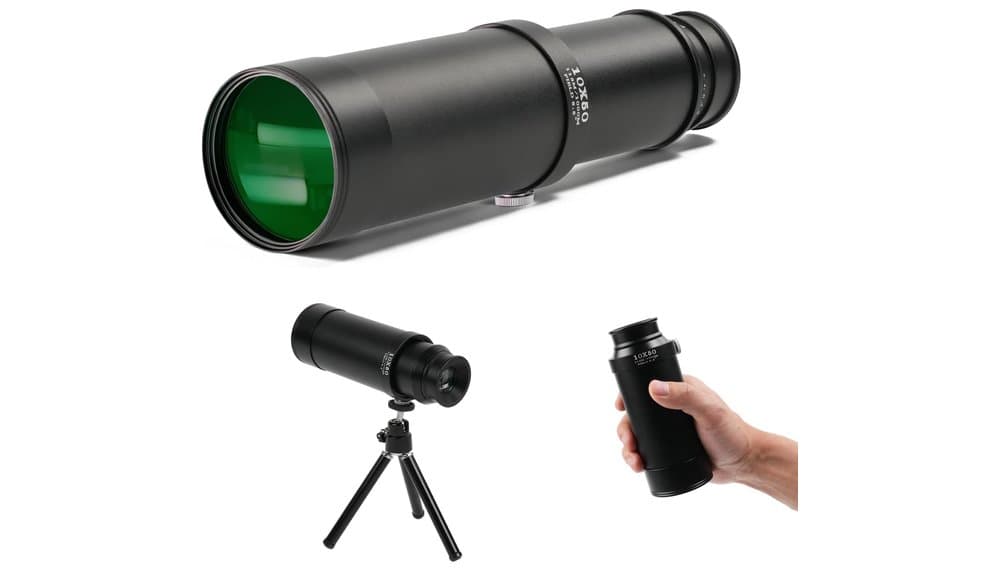
BOSTRON CY 10x50 Monocular Review & Test
Compact 10x50 monocular review: Analyzes optical clarity, field of view & build quality for hiking, nature & astronomy. See its true value.
Guides you might like
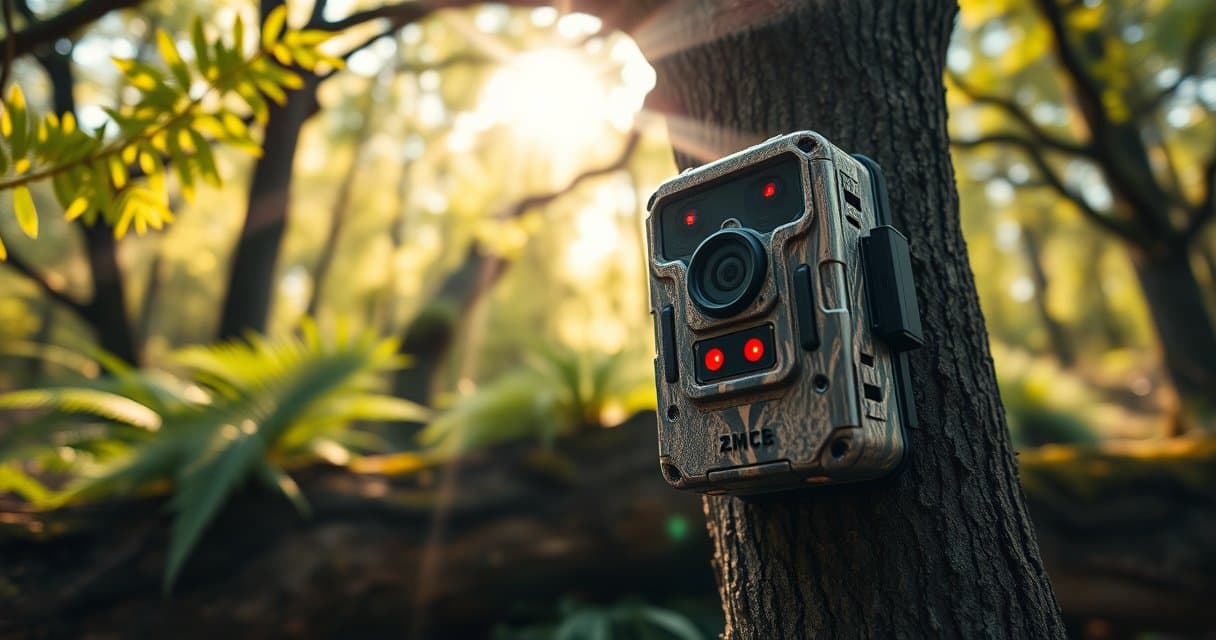
WiFi Trail Camera Guide
See wildlife discreetly from your couch! Learn how WiFi trail cameras let you monitor animals without disturbance and how to choose the right one.
Ultimate Travel Telescope Guide
Choose a portable, high-performance travel telescope to explore the universe from your backpack without compromising on essential astronomical views.
Ultimate Guide to Night Vision Binoculars
Choose the perfect night vision binoculars: Gen vs. digital? Unravel the tech to make your nighttime wildlife adventures a total success. Guide inside.