Celestron Nature DX ED 12x50 Binoculars Review & Test
Published on 20 August 2026 · By OptiqueNature
Review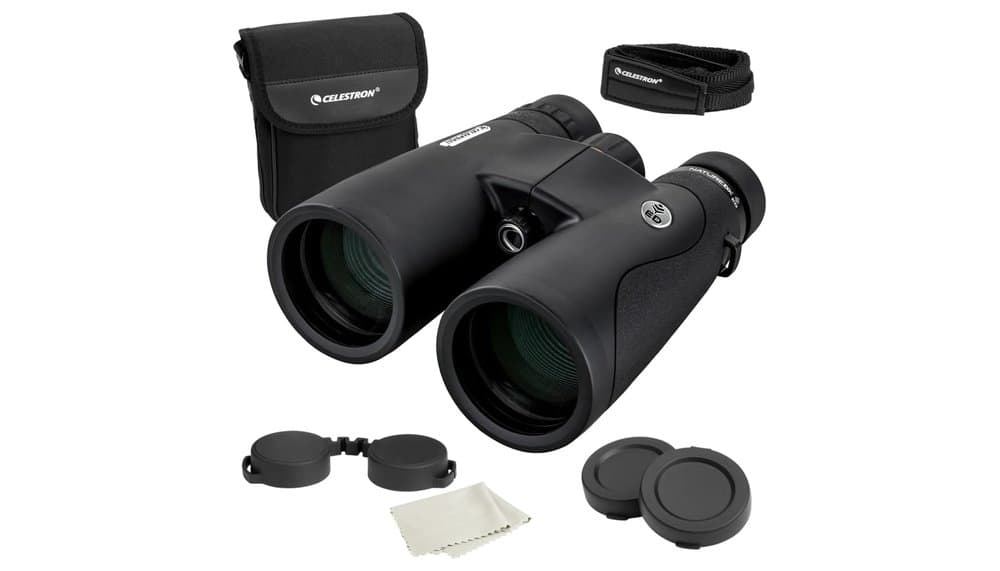
Introduction
In the demanding world of nature observation, finding the perfect balance between optical performance, robustness, and price is a perpetual quest. Large-aperture, high-magnification binoculars hold a special place, promising distant details but often imposing compromises. The Celestron Nature DX ED 12x50 presents itself as a bold solution in the mid-range segment. This model incorporates optical technology often reserved for higher-end ranges: ED (Extra-low Dispersion) glass. We will dissect this instrument to understand if it manages to offer exceptional performance without sacrificing essentials for the field observer, based on its specifications, expert tests, and consolidated feedback from the user community.
Key Strengths
- Exceptional optical quality for the price thanks to ED glass which dramatically minimizes chromatic aberration.
- High brightness and light transmission enabled by BaK-4 prisms with phase coating and full multi-coating.
- Robust and waterproof construction with a nitrogen-purged (fogproof) body and rubber armoring.
- Remarkable versatility for long-distance observation, casual astronomy, and low-light conditions.
- Very short minimum focusing distance (2.5 m) for a 12x50 model, useful for entomology or botany.
Weaknesses
- Significant weight and bulk (806g) which hinder stability for prolonged handheld sessions.
- 12x magnification requiring impeccable technique or the use of a tripod to be fully exploited without shake.
- Comfort for eyeglass wearers sometimes criticized, with a stated eye relief of 14.3 mm that can prove insufficient depending on facial morphology.
- Eyecup mechanics considered less premium than the optical part by some users.
Detailed Product Analysis
Optical Performance: The ED Revolution at a Contained Price
The heart of the Nature DX ED 12x50's proposition lies in its optical assembly. On paper, the specs announce a serious configuration. The use of ED (Extra-low Dispersion) glass is the main argument. According to expert tests, this technology effectively allows to "virtually eliminate" color fringing (chromatic aberration), particularly on high-contrast edges. User feedback overwhelmingly confirms this point: the image is described as sharp, contrasty, and with faithful colors, even in difficult conditions.
The combination of BaK-4 prisms (superior to standard BK-7) and full multi-coating on all air-to-glass surfaces aims to maximize light transmission. With a 50mm objective lens and an exit pupil of 4.2mm (50/12), these binoculars capture a lot of light. The twilight factor (√(12x50) ≈ 24.5) is high, which, theoretically, destines them for honorable performance in low light, at dusk, or under a starry sky. The community indeed notes good brightness and a tangible advantage compared to non-ED models in these conditions.
The field of view is 5.8° (approximately 305 feet at 1000 yards / 101m at 1000m). For a 12x magnification, this is a standard value, neither exceptionally wide nor narrow. It is comparable to that of many direct competitors in this magnification category. It allows for easy tracking of birds in flight or moving animals, although 8x42 models will always offer a wider field.
Construction and Handling: Robust but Demanding
Testers emphasize that the construction is solid and inspires confidence. The rubber armor offers good grip in wet or dry conditions and protects against minor shocks. The waterproofing ensured by O-ring seals and nitrogen purging guarantees protection against internal fogging and moisture penetration, making them suitable for use in forests, by the sea, or in light rain.
However, the main physical compromise here is evident: the weight of 806 grams and generous dimensions. For active, nomadic use like hiking, this 12x50 format can become cumbersome. The majority of experts and experienced users are unanimous: the 12x magnification amplifies natural hand tremors. For detailed and prolonged observation, particularly in stationary birdwatching or astronomy, the use of a support (tripod or monopod) is highly recommended, even essential for some. Therefore, this is not a "grab-and-go" pair of binoculars for a quick walk, but rather a dedicated observation tool.
The general ergonomics are considered good, with a smooth central focus and a precise diopter adjustment wheel. The minimum focusing distance of 2.5 meters is a real asset, allowing observation of insects or flowers with high magnification, which is rare for this type of instrument.
Use with Eyeglasses
The specifications mention an eye relief of 14.3 mm. According to user feedback, this measurement is sufficient for many eyeglass wearers, who can see the entire field without removing their corrective lenses. However, several reviews, particularly on specialized forums, indicate that for some, this relief is still borderline. The soft, twist-up eyecups offer several adjustment steps, but it seems the experience varies depending on the shape of the frames and eye socket depth. This is a point to check in real conditions if possible.
Technical Specifications
| Feature | Detail |
|---|---|
| Model | Celestron Nature DX ED 12x50 |
| Magnification | 12x |
| Objective Lens Diameter | 50 mm |
| Prisms | BaK-4, with phase coating |
| Optical Coating | Fully Multi-Coated (FMC) |
| Special Glass | ED (Extra-low Dispersion) |
| Field of View | 5.8° (101m at 1000m / 305 ft at 1000 yds) |
| Exit Pupil | 4.2 mm |
| Eye Relief | 14.3 mm |
| Minimum Focus Distance | 2.5 m |
| Purge Gas | Nitrogen (waterproof & fogproof) |
| Armoring | Rubber |
| Weight | 806 g |
| Warranty | 2-Year Limited |
What Users and Experts Say
A cross-analysis of hundreds of customer reviews and available professional tests reveals clear trends.
The recurring positive points are overwhelming. Users unanimously praise the optical quality, described as "impressive for the price." The terms "sharpness," "natural colors," and "absence of color fringing" constantly reappear. Many favorably compare these binoculars to much more expensive models, believing the qualitative leap provided by the ED glass fully justifies the investment. Robustness and waterproofing are also highly appreciated, with the binoculars described as capable of withstanding outdoor conditions without issue. The versatility is widely praised: the same user can employ them for birdwatching, casual astronomy (the Moon, star clusters), and even basic digiscoping with an adapted mount.
The negatives focus essentially on the ergonomics related to the format. The weight is the number one critique for long handheld sessions. Stability with 12x magnification is a frequently mentioned challenge, confirming the need for stable technique (bracing elbows) or a tripod. A few isolated comments point to eyecup mechanics that may seem slightly less qualitative than the rest, or comfort for eyeglasses that is not optimal for all facial shapes. No major recurring optical or construction flaws are reported.
Conclusion
The Celestron Nature DX ED 12x50 are not all-purpose binoculars. They represent a strategic and deliberate choice for the demanding observer who primarily seeks high-level optical performance at a reasonable price point. The contribution of the ED glass is tangible and transforms the visual experience, offering sharpness and color fidelity that rival much more expensive instruments.
Their true nature is that of a specialized tool for distance and low light. They excel for coastal observation, wildlife surveillance from a fixed hide, beginner amateur astronomy, or outdoor sporting events. On the other hand, their weight and high magnification make them less suited for dynamic hiking or fast-moving observation without support.
In summary, if you are willing to accept the compromise of weight and the necessity for stabilization (steady body posture or tripod) to obtain exceptional image quality, these binoculars constitute, based on the synthesis of available data, one of the most solid and recommendable values in the mid-range market. They offer a window onto a level of detail that fully justifies their format and demonstrate that ED technology is now within reach of a wide audience of discerning enthusiasts.
100% free and independent — All our articles are written independently, without any sponsorship. We may earn a commission on purchases made through our links, at no extra cost to you.
Articles you might like
Vanguard Endeavor HD65A Spotting Scope Review
Spotting scope with 65mm ED glass & 15-45x zoom for birding & hiking. Balanced performance & portability for serious nature observers.
Carson AdventurePak Kids' Exploration Tool Kit Review
Explore nature with this kid's 5-piece tool kit for outdoor adventure and educational discovery. Perfect for young explorers.
BOSTRON CY 10x50 Monocular Review & Test
Compact 10x50 monocular review: Analyzes optical clarity, field of view & build quality for hiking, nature & astronomy. See its true value.
Guides you might like

WiFi Trail Camera Guide
See wildlife discreetly from your couch! Learn how WiFi trail cameras let you monitor animals without disturbance and how to choose the right one.
Ultimate Travel Telescope Guide
Choose a portable, high-performance travel telescope to explore the universe from your backpack without compromising on essential astronomical views.
Ultimate Guide to Night Vision Binoculars
Choose the perfect night vision binoculars: Gen vs. digital? Unravel the tech to make your nighttime wildlife adventures a total success. Guide inside.