Bushnell Sentry 18-36x 50mm Scope Review
Published on 24 April 2026 · By OptiqueNature
Review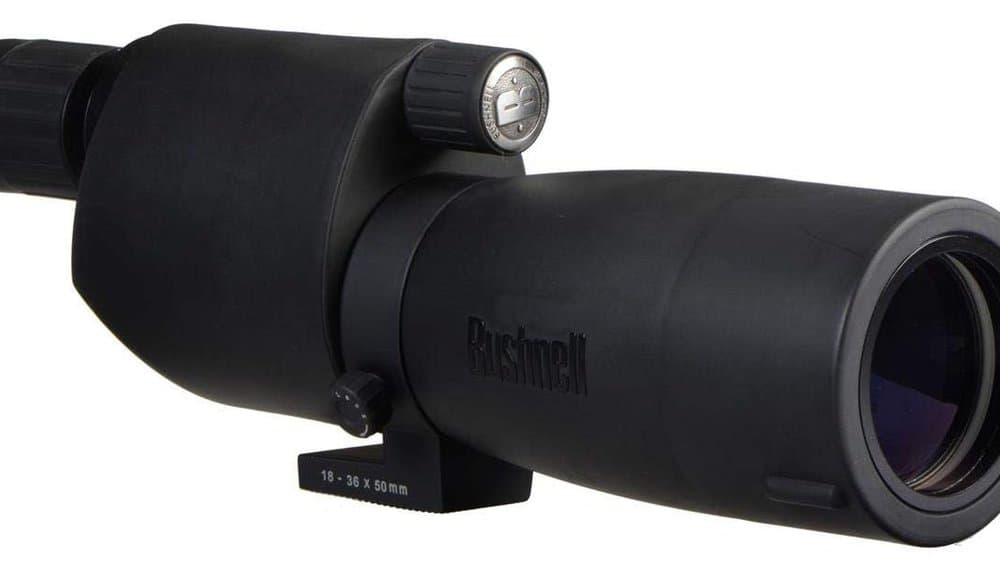
Introduction
In the often complex world of terrestrial spotting scopes, the search for a balance between accessibility and performance is a constant challenge. The Bushnell Sentry 18-36x 50mm fits precisely into this niche: an entry-level model offering an extended zoom in a compact format. We will dissect this scope based on its technical specifications, consolidated feedback from the user community, and available expert analysis. The objective is clear: determine for which types of observers this product represents a wise choice, and where its inevitable limitations lie.
Strengths
- Versatility of Continuous Zoom: The 18-36x magnification range offers great flexibility of use, from locating objects at low power to examining details.
- Compactness and Light Weight: With a 50mm objective and a relatively short body, this model is designed for mobility, making it a low-profile companion for hiking or field use.
- Asserted Weatherproofing: The waterproof and fogproof construction, guaranteed by O-ring seals, is a major asset for outdoor use in all weather conditions.
- Price-to-Performance Ratio: In its budget segment, the Sentry offers a set of basic features (zoom, waterproofing, complete kit) that is difficult to find at a lower price.
Weaknesses
- Limited Optical Performance at High Magnification: Beyond 30x, and particularly at 36x, testers note a significant drop in brightness, sharpness, and the appearance of vignetting (darkening of the edges).
- Construction Perceived as "Plastic": Despite its rubber armor coating, the feel in the hand and the perceived sturdiness of the mechanisms (zoom and focus) are regularly cited as potential weak points.
- Focus Judged Imprecise: The manual focus mechanism is described by some users as too sensitive or lacking precision, especially in combination with maximum zoom.
- Critical Dependence on a Tripod: From around 24x, stability becomes an issue. The included mini-tripod is universally considered insufficient, requiring the purchase of a sturdier photo model.
Detailed Analysis of the Bushnell Sentry 18-36x 50mm
Optical Quality and Visual Performance
On paper, the specs announce fully multi-coated lenses on all air-to-glass surfaces and a BAK-4 prism, a standard combination in serious entry-level gear aimed at maximizing light transmission and contrast. In practice, feedback is mixed. In optimal daytime conditions and up to medium magnification (around 24x), the majority of users agree that the image is clear, bright, and sufficiently contrasted for general wildlife or landscape observation.
However, it is under difficult lighting (dusk, overcast sky) and at the maximum magnification of 36x that the optical compromises appear. Light transmission, although correct for a 50mm at low power, drops notably. The image becomes dark and lacks punch. Resolution decreases, and vignetting can become bothersome. This corresponds to the expected characteristics of an economical optic without ED (Extra-low Dispersion) glass or advanced phase or dielectric coatings, reserved for higher segments. The theoretical twilight factor is high thanks to the strong magnification, but the exit pupil falls to only 1.4mm at 36x (50/36), which explains the difficulty in seeing a clear and bright image under those conditions.
Field of View and Ergonomics
The field of view is not the strong point of such a powerful zoom on a small objective. Although exact specifications are not always communicated, the view is naturally narrow at 36x, making pointing and tracking a subject more delicate. Compared to similar-zoom competitors in this range, it sits at the lower end of the average.
In terms of ergonomics, the scope is generally considered pleasant to handle thanks to its rubber armor. The eye relief of 16mm, on paper suitable for eyeglass wearers, can in practice become restrictive at the highest magnifications according to feedback. The minimum focus distance is satisfactory for versatile observation, allowing for reasonably close viewing of small subjects.
Construction and Durability
Bushnell highlights a waterproof and fogproof construction via nitrogen purging. User feedback generally confirms this claim, with very few reports of moisture infiltration or internal fogging, even after several years of moderate use. This is a reliable point.
The caveat concerns the perception of mechanical solidity. While the body withstands light shocks well, the community regularly notes that the zoom and focus rings lack finesse and can seem fragile. This is not a tool designed for intensive use or rough handling. Its contained weight (approximately 876g) is an asset for transport.
Recommended and Not Recommended Use Cases
What the Sentry is suited for:
- Daytime observation of wildlife and birds at short to medium distances (up to 24-30x).
- Hiking and travel where compactness is paramount.
- Landscape observation.
- Introduction to digiscoping (smartphone adaptation) with variable results, especially at low magnification.
- Spotting for recreational shooting at moderate distances, as confirmed by several users on forums.
What it is less suited for:
- Observation in low light (dawn, dusk, dense forest).
- Intensive use at high magnification (36x) requiring a critical image.
- Astronomy beyond basic lunar observation, due to optical limits and the narrow field.
- Demanding digiscoping at high zoom.
- Extreme environments where robustness is essential.
Technical Specifications Table
| Characteristic | Detail |
|---|---|
| Model | Bushnell Sentry 18-36x 50mm |
| Objective Diameter | 50 mm |
| Magnification | 18x to 36x (continuous zoom) |
| Prism | BAK-4 |
| Optical Coatings | Fully multi-coated on all surfaces |
| Waterproofing | Yes (Waterproof) |
| Purge/Filling | Nitrogen (fogproof / Fogproof) |
| Coating | Rubber armor |
| Eye Relief | 16 mm |
| Focus | Manual |
| Tripod Compatibility | Yes (standard 1/4" thread) |
| Approximate Weight | 876 g |
| Included Items (depending on kit) | Spotting scope, soft case, ocular lens cover, mini-tripod (variable quality), carrying case |
What Users and Testers Say
The synthesis of 169 customer reviews (average rating of 4.0/5) and available expert analysis paints a consistent picture of the product.
The recurring positive points are:
- Overall satisfaction relative to the price paid. The phrase "good value for money" comes back as a leitmotif.
- Appreciation of the extended zoom range for a compact model.
- Confirmation of waterproofing in light rain conditions.
- Compactness and the "practical to carry" aspect.
- Image quality considered sufficient for occasional daytime use.
The most frequent criticisms concern:
- The included accessory: The mini-tripod is almost systematically described as useless, too light, and unstable. Many recommend immediately investing in a sturdy photo tripod.
- Optical limitations at high zoom: Mentions of a "dark", "lacking sharpness", or "reduced" image at 36x are very common.
- The feel of construction: Terms like "plastic", "a bit cheap mechanism", or "uncertain durability" appear in more critical feedback.
- Focus precision: Several users note that it is difficult to achieve perfect sharpness, especially at maximum power, due to an overly sensitive focus ring.
Web experts confirm this positioning, describing the Sentry as a valid entry-level model for initiation or light use, but clearly surpassed in clarity, resolution, and finish by mid-range Vortex or Celestron models, which constitute its main competitors.
Conclusion
The Bushnell Sentry 18-36x 50mm is a product that fully assumes its positioning: an economical and versatile spotting scope for beginners or occasional observers. Its assets are concrete: a useful zoom, real waterproofing, a portable format, and an often complete kit.
However, its analysis also reveals inevitable compromises. The search for optical performance at high magnification or in low light will be disappointed. Its construction, although waterproof, does not inspire absolute confidence for intensive use over several years.
Our conclusion is therefore nuanced and targeted: this scope is an excellent entry point for someone wanting to discover terrestrial observation without a significant investment, for activities like hiking, daytime backyard bird watching, or spotting for shooting. Conversely, for the regular observer who is demanding about image quality, or planning outings in difficult lighting conditions, it is prudent to consider directly a model from the higher segment, with a larger objective (65mm or 80mm) and advanced optical coatings. The Sentry fulfills its basic mission, but its limitations are a direct reflection of its price category.
100% free and independent — All our articles are written independently, without any sponsorship. We may earn a commission on purchases made through our links, at no extra cost to you.
Articles you might like
FunKind HC600Pro 4G Trail Camera Review
FunKind HC600Pro solar-powered 4G trail camera review. Analyzes real-time wildlife monitoring specs, solar/battery power, and performance data.
Haokoo Vision Nocturne 4K Night Vision Binoculars Review
Haokoo 4K Night Vision Binoculars review: See & record in total darkness. Compact, versatile for nature observation. High-definition digital performance.
Celestron Astro-FI 102 WiFi Reflector Telescope Review
Wireless Celestron Astro-FI 102 telescope review: Does smartphone control simplify stargazing for beginners or add unnecessary complication?
Guides you might like
WiFi Trail Camera Guide
See wildlife discreetly from your couch! Learn how WiFi trail cameras let you monitor animals without disturbance and how to choose the right one.
Ultimate Travel Telescope Guide
Choose a portable, high-performance travel telescope to explore the universe from your backpack without compromising on essential astronomical views.
Ultimate Guide to Night Vision Binoculars
Choose the perfect night vision binoculars: Gen vs. digital? Unravel the tech to make your nighttime wildlife adventures a total success. Guide inside.