BolyGuard SG2060-T Trail Camera Review & Test
Published on 30 July 2026 · By OptiqueNature
Review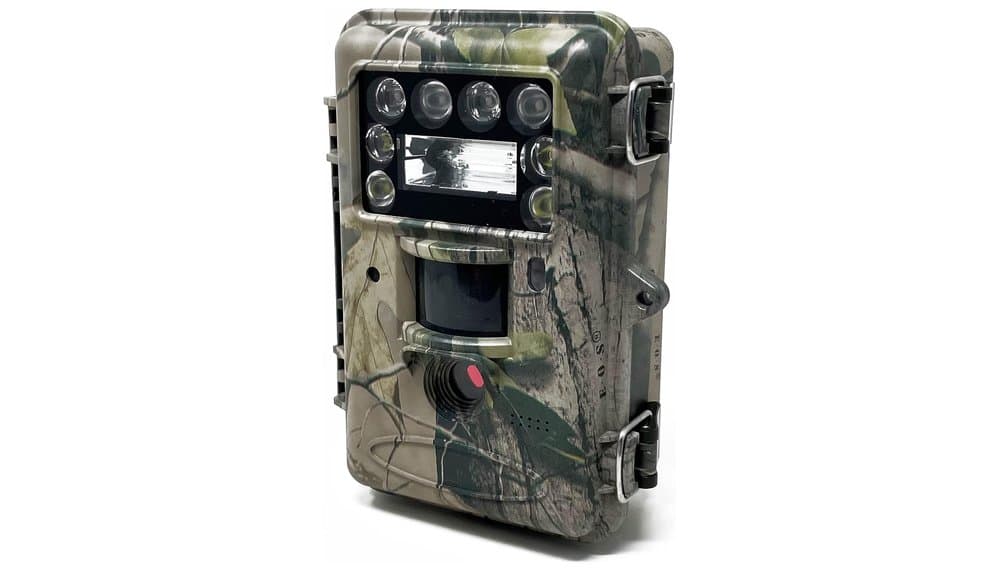
Introduction
In the world of trail cameras, one promise often recurs: capturing the unseen without disturbing it. The BolyGuard SG2060-T Chasse Trail Camera positions itself in this demanding niche, promoting a unique ability to film and photograph at night in color thanks to LED lighting. It's a product that immediately stands out from classic black-and-white infrared cameras. On paper, it targets the wildlife observer who wants to accurately identify species, their nocturnal behaviors, and obtain usable media, even in total darkness. However, this technological approach, as appealing as it may be, involves compromises. We will dissect this trail camera from all angles: its optical and electronic performance, its construction, its ergonomics, and, above all, its real suitability for the needs of field observers, based on its technical specifications and tangible feedback from the user community.
Strengths
- Color night vision thanks to white LEDs: This is the main argument. Unlike invisible infrared, the white LEDs illuminate the scene, allowing for night videos and photos with real colors. According to user feedback, this light is very powerful and offers excellent definition for identification of animals.
- Remarkable audio quality: Several testers and customers highlight the quality of the recorded sound, a parameter often overlooked but crucial for complete immersion and the study of behaviors.
- Versatility of capture modes: The camera offers great flexibility with programmable videos from 5 to 180 seconds, a time-lapse mode, a sequential photo+video function, and adjustable detection.
- Integrated 2-inch LCD screen: Allows for immediate viewing and listening in the field, facilitating setup and control without needing a computer.
Weaknesses
- Very high power consumption in night mode: This is the major flaw highlighted by almost all users. The LED lighting being very power-hungry, a set of 8 standard batteries is depleted in just a few days. An external power supply is almost mandatory for prolonged use.
- Deterrent effect on wildlife: The advantage of color becomes an ethological drawback. The community notes that while domestic animals pay little attention, wild animals are often frightened by the sudden and powerful lighting, which can skew observations and limit footage.
- Medium-term reliability issues: Several customer reviews report malfunctions after a few months of use (SD cards not recognized, corrupted media, premature shutdowns), calling into question the product's durability.
- Lack of a robust anti-theft system: The small provided eyelet is deemed inadequate by users, requiring the purchase or fabrication of an external protective casing to secure the investment.
Detailed Analysis by Category
Image Quality and Optical Performance
Here, it is necessary to separate day and night performance, as the technologies used differ radically.
During the day, the camera uses its 14MP (interpolated up to 36MP) color CMOS sensor. On paper, the specs promise good resolution. User feedback confirms a correct and detailed image quality during the day, sufficient for clear identification. The 57° field of view is standard, allowing coverage of a reasonable area without excessive distortion.
At night, it's a different product. The Xenon flash is used for photos, providing an instantaneous burst. Testers report that the night photo quality is "average but effective." However, for videos, it's 4 powerful incandescent LEDs that light up, creating constant illumination. This is where the quality excels: the community agrees that the definition and richness of colors are exceptional, far superior to any classic infrared. However, this lighting is so intense it can "burn out" very close subjects. Some clever users have had to add a diffusing filter in front of the LEDs to soften the light.
Light transmission and exit pupil, key concepts for traditional optics, do not directly apply here. Nocturnal performance depends entirely on the power and diffusion of the LEDs. Their effective range is estimated by users to be between 15 and 20 meters, below the sometimes-advertised 30m.
Construction, Weatherproofing, and Ergonomics
The technical sheet mentions a camouflage plastic housing. Feedback on physical robustness is mixed. No user reports failure due to rain, suggesting the housing is adequately weatherproof (although the exact IP rating is not communicated). The weak point of the construction appears to be the battery compartment door, described as fragile and prone to opening if the camera is jostled, cutting off power.
The menu ergonomics via the LCD screen are judged intuitive. However, the PIR sensor sensitivity, even on the low setting, is described by some as too high, leading to false triggers in environments with dense, moving vegetation.
Field Use and Application Cases
This camera is not a "universal" product. Its use must be considered.
- For nocturnal scientific observation and counting: It is excellent if the goal is to obtain certain visual identifications (fur color, marking details). However, the surprise lighting effect can bias natural behavior.
- For security or property surveillance: The powerful lighting acts as a deterrent spotlight. The color image quality is an asset for identification.
- For long-term tracking in isolated areas: This is its critical point. Without external power (high-capacity battery or solar kit), its autonomy is very limited. It is not a camera to install for several weeks on standard batteries.
- For discreet observation of wary wildlife: It is unsuitable. The visible white light will scare away most wild animals, making the observation of natural behaviors impossible.
The minimum focus distance is not a reported problem; the PIR system and fixed focal length lens seem to handle close subjects well.
Value for Money and Positioning
The BolyGuard SG2060-T occupies a particular niche. It does not belong to the entry-level segment (basic IR cameras) nor the premium high-end (recognized brands with ultra-fast firmware and high reliability). It sits in an intermediate price segment, but with a unique technology.
Its value for money is conditional. For a user willing to manage power supply (external battery) and whose study area tolerates or requires visible lighting (garden, forest edge, secured zone), it can offer exceptional value thanks to its color night videos and excellent sound.
Conversely, for a user looking for a discreet, autonomous for months, and reliably durable camera, the calculation is different. The reported reliability issues and power consumption make it a risky and potentially costly choice in maintenance. In this case, a "no-glow" black infrared camera from an established brand would often be a wiser investment.
What Users Say
The synthesis of available customer reviews and expert feedback paints a very contrasted picture, explaining the overall moderate rating.
The recurring positive points are unanimous:
- The quality of color night videos is praised as "excellent," "amazing," "TOPP."
- The sound quality is systematically mentioned as a major asset.
- The ease of use and visibility of the screen are appreciated.
The negative points are just as clear and repeated:
- The disastrous battery life is the number one problem. Terms like "hoher Energiebedarf," "significant consumption," "standard batteries... won't last long" appear in almost all feedback.
- The deterrent effect on wildlife is widely documented: "wild animals flee very quickly," "some wild animals don't like being lit up."
- Reliability concerns appear: "stopped working after 5 months," "videos that appear... and not in the archives," "card full for no reason."
- The excessive PIR sensitivity and the lack of a practical anti-theft system are also criticized.
The trend is clear: those who have circumvented the power issue (with external 6V/4.5Ah batteries or DIY adaptations) and who use the camera in a suitable context (where deterrence is not required) are very satisfied, sometimes to the point of buying more. Others, who expected standard autonomy or total discretion, are disappointed.
Technical Specifications
| Category | BolyGuard SG2060-T Specification |
|---|---|
| Photo Sensor | 14MP Color CMOS (interpolable to 36MP) |
| Video Resolution | 1080p (Full HD) |
| Night Illumination (Video) | 4 White Incandescent LEDs (visible) |
| Night Illumination (Photo) | Xenon Flash |
| Illumination Range | Advertised 18-30m / User Actual: ~15-20m |
| Detection Angle (PIR) | 60° |
| Detection Range | Up to 25m (optimal conditions) |
| Trigger Speed | 0.3 - 0.4 seconds |
| Screen | 2-inch Color LCD |
| Power Supply | 8 AA Batteries (high consumption) / Port for 6V External Power |
| Storage | SD/SDHC Card up to 32GB (not included) |
| Modes | Photo, Video (5-180s), Photo+Video, Time-Lapse |
| Housing | Plastic, Green Camouflage |
| Weatherproofing | IP not specified, but positive feedback on weather resistance |
Conclusion
The BolyGuard SG2060-T Chasse Trail Camera is a product with a strong personality and assumed compromises. It is not an all-rounder camera, but a specialized tool for precise missions.
Its technical analysis and user feedback converge on a conclusion: it is a camera ideal for those seeking the best color night image and sound quality, and who are willing to pay the operational price. This price is not only financial, it is logistical (managing an external power supply) and ethological (impact on animal behavior).
Therefore, we recommend it to equipped observers, who can connect it to a sustainable power source (external battery, solar) and who use it in contexts where absolute discretion is not paramount (property surveillance, garden observation, tracking of less timid species). For all other uses, particularly the discreet study of wildlife with long-term autonomy, its flaws – power consumption, deterrent effect, and reliability questions – make it a difficult choice to justify despite the undeniable beauty of its images.
100% free and independent — All our articles are written independently, without any sponsorship. We may earn a commission on purchases made through our links, at no extra cost to you.
Articles you might like
Vanguard Endeavor HD65A Spotting Scope Review
Spotting scope with 65mm ED glass & 15-45x zoom for birding & hiking. Balanced performance & portability for serious nature observers.
Carson AdventurePak Kids' Exploration Tool Kit Review
Explore nature with this kid's 5-piece tool kit for outdoor adventure and educational discovery. Perfect for young explorers.
BOSTRON CY 10x50 Monocular Review & Test
Compact 10x50 monocular review: Analyzes optical clarity, field of view & build quality for hiking, nature & astronomy. See its true value.
Guides you might like
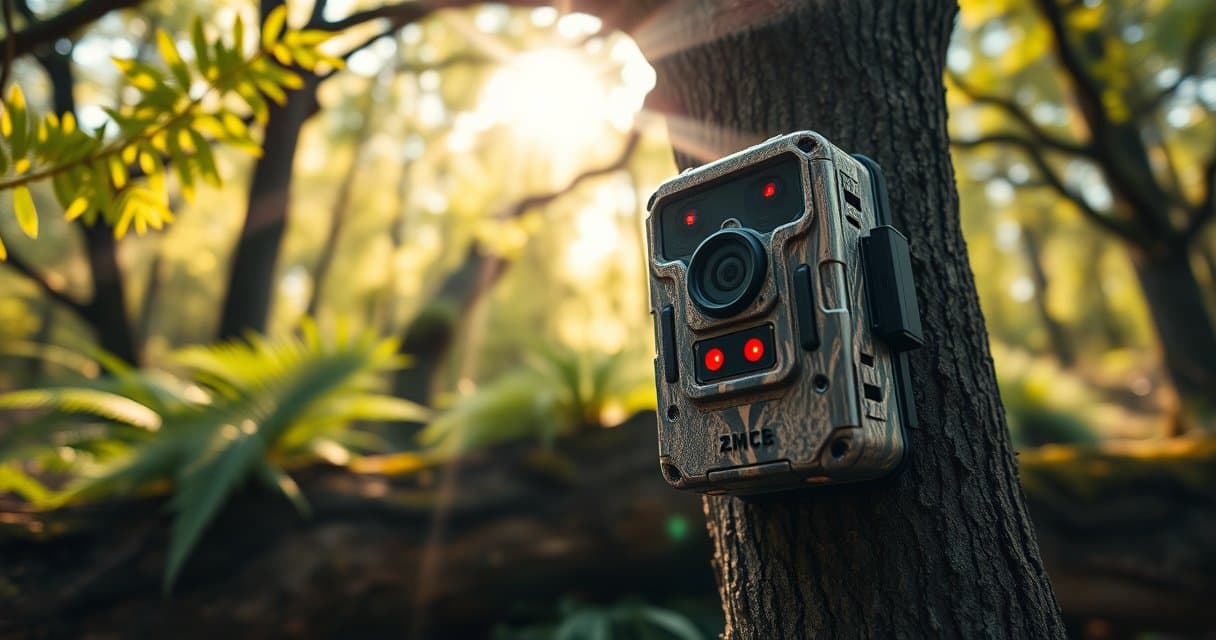
WiFi Trail Camera Guide
See wildlife discreetly from your couch! Learn how WiFi trail cameras let you monitor animals without disturbance and how to choose the right one.
Ultimate Travel Telescope Guide
Choose a portable, high-performance travel telescope to explore the universe from your backpack without compromising on essential astronomical views.
Ultimate Guide to Night Vision Binoculars
Choose the perfect night vision binoculars: Gen vs. digital? Unravel the tech to make your nighttime wildlife adventures a total success. Guide inside.