BDSHUNBF 16X52 Monocular Review & Performance Test
Published on 29 July 2026 · By OptiqueNature
Review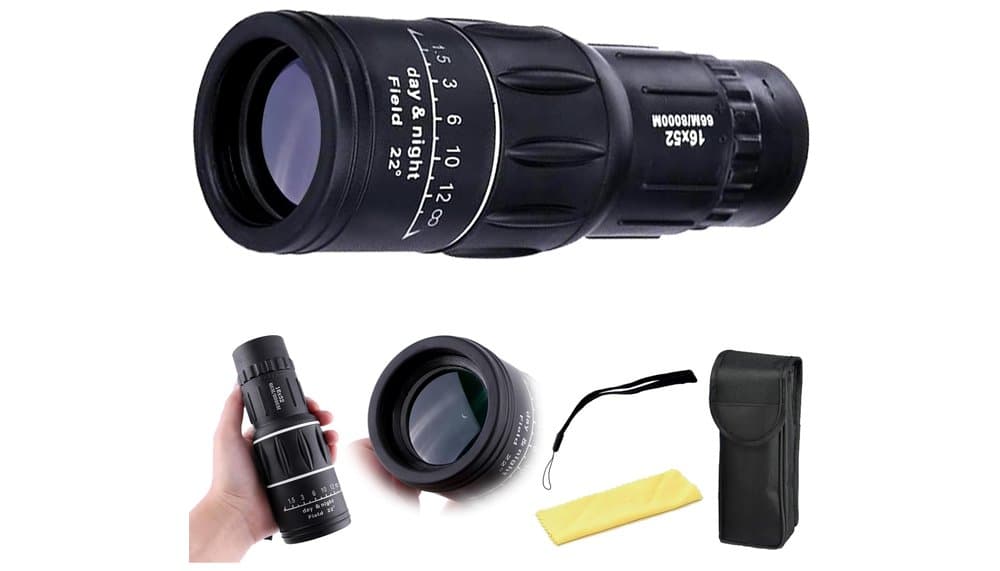
Introduction
In the world of recreational monoculars, high-magnification and affordable products always attract particular attention. The BDSHUNBF Monocular Telescope 16X52 falls into this category, promising compact and accessible long-distance observation. We will dissect this instrument to understand what it truly offers the nature observer, by confronting its technical specifications with concrete feedback from the user community. Is it a reliable tool for birdwatching or hiking, or a compromise with overly marked limitations?
Strengths
- High Magnification and Compactness: The 16x magnification coupled with a 52mm objective lens offers, on paper, an interesting formula for bringing distant subjects closer while maintaining a relatively compact and lightweight format.
- Robust Construction and Weatherproofing: According to the technical sheet, the monocular is advertised as waterproof and fogproof. Its rubber armor with a textured grip is designed to improve handling and absorb minor shocks, an important point for outdoor use.
- BAK4 Optics and FMC Coating: The presence of a BAK4 prism (superior to the standard BK7) and a FMC (Full Multi-Coated) treatment on the lenses promises better light transmission, increased contrast, and reduced chromatic aberrations compared to untreated entry-level models.
- Included Accessories and Portability: The inclusion of a protective case and a cleaning cloth, combined with a light weight (270g), makes it an instrument that is easy to slip into a backpack for occasional use.
Weaknesses
- Compromised Image Stability: A 16x magnification without support (tripod) is very demanding. User feedback confirms that the slightest hand shake makes the image tremble and prolonged observation tiring, limiting its practical handheld use.
- Restricted Field of View: At equivalent magnification, budget monoculars often present a narrow angular field of view. Although not specified by the manufacturer, this characteristic makes it difficult to locate and track moving subjects, like a bird in trees.
- Uneven Optical Quality in Real Conditions: Despite the promises of FMC coatings, several reviewers highlight a blurred image periphery, average overall sharpness, and pronounced internal reflections (flare) in the presence of stray light sources, signs of limited optical control and baffling.
- Manufacturing and Quality Control Defects: The community notes some inconsistency in unit quality, with reports of focus issues, faulty collimation (optical alignment), or lower-quality mechanisms. This directly impacts the user experience.
Detailed Analysis of the BDSHUNBF 16X52
Optical Performance: Theory vs Reality
On paper, the specs are attractive for a tight budget. The exit pupil diameter is 3.25 mm (52mm / 16). This is adequate for daytime use but becomes limiting in low light (twilight), where a larger exit pupil (beyond 4mm) would be preferable. The twilight factor is approximately 28.8 (√(16x52)), a theoretical figure indicating correct potential for perceived brightness, but which does not account for lens and coating quality.
This is precisely where the problem lies. While the combination of a BAK4 prism and FMC coating is a valid marketing argument against low-end products, it does not guarantee exceptional performance. Coatings advertised as "broadband green film" are common in this price range but are often surpassed by phase-correction coatings and dielectric prisms found in mid and high-end models. Concretely, this translates to lower light transmission and contrast, less accurate color fidelity, and sensitivity to glare. Reviews concur: the image lacks sharpness and "pop," especially at the edge of the field.
Ergonomics and Design for Field Observation
The main ergonomic challenge is intrinsic to its specifications: holding a 16x magnification steady by hand is almost impossible over time. For relaxed observation, a support (wall, branch, or ideally a small tripod with an adapter) becomes almost mandatory. This significantly reduces its "compact and quick to deploy" advantage.
The focus adjustment is manual. Some users find it smooth, others note that it is too sensitive or that it only allows sharpness on part of the field of view, as noted by one disappointed customer. The minimum focus distance is not communicated, it is likely several meters, making it unsuitable for observing insects or very close details.
For eyeglass wearers, the eye relief is a crucial parameter. Again, the lack of official information is a clue: it is likely short. Eyeglass wearers will most likely need to remove them to see the entire field, a major inconvenience for quick outdoor use.
Durability and Weatherproofing: What Are the Promises Really Worth?
The claim of a waterproof and fogproof (nitrogen purged) construction is common but should be taken with caution in this price range. No standard (like IPX7) or test is typically provided to attest to it. The rubber armor offers good grip and protection against light shocks, but the internal construction (chassis, seal integrity) remains a question mark. Feedback does not report major short-term problems, but long-term durability in intensive wet or dusty conditions is not guaranteed as it might be on a product from a reputable brand.
Typical Use Cases: Who Is It Suitable For?
- Birdwatching / Wildlife Observation: Suitable with reservations. The high magnification allows seeing details, but the narrow field and instability make locating and tracking a bird very difficult. Ideal for observing a fixed point (a nest, a known perch) with support.
- Hiking and Travel: Its compact and lightweight format is a real plus. Perfect for occasional observation of landscapes, buildings, or distant animals, without pretension to perfect optical quality.
- Sporting Events or Concerts: The 16x magnification is excessive for distances often under 100m. The image will be shaky and the field too narrow.
- Casual Astronomy: Can allow observing the Moon with details, but the lack of stable support and the probable chromatic aberrations at the edges will limit enjoyment.
- Digiscoping (Smartphone Photography): Possible if an adapter is purchased separately, but the limited optical quality of the monocular and the instability will yield mediocre results, well below a proper digiscoping setup.
Summary Technical Sheet
| Characteristic | BDSHUNBF 16X52 Specification |
|---|---|
| Magnification | 16x |
| Objective Diameter | 52 mm |
| Prism | BAK4 |
| Optical Coatings | FMC (Full Multi-Coated) - "Broadband Green Film" |
| Field of View | Not specified (likely narrow, 2.5° to 3° estimated) |
| Exit Pupil | 3.25 mm |
| Twilight Factor | ~28.8 |
| Eye Relief | Not specified (likely short) |
| Minimum Focus Distance | Not specified |
| Weatherproofing | Advertised as waterproof and fogproof (no standard specified) |
| Armor | Textured Rubber |
| Weight | 270 g |
| Included Accessories | Case, cleaning cloth |
What Users Say: Trends and Real Feedback
The analysis of customer reviews, with an overall rating of 3.7/5, reveals polarized opinions that confirm our technical analysis.
Recurrent positive points revolve around the excellent value for money for a first approach. Terms like "gets the job done," "decent for the price," and "good value for money" come up often. Satisfied users appreciate its compactness ("light, fits in a pocket") and the fact it offers significant magnification on a modest budget. Some find it perfect for simple and occasional uses.
The negative points are instructive and target the product's fundamental limitations. Several users express disappointment with the actual power and stability ("I thought it would be more powerful," instability is implied). The harshest criticism concerns optical and mechanical quality: "Absolutely mediocre. The focus works only on a zoom" suggests a collimation or very shallow depth of field problem. Others, internationally, note that you need to "get a bit of confidence" with the focus and that "the framing is not perfect." The advice "I would go for something more expensive another time" summarizes the feeling of those who quickly reach the instrument's limits.
The trend is clear: it's a product suited for users without high demands or very tight budgets, but one that will quickly frustrate anyone seeking a sharp, bright, and stable image, or intensive field use.
Conclusion
The BDSHUNBF Monocular Telescope 16X52 is the archetype of the entry-level, high-magnification monocular. It ticks the marketing boxes (BAK4, FMC, waterproof) at an attractive price, allowing an initiation to long-distance observation without a significant investment.
However, our technical analysis cross-referenced with user feedback highlights its significant compromises. The 16x52 combination is inherently unstable handheld and its optics, while superior to pure low-end, cannot rival the performance of mid-range models from established brands. Its likely narrow field of view and short eye relief make it a tool poorly suited for dynamic observation like active birdwatching.
Final Verdict: This monocular finds its audience among hikers or enthusiasts wanting a compact tool for occasional and static observations, without expecting perfect optical fidelity. For a more serious nature observer, investing in a model with a more reasonable magnification (8x or 10x) offering better stability, a wider field, and proven optical coatings, even at a slightly higher price, will be a much more rewarding choice in the field. The BDSHUNBF 16X52 is a gateway, but a gateway whose limits are quickly seen.
100% free and independent — All our articles are written independently, without any sponsorship. We may earn a commission on purchases made through our links, at no extra cost to you.
Articles you might like
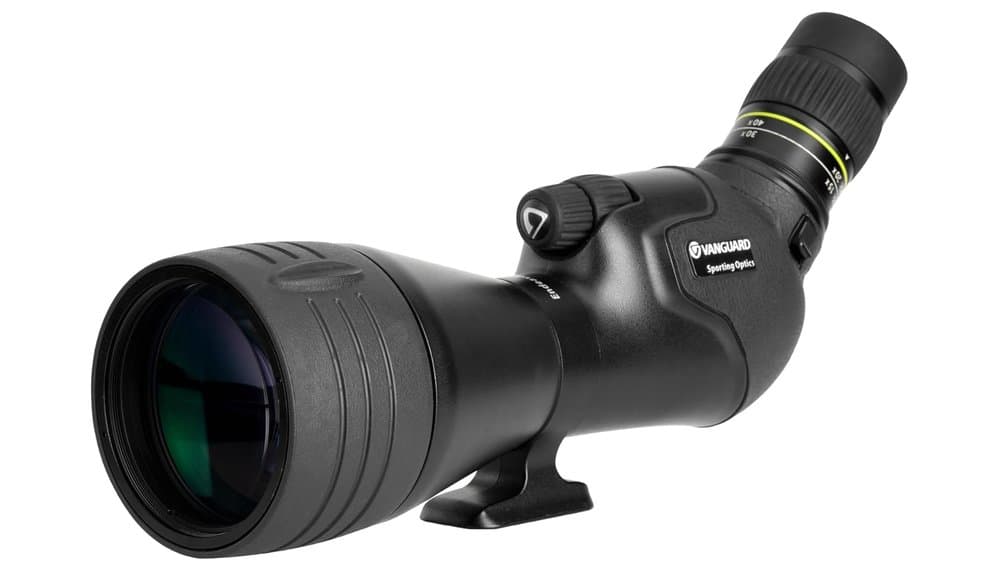
Vanguard Endeavor HD65A Spotting Scope Review
Spotting scope with 65mm ED glass & 15-45x zoom for birding & hiking. Balanced performance & portability for serious nature observers.
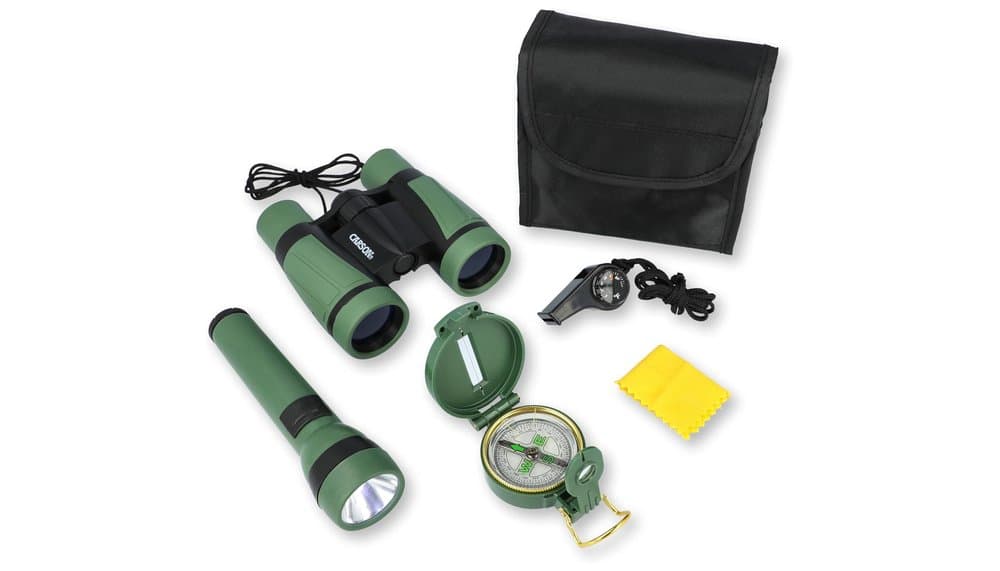
Carson AdventurePak Kids' Exploration Tool Kit Review
Explore nature with this kid's 5-piece tool kit for outdoor adventure and educational discovery. Perfect for young explorers.
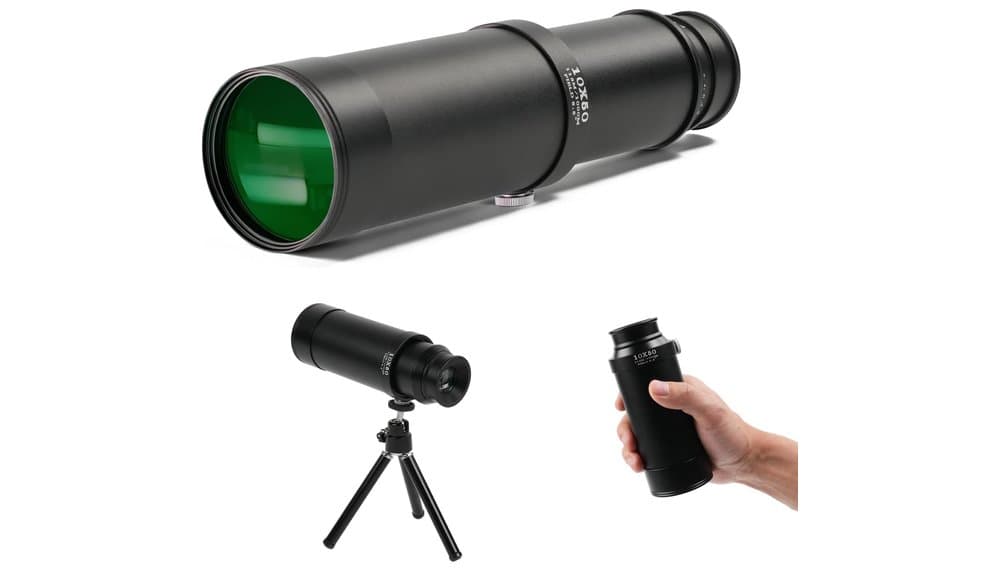
BOSTRON CY 10x50 Monocular Review & Test
Compact 10x50 monocular review: Analyzes optical clarity, field of view & build quality for hiking, nature & astronomy. See its true value.
Guides you might like
WiFi Trail Camera Guide
See wildlife discreetly from your couch! Learn how WiFi trail cameras let you monitor animals without disturbance and how to choose the right one.
Ultimate Travel Telescope Guide
Choose a portable, high-performance travel telescope to explore the universe from your backpack without compromising on essential astronomical views.
Ultimate Guide to Night Vision Binoculars
Choose the perfect night vision binoculars: Gen vs. digital? Unravel the tech to make your nighttime wildlife adventures a total success. Guide inside.