VOOPEAK TC22-T Dual Lens Solar Trail Camera Review
Published on 22 April 2026 · By OptiqueNature
Review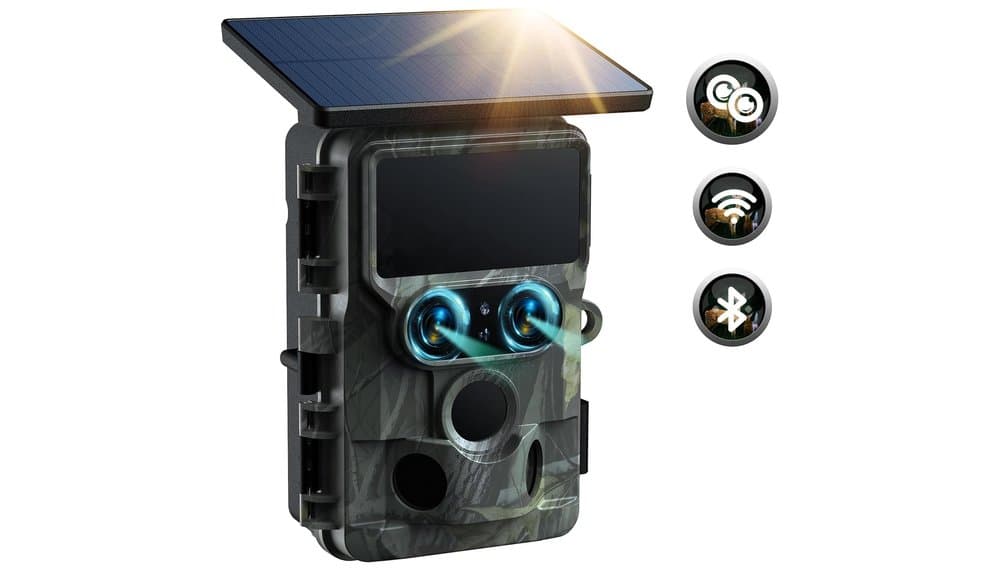
Introduction
Within the realm of modern trail cameras, the VOOPEAK TC22-T Dual Lens Solar Hunting Camera presents itself as an ambitious model, promising complete energy independence through its integrated solar panel and high-level optical performance with its dual-lens configuration. This device clearly targets nature observers and hunters looking to conduct extended surveillance sessions with minimal human intervention. Here, we analyze its technical promises, construction, and value for money based on its specifications, expert reviews, and user feedback.
Strengths and Weaknesses
Main Strengths
- Revolutionary Autonomy: The integrated solar panel combined with a 4400 mAh battery eliminates the need for disposable batteries and allows, under proper sunlight conditions, theoretically continuous operation.
- Superior Image and Video Quality: The Sony IMX458 sensor, dual lens, and H.265 processing enable 4K 30 fps videos and 60MP photos of appreciable sharpness, both day and night with "starlight" night vision.
- Practical Connectivity: The dedicated Wi-Fi connection and mobile app allow for downloading media and adjusting camera settings remotely, without needing to dismount the unit.
- Ruggedness Suited for the Field: The housing boasts an IP66 protection rating (dust-tight and resistant to powerful water jets) and is designed to withstand extreme temperatures.
Identified Limitations
- Limited Wi-Fi Range: The wireless connection is limited to a range of about 10 meters without obstacles, requiring physical proximity to the camera to retrieve files.
- Intermittent Triggers: Several users report that the PIR sensors can be sensitive to weather conditions like light rain or fog.
- Occasionally Finicky Software: Some feedback mentions the necessity of a factory reset upon initial setup for optimal performance, and the app interface could be improved.
- Critical SD Cards: Performance is dependent on using a high-quality U3 V30 SD card, which is not included with the device.
Detailed Analysis by Category
Optical Quality and Image Performance
The VOOPEAK TC22-T relies on an unusual optical architecture with its dual lens. On paper, this specificity aims to optimize daytime and nighttime capture separately. The main lens, described as an "astronomical-grade lens" with 6 layers of glass, is paired with the Sony IMX458 sensor for daytime results in 4K/60MP that users describe as "very sharp", "detailed", and "stable". Light transmission seems good for the category.
For night use, the secondary lens and specific "Starlight" processing aim to capture natural ambient light (moonlight, starlight) to produce color images, avoiding the conspicuous white or red flash of traditional IR LED cameras. Feedback confirms that night vision is effective and produces colored images in low-light conditions, although, as is often the case, excessive proximity to the subject can lead to overexposure.
The 120° field of view is competitive and typical for cameras in this range, allowing coverage of a wide area without excessive blind spots.
Construction, Weatherproofing, and Ergonomics
The robust plastic construction and forest camouflage are appreciated for their stealth in the field. The IP66 rating is a serious guarantee of protection against the elements. Users report its resistance to rain and cold. Its weight of 680 grams makes it portable without being excessively light, contributing to its stability once mounted.
Ergonomics are praised: the 2.4-inch LCD screen and clearly marked physical buttons make basic configuration accessible without the app. The presence of a standard tripod mount and robust locking straps is a plus. Testers also highlight the convenience of the USB-C port for data transfer and emergency charging.
Features and Software
The loop recording feature is essential for long deployments, automatically overwriting the oldest files when the card is full. The motion trigger with an advertised latency of 0.1s is responsive according to reviews.
The dedicated mobile app is a central point. It allows for viewing a live preview, changing settings (photo/video mode, PIR sensitivity, recording length), and downloading files directly to a smartphone. However, the community notes that the connection can be slow to establish (up to 30 seconds) and its limited 10-meter range is its main drawback. This is not a cellular (4G/LTE) camera: remote data retrieval requires physically approaching the device.
Battery Life and Power Supply
This is the major breakthrough of this model. The hybrid solar system (panel + integrated 4400mAh Li-ion battery) radically changes the user experience. Feedback is unanimous: when properly exposed to daylight, the device maintains a full charge and can operate indefinitely without battery changes. This eliminates the cost and logistics of batteries and significantly reduces disturbance at the observation site. In case of prolonged heavy cloud cover, the high-capacity battery and the possibility of USB-C charging offer substantial backup.
Technical Specifications
| Characteristic | Detail |
|---|---|
| Photo Resolution | Up to 60 Megapixels |
| Video Resolution | 4K Ultra HD at 30 frames per second |
| Image Sensor | Sony IMX458 |
| Processor | Novatek 96670 |
| Lens | Dual lens, 6-layer glass, 120° viewing angle |
| Night Vision | "Starlight" mode for color images in low light |
| Power Supply | Integrated solar panel + Internal 4400mAh Li-ion battery |
| Connectivity | 2.4 GHz Wi-Fi (~10m range), Dedicated App |
| Screen | 2.4-inch color LCD |
| Storage | MicroSD card (up to 128/256 GB), U3/V30 Class recommended |
| Durability | IP66 housing (water and dust resistant) |
| Temperature Range | -20°C to +70°C |
| Trigger | PIR sensor, adjustable delay, 0.1s trigger speed |
| Modes | Photo, Video, Photo+Video |
| Video Format | H.265 (~90% space saving vs MJPEG) |
| Audio | Built-in microphone, speaker for preview |
What Users and Experts Say
User reviews and technical analyses converge on several key points.
Recurring positive points revolve around three pillars:
- Image Quality: It is widely praised as being above average for the segment. Terms like "true 4K", "very sharp images", "clear details", and "bright night" are constantly mentioned. The difference from cameras with interpolated resolution is clearly perceived.
- Solar Autonomy: This is the most appreciated function. Users love not having to change batteries anymore, making this camera a "set and forget" surveillance device for long periods.
- Convenience of Wi-Fi and the App: Although limited in range, the ability to retrieve files without removing the SD card is considered a major time-saving and convenience advantage, preserving the observation site from disturbance.
Criticisms and points of caution are also clear:
- The excessive sensitivity of the PIR during rain or mist is the most frequently reported flaw, leading to video clips triggered without an animal subject.
- The Wi-Fi range limited to 10 meters is seen as a constraint, especially in dense forest or if the camera is placed high up.
- The importance of using a high-speed SD card (U3/V30) is emphasized, as failure to do so may lead to recording errors or reduced responsiveness.
- Some users recommend performing a factory reset upon first use to ensure optimal stability of settings.
Web experts highlight that this model marks a significant step towards energy self-sufficiency in the trail camera domain, positioning it as a reference in the solar-connected camera segment.
Conclusion: For Which Type of User?
The VOOPEAK TC22-T Dual Lens Solar Hunting Camera is not simply an evolution; it's a different proposition. It perfectly meets the needs of the dedicated nature observer, the land manager, or the property owner wanting discreet, long-term perimeter surveillance.
Its main merit is eliminating the energy constraint thanks to its effective solar system, enabling long-term wildlife studies or property monitoring without maintenance. Its 4K/60MP image quality and starlight night vision place it at the top end of "all-in-one" cameras.
On the other hand, its short-range Wi-Fi and the contextual sensitivity of its motion detector make it a less suitable tool for those who wish to retrieve their data remotely immediately (which would require a 4G cellular camera) or in environments very exposed to light precipitation.
Ultimately, for the user who prioritizes autonomy, raw image quality, and accepts moving to a short distance to retrieve data, the TC22-T represents a very coherent and high-performing investment. It embodies a practical and ecological vision of prolonged observation in a natural setting.
100% free and independent — All our articles are written independently, without any sponsorship. We may earn a commission on purchases made through our links, at no extra cost to you.
Articles you might like
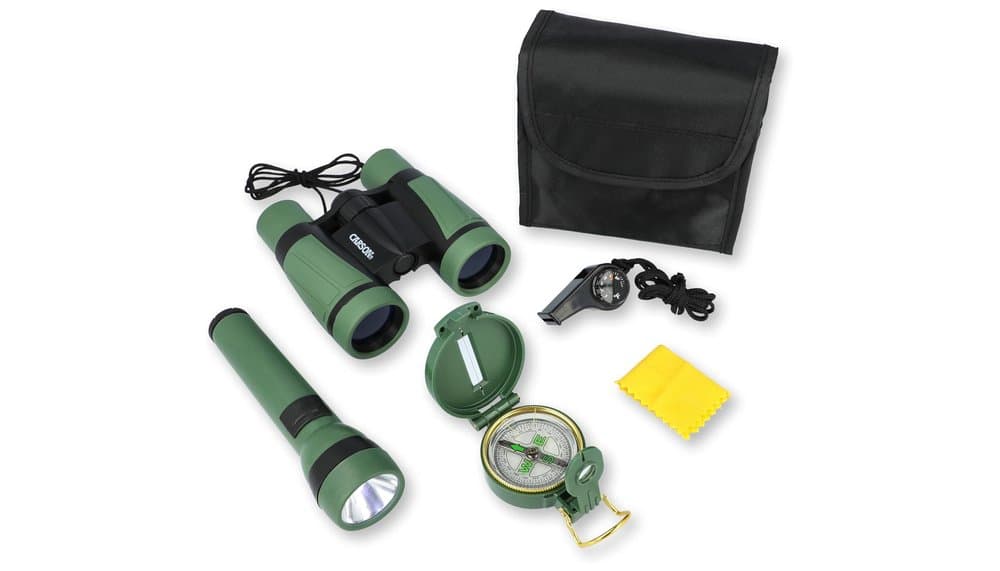
Carson AdventurePak Kids' Exploration Tool Kit Review
Explore nature with this kid's 5-piece tool kit for outdoor adventure and educational discovery. Perfect for young explorers.
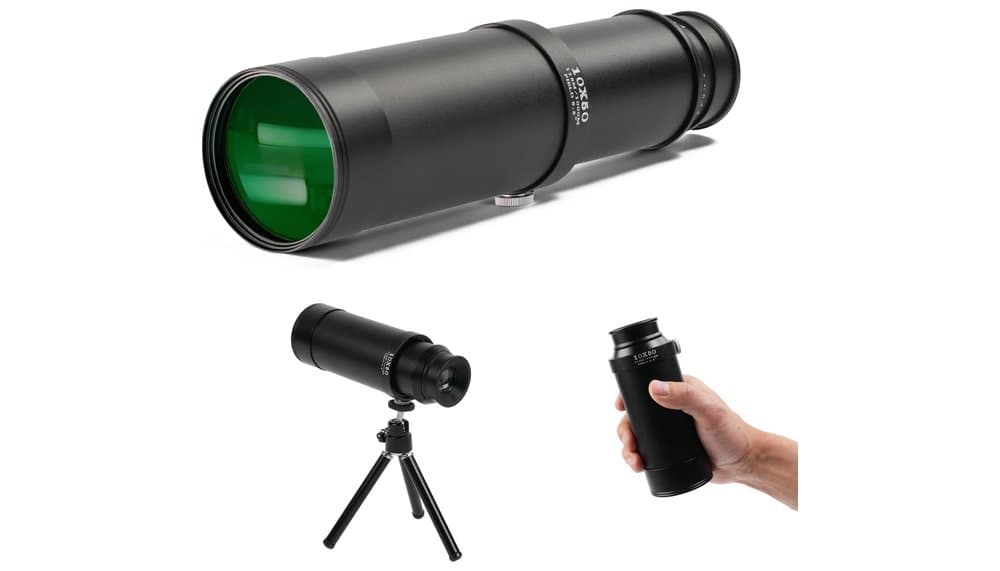
BOSTRON CY 10x50 Monocular Review & Test
Compact 10x50 monocular review: Analyzes optical clarity, field of view & build quality for hiking, nature & astronomy. See its true value.
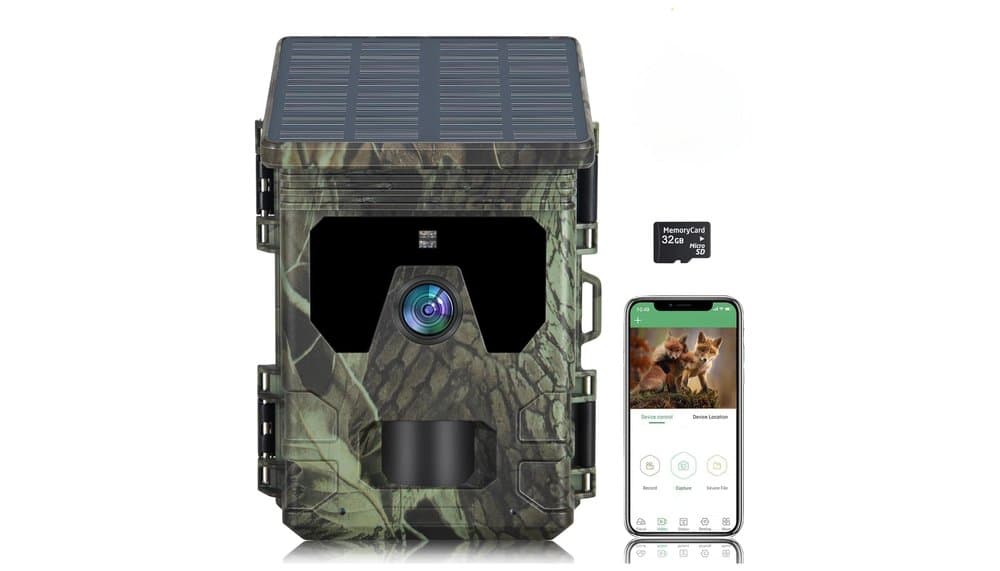
FunKind HC600Pro 4G Trail Camera Review
FunKind HC600Pro solar-powered 4G trail camera review. Analyzes real-time wildlife monitoring specs, solar/battery power, and performance data.
Guides you might like
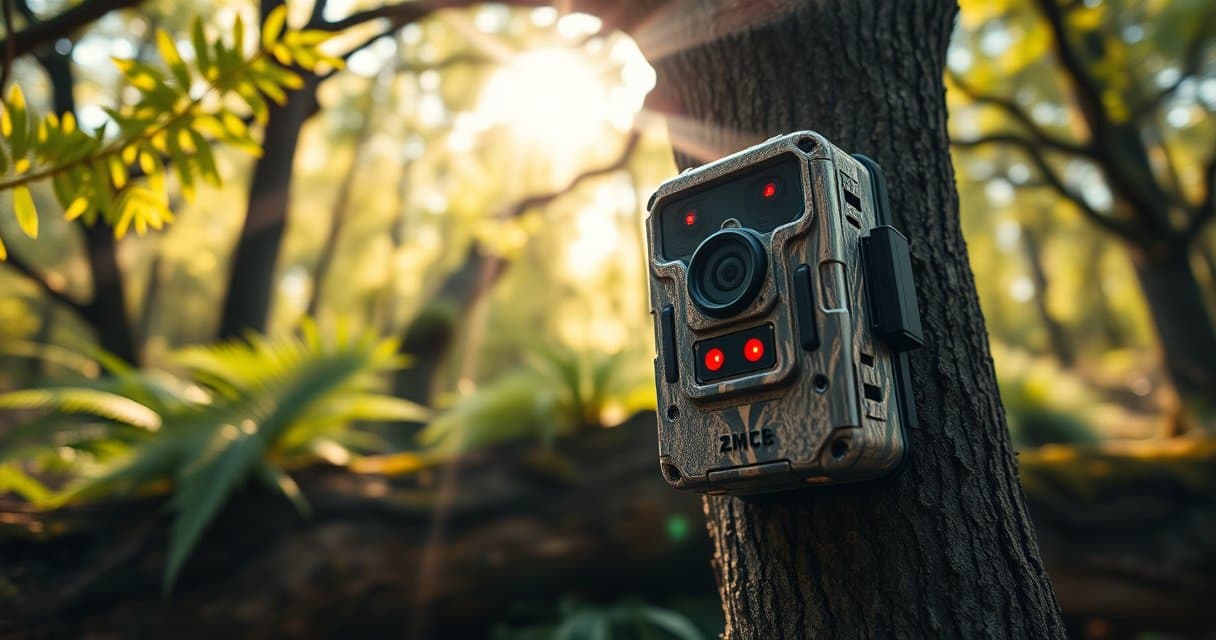
WiFi Trail Camera Guide
See wildlife discreetly from your couch! Learn how WiFi trail cameras let you monitor animals without disturbance and how to choose the right one.
Ultimate Travel Telescope Guide
Choose a portable, high-performance travel telescope to explore the universe from your backpack without compromising on essential astronomical views.
Ultimate Guide to Night Vision Binoculars
Choose the perfect night vision binoculars: Gen vs. digital? Unravel the tech to make your nighttime wildlife adventures a total success. Guide inside.