Vanguard VESTA 8320M Monocular Digiscoping Review
Published on 13 September 2026 · By OptiqueNature
Review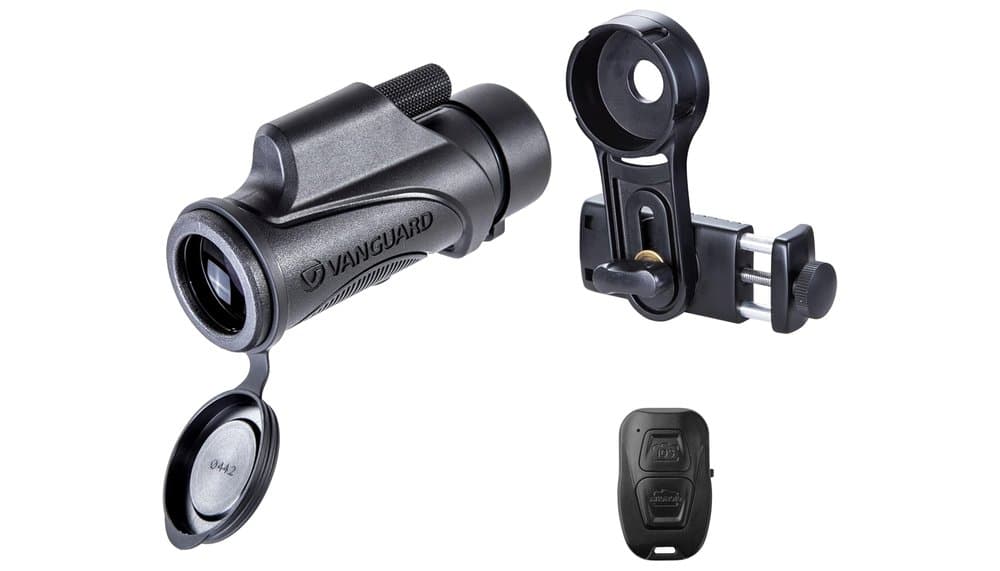
Introduction
In the landscape of nature observation instruments, the monocular occupies a unique place, combining compactness and versatility. The Vanguard VESTA 8320M Digiscoping Monocular positions itself as an all-in-one solution, promising not only close observation but also the ability to capture those moments with a smartphone. On paper, it's a kit designed to democratize the practice of digiscoping — the art of photographing through an optic — without requiring a significant investment. Through this analysis, we will dissect its technical characteristics, construction, real-world performance, and its place in the market, based on official specifications and concrete feedback from the user community.
Strengths and Weaknesses
Before diving into the details, here is a synthetic overview of the strengths and limitations of the Vanguard VESTA 8320M, as they emerge from the available data.
Strengths:
- Complete and integrated digiscoping kit: The inclusion of a universal PA-60 smartphone adapter and a Bluetooth remote offers a turnkey solution for image capture.
- Remarkable compactness and lightness: At only 260 grams and with minimalist dimensions, it's a discreet companion for hiking or travel.
- Interesting quality/price ratio for an entry into observation and basic digiscoping.
- Waterproof and Fogproof construction, ensuring durability in various weather conditions.
- BaK-4 glass prism and multi-coatings for honorable optical quality in its category.
Weaknesses:
- Digiscoping with compromises: User feedback consistently highlights a circular image (vignetting) and pale colors in direct output from the smartphone, requiring post-processing.
- Absence of high-end optical technologies: No ED (Extra-low Dispersion) glass for optimal chromatic correction, nor dielectric coatings or phase corrections on the prism, limiting performance in grazing light.
- Relatively narrow field of view for an 8x32, which can hinder the rapid location of subjects.
- Dependence on tripod/monopod: For digiscoping, stabilization is essential, but the kit does not include one.
Detailed Analysis of the Vanguard VESTA 8320M
Optical Quality and Field Performance
The heart of this instrument is a classic 8x32 configuration. The 32mm diameter offers a good compromise between brightness and size. On paper, the specs announce a BaK-4 roof prism and multi-coatings. This indicates a solid optical foundation for the entry-level segment. The BaK-4 glass, of better quality than BK-7, ensures more efficient light transmission and reduces brightness loss at the edges of the field of view.
However, it must be noted that there is no mention of ED glass or dielectric coatings on the prism mirrors. In practice, this means the device may show some chromatic fringing (slight colored fringes on strong contrasts) in conditions of high light contrast, and that its maximum light transmission will not rival more premium models equipped with these technologies.
The twilight factor (√(8x32) ≈ 16) and the exit pupil (32/8 = 4mm) are perfectly adequate for daytime use and early evening. The 4mm exit pupil is comfortable and allows for quick focusing. The eye relief is not specified by the manufacturer, but user feedback does not report major difficulties for eyeglass wearers, suggesting acceptable relief.
The real point of attention is its field of view. The physical dimensions suggest a rather restricted field. Compared to mid-range 8x32 monoculars or binoculars, the VESTA 8320M will likely offer a more "tubular" image, which can make locating a bird in a tree slightly less intuitive. This is a common concession on very compact and economical models.
Construction, Weatherproofing, and Ergonomics
The technical sheet highlights a waterproof and fogproof construction. This is a major argument for a product intended for outdoor use. This typically implies the optics are sealed with nitrogen or argon, protecting them durably against internal condensation. The rubber armor provides good grip and protection against minor shocks.
With a weight of 260g, this monocular is a featherweight. It will easily fit in a jacket pocket or backpack. Its small size (12.7 x 4.7 x 7.1 cm) makes it an "always have on hand" tool. The minimum focusing distance of 2.5 meters is suitable for observing insects, flowers, or small birds nearby.
The presence of an integrated 1/4 inch thread is crucial. It allows the monocular to be mounted on any standard photo tripod or monopod, a feature almost indispensable for stable digiscoping use. Focusing is done manually via a wheel, described as precise and smooth by users.
The Digiscoping Proposition: Main Asset with Caveats
The Vanguard VESTA 8320M is not sold as a simple monocular, but as a digiscoping kit. The inclusion of the universal PA-60 adapter and the Bluetooth remote fundamentally changes its value proposition. It saves the novice from searching for compatibilities and offers an immediately operational solution.
However, this is also where community feedback is most instructive and nuanced. Testers and users unanimously highlight two characteristics of the image obtained in digiscoping:
- The image is circular (strong vignetting). This is due to the design of the eyepiece, not originally optimized for coupling with a smartphone. The digital zoom of the phone must be used to crop and obtain a rectangle, which reduces the effective resolution.
- Colors can appear pale and contrast weak in direct output. As one user notes, "everything suggests that taking photos with a smartphone will be disappointing."
The potential, however, is clearly present. The same user adds: "With a little time to crop and process the image a bit (contrast): impressive!". This clearly positions the VESTA 8320M as a tool requiring minimal post-production (cropping, adjusting colors and contrast) to fully exploit its capabilities. It is not a device for instant "click and share" professional-quality photography, but an accessible and fun way to immortalize distant observations.
Value Comparison and Use Cases
In the budget segment (entry-level): The Vanguard VESTA 8320M stands out for its complete kit. Compared to basic monoculars at the same price, it offers obvious added value with the adapter and remote. Its optical quality, although simple, is judged "honorable" and "clear" for the price by users.
Versus mid-range: It cannot compete on pure optical performance. Dedicated observation monoculars, without digiscoping function, in this category will often offer a wider field of view, better aberration correction, and superior finish. The VESTA 8320M bets on versatility.
Recommended use cases:
- Hikers and light travelers: Its compactness makes it a perfect tool to lighten one's pack without giving up observation capability.
- Digiscoping beginners: It's a low-risk entry point to experiment with photography through an optic.
- Casual wildlife observation: For short, daytime sessions of bird or animal watching.
- Varied uses: Shows, cultural trips, or even very basic astronomical observation of the Moon.
Not recommended use cases:
- Demanding digiscoping requiring ready-to-use image quality.
- Observation in very low light (deep twilight).
- Intensive use by a demanding birder who will prioritize a wide field and perfect color fidelity.
What Users Say: Summary of Reviews
The average rating of 4.3/5 stars based on customer feedback reveals general satisfaction, tinged with a realistic understanding of the product's limits.
The recurring positive points are:
- Practical and complete kit: The inclusion of the adapter and remote is highly appreciated and considered a real plus.
- Good value for money: The majority of comments judge the product "good for the price" or "excellent value for money".
- Compactness and lightness: Often cited as major assets for portability.
- Correct optical quality for visual observation: Terms like "clarity", "good brightness", and "quality multi-coated optics" recur.
- Ease of use of the smartphone adapter.
The frequent negative points or criticisms are:
- Image quality in digiscoping: This is the main point of friction. The circular image (vignetting) is mentioned in almost all detailed reviews. The need to digitally zoom and rework the image (contrast, colors) is presented as an unavoidable step to obtain a satisfactory result.
- Sometimes misaligned expectations: A few users seem to expect photo quality equivalent to a dedicated telephoto lens, which is not the case.
- The manual or listing photos can sometimes be confusing (one review mentions photos of another model).
The consensus is clear: it is an excellent product for what it is – a compact and decent monocular, sold with a functional but basic digiscoping kit. It rewards patient users willing to do a minimum of post-processing.
Summary Technical Sheet
| Characteristic | Detail |
|---|---|
| Model | Vanguard VESTA 8320M Digiscoping Monocular |
| Magnification | 8x |
| Objective Diameter | 32 mm |
| Prism | Roof, BaK-4 glass |
| Optical Coatings | Fully Multi-Coated |
| Weatherproofing | Yes, waterproof & fogproof (nitrogen/argon) |
| Weight | 260 g |
| Dimensions (LxHxW) | 12.7 x 7.1 x 4.7 cm |
| Minimum Focus Distance | 2.5 m |
| Thread | 1/4" for tripod/monopod |
| Included Kit | Monocular, universal PA-60 smartphone adapter, Bluetooth remote, case, eyecup, objective lens protections |
| Manufacturer Warranty | 2 years |
Conclusion
The Vanguard VESTA 8320M Digiscoping Monocular is a product that perfectly assumes its positioning. It does not claim to be a high-end optical instrument, but rather a versatile and accessible solution for the nomadic observer or the curious individual wanting to try digiscoping without breaking the bank.
Its technical analysis reveals an honest optical foundation for its segment, with the assets of compactness, weatherproofing, and robust construction. Its Achilles' heel, anticipated by the specifications and confirmed by users, lies in the inherent limits of its digiscoping function: an image consistently requiring cropping and color adjustment.
Consequently, we highly recommend it to the target audience for which it is designed: the hiker, traveler, or amateur naturalist primarily seeking a light and discreet observation tool, and who sees the smartphone photo function as a practical and fun bonus, even if it demands a small retouching effort. For those whose primary requirement is perfect image quality in digiscoping, it would be better to direct their budget towards more specialized and expensive solutions. The VESTA 8320M fulfills its mission: democratizing access to close observation and its capture, with honesty about its compromises.
100% free and independent — All our articles are written independently, without any sponsorship. We may earn a commission on purchases made through our links, at no extra cost to you.
Articles you might like
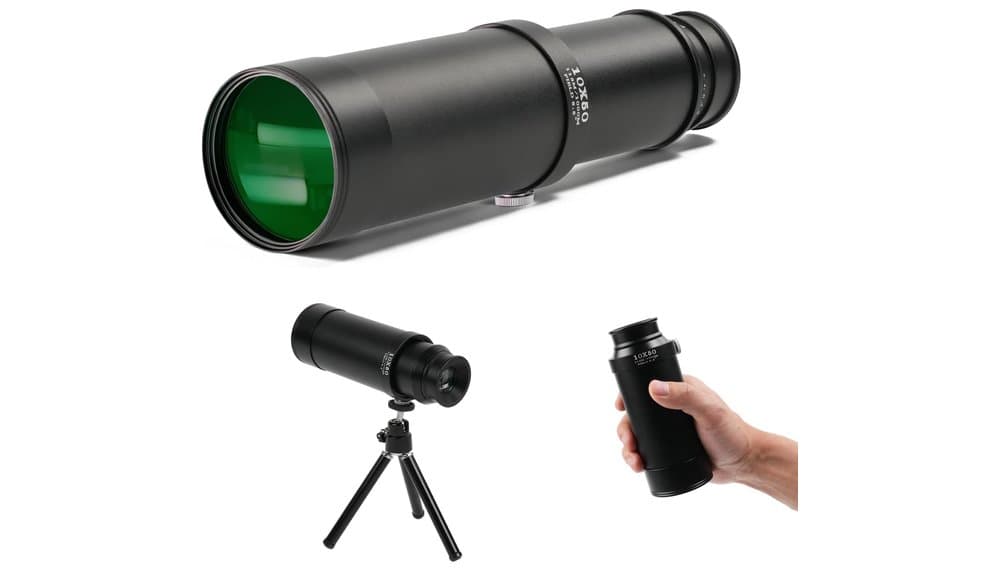
BOSTRON CY 10x50 Monocular Review & Test
Compact 10x50 monocular review: Analyzes optical clarity, field of view & build quality for hiking, nature & astronomy. See its true value.
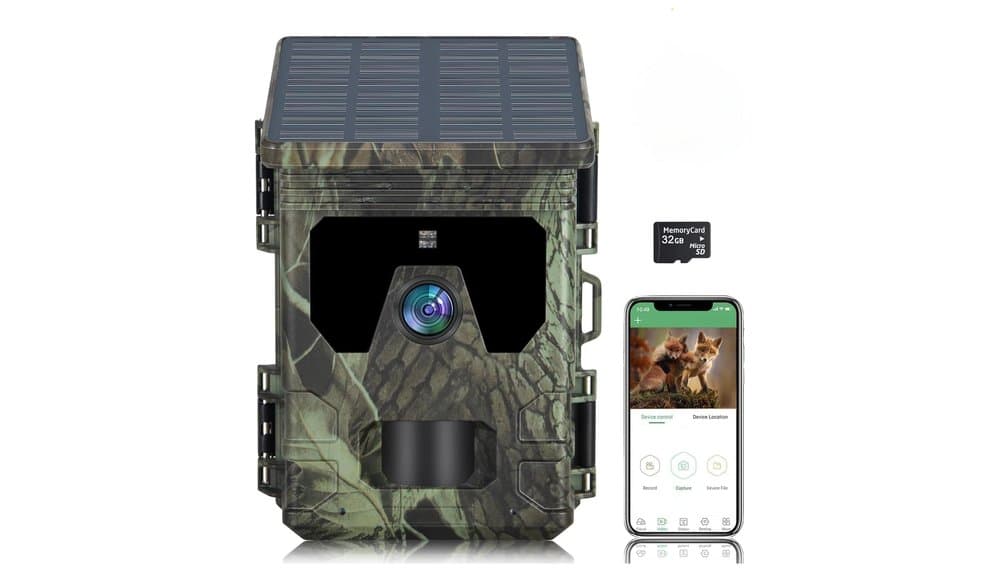
FunKind HC600Pro 4G Trail Camera Review
FunKind HC600Pro solar-powered 4G trail camera review. Analyzes real-time wildlife monitoring specs, solar/battery power, and performance data.
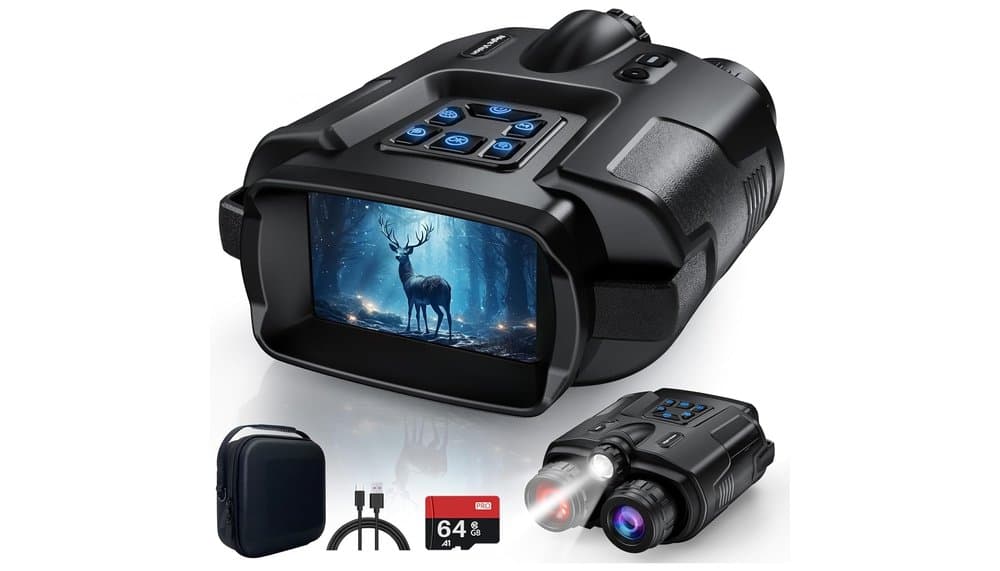
Haokoo Vision Nocturne 4K Night Vision Binoculars Review
Haokoo 4K Night Vision Binoculars review: See & record in total darkness. Compact, versatile for nature observation. High-definition digital performance.
Guides you might like
WiFi Trail Camera Guide
See wildlife discreetly from your couch! Learn how WiFi trail cameras let you monitor animals without disturbance and how to choose the right one.

Ultimate Travel Telescope Guide
Choose a portable, high-performance travel telescope to explore the universe from your backpack without compromising on essential astronomical views.
Ultimate Guide to Night Vision Binoculars
Choose the perfect night vision binoculars: Gen vs. digital? Unravel the tech to make your nighttime wildlife adventures a total success. Guide inside.