TRDEWR Long View Professional Monocular Review
Published on 9 October 2026 · By OptiqueNature
Review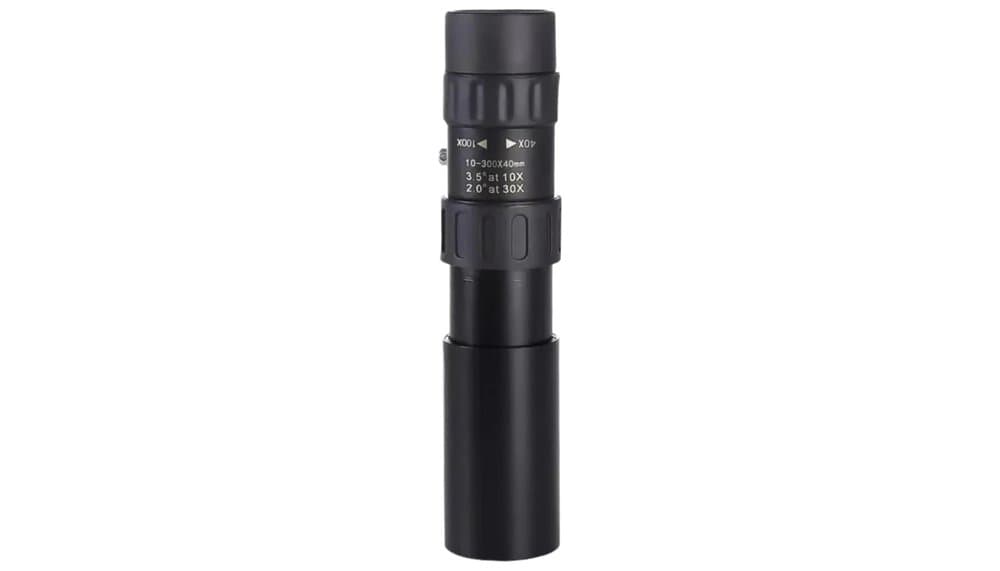
Analysis of the TRDEWR Long View Professional Monocular Telescope
Here is a monocular that promises a lot: a deep zoom from 10x to 300x, a metal construction, and a portable design. On paper, it seems to be the ultimate tool for long-distance observation. But behind these enticing specifications, what is the TRDEWR Long View Professional really worth? We have analyzed its technical characteristics, dissected user feedback, and compared its claims to the current field optics market to give you a clear and objective view.
Strengths
- Very Extensive Zoom: The advertised magnification range, from 10x to 300x, is exceptionally wide for a model at this price.
- Seemingly Robust Construction: The metal housing promises a certain sturdiness and good heat dissipation.
- Compactness and Portability: Its monocular format makes it easy to slip into a bag for hiking or hunting.
- Foldable Eyecup: This feature is designed for eyeglass wearers, offering appreciable comfort of use.
Weaknesses
- Major Flaw Reported by Users: Many customer reviews indicate a recurring focus problem, with the device often arriving unable to achieve sharp focus, resulting in a blurry image and rendering the tool unusable.
- Very Limited Optical Quality: No mention of ED (Extra-low Dispersion) glass, quality multi-layer coatings, or high-performance prisms. Resolution and clarity suffer greatly at high magnifications.
- Reduced Field of View and Low Brightness: Such a high zoom on a modest-sized objective lens inevitably leads to a very narrow field of view and a tiny exit pupil at high magnifications, making the image dark and observation difficult.
- Impossible Stability Without a Tripod: Beyond 20x-30x, handshake makes the image unusable. Use at 300x is purely theoretical without an ultra-sturdy support.
Detailed Analysis
Optical Quality and Visual Performance
The provided technical specifications are minimalistic, which is often a first indicator. The TRDEWR Long View Professional advertises a 40mm objective lens and a 10-300x zoom. Immediately, a quick calculation alerts us: at 300x, the exit pupil (objective diameter / magnification) is only 0.13mm. This is extremely low, well below the human pupil, meaning the image will be extremely dark and the field of view minuscule. In practice, brightness and observation comfort drop radically as soon as one exceeds 40-50x on an instrument in this category.
The mentions of "Optical Lens + High Definition Green Film" are vague. They do not guarantee the presence of quality anti-reflective multi-coatings on all air-to-glass interfaces, essential for maximizing light transmission and contrast. No information is given on the type of prisms (roof or Porro?) or their coatings. In the field, this often translates to images lacking sharpness, with pronounced color fringing (chromatic aberration) around high-contrast objects, and disappointing overall clarity.
The field of view is not quantified, but with such a high zoom ratio, it is inevitably very restricted at high magnifications, making spotting a bird or an animal an exercise in patience and precision.
Construction and Handling
The metal housing is a positive point on paper, suggesting better rigidity and protection against light shocks compared to plastic. The advertised weight of 100g places it in the category of very lightweight and easily transportable devices. However, the data is silent on aspects critical for nature observation: waterproofing and fog resistance (nitrogen purged / fogproof). For outdoor use (birdwatching, hiking in damp environments), this lack of indication is a serious handicap. It is reasonable to assume the instrument is not designed to withstand the elements.
The foldable eyecup is a practical, well-thought-out feature for eyeglass wearers, saving them from having to remove their corrective lenses to observe. The minimum focus distance is not specified, but monoculars in this range generally allow for relatively close observation, potentially useful for looking at insects or botanical details.
Practical Use and Segmented Comparison
The TRDEWR Long View Professional clearly positions itself in the budget/entry-level segment. Its main argument is the oversized zoom, a marketing figure that catches the eye but is technically very difficult to master, especially without a heavy tripod.
- For Birdwatching: At low and medium magnifications (10x-30x), it can theoretically work for general observation, but the limited optical quality and reported focus problems hinder fine identification of plumage. The narrow field is a disadvantage for spotting.
- For Hiking and Terrestrial Observation: Its compactness is an asset. For panoramic views or spying on a fixed distant point (with a tripod), it can be useful at low magnification.
- For Digiscoping: Adapting it to a smartphone would be hit or miss. The image quality, already limited to the eye, would degrade further through a phone's lens, and stabilization would be a nightmare.
- For Light Astronomy: The Moon will be visible, but with mediocre definition and a lot of shake. Planets will remain small blurry dots. The 300x is unusable for this application without a quality equatorial mount.
Value Comparison:
- Versus a Good Entry-Level 10x42 Binocular (around €100-150): The binocular will offer an incomparably wider field of view, a much brighter and more stable image (because held with two hands), and far superior observation comfort for dynamic observation (birds in flight, moving wildlife).
- Versus a Used Spotting Scope: For a similar budget, one can often find models from recognized brands (older Celestron, Bushnell) with 60mm optics and 20-60x zooms. Even if older, they will provide a significantly clearer, more contrasted, and usable image, especially on a tripod.
What Users Say
Available customer reviews, although few in number, point to clear and problematic trends. There are no nuanced critiques; opinions seem polarized between initial expectation and practical disappointment.
Positive Points Noted:
- Compactness and light weight are appreciated.
- The concept of extensive zoom is appealing on paper before purchase.
- The eyeglass-adjustable eyecup is noted as a good idea.
Recurring and Serious Negative Points:
- The focus defect is the major and frequently reported problem. Many units allegedly arrive unable to achieve correct sharpness, regardless of adjustment, resulting in a constantly blurry image. This suggests quality control issues, optical alignment (collimation) problems, or zoom mechanism flaws.
- Image quality is described as mediocre, even poor: users talk of "murky," "pixelated," "lacking sharpness" images, particularly at high magnifications where it becomes unusable.
- Extreme instability beyond low magnification is systematically mentioned. The 300x is described as an unrealistic marketing claim without a very sturdy tripod, and even then, the optical quality does not keep up.
- Materials and finish are sometimes judged below the promises of an "all-metal" build, with perceived low-quality plastic parts to the touch.
Summary Technical Sheet
| Characteristic | Specification / Analysis TRDEWR Long View Professional |
|---|---|
| Magnification | 10x - 300x (continuous zoom) |
| Objective Lens Diameter | 40 mm |
| Exit Pupil (at 300x) | 0.13 mm (very low, dark image) |
| Exit Pupil (at 10x) | 4 mm (adequate in full daylight) |
| Optical Construction | Not specified (likely roof prisms) |
| Optical Coatings | "Green Film" advertised. No mention of full multi-coatings. |
| Waterproof / Fogproof | Not specified (likely absent) |
| Housing Material | Metal (lightweight) |
| Advertised Weight | 100 g |
| Eyeglass-Compatible Eyecup | Yes, with foldable eyecup |
| Tripod Compatibility | Not mentioned (likely requires an adapter) |
Conclusion
The TRDEWR Long View Professional Monocular Telescope is a product that bets everything on one marketing argument: the 300x zoom. Our technical analysis and the synthesis of user feedback reveal that this promise is largely unsustainable in practice. The laws of optics are unforgiving: on a 40mm objective lens, such magnification produces a dark, narrow image extremely sensitive to vibration, requiring perfect support.
More worryingly, customer reviews report frequent focus problems that can render the device unusable upon receipt, hinting at possible quality control issues. The construction, although metallic, does not compensate for the fundamental optical shortcomings.
For the nature observer demanding clarity, contrast, and reliability, this instrument involves too many compromises. Its main interest would lie in occasional use at low or medium magnification, in broad daylight, and with an awareness of its limits. For a similar budget, a good compact 8x25 or 10x28 binocular from a specialized brand, or a used spotting scope of recognized quality, will offer a much more satisfying and faithful observation experience. The key takeaway is that in the field of optics, consistent performance and image quality always take precedence over the race for maximum magnification.
100% free and independent — All our articles are written independently, without any sponsorship. We may earn a commission on purchases made through our links, at no extra cost to you.
Articles you might like
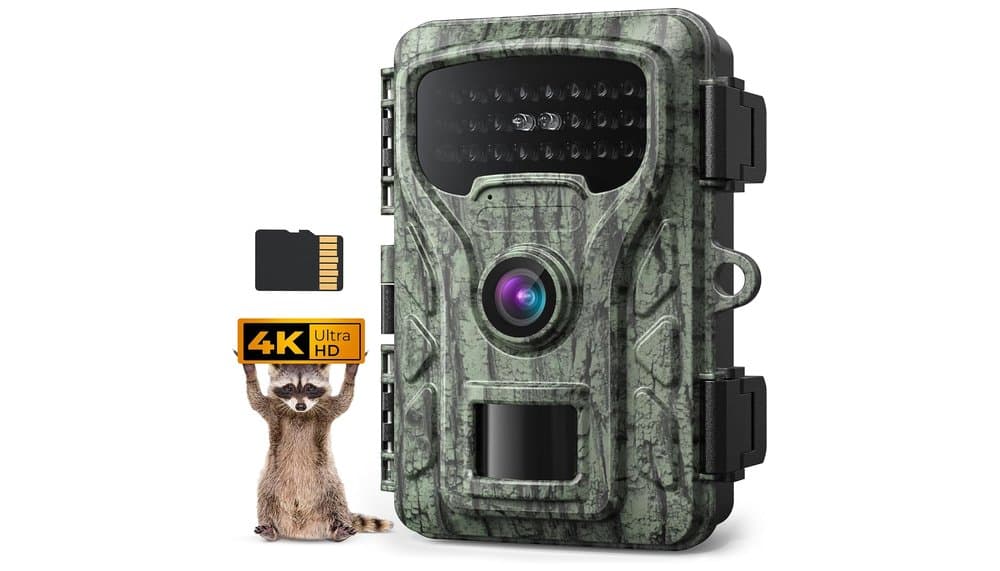
Caytail 4K 48MP Hunting Camera Review & Test
In-depth review of the Caytail 4K 48MP trail camera with included SD card. We analyze specs and real user feedback on its true field performance.
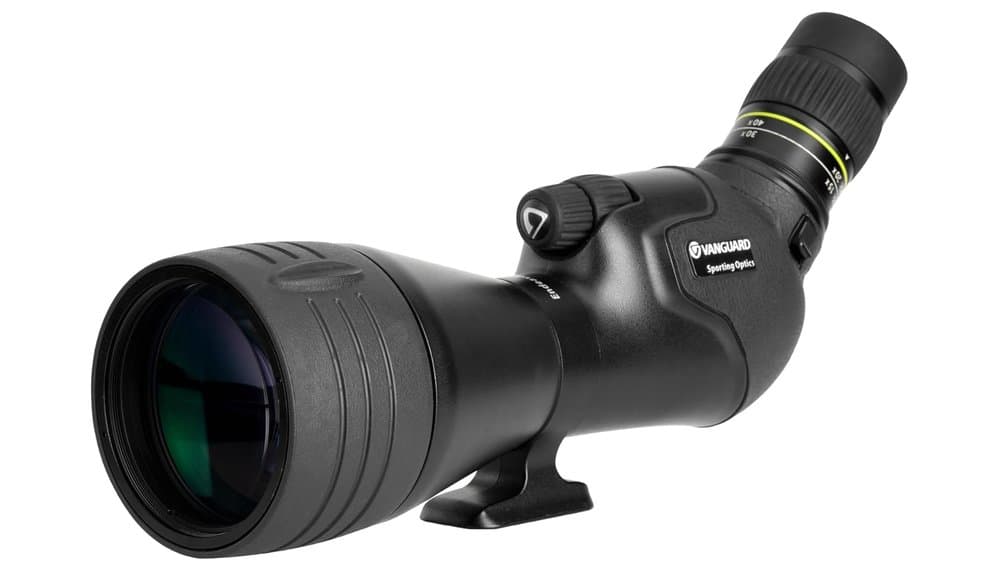
Vanguard Endeavor HD65A Spotting Scope Review
Spotting scope with 65mm ED glass & 15-45x zoom for birding & hiking. Balanced performance & portability for serious nature observers.
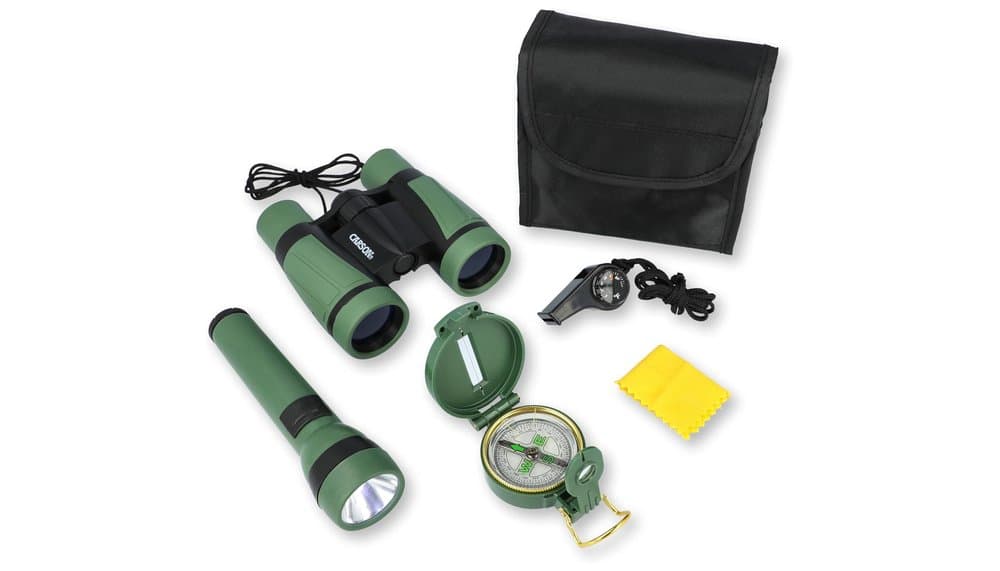
Carson AdventurePak Kids' Exploration Tool Kit Review
Explore nature with this kid's 5-piece tool kit for outdoor adventure and educational discovery. Perfect for young explorers.
Guides you might like
WiFi Trail Camera Guide
See wildlife discreetly from your couch! Learn how WiFi trail cameras let you monitor animals without disturbance and how to choose the right one.
Ultimate Travel Telescope Guide
Choose a portable, high-performance travel telescope to explore the universe from your backpack without compromising on essential astronomical views.
Ultimate Guide to Night Vision Binoculars
Choose the perfect night vision binoculars: Gen vs. digital? Unravel the tech to make your nighttime wildlife adventures a total success. Guide inside.