Trail Camera Wildlife Observation Logbook Review
Published on 4 August 2026 · By OptiqueNature
Review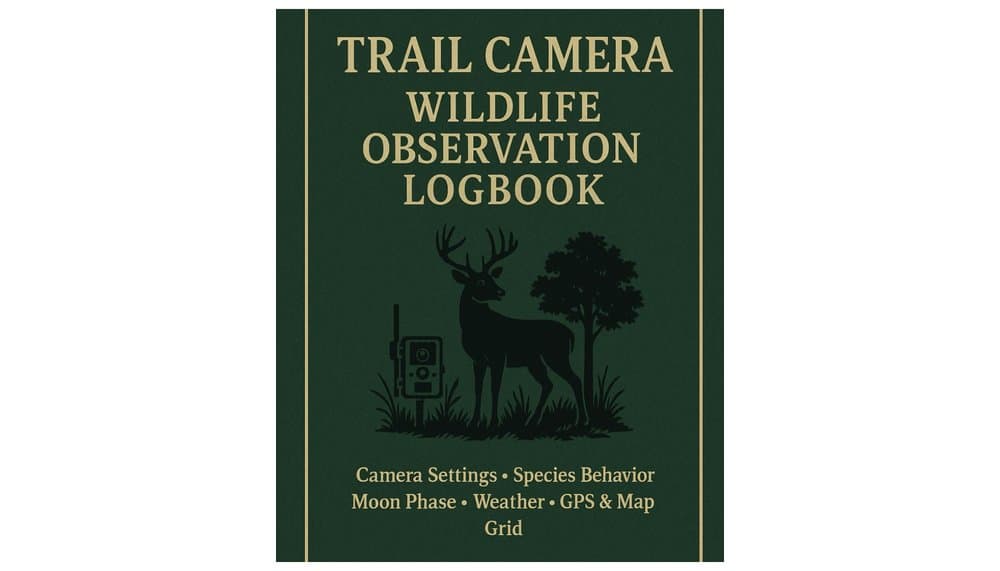
Analysis: Trail Camera Wildlife Observation Logbook – Field Notebook
In the ecosystem of wildlife observation, the focus is often on optical and electronic equipment: binoculars, spotting scopes, and trail cameras. However, data capture, organization, and interpretation are just as crucial. This is the niche where the Trail Camera Wildlife Observation Logbook – Field Notebook comes in. On a site dedicated to nature optics, it is legitimate to question the relevance of such a paper accessory. Our technical analysis is based on published specifications and comprehensive feedback from the user community to assess its real added value.
Strengths
The main asset of this logbook lies in its specificity designed for trail camera users. Unlike a generic notebook, it methodically structures information collection. According to the specifications, it includes dedicated sections for camera settings (sensitivity, interval, video mode), allowing users to replicate or adjust successful configurations. The centralization of data on species behavior, lunar phases, and weather provides a powerful analysis framework for understanding wildlife activity patterns.
Another strength, frequently highlighted by users, is its educational and organizing aspect. It transforms a leisure activity into a structured scientific approach, which is particularly appreciated for young naturalists or beginners. The inclusion of a GPS and maps grid encourages precise geolocation of observations, an asset for long-term monitoring or sharing information with other observers.
Weaknesses
As a physical medium, the logbook presents limitations inherent to the paper format. It does not allow for instant search or automated sorting of data, unlike a digital app or spreadsheet. For very active users with multiple cameras, manual entry can become time-consuming and storage capacity is limited to the number of pages in the notebook.
Its utility is also highly dependent on user discipline. A casual observer who quickly checks their cameras for the simple pleasure of seeing images might find this logging process too rigid. The time investment is real, and the added value is only fully exploited by those who genuinely wish to analyze and draw conclusions from their observations.
Detailed Analysis: Ergonomics and Utility in the Field
Let's analyze this tool not in terms of optical performance, but in terms of intellectual ergonomics and field efficiency.
Build Quality and Handling: The product is described as a paperback book. User feedback does not report durability issues for standard outdoor use (placed on a camp table or in a backpack). Its light weight and format, likely similar to an A5 notebook, make it easy to carry with the rest of one's equipment. There is, of course, no waterproof rating (IPX) or fog resistance rating as with an optical instrument, but its robustness depends on paper and binding quality, which seems to satisfy current users.
Design for Practical Use: The fundamental value of this logbook lies in its workflow-oriented design. After retrieving the SD card from their trail camera, the user can immediately note the date, exact location (using the GPS grid), and the weather and lunar conditions at the time of the trigger. This contextualization is what elevates a simple collection of photos to a usable database. Testers and users emphasize that this structure significantly improves the rigor and quality of observations.
Comparison with Alternatives: In the "logging accessories" segment, we have three categories.
- The blank notebook: Economical and free-form, but lacks structure. Data is disorganized, hard to retrieve, and compare.
- Mobile apps/spreadsheets: Powerful, searchable, shareable. But they require a charged battery, can be intrusive in the middle of nature, and impose a software learning curve.
- The specialized logbook (like this product): Offers an optimal middle ground. It guides the user without needing a battery, resists shock and moisture better than a smartphone, and its predefined structure saves considerable time compared to designing a note-taking system. Its cost is justified by this gain in time and efficiency.
Summary Technical Sheet
| Characteristic | Detail for the Trail Camera Wildlife Observation Logbook |
|---|---|
| Product Type | Specialized field notebook (paperback, paperback format) |
| Design Specifics | Pre-printed sections for: Camera settings, Species behavior, Lunar phase, Weather, GPS/Map grid |
| Intellectual "Ergonomics" | Structure guides the user and standardizes note-taking |
| Field "Ruggedness" | Portable, lightweight, does not depend on a battery |
| Data "Field of View" | Centralizes context (weather, moon, location) with observations (photos) |
| Compatibility | Universal, usable with all brands and models of trail cameras |
| Primary "Added Value" | Transforms isolated images into analyzable ecological data |
What Users and Testers Say
The available feedback, notably from a user for her 11-year-old grandson, all points in the same direction: very high satisfaction for a very targeted need.
Recurring Positive Trends:
- Appreciated Structure: Users validate the choice of categories (camera settings, weather, lunar phase). They confirm these are indeed the elements they need to keep track of.
- Exemplary Educational Tool: The cited case of an 11-year-old "truly passionate about nature" is revealing. The logbook is perceived as an excellent means to introduce the scientific method: observe, note, correlate.
- Simplicity and Reliability: The fact that it does not require any complex technology is seen as a major advantage for nature immersion without digital distraction.
Limitations and Expectations: The main caveat, implicit in the feedback, concerns the required personal commitment. This product is not a passive accessory like a lens; it demands regular action from the user. Its success depends entirely on the discipline of the person filling it. No feedback criticizes paper or print quality, suggesting the product is well-finished for its price.
Conclusion: A High-Value Accessory for the Serious Observer
The Trail Camera Wildlife Observation Logbook – Field Notebook is not an optical accessory, but a cognitive accessory. Its analysis shows that it fills a gap between raw image collection and scientific analysis.
For whom is this a wise investment?
- The serious naturalist who wants to understand visitation patterns at their sites.
- The hunter or land manager wanting to optimize the placement and settings of their cameras.
- The educator or parent looking for a structuring tool to accompany a young person in discovering field ecology.
- The wildlife photographer wanting to maximize their chances of capture by analyzing the conditions of their past successes.
Its value lies not in ED glass or dielectric coatings, but in its ability to give meaning to your observations. It enforces rigor, creates a reliable reference, and transforms a passion into a documented and enriching practice. If you use your trail cameras with the simple curiosity of "seeing what passes by," this logbook is probably superfluous. But if you've ever wondered "Why so much activity that particular night?" or "What settings had I used for that perfect sequence?", then this tool proves to be a complement as essential as a good pair of binoculars for interpreting what you see. The unanimous feedback from the community confirms it perfectly meets this specific need.
100% free and independent — All our articles are written independently, without any sponsorship. We may earn a commission on purchases made through our links, at no extra cost to you.
Articles you might like
BOSTRON CY 10x50 Monocular Review & Test
Compact 10x50 monocular review: Analyzes optical clarity, field of view & build quality for hiking, nature & astronomy. See its true value.
FunKind HC600Pro 4G Trail Camera Review
FunKind HC600Pro solar-powered 4G trail camera review. Analyzes real-time wildlife monitoring specs, solar/battery power, and performance data.
Haokoo Vision Nocturne 4K Night Vision Binoculars Review
Haokoo 4K Night Vision Binoculars review: See & record in total darkness. Compact, versatile for nature observation. High-definition digital performance.
Guides you might like
WiFi Trail Camera Guide
See wildlife discreetly from your couch! Learn how WiFi trail cameras let you monitor animals without disturbance and how to choose the right one.

Ultimate Travel Telescope Guide
Choose a portable, high-performance travel telescope to explore the universe from your backpack without compromising on essential astronomical views.
Ultimate Guide to Night Vision Binoculars
Choose the perfect night vision binoculars: Gen vs. digital? Unravel the tech to make your nighttime wildlife adventures a total success. Guide inside.