Technaxx TX-142 Digital Camera Binoculars Test & Review
Published on 17 July 2026 · By OptiqueNature
Review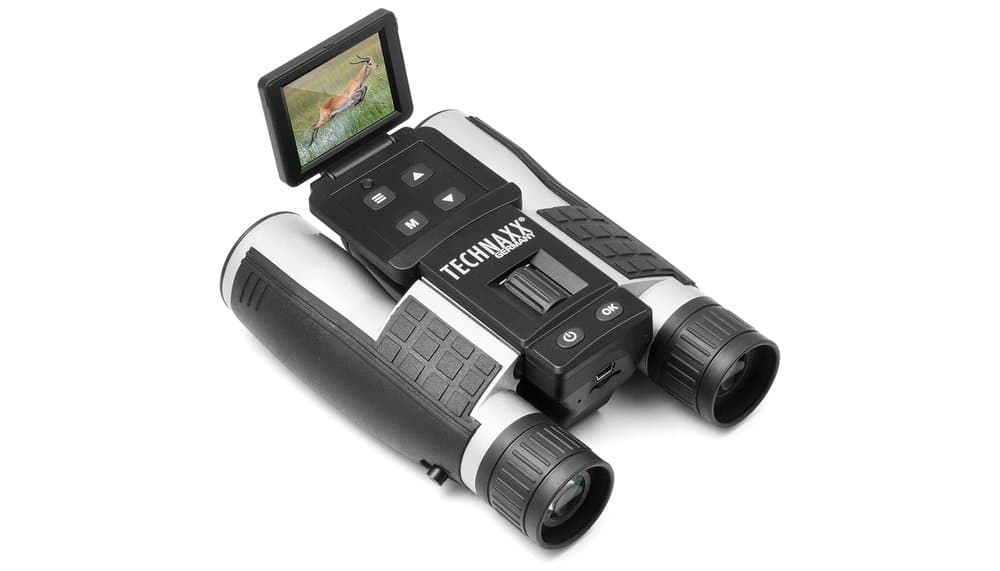
Introduction
The hybridization between observation optics and digital imaging is an appealing concept, promising to capture in a single gesture what the eye sees through the eyepieces. The Technaxx TX-142 Jumelles Appareil Photo Numérique firmly fits into this category of 2-in-1 products. It offers a 12x magnification optical system coupled with a 1080p photo/video sensor, all integrated into a compact body. On paper, it seems like the ideal tool for documenting one's natural observations without switching equipment. But behind this attractive technical proposition, what is the actual user experience for the nature observer? We will dissect this hybrid by analyzing its specifications, construction, and by confronting its promises with the concrete feedback from the user community.
Strengths and Weaknesses
Before diving into the detailed analysis, here is a summary of the salient characteristics of the Technaxx TX-142, as they emerge from technical sheets and reviews.
Strengths:
- Practical "all-in-one" concept: Eliminates the need to carry separate binoculars and a camera.
- Significant battery life: A built-in 2500 mAh battery promises up to 8 hours of recording, which is excellent for a day in the field.
- Integrated video features: Full HD 1080p video recording at 30fps and direct image capture from the view.
- Compactness and contained weight: At approximately 490 grams, it remains light for a day of hiking.
- Tripod compatibility: A standard mount allows for stabilization essential for 12x magnification and video.
- Ambitious technical sheet: Advertises 25mm objectives, low-light sensitivity (0.01 lux), and a 5 MP photo sensor.
Weaknesses:
- Highly criticized optical and image quality: The community reports insufficient sharpness, disappointing magnification, and low-resolution images/videos.
- Questionable construction and reliability: Many reports indicate functional defects (unexpected shutdowns) and a plastic finish that does not inspire confidence in durability.
- Limited ergonomics and visual comfort: The eyecups are too small, causing black reflections (vignetting) and making observation uncomfortable, especially for glasses wearers.
- Basic interface and user experience: The 2.8-inch screen is judged to be of average quality and navigation seems simplistic.
- Misleading marketing claims: The "5 MP" label and low-light performance do not match the reality experienced by users.
Detailed Technical Analysis
Now, let's break down this product according to the fundamental criteria of optical observation and imaging.
Optical Quality and Observation Performance
On paper, the TX-142's specifications advertise 12x magnification with 25mm diameter objectives. This yields an exit pupil of 2.1 mm (25/12), a low value indicating limited light performance in low-light conditions (twilight, dense forest). The advertised field of view is 17.5°, which is relatively standard for this type of magnification, but nothing exceptional.
However, analysis of user feedback reveals a major discrepancy. Testers emphasize that the effective magnification seems lower than the advertised 12x and that the overall sharpness is mediocre. There is no mention of Extra-low Dispersion (ED) glass, phase-corrected multi-coatings, or dielectric prisms by the manufacturer, suggesting a basic optical system, lacking the high-end treatments that improve contrast, color fidelity, and light transmission. The actual light transmission is therefore likely well below that of dedicated conventional binoculars in a similar price category.
For nature observation (birds, mammals), resolving power and chromatic fidelity are crucial for distinguishing details of plumage or fur. According to feedback, the TX-142 struggles to provide this level of detail, with the digital sensor failing to compensate for the weaknesses of the optics.
Sensor and Imaging Capabilities
This is the core of the "2-in-1" proposition. The TX-142 is equipped with a sensor enabling 1080p video capture (30 fps) and image capture at 2592x1944 pixels (approximately 5 megapixels).
Feedback is unanimous on one point: the image quality produced is very disappointing. Photos and videos are described as grainy, sorely lacking sharpness and detail. The "5 MP" claim appears to be digital interpolation, a common practice on small, economical sensors, rather than a useful native optical resolution. Image stabilization is absent, making videos shaky without the mandatory use of a tripod, even at 12x. The advertised low-light sensitivity (0.01 lux) does not translate, according to users, into usable images in these conditions, which are instead noisy and unclear.
For digiscoping (photographing through optics), integration should be an asset. In reality, the sensor quality and limited image processing make it an inadequate tool for serious wildlife documentation. It captures a "memento" of the observation, not a usable image.
Construction, Ergonomics, and Durability
The product weighs 490g and its dimensions are compact (14.5 x 9.5 x 5.5 cm). Its frame is made of plastic and rubber. The manufacturer describes it as splash-resistant (Water Resistant), but this is not a waterproof certification (like an IPX7 rating). For outdoor use (humidity, light rain), this protection is minimal and does not guarantee full waterproofing (waterproof) nor fogproof protection (fogproof) through nitrogen purging, which are essential features on quality binoculars.
Ergonomics are criticized. The eyecups that are too small create annoying vignetting (black circles in the field of view) and make the eye relief insufficient for glasses wearers, forcing them to observe without their corrective lenses. The diopter adjustment and interpupillary distance adjustment are present but, coupled with these small eyepieces, their effectiveness is reduced.
Reliability is the biggest black mark. A significant portion of customer reviews reports premature failures: the device turns off by itself after 30 seconds, does not take photos despite the advertised function, or stops working after little use. This strongly questions the quality of electronic components and the rigor of quality control.
Use Cases and Value for Money
Let's now evaluate the TX-142 for concrete scenarios:
- Birdwatching: The 12x magnification is suitable, but the poor optical quality and low observation comfort make it frustrating. Dedicated binoculars are preferable.
- Hiking and general observation: Its compactness and battery life are assets. For undemanding "leisure" observation, it may suffice.
- Wildlife photography/documentation: It is not suitable. Image quality is insufficient for serious use.
- Casual astronomy (Moon): The magnification allows for observing the Moon, but probable chromatic aberrations and lack of brightness will limit the enjoyment.
- Static surveillance (with tripod): This is perhaps its best use, thanks to battery life and video recording, but image quality remains a limiting factor.
In terms of value for money, the TX-142 occupies a tricky position. Its selling price places it in the entry-level. However, compared to a pair of dedicated optical binoculars in the same price range, its optical performance is significantly inferior. Compared to mid-range observation binoculars, the gap is abysmal in terms of clarity, robustness, and comfort. Its only advantage is the integrated recording function, but its quality is so low that it does not justify, for a demanding user, the compromises made on optics and reliability.
What Users Say: Review Synthesis
Analysis of customer feedback (138 reviews, overall rating of 3.6/5) reveals a very clear polarization, typical of low-cost products with ambitious promises.
Recurrent positive points mainly concern the practical concept, light weight, good battery life, and satisfaction for simple, undemanding use. Some users find it "nice" as a gift or for introducing children.
Negative criticisms are much more specific and recurrent:
- Disappointing image quality: This is the main complaint. Terms like "relative sharpness", "average quality", "poor resolution", "unsatisfying magnification" constantly reappear. The "5 MP" and "Full HD" promise is not fulfilled in practice.
- Reliability issues: Many reviews report functional defects: "the device turns off 30 seconds after turning it on", "ordered 2x, defective 2x", "does not work correctly". This casts a serious shadow over durability.
- Faulty ergonomics: The eyecups that are too small are mentioned several times as an annoying defect, making observation difficult and uncomfortable.
- Misleading claims: Several users note that the device only takes videos, not photos, contradicting the product description.
The trend is clear: for a casual and undemanding user, the product may suffice. For anyone seeking genuine optical performance or reliable documentation capability, the experience is very often disappointing, even frustrating due to malfunctions.
Technical Specifications
| Characteristic | Detail |
|---|---|
| Model | Technaxx TX-142 Jumelles Appareil Photo Numérique |
| Optical Magnification | 12x |
| Objective Diameter | 25 mm |
| Exit Pupil | 2.1 mm |
| Field of View (Angular) | 17.5° |
| Photo Sensor | 5 MP (interpolated, output 2592 x 1944) |
| Video Recording | Full HD 1080p at 30 frames per second |
| Digital Zoom | 4x |
| Screen | 2.8 inches |
| Battery | Built-in Li-ion 2500 mAh (up to 8h of recording) |
| Storage | MicroSD Card (up to 128 GB) |
| Resistance | Splash-resistant (Water Resistant) |
| Mount | Standard tripod thread |
| Weight | 490 grams |
| Dimensions | 145 x 95 x 55 mm |
Conclusion
The Technaxx TX-142 Jumelles Appareil Photo Numérique is the archetype of a product with a seductive promise but imperfect execution. Its "all-in-one" concept is undeniably practical for the hiker or leisure observer who wants to lighten their backpack without giving up documentation capability.
However, our technical analysis cross-referenced with user feedback paints a clear picture: this product sacrifices too much on the altar of versatility. Optical quality and image quality are significantly below even dedicated entry-level standards. The recurring problems of reliability and ergonomics (eyecups) further burden the experience.
For the community of nature observers, for whom clarity, color fidelity, and reliability are paramount, the TX-142 is not a viable recommendation. It may find its audience among casual users, children, or those whose expectations are limited to a pixelated souvenir of an observation. For anything else, an equivalent budget invested in a pair of simple optical binoculars from a recognized brand, coupled with one's smartphone camera, will offer, in the vast majority of cases, a much better observation experience and superior image quality. The TX-142 shows that hybridization between optics and electronics remains a complex technical challenge, especially when approached with a budget and mainstream low-end components.
100% free and independent — All our articles are written independently, without any sponsorship. We may earn a commission on purchases made through our links, at no extra cost to you.
Articles you might like
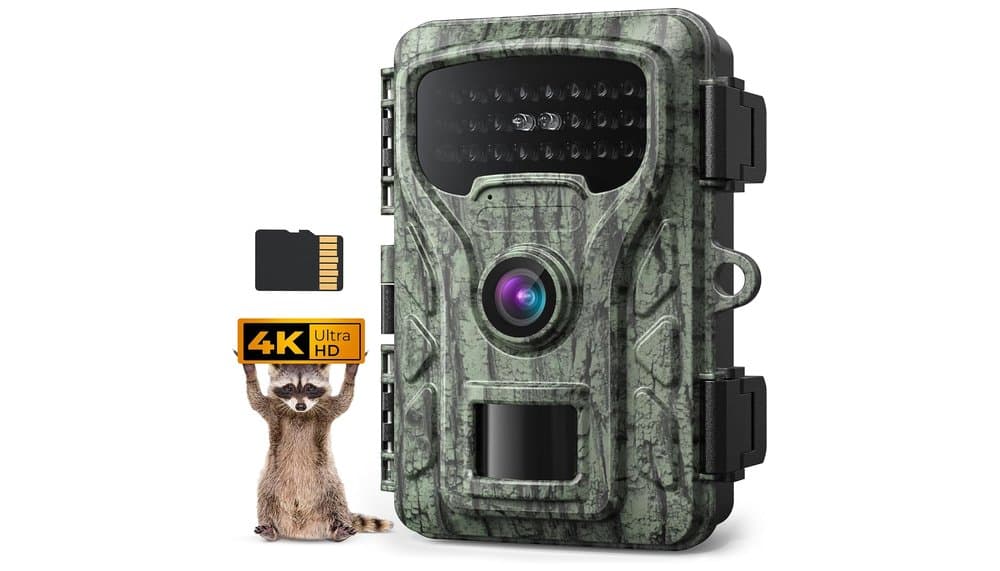
Caytail 4K 48MP Hunting Camera Review & Test
In-depth review of the Caytail 4K 48MP trail camera with included SD card. We analyze specs and real user feedback on its true field performance.
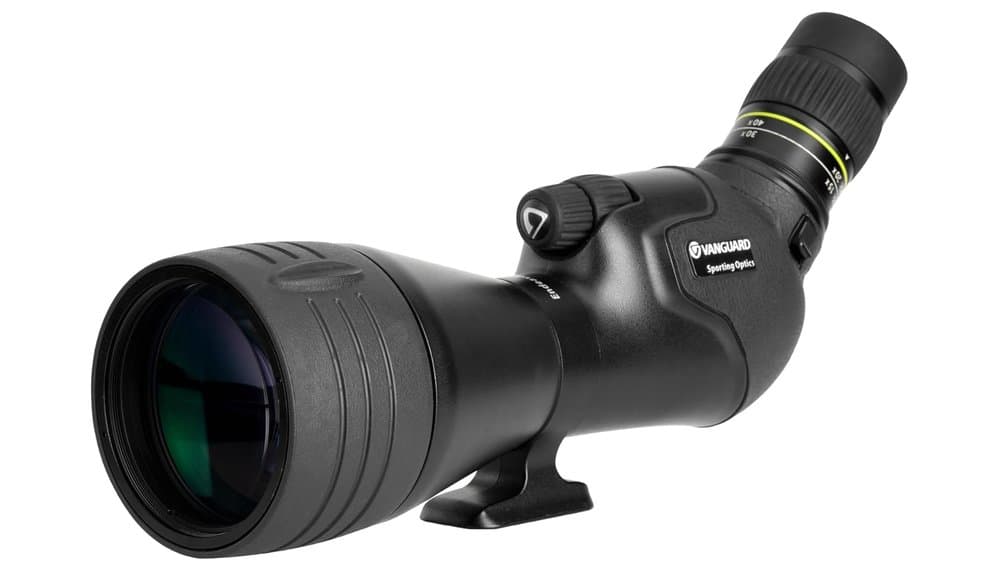
Vanguard Endeavor HD65A Spotting Scope Review
Spotting scope with 65mm ED glass & 15-45x zoom for birding & hiking. Balanced performance & portability for serious nature observers.
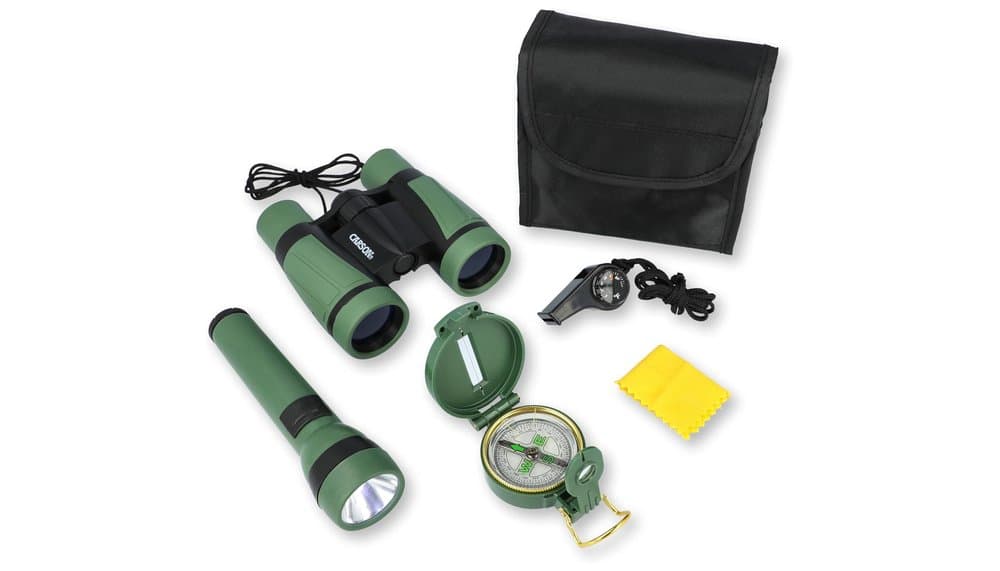
Carson AdventurePak Kids' Exploration Tool Kit Review
Explore nature with this kid's 5-piece tool kit for outdoor adventure and educational discovery. Perfect for young explorers.
Guides you might like
WiFi Trail Camera Guide
See wildlife discreetly from your couch! Learn how WiFi trail cameras let you monitor animals without disturbance and how to choose the right one.
Ultimate Travel Telescope Guide
Choose a portable, high-performance travel telescope to explore the universe from your backpack without compromising on essential astronomical views.
Ultimate Guide to Night Vision Binoculars
Choose the perfect night vision binoculars: Gen vs. digital? Unravel the tech to make your nighttime wildlife adventures a total success. Guide inside.