SUZLAZYR NK008 Digital Night Vision Sight Review
Published on 19 July 2026 · By OptiqueNature
Review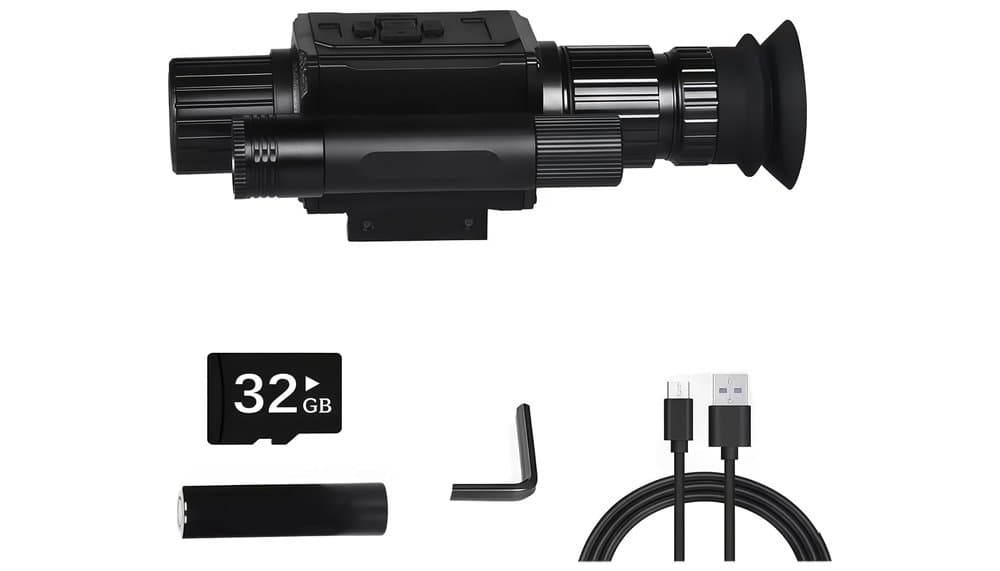
Detailed Analysis of the SUZLAZYR NK008 Digital Telescopic Night Vision Sight
Today we examine a product that sits at the crossroads between traditional observation and digital technology: the SUZLAZYR NK008. This is not a classic optical instrument, but a digital night vision sight, a hybrid category that is attracting more and more users for specific applications. Its approach is decidedly modern, replacing eyepieces and prisms with a screen and a sensor. Our analysis is based on its technical specifications, available feedback from the community, and the context of use to determine its real interest for the nature observer.
Strengths
- Full Day/Night Versatility: This is its main argument. The transition between daylight and total darkness is immediate, thanks to the integrated infrared illuminator. You switch from a simple daytime sighting device to an active night vision device without any modification.
- Built-in Multimedia Functions: The ability to record photo and video in 1080P directly to an SD card is a major asset for documenting observations without needing a smartphone or an additional camera.
- Advertised Robustness: The specifications mention a metal alloy construction and shock resistance validated by a 2-meter drop test. Its compatibility with calibers up to .308 suggests recoil handling suitable for hunting.
- Simplified Installation: Mounting on a standard 20mm rail makes it compatible with the majority of rifle configurations, a point appreciated by users according to feedback.
Weaknesses
- Digital Optics vs. Traditional Optics: One must be aware that this is viewing via a screen. This implies potential latency (though not specified), a resolution limited by the 2MP sensor, and a different sense of depth than that provided by a direct optical system.
- Limited Autonomy in Night Vision Mode: Using the IR illuminator significantly reduces battery life, dropping from 5-6 hours to only 1.5 hours. A prolonged night outing requires spare batteries.
- Digital Zoom Only: The advertised zoom from 1x to 5x is a digital zoom. This means that beyond the sensor's base magnification, the image is simply cropped and enlarged electronically, leading to a loss of definition and sharpness.
- Field of View Not Specified: No data on the angular or linear field of view is provided, which is a crucial omission for evaluating its usefulness in dynamic observation (tracking a bird in flight, scanning a clearing).
Detailed Technical Analysis
The NK008 is not a scope or spotting scope in the classic optical sense. It is an electronic vision system. Let's analyze what this implies.
Image Quality and Performance: An Electronic System Here, there is no ED glass, multi-coatings, or roof prisms. Image quality depends entirely on an electronic chain: the 50mm lens, the 2MP CMOS sensor, signal processing, and the 1.4" screen. "Light transmission" and "twilight factor" are metrics that do not apply. Low-light performance depends on the sensor's sensitivity and the power of the 850nm IR illuminator. User feedback highlights a decent image at night with the IR, but fine details and contrast will never rival high-end optics in daytime conditions. The base magnification is not clearly defined; the "1x" is likely the native field of the sensor with the 50mm lens. The "5x" is a digital zoom that degrades the image.
Construction and Ergonomics: Designed for the Field The technical sheet highlights a metal alloy housing, unspecified sealing (but shock resistance is claimed), and a contained weight. The ergonomics seem geared towards rail use, with likely dedicated controls (zoom, IR adjustment, recording). Eye relief is not a problem since you are looking at a screen, which can be an advantage for eyeglass wearers. The minimum focusing distance is not indicated, but electronic systems often have a fairly short minimum distance.
Comparison with Market Segments
- Budget Segment (Traditional Optics): Compared to an entry-level binocular or spotting scope, the NK008 loses in brightness, prolonged viewing comfort, and field of view. It gains in night-time capability and built-in video recording.
- Mid-Range Segment: This is where the comparison is interesting. For the price, one could opt for a much better quality daytime optic or invest in a digiscoping accessory. The NK008 offers an "all-in-one" solution but with compromises on image fidelity.
- Premium Segment: There is no possible comparison with high-end optics. On the other hand, compared to image intensifiers (true analog night vision) or thermal devices, the NK008 positions itself as a very economical digital alternative, but with significantly inferior range and discretion (the 850nm IR is visible to some animals).
Summary Technical Sheet
| Characteristic | SUZLAZYR NK008 Detail |
|---|---|
| Type | Digital Night Vision Sight / Monocular |
| Sensor / Lens | 2MP CMOS Sensor, 50mm lens |
| Display | 1.4" Circular Screen |
| Magnification | Digital Zoom from 1x to 5x |
| Night Vision | 850nm IR Illuminator with 3 power levels |
| Recording | Photo & 1080P Video, storage on microSD card (max 128GB) |
| Advertised Range | Night: ~400m (with IR) / Day: >1000m |
| Construction | Metal Alloy, Shock Resistant (2m test) |
| Mount | Standard 20mm Rail |
| Battery Life | 1.5h (IR enabled) / 5-6h (IR disabled) |
| Battery | 1 x 18650 (2600mAh included) |
| Reticle | Adjustable Electronic Reticle |
What Users Say
Available feedback, although limited, reveals certain trends. It is important to note that the user community for this type of product is often oriented towards hunting or surveillance more than classic naturalist observation.
Recurring Positive Points:
- Users appreciate the ease of installation on their equipment and the quick learning curve.
- The video recording function is often cited as a decisive advantage, allowing capture of footage without additional gear.
- For occasional night use, the image provided by the IR illuminator is considered sufficiently clear for observation or spotting at medium distances.
- The construction is perceived as solid and suitable for rigorous outdoor use.
Negative Points or Points of Caution:
- Several comments emphasize the need to understand the nature of the product: it is not traditional optics. Expectations must be adjusted.
- Battery life in night mode is clearly identified as a limitation for prolonged sessions. Purchasing additional 18650 batteries is almost essential.
- Image quality at maximum digital zoom (5x) is described as pixelated, confirming that this function is more of a "bonus" than a main usable feature.
- The lack of precise information on the field of view is a shortcoming noted by more experienced users.
Conclusion: Who is the NK008 Really For?
The SUZLAZYR NK008 Digital Telescopic Night Vision Sight is a specialized tool that finds its place in very specific niches. It is not a substitute for binoculars or a spotting scope for birdwatching or detailed landscape observation during the day.
It is primarily suited for:
- The observer or hunter requiring instant day/night capability without investing in two separate systems.
- Those who prioritize built-in video recording to systematically document their sessions, especially at night.
- The user looking for a robust and simple-to-mount solution on a rail, for field surveillance or spotting applications.
On the other hand, it will disappoint:
- The optics purist seeking the brightness, sharpness, and wide field of view of a traditional instrument.
- The observer requiring long night sessions without the ability to recharge/swap batteries.
- Those who need high-quality, strong magnification for fine identification at long distance.
Our Verdict: The NK008 is an interesting technological proposition that democratizes access to digital night vision coupled with recording. It must be approached for what it is: an electronic Swiss Army knife for the field, performing well in its versatility and multimedia functions, but making inevitable compromises on optical finesse and the "natural" visual experience. For occasional mixed use where image capture is paramount, it holds definite interest. For contemplative or demanding observation, classic optical instruments remain indispensable.
100% free and independent — All our articles are written independently, without any sponsorship. We may earn a commission on purchases made through our links, at no extra cost to you.
Articles you might like
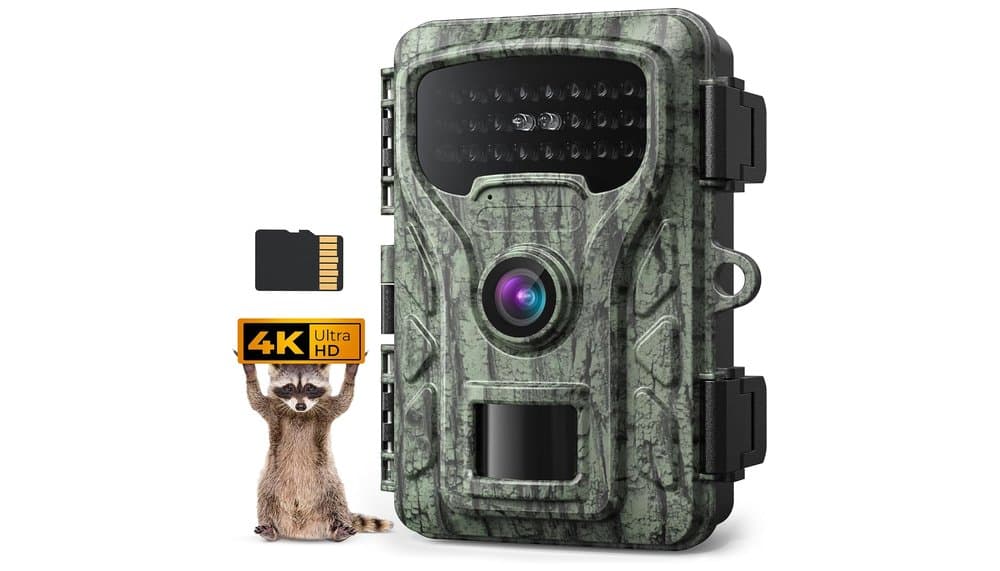
Caytail 4K 48MP Hunting Camera Review & Test
In-depth review of the Caytail 4K 48MP trail camera with included SD card. We analyze specs and real user feedback on its true field performance.
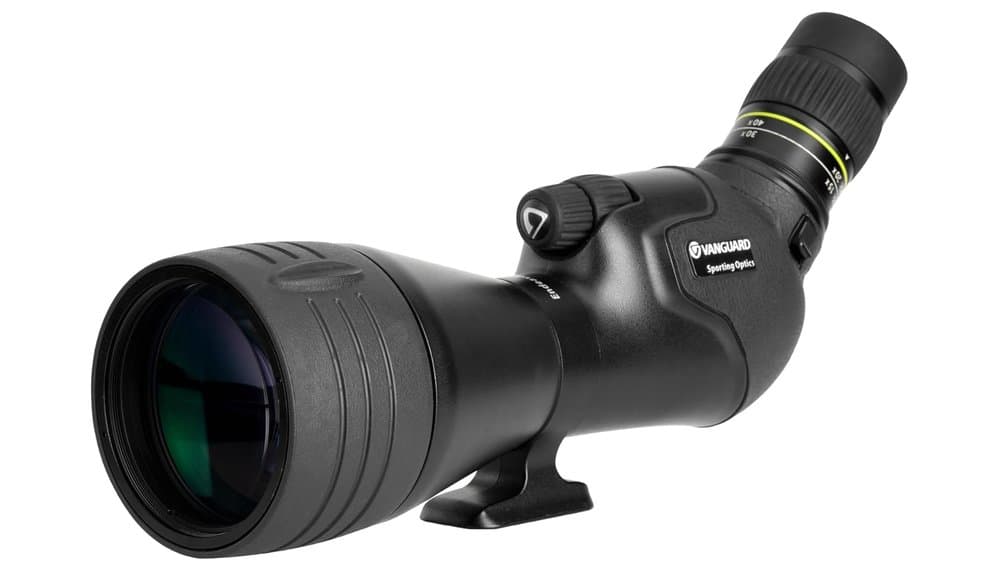
Vanguard Endeavor HD65A Spotting Scope Review
Spotting scope with 65mm ED glass & 15-45x zoom for birding & hiking. Balanced performance & portability for serious nature observers.
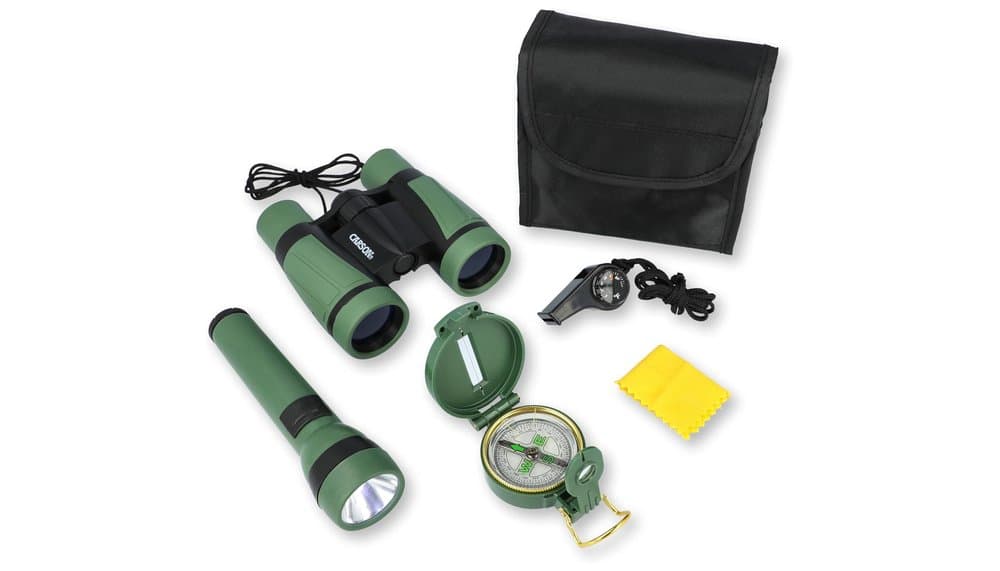
Carson AdventurePak Kids' Exploration Tool Kit Review
Explore nature with this kid's 5-piece tool kit for outdoor adventure and educational discovery. Perfect for young explorers.
Guides you might like

WiFi Trail Camera Guide
See wildlife discreetly from your couch! Learn how WiFi trail cameras let you monitor animals without disturbance and how to choose the right one.

Ultimate Travel Telescope Guide
Choose a portable, high-performance travel telescope to explore the universe from your backpack without compromising on essential astronomical views.
Ultimate Guide to Night Vision Binoculars
Choose the perfect night vision binoculars: Gen vs. digital? Unravel the tech to make your nighttime wildlife adventures a total success. Guide inside.