SEHMUA ZC-YT10MC Solar 4G LTE Camera Review
Published on 12 September 2026 · By OptiqueNature
Review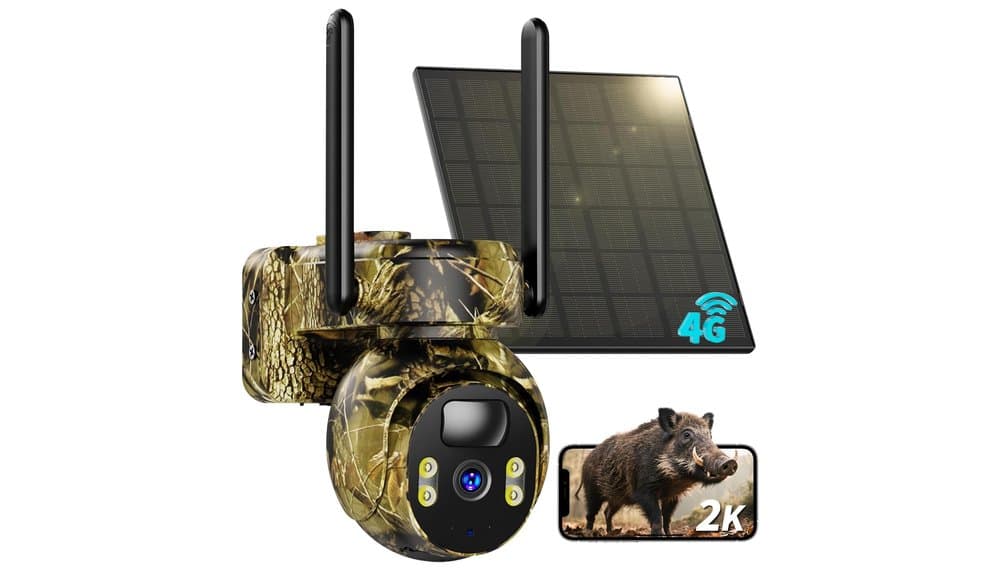
Introduction
The world of nature observation and wildlife monitoring is rapidly evolving with the integration of cellular and solar technologies. The SEHMUA ZC-YT10MC 4G LTE Solar Hunting Camera fits into this trend by offering a total surveillance solution that claims to eliminate infrastructure constraints. Positioned as a hybrid tool for naturalists, hunters, and owners of isolated land, this camera promises energy autonomy and remote connectivity. Our analysis aims to dissect this promise by cross-referencing its technical specifications with concrete feedback from the user community and observations from independent testers.
Key Strengths
On paper, the product presents several significant advantages for use in natural environments or remote properties.
- Total Energy Autonomy: The combination of a solar panel and an integrated 10400 mAh battery aims to eliminate frequent visits to change batteries, assuming sufficient sunlight.
- Network Independence: The integrated 4G LTE connectivity with included SIM card allows for truly "plug & play" installation in areas without Wi-Fi coverage, a decisive advantage for remote observation posts.
- Surveillance Versatility: The 355° horizontal and 100° vertical rotation offers a 360° panoramic field of view, covering a wide area without mechanical blind spots.
- Promising Image Quality: The 2K resolution and color night vision, assisted by LED spotlights, suggest a level of detail superior to traditional black and white infrared cameras.
Weaknesses
User experience reports and inherent technical limitations highlight several potential drawbacks.
- Dependence on Network Coverage: Its greatest asset becomes its Achilles' heel in areas where 4G signal is weak or non-existent. This camera is not an option in such environments.
- Subscription-Based Features: The inclusion of a SIM card with trial data is a plus, but long-term use requires a paid cellular data plan, adding a recurring cost to operation.
- Conditional Energy Reliability: Testers note that solar autonomy heavily depends on exposure and weather conditions. Several days of bad weather can impact performance.
- Configuration Complexity: While physical installation is simple, some users report difficulties during mobile app setup and network connection, a crucial step for operation.
Detailed Analysis by Aspect
We will now examine this product from the perspective of essential criteria for our community of nature observers.
Optical and Image Quality
Here, we leave the realm of prisms and ED glass for that of digital video capture. On paper, the specs announce a 2K resolution which, if properly leveraged by the sensor and lens, can provide sufficient detail to identify species or read a license plate at a reasonable distance. The major innovation is color night vision, made possible by LED spotlights. According to user feedback, this feature is highly appreciated as it provides more natural and usable images than traditional black and white infrared. However, it should be noted that activating the color spotlights can potentially scare wildlife or reveal the camera's position, making it a choice based on application (property surveillance vs. discreet observation). The motorized 360° panoramic view is a major advantage in terms of coverage, but it operates by scanning and does not provide an instant, full-field view like a fixed wide-angle lens.
Construction and Durability
The camouflaged housing and IP66 rating (protected against dust and powerful water jets) indicate a design intended for outdoor use. The materials, described as "robust plastic" by testers, seem suitable for standard use. Weather resistance is generally positive, but the community notes that long-term durability (several years) under extreme conditions (prolonged freezing, heatwaves) is not yet established. Its weight of 1.29 kg and compact dimensions make it a device easy to deploy. The connection between the solar panel and the camera via a 3-meter cable offers some flexibility to optimize sunlight exposure.
Ergonomics and Field Use
The installation is unanimously praised for its simplicity by satisfied users: no power cables to run, no Wi-Fi network to configure. The main ergonomic challenge is not physical but digital: the initial setup via the UBox app and SIM card activation can be obstacles for some, as evidenced by negative reviews mentioning setup failures ("They don't work!"). For wildlife observation, its versatility is an asset, but its motorization and spotlights can make it less discreet than a dedicated passive trail camera. For property, construction site, or ranch surveillance, its features (two-way audio, alarm, notifications) are very relevant.
Value for Money and Positioning
The SEHMUA ZC-YT10MC occupies a specific niche. It is not directly comparable to binoculars or a spotting scope, but rather to other dedicated cellular cameras for wildlife or security. Its "all-in-one" package (camera, solar panel, trial SIM card) sets it apart. Compared to high-end cellular hunting cameras, it may offer an initial financial advantage, but the recurring cost of the data plan must be factored into the equation. For a naturalist observer wanting to monitor a remote water point without infrastructure, it represents a technically adequate solution. For a hiker, it obviously holds no interest. Its real competitor is infrastructure: the cost and complexity of running power cables and Wi-Fi to an isolated location.
Technical Specifications
| Characteristic | Detail |
|---|---|
| Model | SEHMUA ZC-YT10MC 4G LTE Solar Hunting Camera |
| Connectivity | 4G LTE (SIM card included, 300 MB trial). Not compatible with Wi-Fi or 5G. |
| Power Supply | 7.5W Solar Panel + integrated 10400 mAh battery |
| Video Resolution | 2K |
| Night Vision | Color (with LED spotlights) and infrared. Range: 20 meters. |
| Field of View | 360° Panoramic (Rotation: 355° horizontal / 100° vertical) |
| Zoom | 4x Digital zoom |
| Detection | PIR sensor, 0.2s trigger speed, adjustable sensitivity |
| Audio | Integrated Two-way audio (microphone + speaker) |
| Storage | microSD card (up to 128GB, not included) and Cloud (30-day trial) |
| Durability | IP66 (waterproof and dust resistant) |
| Dimensions | 18 x 17 x 13 cm |
| Weight | 1.29 kg |
| Application | UBox (remote control and viewing) |
What Users and Testers Say
An analysis of 46 customer reviews (overall rating 4.4/5) and available expert feedback reveals clear trends.
The recurring positive points are:
- Autonomy and Installation Freedom: Users are "delighted" to be able to install it "without any cables to run" in remote locations (garden, forest, land). The solar/4G combination is praised as an "ideal solution".
- Perceived Image Quality: The majority of reviews indicate that image quality is "excellent", "sharp" and "well detailed", both day and night with color vision.
- Appreciated Features: Instant notifications, two-way audio, and motion detection are cited as very practical "pluses" for interactive surveillance.
The points of caution and criticism focus on:
- Connection Reliability: The few negative reviews (1 and 2 stars) almost consistently point to setup problems ("They don't work!"). These failures seem linked to incorrect SIM card configuration (the provided one or a local operator's card) or insufficient 4G coverage on site.
- Configuration: Even satisfied users note that the setup via the app is "not super easy". Customer service is mentioned as being responsive in helping to resolve these issues.
- Dependence on Sunlight: Testers emphasize that battery life is "very good" but conditioned by "sufficient sunlight", a variable to be carefully considered before installation.
Web expertise confirms these trends, adding that the camera is dependent on local network operators and that its solar efficiency can vary, making it a high-performing but conditional solution.
Conclusion
The SEHMUA ZC-YT10MC 4G LTE Solar Hunting Camera is a specialized product that perfectly fulfills its mission... when the conditions are right. It represents a significant advancement for surveillance in areas without electrical infrastructure or Wi-Fi network. Its energy autonomy, cellular connectivity, and 2K image quality with color night vision make it a powerful and versatile tool for the naturalist, landowner, or construction site monitor.
However, its adoption should not be taken lightly. Its success is entirely conditioned by two external factors: adequate solar exposure to maintain charge and, most importantly, a robust and stable 4G coverage at the installation site. Reported failures almost always stem from neglecting these points. Before any purchase, a meticulous check of the network signal on-site is imperative.
For our nature observation community, this camera is not a substitute for traditional optical instruments, but a valuable technological complement for remote and passive monitoring. It frees the observer from the need to be physically present, opening new possibilities for studying sensitive areas or simply keeping an eye on a specific spot. If your needs match this profile and the site conditions are favorable, the SEHMUA ZC-YT10MC stands out as a coherent and technically accomplished solution.
100% free and independent — All our articles are written independently, without any sponsorship. We may earn a commission on purchases made through our links, at no extra cost to you.
Articles you might like
FunKind HC600Pro 4G Trail Camera Review
FunKind HC600Pro solar-powered 4G trail camera review. Analyzes real-time wildlife monitoring specs, solar/battery power, and performance data.
Haokoo Vision Nocturne 4K Night Vision Binoculars Review
Haokoo 4K Night Vision Binoculars review: See & record in total darkness. Compact, versatile for nature observation. High-definition digital performance.
Celestron Astro-FI 102 WiFi Reflector Telescope Review
Wireless Celestron Astro-FI 102 telescope review: Does smartphone control simplify stargazing for beginners or add unnecessary complication?
Guides you might like
WiFi Trail Camera Guide
See wildlife discreetly from your couch! Learn how WiFi trail cameras let you monitor animals without disturbance and how to choose the right one.
Ultimate Travel Telescope Guide
Choose a portable, high-performance travel telescope to explore the universe from your backpack without compromising on essential astronomical views.
Ultimate Guide to Night Vision Binoculars
Choose the perfect night vision binoculars: Gen vs. digital? Unravel the tech to make your nighttime wildlife adventures a total success. Guide inside.