Celestron Astro-FI 102 WiFi Reflector Telescope Review
Published on 15 October 2026 · By OptiqueNature
Review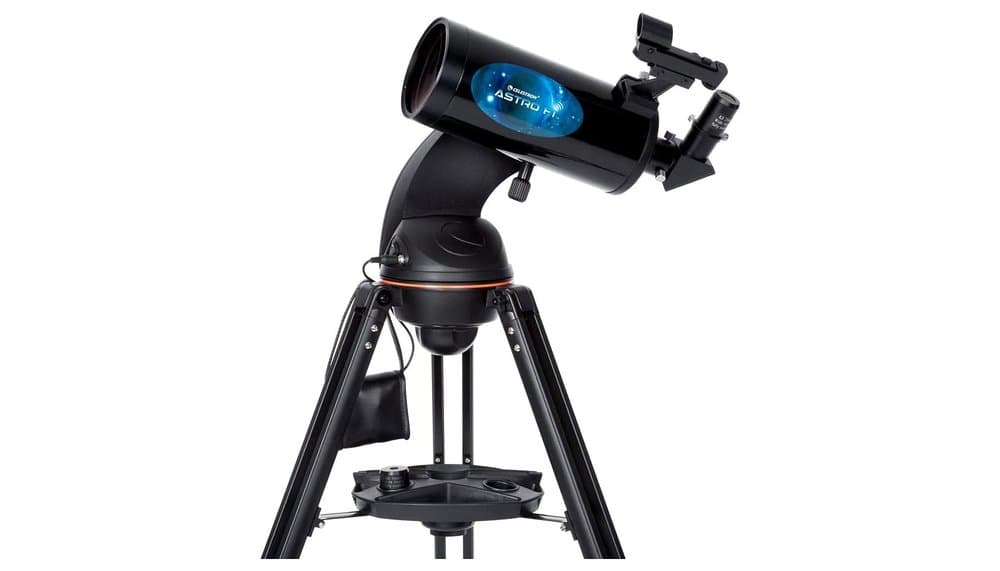
Celestron Astro-FI 102 WiFi Wireless Reflector Telescope: Revolution or Complication?
In the world of amateur astronomy, the promise of integrated wireless technology to control a telescope sounds like a welcome modernization. The Celestron 22202 Astro-FI 102 WiFi Wireless Reflector Telescope embodies this promise. It is an instrument that blends a Maksutov-Cassegrain optical design with a computerized mount controlled exclusively via smartphone. On paper, it clearly targets the beginner or mobile astronomer seeking to simplify celestial navigation. But does this fusion of classic optics and modern connectivity live up to its promises? We will dissect this instrument from all angles: optics, mechanics, user experience, and overall value.
Strengths
- Complete and Modern Smartphone Control: The elimination of a dedicated hand controller in favor of a free application (SkyPortal) is the major selling point. This approach offers an intuitive interface, access to a database of celestial objects, and "point-and-tap" operation that appears to radically simplify sky exploration.
- Portability and Compactness: With a Maksutov-Cassegrain optical tube and a total assembled weight of approximately 6.4 kg, this telescope is designed to be transported. Its single-fork altazimuth mount is relatively compact, making it a candidate for urban observers or travelers.
- Recognized Optical Quality of the Maksutov Design: The 102mm (4-inch) aperture optics and its 1325mm focal length (f/13) are appreciated for their ability to deliver contrasted and sharp images, ideal for planetary and lunar observation.
- Simplified Alignment with SkyAlign: Celestron's proprietary SkyAlign technology allows alignment on any three celestial objects, a procedure often considered more accessible for novices than traditional methods.
Weaknesses
- Problematic WiFi Connection Reliability: This is the most frequently reported Achilles' heel. The connection between the telescope and the mobile device can be unstable, leading to unexpected disconnections that make observing frustrating and require realignment.
- Total Dependence on the App and Smartphone: The absence of a backup hand controller means that in case of phone battery depletion, app bugs, or connection failure, manual fine control of the telescope is very limited. This point worries a portion of users.
- Entry-Level Accessories: The included eyepieces are Kellner models (10mm and 25mm), a basic design. Similarly, the StarPointer red dot finder is often described as minimalist and imprecise, sometimes requiring careful adjustment.
- Limited Aperture for Deep Sky: While performing well on the Moon and planets, the 102mm aperture shows its limitations on faint deep-sky objects (nebulae, galaxies). The brightness and reduced field of view due to the long focal length confine it to specific targets.
Detailed Analysis by Category
Optical Quality and Performance
Here, we must clarify terminology. Despite its commercial name including "Reflector," the Celestron Astro-Fi 102 is actually a Maksutov-Cassegrain catadioptric telescope. This design combines mirrors and a corrector lens (the front meniscus) to correct aberrations.
The specs state fully multi-coated optics. In Celestron's jargon, this means all optical elements (the corrector lens and mirrors) have received anti-reflection coatings to maximize light transmission. For a Maksutov-Cassegrain, this transmission is generally estimated between 85% and 90%, which is very good. Contrast is the strength of this design, as the closed tube and long focal ratio (f/13) minimize stray light diffusion, offering sharp planetary images.
The field of view is intrinsically narrow with a 1325mm focal length. With the included 25mm eyepiece, you get a magnification of 53x and a true field of about 0.9°. This is sufficient for the Moon and planets, but too narrow for vast star clusters or large nebulae like Orion's, which will not fit entirely in the field. The exit pupil with this eyepiece is about 1.9mm (102mm / 53), acceptable for nighttime observation.
In summary: The optics are the undeniable strength of this kit. They deliver what is expected from a 102mm Maksutov: sharp, contrasted images free from chromatic aberration, perfect for scrutinizing lunar craters, Jupiter's bands, or Saturn's rings. For deep sky, they allow viewing the brightest objects (like the Hercules Cluster M13 or the Orion Nebula M42), but with less detail and brightness than a 130mm or 150mm Newtonian in the same price range.
Build Quality and Ergonomics
The aluminum fork mount and tripod seem robust for occasional amateur use. Testers note that the assembly is stable for the 102mm aperture, although some mention that a moderate breeze may require waiting a moment for vibrations to dampen. There is no indication of waterproofing (IPX) or fogproof resistance. It is an instrument designed for standard indoor/outdoor use, not to withstand harsh weather.
Manual control is almost nonexistent once the system is aligned and locked. To manually recenter an object, one must manually unlock the axes (which disrupts the alignment) or use the application. This dependency is a design choice that divides the community.
The eyepiece holder is a standard 1.25" and the focus adjustment is manual, described as fairly smooth and precise. The integrated smartphone mounting clamp on the accessory tray is a good idea, though considered a "gadget" by some, with a dedicated bracket for digiscoping (smartphone astrophotography) often recommended for more serious results.
Software Experience and WiFi Connectivity
This is the heart of the product and its main source of criticism. The SkyPortal application (or Celestron SkyPortal) is unanimously praised for its extensive object database and intuitive interface. The "Point and Tap" function (pointing your phone at the sky and tapping an object for the telescope to slew to it) is particularly appreciated by beginners.
However, user feedback and expert tests converge on a recurring issue: the WiFi connection is finicky. The telescope creates its own WiFi network to which the mobile device must connect. This connection can be unstable, drop for no apparent reason, or fail to establish properly with certain smartphone models, notably some recent iPhones. A disconnection often implies recalibrating the alignment, a procedure that can become tedious. Advice from experienced users includes disabling the "auto-join networks" option on the mobile device and verifying that the application is up to date.
Value for Money and Market Segments
The Celestron Astro-Fi 102 positions itself in the mid-range segment of computerized ("GoTo") telescopes. Its value lies not in record-breaking aperture, but in the all-in-one, portable, and connected package.
- Compared to manual telescopes (Dobsonians, simple refractors) in the same budget range, it offers less aperture (thus less light gathering) but compensates with the comfort of automatic pointing and the database.
- Compared to other equivalent GoTo telescopes (like Meade ETX or Celestron NexStar SLT models), its differentiating argument is 100% smartphone control, eliminating the command box. This is both a simplification and a risk of dependency.
- For a similar budget, an astronomer purely interested in visual performance might prefer a 150mm or 200mm Dobsonian-type telescope, much brighter but entirely manual. The choice is therefore philosophical: prioritize ease of use and portability, or raw optical power.
Typical Use Cases
- Planetary and Lunar Astronomical Observation: This is its domain of excellence. The images will be sharp and contrasted, and the automatic pointing helps find these bright objects.
- Astronomy Initiation: Ideal for those who want to avoid the frustration of finding nothing in the sky. The application serves as a pedagogical guide.
- Mobile Observation: Its relative compactness and integrated mount make it a good candidate for weekend getaways under darker skies than the city's.
- Basic Astronomical Digiscoping: With a dedicated smartphone adapter (not included as standard), it allows capturing images of the Moon or planets, but its altazimuth mount (non-equatorial) and modest aperture limit it for deep-sky astrophotography.
Technical Specifications
| Feature | Specification |
|---|---|
| Optical Type | Maksutov-Cassegrain (Catadioptric) |
| Diameter (Aperture) | 102 mm (4 inches) |
| Focal Length | 1325 mm |
| Focal Ratio | f/13 |
| Mount | Motorized Altazimuth, controlled via WiFi |
| Control | Celestron SkyPortal Application (iOS/Android) |
| Alignment | SkyAlign Technology (Any 3 stars) |
| Included Eyepieces | 2 Kellner (25mm and 10mm) 1.25" |
| Finder Scope | StarPointer Red Dot |
| Provided Magnifications | 53x (25mm) and 132x (10mm) |
| Total Weight | Approximately 6.4 kg |
| Power Supply | Internal batteries (rechargeable via micro-USB port) |
| Notable Accessories | Eyepiece/Accessory tray with smartphone mount, 90° mirror diagonal |
What Users Say
An analysis of customer reviews and forum feedback reveals clear trends.
The praise mainly focuses on:
- Conceptual Simplicity: Once the system is operational, finding objects becomes child's play. "It's magical to touch a star on the screen and see the telescope slew to it," summarizes one user.
- Planetary Image Quality: Observers of the Moon, Jupiter, and Saturn are generally delighted with the sharpness and contrast provided by the Maksutov optics.
- Ease of Setup: Assembling the tripod and fork is considered quick and intuitive.
The recurring criticisms concentrate on:
- The WiFi Connection: This is the number one frustration. Random disconnections, difficulty maintaining the link, or compatibility issues with certain phones are mentioned in a large portion of negative reviews.
- Dependence on the App: The lack of a backup hand controller is a real concern. "If the app crashes or your phone battery dies, you're stuck," notes one customer.
- Accessory Quality: The StarPointer finder is often described as basic and imprecise, requiring fine adjustments. The Kellner eyepieces are seen as a starting point to improve upon.
- Software Bugs: Some report the application "lagging" or occasionally freezing, breaking the observing flow.
- The Alignment Process: Although SkyAlign is designed to be simple, several users report having to repeat it several times before the system accepts the alignment.
Conclusion
The Celestron Astro-FI 102 WiFi Wireless Reflector Telescope is a product of two faces. On one side, it features very well-made optics, typical of Maksutov-Cassegrains from this brand, capable of providing beautiful planetary observing sessions. Its concept of full smartphone control is bold and appealing when it works, offering a modern and simplified experience of celestial navigation.
On the other side, it falters due to the imperfect reliability of its cornerstone: wireless connectivity. This weakness, coupled with total dependence on an external mobile device, introduces a factor of frustration and uncertainty that can spoil the experience, especially for a beginner who primarily expects simplicity.
Our final verdict: It is an excellent choice for the technophile and patient astronomer, ready to overcome initial software hiccups to enjoy a compact and intelligent system. Conversely, for the observer who seeks reliability and peace of mind above all, or for one whose priority is maximum optical power, better-suited alternatives exist. The Celestron Astro-Fi 102 is less a revolutionary telescope and more a promising yet still improvable experiment in connected astronomy. Its success will largely depend on your smartphone's compatibility and your tolerance for potential technological bugs.
100% free and independent — All our articles are written independently, without any sponsorship. We may earn a commission on purchases made through our links, at no extra cost to you.
Articles you might like
Caytail 4K 48MP Hunting Camera Review & Test
In-depth review of the Caytail 4K 48MP trail camera with included SD card. We analyze specs and real user feedback on its true field performance.
Vanguard Endeavor HD65A Spotting Scope Review
Spotting scope with 65mm ED glass & 15-45x zoom for birding & hiking. Balanced performance & portability for serious nature observers.
Carson AdventurePak Kids' Exploration Tool Kit Review
Explore nature with this kid's 5-piece tool kit for outdoor adventure and educational discovery. Perfect for young explorers.
Guides you might like
WiFi Trail Camera Guide
See wildlife discreetly from your couch! Learn how WiFi trail cameras let you monitor animals without disturbance and how to choose the right one.

Ultimate Travel Telescope Guide
Choose a portable, high-performance travel telescope to explore the universe from your backpack without compromising on essential astronomical views.
Ultimate Guide to Night Vision Binoculars
Choose the perfect night vision binoculars: Gen vs. digital? Unravel the tech to make your nighttime wildlife adventures a total success. Guide inside.