Scotamalone 4x30 Kids Binoculars Review and Test
Published on 18 September 2026 · By OptiqueNature
Review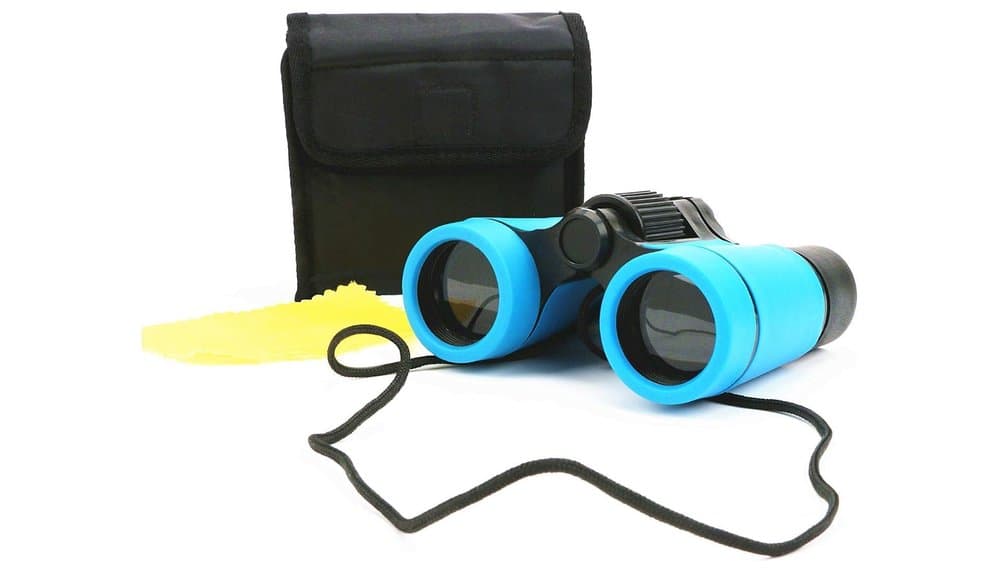
Introduction: A Pair of Binoculars for First Explorations
In the world of nature observation, introducing young children is a crucial step. Choosing their first optical instrument is delicate: it must be suited to their size, robust, simple to use, and performant enough to spark wonder rather than frustration. The Scotamalone 4x30 Kids Binoculars clearly position themselves in this niche, promising to awaken the curiosity of children aged 3 to 10. On paper, they offer modest but targeted technical characteristics: low 4x magnification and 30mm diameter objectives. But beyond the specifications, what interests us here is whether this product manages to find the right balance between an educational toy and a real observation tool. We will analyze its actual optical performance, construction, and educational value by cross-referencing technical data with user and tester feedback.
Strengths
- Ergonomics and safety adapted for children: The design is universally praised. The casing covered with non-toxic, non-slip rubber provides a stable and secure grip, even for small hands. The soft rubber eyecups protect the eye area, an essential detail for a young and sometimes clumsy audience.
- Lightweight and compact: With an announced weight of approximately 100 grams, these binoculars are easy for a child to carry, whether around the neck or in hand. Their compact size allows them to slip into a backpack or be carried in the included case.
- Complete explorer kit: The set comes with all useful accessories: an adjustable strap, a protective case, and a cleaning cloth. This makes it a ready-to-use gift, ideal for stimulating the imagination of a budding young naturalist.
- Ease of use: Focusing is done via a single central wheel, a simple mechanism that children can quickly learn to use, without complex interpupillary adjustment (the width is fixed but adapted to children's faces).
Weaknesses
- Optical quality and random alignment: This is the major drawback emerging from feedback. Several users report optical alignment (convergence) problems. In the most problematic cases, the image seen by each eyepiece does not merge, causing double vision. This makes observation impossible and frustrating.
- Limited and often imprecise focus: Although present, the focus wheel is described by some as having too limited a range or not allowing for satisfactory sharpness across a useful distance range. This limits its practical effectiveness.
- Basic construction and not waterproof: This is clearly an entry-level product. The binoculars are not waterproof nor nitrogen purged (fog-proof). Their shock resistance, although claimed, is limited to the rubber armor; the internal mechanisms seem fragile.
- Very low magnification: 4x magnification is extremely modest. While it may be sufficient for observing landscape features or stationary objects at medium distance, it is largely insufficient for detailed observation of birds or small animals, which could quickly limit the child's interest for more advanced activities.
Detailed Performance Analysis
Optical Quality and Field Performance
On paper, the Scotamalone 4x30 specifications suggest adequate luminous performance for daytime use. An exit pupil of 7.5mm (30mm / 4 = 7.5) is very large, much larger than a child's pupil in daylight, guaranteeing a bright and clear image. The twilight factor is √(4x30) ≈ 10.95, which is very low and confirms their intended use exclusively in full light.
However, theory clashes with practice. User reviews highlight that image clarity and sharpness vary greatly from one unit to another. When properly aligned, the view is judged "clear" and "sufficient" for an introduction. But numerous reports of double vision indicate serious shortcomings in the quality control of prism alignment (likely low-quality roof Porro prisms in this segment). There is no mention of high-performance multi-layer anti-reflective coatings (only "scratch-resistant" or "blue-tinted" lenses are mentioned), nor dielectric or ED glass prisms. Light transmission is therefore basic, and images may lack contrast and show color fringing (chromatic aberration) on high-contrast edges.
Construction, Handling, and Durability
Construction is the point where the product best fulfills its "child-friendly" promise. The thick, soft rubber armor is appreciated for its pleasant feel and ability to cushion minor bumps. The design is compact and lightweight, perfectly adapted to a child's morphology. The central focus wheel is simple, although some testers note it can be a bit stiff or imprecise.
On the other hand, one must be aware of the limits. These binoculars are not waterproof (not water resistant) and not fog-proof. A drop in damp grass, a sudden rain shower, or simply a significant temperature difference between indoors and outdoors can render them unusable or cause the internal lenses to fog up completely. Their long-term durability, faced with intensive use by a child, is therefore questionable. They are designed for a gentle introduction, not for robust adventures in all conditions.
Use Case Study
- Bird and wildlife watching: The low magnification (4x) is a serious handicap. It allows locating a bird in a tree, but not appreciating details of its plumage. It is a tool for general discovery rather than fine identification.
- Hiking and exploration: This is the ideal use case. For observing a landscape, a distant monument, or following a trail, the presumed wide field of view (although not specified) and the light weight make it a pleasant hiking companion for a child.
- Sports events or shows: The magnification is also very limiting here. The child will see better than with the naked eye, but without significant detail.
- Astronomical observation: Unsuitable. The 4x30 does not gather enough light and does not magnify sufficiently to observe anything other than the Moon in broad view, and even then, without much detail.
- Digiscoping: No adaptation is provided and the optical quality is not suited for it.
Value for Money and Market Positioning
The Scotamalone 4x30 Kids Binoculars sit in the most budget-friendly segment of the "children's binoculars" market. They directly compete with optical toys. Their educational value and appeal as a "grown-up" object are their main assets. However, the optical quality control problems reported by users create a lottery at purchase: one might get a decent unit for basic introduction, or an unusable one due to double vision.
For a slightly higher budget, there are children's binoculars from recognized optical brands (such as some entry-level models from generalist brands) that generally offer slightly higher magnification (6x or 8x), guaranteed image quality (stable collimation), and sometimes even waterproof construction. These models represent a better investment if the child shows a genuine interest in observation.
Technical Specifications Summary
| Characteristic | Detail |
|---|---|
| Model | Scotamalone 4x30 Kids Binoculars |
| Magnification | 4x |
| Objective Lens Diameter | 30 mm |
| Exit Pupil | 7.5 mm |
| Relative Brightness | 56.25 (7.5²) |
| Twilight Factor | ~10.95 |
| Minimum Focus Distance | Not specified |
| Diopter Adjustment | No |
| Eye Relief | Not specified (soft inclusive eyecups) |
| Prisms | Likely Roof Porro, standard quality |
| Optical Coatings | "Scratch-resistant" coating; mention of tinted (bluish) lenses |
| Waterproofing | No (Not Water Resistant) |
| Gas Filling | No (not fog-proof) |
| Armor | Non-toxic, non-slip rubber |
| Weight | Approximately 100 g |
| Included Accessories | Case, strap, cleaning cloth |
What Users Say: Between Childish Enthusiasm and Optical Disappointment
Analysis of customer reviews (with an overall rating of 3.7/5) reveals a clear divide between the child's experience and the adult's technical assessment.
The recurring positive points revolve around the overall user experience for a child. Parents note that the product is immediately appealing: it is light, colorful, easy to handle, and complete with its accessories. Children are delighted to have "their own binoculars" to play explorer. The safety of the rubber eyecups and the adapted design are consistently appreciated. Some testers judge the view "clear" and "sufficient" for basic playful and educational use.
The negative points, however, are technical and, in some cases, deal-breaking. The most serious and frequently cited problem is poor convergence (double vision). Users describe binoculars where the two images do not overlap, rendering them unusable. The second grievance concerns the focus judged ineffective or too limited, not allowing for a sharp image. Finally, several comments highlight the very low magnification (4x), which is disappointing relative to expectations, even for a toy. The perceived build quality as a "good toy" but not an "optical instrument" is also mentioned.
The community therefore agrees on one point: this is an introductory toy. Its success depends heavily on the user's tolerance for its optical limits and the luck of getting a properly aligned unit.
Conclusion: An Introductory Toy, Not an Observation Instrument
The Scotamalone 4x30 Kids Binoculars perfectly fulfill their role as a first symbolic object dedicated to observation for a young child. Their main asset is their adapted design: safety, lightness, simplicity. They can succeed in awakening the curiosity of a 3 to 6-year-old child during family outings, giving them the feeling of participating in the activity "like the grown-ups."
However, our analysis based on specifications and user feedback leads to an important caveat. Due to recurring optical alignment and limited focus problems, their reliability as a tool producing a single, sharp image is not guaranteed. Their low magnification (4x) significantly limits their application and long-term interest.
Our recommendation is therefore nuanced. These binoculars can constitute a nice, inexpensive gift for a very young child whose interest in observation is still at a playful awakening stage. On the other hand, for an older child (beyond 6-7 years) showing a genuine curiosity for nature, or if you want an object that works reliably, it is probably preferable to consider a slightly more sophisticated model, even if it means increasing the budget slightly. The Scotamalone 4x30 are a gateway into the world of observation, but a gateway whose lock may sometimes be faulty.
100% free and independent — All our articles are written independently, without any sponsorship. We may earn a commission on purchases made through our links, at no extra cost to you.
Articles you might like
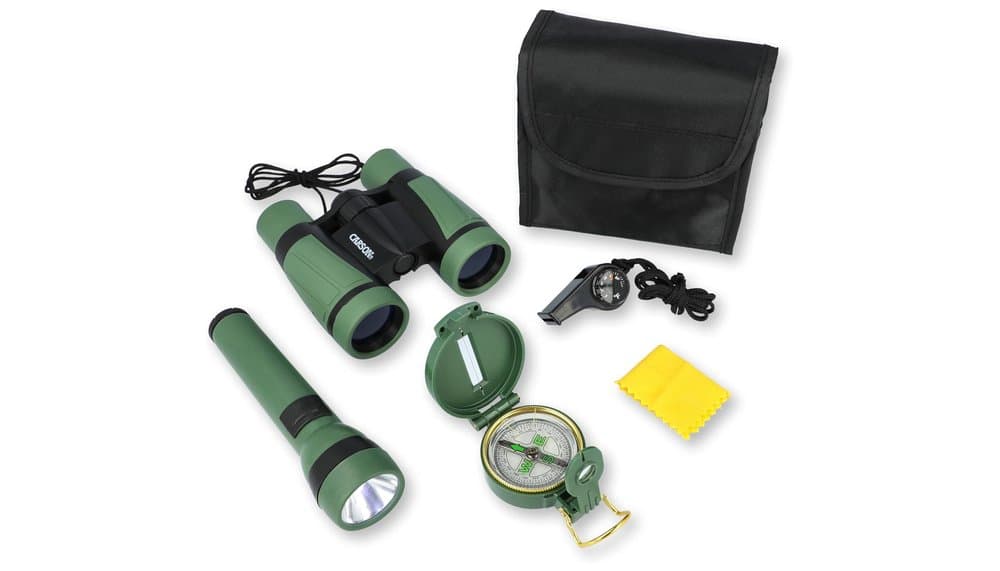
Carson AdventurePak Kids' Exploration Tool Kit Review
Explore nature with this kid's 5-piece tool kit for outdoor adventure and educational discovery. Perfect for young explorers.
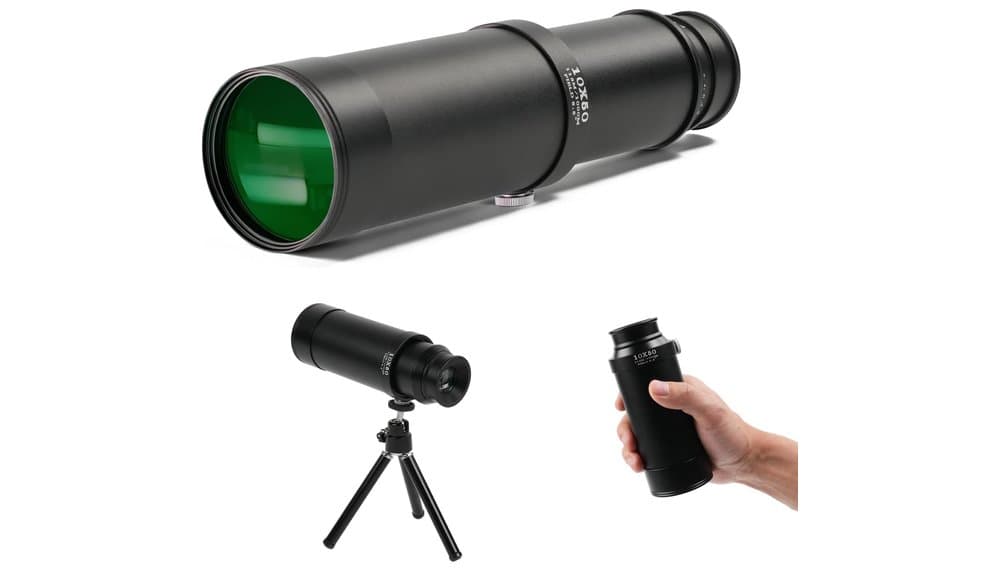
BOSTRON CY 10x50 Monocular Review & Test
Compact 10x50 monocular review: Analyzes optical clarity, field of view & build quality for hiking, nature & astronomy. See its true value.
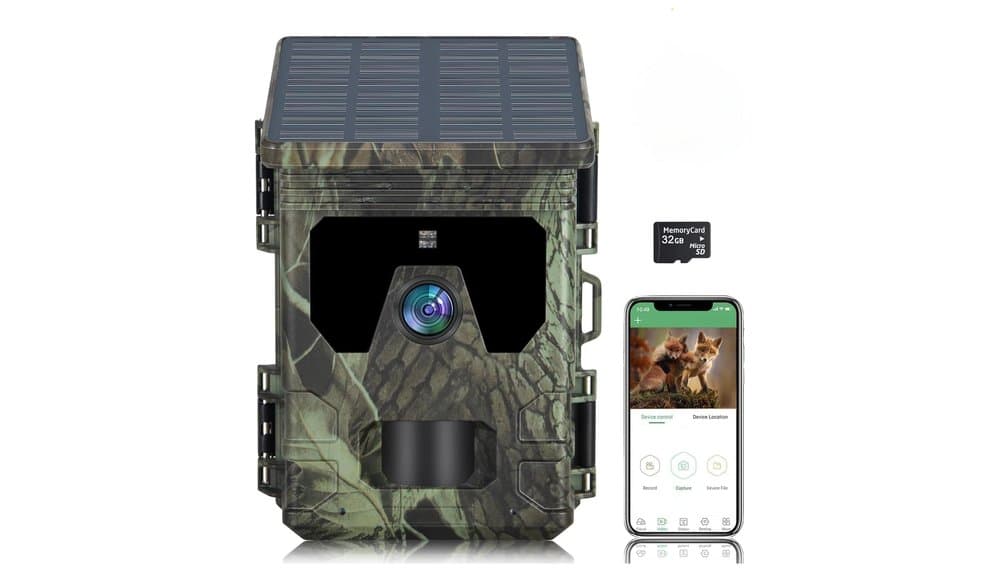
FunKind HC600Pro 4G Trail Camera Review
FunKind HC600Pro solar-powered 4G trail camera review. Analyzes real-time wildlife monitoring specs, solar/battery power, and performance data.
Guides you might like
WiFi Trail Camera Guide
See wildlife discreetly from your couch! Learn how WiFi trail cameras let you monitor animals without disturbance and how to choose the right one.

Ultimate Travel Telescope Guide
Choose a portable, high-performance travel telescope to explore the universe from your backpack without compromising on essential astronomical views.
Ultimate Guide to Night Vision Binoculars
Choose the perfect night vision binoculars: Gen vs. digital? Unravel the tech to make your nighttime wildlife adventures a total success. Guide inside.