PH970S Solar Camera: Detailed Test & Review
Published on 8 March 2026 · By OptiqueNature
Review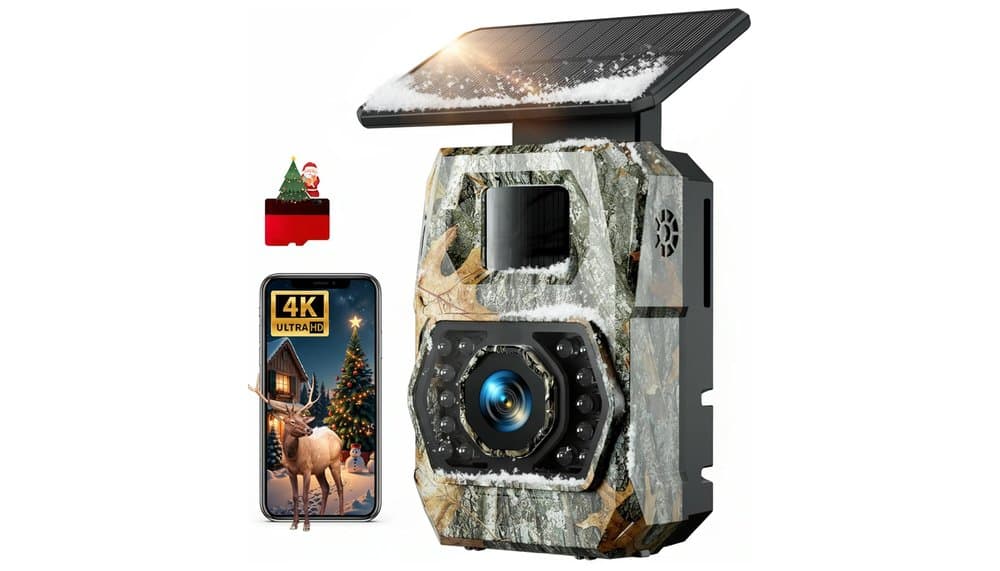
Introduction
In the world of hunting cameras and trail cameras, battery life and ease of use are often the Achilles' heel of traditional models. The PH970S Solar Hunting Camera enters this arena directly by promising a near-infinite solution thanks to its integrated solar panel and large-capacity battery. Aimed at wildlife observers, landowners, or nature enthusiasts, it claims to combine the convenience of solar charging with the performance of a 60MP sensor and 4K. Here, we analyze this product without bias, dissecting its technical specifications and confronting them with user feedback and expert analyses. What interests us is determining whether this device lives up to its promises and constitutes a reliable tool for the discreet observation of wildlife.
Strengths
Analysis of the specifications and feedback converges on several marked advantages. The most prominent is undoubtedly its revolutionary autonomy. The combination of an integrated 5200mAh battery and a solar panel eliminates the cost and logistical hassle of AA batteries, a real game-changer according to the user community.
Next, the wireless connectivity is a major asset. The connection via Wi-Fi/Bluetooth to a dedicated app allows configuring the device, viewing media, and even watching live without having to remove the SD card, an appreciated gain in time and discretion.
Finally, its versatility and robustness are highlighted. The IP66 waterproof housing and camouflage design ensure durable and discreet outdoor installation. The complete package including a 32GB microSD card is also seen as a real plus for immediate deployment.
Weaknesses
Despite its strengths, some limitations emerge from user feedback. The first concerns the fixed solar panel. Its orientation cannot be adjusted, which can be problematic in shaded areas where direct sunlight is limited, potentially compromising the promise of infinite autonomy.
Next, the Wi-Fi connectivity range is limited to about 20 meters. This rules out any connection to a standard home network and requires physical proximity to the device to retrieve files, which can be a constraint on large properties.
Finally, as is often the case in this product category, some users note that one must temper expectations regarding the advertised resolutions. Although very decent for the intended use, the images, especially at night, do not always offer the level of detail and sharpness that an expert photographer might expect from 60MP and 4K values.
Detailed Analysis
Autonomy and Design: A Practical Approach
The power system is the main argument for the PH970S. According to feedback, the 5200mAh battery, paired with the solar panel, offers remarkable autonomy, drastically reducing maintenance. Users installing the camera in a well-exposed location report never having to charge it manually. This solution is eco-friendly and economical in the long term. The ABS construction and IP66 certification are validated by the community: the device withstands rain, frost, and dust. Its compact and camouflaged design (10x5x6 cm) facilitates its integration into the natural environment.
Optical Performance and Sensor: Between Promises and On-the-Ground Reality
The specifications advertise a 60MP photo sensor and 4K video. Users confirm a good overall image quality, with natural colors during the day and sufficient detail to identify species. The night vision, ensured by 14 invisible 850nm infrared LEDs (for most animals), produces usable black-and-white images. However, as one tester points out, the actual resolution seems lower than the marketing figures, especially in low-light conditions. Nonetheless, this remains largely sufficient for observation and surveillance.
The 100° field of view is considered very wide, allowing coverage of an extensive scene without a significant blind spot. Combined with motion detection and a trigger delay of 0.1 seconds, the camera effectively captures rapid movements, a point praised by users who have experienced slower models.
Interface and User Experience: The App in the Spotlight
The user experience revolves around the proprietary mobile application. Feedback describes it as intuitive, stable, and available in French. It allows changing settings (photo/video/mixed mode, sensitivity, intervals, time ranges), viewing live (within the 20m range limit), and downloading media. The ability to manage multiple cameras from a single interface is an advantage for complex setups. It is crucial to note that the connection is made directly between the smartphone and the camera, not via a home Wi-Fi router.
Segment Comparison and Value
Positioned in the intermediate segment, the PH970S distinguishes itself with its solar-powered "all-in-one" ecosystem. Compared to entry-level cameras running on batteries, it offers superior ease of use and lower ownership costs. Compared to high-end models from established brands, it may present shortcomings in terms of detection finesse, absolute image quality, or infrared range (limited here to about 20m). However, for the regular observer or property owner seeking simple, autonomous surveillance, its value for money is judged excellent, as it combines advanced features (4K, Wi-Fi, solar) at a contained price.
Technical Specifications
| Feature | Detail |
|---|---|
| Photo Resolution | 60 Megapixels (interpolated) |
| Video Resolution | 4K (Ultra HD) |
| Lens | 100° field of view |
| Night Vision | 14 850nm Infrared LEDs (range ~20m) |
| Detection | PIR sensor, trigger delay: 0.1s |
| Power | Integrated 5200mAh Li-ion battery + Fixed solar panel |
| Connectivity | Wi-Fi/Bluetooth (range ~20m), dedicated app |
| Storage | microSD card (included: 32GB), supports up to 128GB |
| Robustness | ABS housing, IP66 waterproofing (dust & water jets) |
| Dimensions | 10 x 5 x 6 cm |
| Weight | 500 g |
| Functions | Video recording, photo, mixed mode, time-lapse, adjustable sensitivity, password protection |
What Users Say
The synthesis of 231 customer reviews (average rating of 4.4/5) and online expert analyses reveals clear trends and a high level of satisfaction.
The recurring positive points are:
- Autonomy and solar practicality: This is the acclaimed argument. Users love not having to buy or change batteries. "A real plus, especially for long-term outdoor use."
- Trigger responsiveness: The detection speed (0.1s) is validated. One user testifies to having chosen this model specifically to replace a camera that was too slow and made them miss elusive birds.
- Image quality judged as very good: The majority is "impressed" by the sharpness of the photos and the smoothness of the 4K videos during the day. Night vision is described as effective and discreet.
- Application and Wi-Fi connection: The app is described as "simple," "intuitive," and "practical" for retrieving media remotely without disassembling the camera.
- Robustness and waterproofing: Feedback confirms the device withstands weather well (rain, snow, cold), validating the IP66.
The points of caution or negatives are:
- Non-adjustable solar panel: This is the most frequent technical criticism. Several users regret not being able to adjust the panel's angle to optimize sunlight.
- Limited Wi-Fi range: The need to be nearby (20m) to connect is noted as a limitation for truly remote monitoring.
- Relative night image quality: While judged sufficient, a few users specify that definition is lower at night and that actual performance falls short of marketing figures, which is common in the segment.
Online experts confirm these trends, emphasizing that the PH970S is perceived as a reliable product, offering excellent value for money and standing out due to its autonomy in its category.
Conclusion
The PH970S Solar Hunting Camera is not just another trail camera. It represents a coherent proposition centered on autonomy and convenience, perfectly meeting the needs of the regular wildlife observer or property owner seeking discreet, low-maintenance surveillance. Its strengths are solid: revolutionary autonomy thanks to the battery/solar duo, impeccable responsiveness, very satisfactory image quality for its segment, and proven robustness with IP66 certification.
Its limitations, primarily the fixed solar panel and the short Wi-Fi range, are the price to pay for its positioning and price point. They clearly define its optimal use: installation in a sufficiently sunny area, where one can move nearby to retrieve data.
In the end, if you are looking for a high-performance, reliable trail camera that definitively frees you from the chore of batteries, the PH970S constitutes a very convincing and relevant choice. It embodies a successful modernization of the concept, bringing real added value through its integrated energy ecosystem.
100% free and independent — All our articles are written independently, without any sponsorship. We may earn a commission on purchases made through our links, at no extra cost to you.
Articles you might like
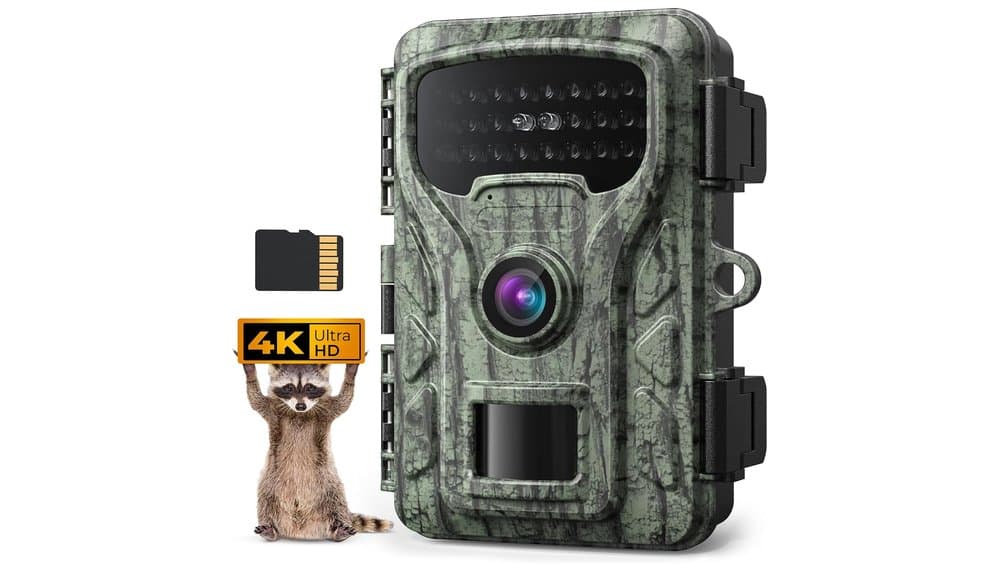
Caytail 4K 48MP Hunting Camera Review & Test
In-depth review of the Caytail 4K 48MP trail camera with included SD card. We analyze specs and real user feedback on its true field performance.
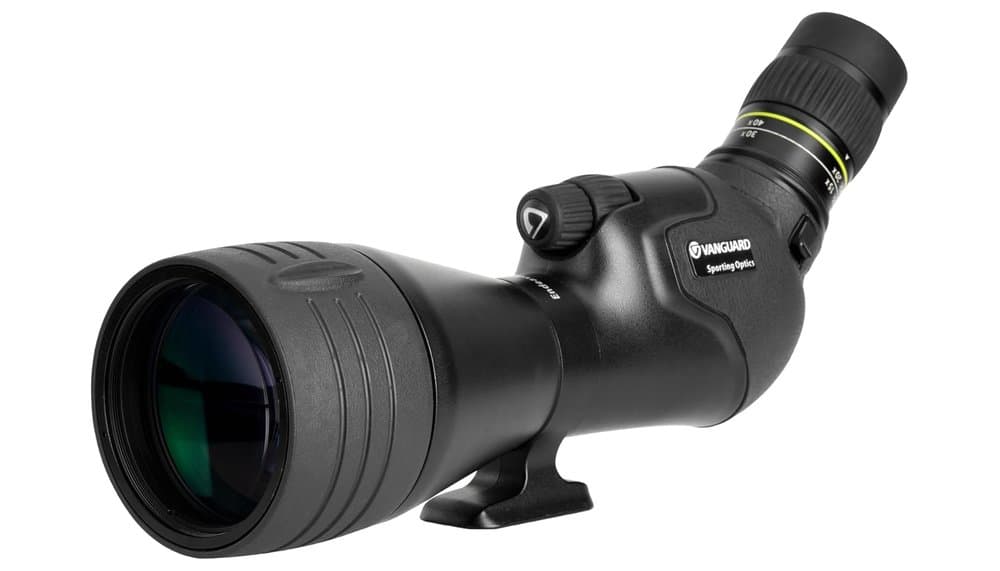
Vanguard Endeavor HD65A Spotting Scope Review
Spotting scope with 65mm ED glass & 15-45x zoom for birding & hiking. Balanced performance & portability for serious nature observers.
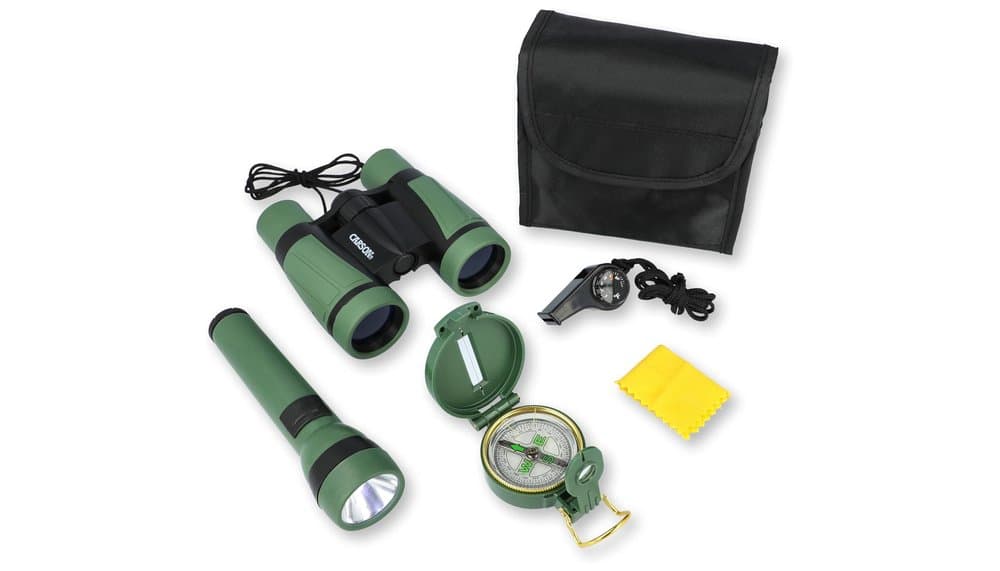
Carson AdventurePak Kids' Exploration Tool Kit Review
Explore nature with this kid's 5-piece tool kit for outdoor adventure and educational discovery. Perfect for young explorers.
Guides you might like
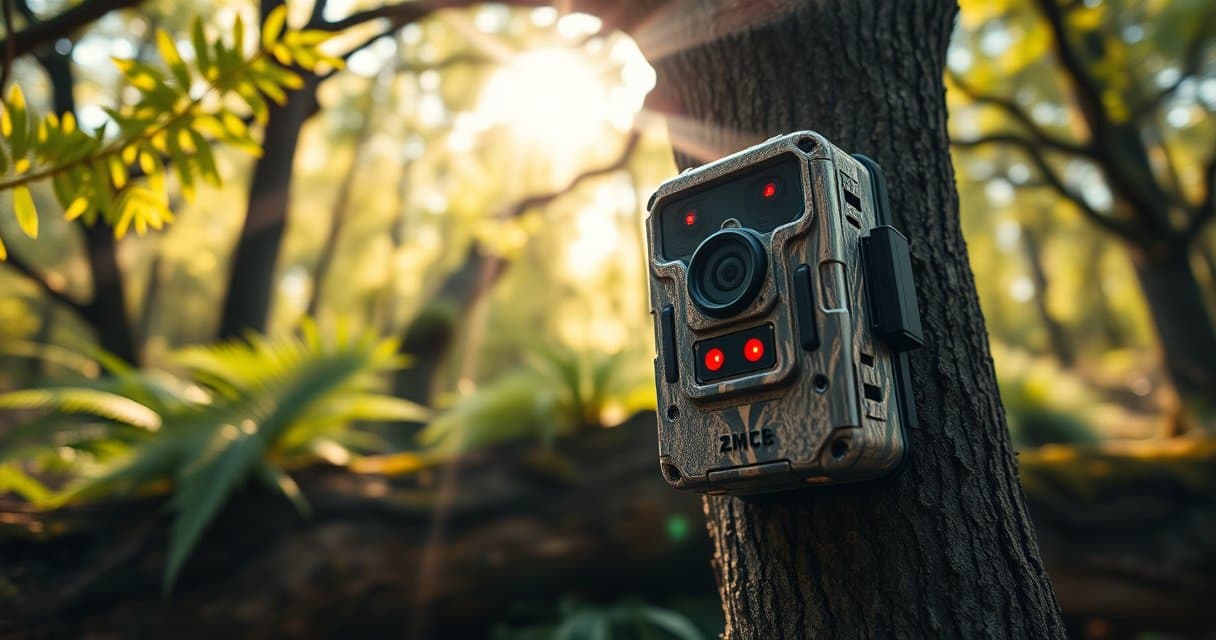
WiFi Trail Camera Guide
See wildlife discreetly from your couch! Learn how WiFi trail cameras let you monitor animals without disturbance and how to choose the right one.

Ultimate Travel Telescope Guide
Choose a portable, high-performance travel telescope to explore the universe from your backpack without compromising on essential astronomical views.
Ultimate Guide to Night Vision Binoculars
Choose the perfect night vision binoculars: Gen vs. digital? Unravel the tech to make your nighttime wildlife adventures a total success. Guide inside.