OzonEyes 8x25 Binoculars Review: Compact & Waterproof
Published on 23 June 2026 · By OptiqueNature
Review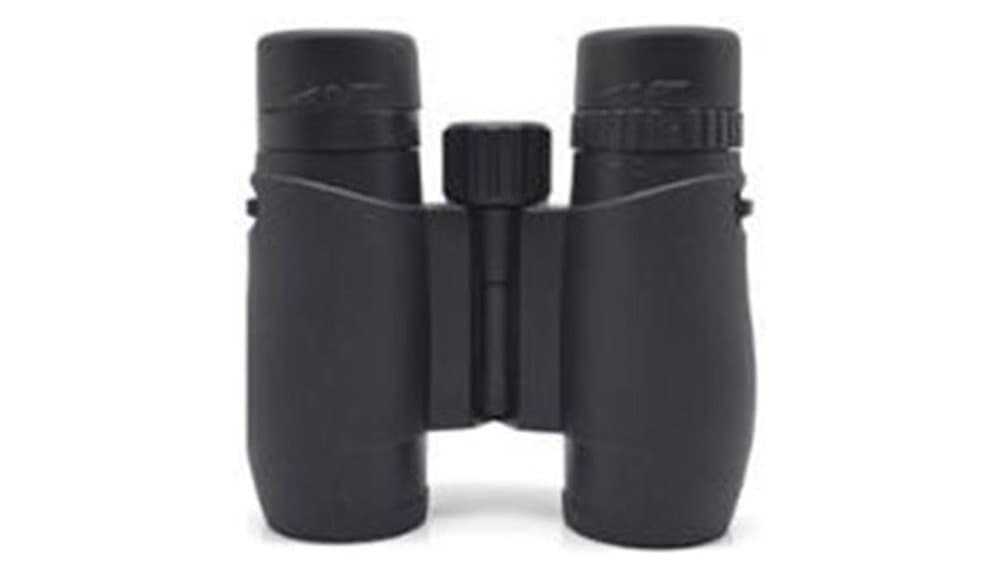
Introduction
In the world of nature observation, compact binoculars occupy a special place: they must combine performance, durability, and lightness without compromising on budget. The market is flooded, especially at the entry-level, making the choice difficult. Today, we dissect the OzonEyes Internal Focus Binoculars 8 x 25, a model that bets on an ultra-compact format and a waterproof construction to appeal to hikers and casual observers. By analyzing its technical specifications and cross-referencing the limited feedback available, we will determine if this pair lives up to its promises and where it stands in the competitive landscape.
Strengths and Weaknesses
Before diving into the details, here is a synthetic overview of this product's assets and limitations, based on its advertised features.
Strengths
- Ultra-light and compact format: At only 320 grams and with reduced dimensions (12 x 4.3 x 10.5 cm), they are designed for maximum portability.
- Asserted waterproofing: The IP67 standard promises very robust protection against rain, splashes, and even temporary immersion.
- Internal focus: This system allows adjusting sharpness without varying the length of the tubes, improving waterproofing and balance.
- Complete equipment: The set includes a soft case, a neck strap, a cleaning cloth, and a desiccant for maintenance.
Weaknesses
- BK7 Glass: The use of this standard optical glass, rather than higher quality BK-4 or low dispersion (ED) glass, limits performance in low light and may induce a loss of brightness at the edge of the field.
- Incomplete optical data: Crucial information such as the light transmission index, the field of view (in meters or degrees), or precise eye relief is not communicated, making the analysis incomplete.
- Absence of advanced coatings: No mention of dielectric coatings on the prisms or Phase Correction (PC), key elements for contrast and detail resolution.
- Lack of user feedback: At the time of this analysis, no customer reviews or expert tests are available to confirm or refute real-world performance.
Detailed Analysis of the OzonEyes 8x25
Let's now look at the concrete aspects of these binoculars, confronting marketing promises with known technical realities.
Optical Quality: What the Specs Reveal (and Hide)
The heart of a pair of binoculars lies in its ability to deliver a bright, contrasted, and sharp image. Here, the specifications give us some clues but also raise questions.
The 8x magnification is a good compromise for nature observation, offering a good balance between image stability and power. The 25mm objective lens determines the amount of light collected. Calculating the exit pupil (objective diameter / magnification) gives us 3.1 mm. This is a modest value. It indicates that images will become dark more quickly in low light (at dusk) compared to models with a larger exit pupil (like 8x42 models, which offer 5.25 mm). The twilight factor (square root of magnification x objective diameter), approximately 14.1, confirms that these binoculars are designed primarily for daytime use.
The mention of "fully multi-coated (FMC)" lenses is a minimum positive point expected today. This improves light transmission and reduces stray reflections. However, the advertised optical material is BK7 glass. It is a standard glass, less performant than BK-4 for light transmission at the edge of the image, especially on models with Porro prisms (which seems to be the case here with internal focus).
The complete silence on the presence of dielectrically coated prisms or phase correction treatments is an important signal. These technologies, common in mid-range and premium segments, are essential for achieving high contrast and color fidelity. Their absence on paper suggests the image might lack sharpness and appear somewhat "washed out," especially in high-contrast conditions (dark bird against a bright sky background).
Build and Ergonomics: Designed for the Field?
On paper, the build seems to be the OzonEyes' main selling point. The featherweight 320g is undeniably a major asset for long hikes or travel. The compactness allows them to slip into a jacket pocket or a small bag without bulk.
The IP67 standard is a serious certification. It guarantees total protection against dust and immersion up to 1 meter for 30 minutes. For outdoor binoculars, this is a very reassuring level of waterproofing, far exceeding the simple "weatherproof" rating of many low-priced competitors. The internal focus reinforces this robustness by eliminating sliding seals on the tubes, potential weak points for waterproofing.
Ergonomics are described as "contoured" and "textured" for a good grip, even with gloves. The mention of "comfortable eye relief" for glasses wearers is crucial, but without a numerical value for eye relief, it is impossible to know if they are truly adapted. The minimum focusing distance also not being communicated, their usefulness for observing insects or very close small birds remains unknown.
Value for Money and Positioning
Without precise pricing information, a strict financial analysis is impossible. However, based on technical specifications, we can situate this product in its segment.
The OzonEyes 8x25 clearly belong to the entry-level segment. The indicators are: BK7 glass, the absence of allusions to advanced optical technologies (ED, dielectric coatings), and a product sheet that highlights general-purpose versatility rather than purely nature-observation performance.
Their main added value compared to other low-end compacts lies in the IP67 waterproofing level and the internal focus system, two elements that significantly improve durability and reliability in the field. They therefore target the occasional observer, hiker, or traveler who is primarily looking for a reliable, light, and waterproof tool for a panoramic view or landscape observation, without extreme demands on optical fineness.
Facing established brands in nature optics (like Nikon, Bushnell, or Olympus) on their entry-level models, the OzonEyes will have to prove in practice that their compactness/waterproofing combo is sufficient, despite the probable optical compromises.
Summary Technical Sheet
| Characteristic | OzonEyes 8x25 Specification |
|---|---|
| Magnification | 8x |
| Objective Diameter | 25 mm |
| Exit Pupil | 3.1 mm |
| Twilight Factor | ~14.1 |
| Prism | Type unspecified (likely Porro) |
| Glass Material | BK7 |
| Optical Coatings | Fully Multi-Coated (FMC) |
| Special Treatments | None mentioned (no Dielectric, Phase Correction) |
| Waterproofing | IP67 (Waterproof and dustproof) |
| Focus | Internal |
| Weight | 320 g |
| Dimensions (L x H x D) | 120 x 105 x 43 mm |
| Included Accessories | Soft case, neck strap, cloth, desiccant |
What Users and Experts Say
It is essential to note that at the time of writing this analysis, no user feedback or expert reviews are available for the OzonEyes Internal Focus Binoculars 8 x 25. This total absence of feedback is in itself important information.
This means that all claims regarding the actual image sharpness, ease of focusing, prolonged viewing comfort, long-term mechanical resistance, or quality of accessories (like the case) cannot be verified by field experience. The manufacturer's promises regarding "clear vision," "ergonomic comfort," and "reliable performance in all weather conditions" therefore remain to be validated.
In the broader context of low-priced compact binoculars, the observer community often notes recurring points of vigilance on models with similar specs:
- Uneven optical quality: Risk of distortions (curvature of lines) at the edge of the field, chromatic aberration (color fringing on high-contrast edges), and an image lacking brightness.
- Uncertain long-term robustness: Even with a high IP rating, the quality of seals and the solidity of hinges on very economical products can be a weak point.
- Collimation: A faulty optical adjustment (misalignment of the two tubes) causes uncomfortable viewing and headaches. This is a defect sometimes reported in the ultra-budget category.
In the absence of feedback, purchasing the OzonEyes 8x25 therefore relies entirely on trust placed in the written technical specifications and the seller's return policy.
Conclusion
The OzonEyes Internal Focus Binoculars 8 x 25 present an interesting technical profile, especially for an audience prioritizing lightness and robustness. Their main asset is undoubtedly the combination of very low weight (320g) with a high-level IP67 waterproofing, all integrated into a compact internal focus design. They seem tailored for the hiker or traveler who wants a discreet and reliable tool, capable of withstanding a downpour without hesitation.
However, this analysis highlights probable optical compromises, inherent to their price segment. The use of BK7 glass and the confirmed absence of advanced prism coatings suggest limited low-light performance and an image that may lack contrast and sharpness compared to models using superior optical components. The crucial lack of data on the field of view and eye relief complicates the assessment of their actual user comfort.
Ultimately, these binoculars find their purpose as a versatile and durable adventure companion, for occasional observation in good light. For the demanding birder or occasional astronomy enthusiast, the optical limitations could be too penalizing. The total absence of user feedback adds a degree of uncertainty. We therefore recommend considering this product keeping in mind its stated priorities: compactness and waterproofing over extreme optical fineness, all while ensuring the possibility to test them and return them if the image quality is not satisfactory.
100% free and independent — All our articles are written independently, without any sponsorship. We may earn a commission on purchases made through our links, at no extra cost to you.
Articles you might like
BOSTRON CY 10x50 Monocular Review & Test
Compact 10x50 monocular review: Analyzes optical clarity, field of view & build quality for hiking, nature & astronomy. See its true value.
FunKind HC600Pro 4G Trail Camera Review
FunKind HC600Pro solar-powered 4G trail camera review. Analyzes real-time wildlife monitoring specs, solar/battery power, and performance data.
Haokoo Vision Nocturne 4K Night Vision Binoculars Review
Haokoo 4K Night Vision Binoculars review: See & record in total darkness. Compact, versatile for nature observation. High-definition digital performance.
Guides you might like
WiFi Trail Camera Guide
See wildlife discreetly from your couch! Learn how WiFi trail cameras let you monitor animals without disturbance and how to choose the right one.

Ultimate Travel Telescope Guide
Choose a portable, high-performance travel telescope to explore the universe from your backpack without compromising on essential astronomical views.
Ultimate Guide to Night Vision Binoculars
Choose the perfect night vision binoculars: Gen vs. digital? Unravel the tech to make your nighttime wildlife adventures a total success. Guide inside.