Optus 10x42 Roof Prism Binoculars Review
Published on 10 March 2026 · By OptiqueNature
Review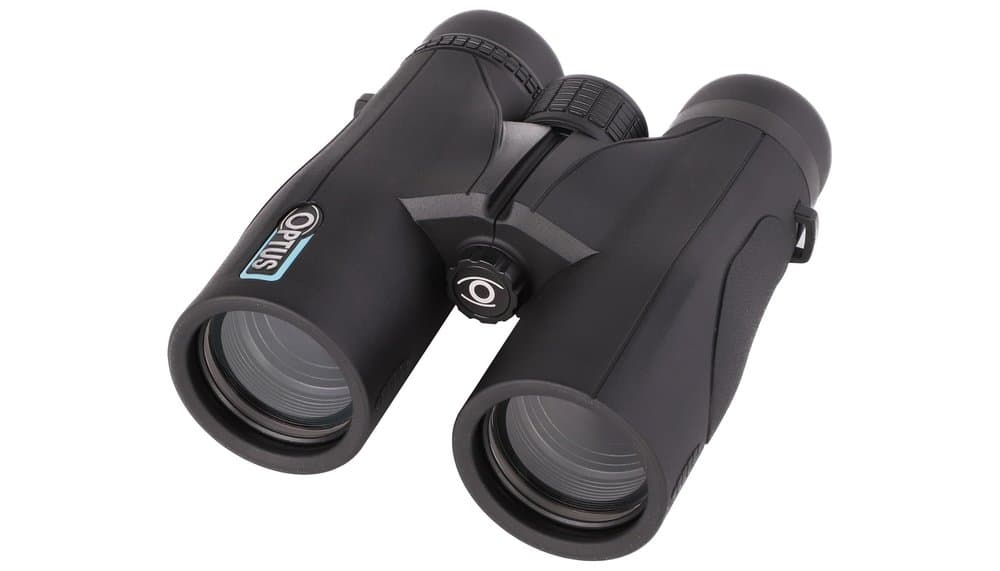
Introduction
The 10x42 binoculars often represent the ideal compromise for the nature observer: enough power for details, a sufficient objective lens for clarity, and a generally compact form. The Optus 10x42 Roof Prism Binoculars position themselves on this highly sought-after middle ground. Our analysis will dissect this model by cross-referencing its technical specifications with concrete user feedback and expert tests, to determine which type of observer is most likely to be satisfied with them. We will evaluate its place in the highly competitive landscape of entry-level and mid-range binoculars.
Strong Points
- Perceived excellent value for money: This is the most unanimous point of feedback from the community. Users feel they receive more than they expected for this price category.
- Careful ergonomics and finish: The rubber armor is regularly praised for its pleasant feel, non-slip quality, and the protection it offers. The balance and weight (approximately 460g) are considered suitable for prolonged mobile use.
- Accessibility for eyeglass wearers: The Twist-up eyecups and integrated diopter correction are features that work as advertised, making the product adaptable to a wide variety of users.
- Integrated tripod mount: The presence of a tripod socket, although it raised a specific issue, is a serious asset for stable long-duration observations or for basic digiscoping use.
Weak Points
- Limited performance in low light: As anticipated for this segment, feedback confirms that performance at dusk is not the strong point of these binoculars. The image quickly becomes dark and lacks contrast as light fades.
- Lack of waterproofing: The technical specifications indicate a "Not Water Resistant" level of water resistance. This is a significant limitation for birdwatchers or hikers facing rain or high ambient humidity. This is not an all-conditions model.
- Optical quality at the periphery: Some expert testers note a drop in sharpness at the edge of the field. This is not unusual in this range, but it is a differentiating element compared to more expensive models with better corrections.
- Random quality control: One piece of feedback mentions a machining issue with the tripod socket (presence of metal shavings). Although isolated, this raises questions about final quality control.
Detailed Analysis by Component
Optical Quality and Field Performance
On paper, the specs announce fully multi-coated lenses. This is a good foundation that, according to users, provides a clear, contrasted image with neutral colors in full daylight. The anti-reflective coating does its job to minimize stray flares. However, it's important to note the absence of marketing terms typical of higher ranges: no ED (Extra-low Dispersion) glass to limit chromatic aberration (color fringing), no dielectric coatings on the roof prisms for maximum light reflection, and no phase correction coating to restore resolution potentially lost by this type of prism. User feedback corroborates this: slight chromatic aberration is visible on extreme contrasts, and light transmission suffers, as evidenced by the modest performance in low light.
The twilight factor (square root of 10x42 ≈ 20.5) is theoretically respectable, but the exit pupil of 4.2mm (42/10) and, especially, the real light transmission limited by the optical components, cap the practical experience at dusk. This is a binocular designed for daytime.
The field of view of 96m at 1000m is on the low side of average for a 10x42. It is neither narrow enough to be bothersome, nor wide enough to be a selling point. For monitoring an animal or observing a bird in a tree, it is sufficient. For quickly "scanning" large areas (like a lake for waterfowl), models with a wider field (often >110m/1000m) will be more effective.
Build, Ergonomics, and Usability
This is clearly where the product creates a positive surprise. The roof prism construction gives a slim profile. The rubber armor is systematically described as high quality, offering an excellent grip. The central focus wheel is judged to be smooth and precise, without excessive play. The close focus is not specified in the provided data, but the description mentions a field "from 96 m to 1 m", suggesting a fairly close focusing ability, useful for observing insects or flowers.
The interpupillary distance adjusts smoothly. The ergonomic strong point, confirmed by experts, is the adaptation for eyeglass wearers thanks to the Twist-up eyecups. Combined with the eye relief (unspecified, but apparently sufficient), this makes the product truly versatile within a group or family.
The major construction flaw remains its lack of waterproofing. One should not expect to use it in a downpour or in a persistent sea mist environment. This is a deal-breaker for serious users in humid environments.
Target Audience and Use Cases
By cross-referencing all this data, the Optus 10x42 finds its niche.
- Nature observation and hiking: This is its preferred terrain. For an occasional or regular daytime outing, its weight, perceived robustness, and clarity in sufficient light make it an ideal companion.
- Introduction to birdwatching: This is a perfect model to start without a heavy investment. The 10x42 is a classic configuration for bird watching. However, the lack of waterproofing limits its use to fair-weather days.
- Sports or cultural events: Its daytime performance and comfort of use are entirely suitable.
- Very occasional digiscoping: The tripod mount allows stabilization for attempting smartphone photos, but the absence of a dedicated adapter and limited optical quality make it a basic solution.
- Very basic astronomical observation: It can provide a view of the Moon or locate constellations, but the 4.2mm exit pupil and edge-of-field aberrations limit its appeal for this hobby.
On the other hand, it is not recommended for: observation in wet or maritime conditions, serious twilight observation (deer, nocturnal raptors), users demanding perfect sharpness across the entire field, or as a primary tool for astronomy.
Technical Specifications
| Characteristic | Detail |
|---|---|
| Model | Optus 10x42 Roof Prism Binoculars |
| Magnification | 10x |
| Objective Lens Diameter | 42 mm |
| Prism | Roof (Roof Prism) |
| Optical Coatings | Multi-coated on all surfaces |
| Field of View at 1000m | 96 meters |
| Exit Pupil Diameter | 4.2 mm |
| Twilight Factor | ~20.5 |
| Focus Adjustment | Central wheel |
| Diopter Correction | Yes |
| Eyecups | Twist-up (for glasses) |
| Waterproofing | No (Not Water Resistant) |
| Tripod Mount | Yes (integrated socket) |
| Armor | Rubber |
| Weight | Approximately 460 g |
| Package Contents | Binoculars, case, strap, lens covers, cleaning cloth |
What Users and Testers Say
The synthesis of customer reviews (primarily German and French) and expert tests provided in the context reveals a clear consensus.
Praise is heavily focused on the perception of very good value for the money. The phrases "excellent rapport qualité-prix", "gutes Preis-Leistungs Verhältnis" (good price-performance ratio) constantly reappear. Users are pleasantly surprised by the finish, the smoothness of the mechanisms, and the image clarity in normal daytime conditions. The comfortable grip and adaptation for glasses are also highly appreciated. One expert tester describes it as a "solide allround-Fernglas" (solid all-round binoculars).
Criticisms and noted limitations are instructive and consistent with the specifications:
- Low light: One user explicitly notes that "Dämmerung und Dunkelheit klappen anscheinend nicht so gut" (dusk and darkness apparently don't work so well).
- Edge quality: A Vine tester remarks: "Zum Rand des Sichtfeldes ist das Bild bei meinem Exemplar nicht plus ganz so scharf wie in der Mitte" (at the edge of the field of view, the image on my unit is no longer quite as sharp as in the center).
- Waterproofing issue: Several mention it as a regret ("Schade, daß das Glas nicht wasserdicht ist" - Pity that the glass is not waterproof).
- Isolated defect: The issue of metal shavings in the tripod socket, although isolated, is reported.
The very high average rating (4.8/5) seems to reflect general satisfaction for a product in its price category, where expectations are adjusted. The limitations are perceived as normal for the segment.
Conclusion
The Optus 10x42 Roof Prism Binoculars is not a high-performance binocular that rivals mid-range or high-end models. However, according to the analysis of feedback, it establishes itself as a serious and very well-thought-out option in the qualitative entry-level segment.
It bets everything on a solid and pleasant user experience (ergonomics, smooth adjustments, practical accessories) and on honest optical quality in full light. Its weaknesses – low light performance, lack of waterproofing, limited optical corrections – are the expected compromises that allow for its price positioning.
Our conclusion is therefore the following: if you are looking for versatile binoculars for hiking, nature observation in fair weather, or to introduce a child or adult without breaking the bank, the Optus 10x42 fully deserves its place on your list. It offers more finish and features (like the tripod socket) than many of its direct competitors. On the other hand, if your outings are systematically wet, or if you primarily observe at dawn and dusk, it is necessary to consider a waterproof model with better coatings, and therefore to move up in range.
100% free and independent — All our articles are written independently, without any sponsorship. We may earn a commission on purchases made through our links, at no extra cost to you.
Articles you might like
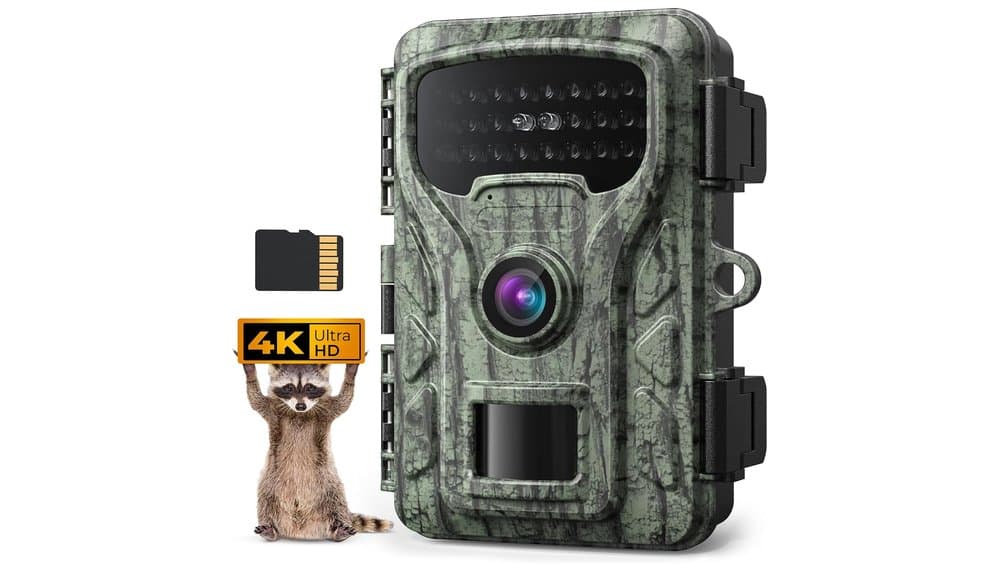
Caytail 4K 48MP Hunting Camera Review & Test
In-depth review of the Caytail 4K 48MP trail camera with included SD card. We analyze specs and real user feedback on its true field performance.
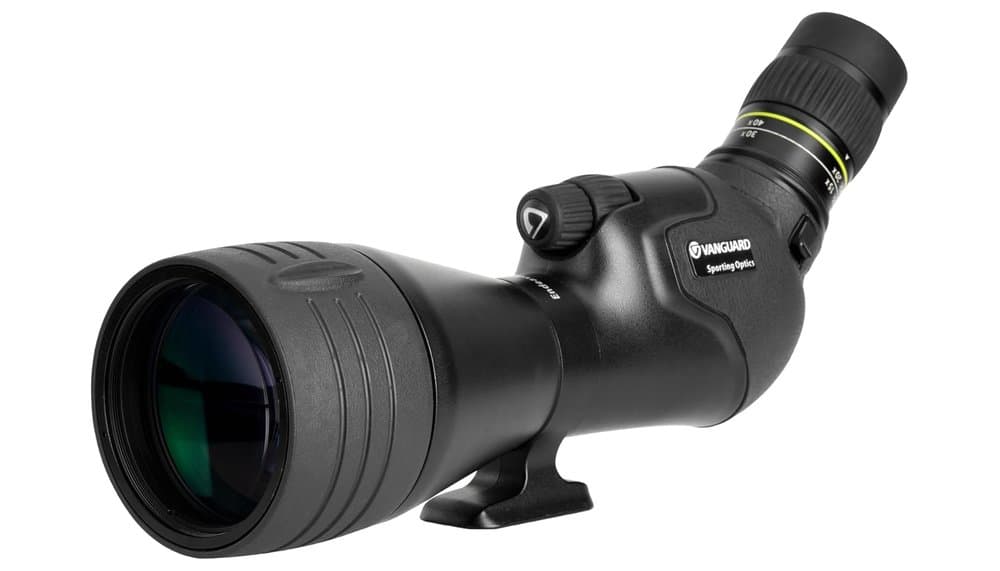
Vanguard Endeavor HD65A Spotting Scope Review
Spotting scope with 65mm ED glass & 15-45x zoom for birding & hiking. Balanced performance & portability for serious nature observers.
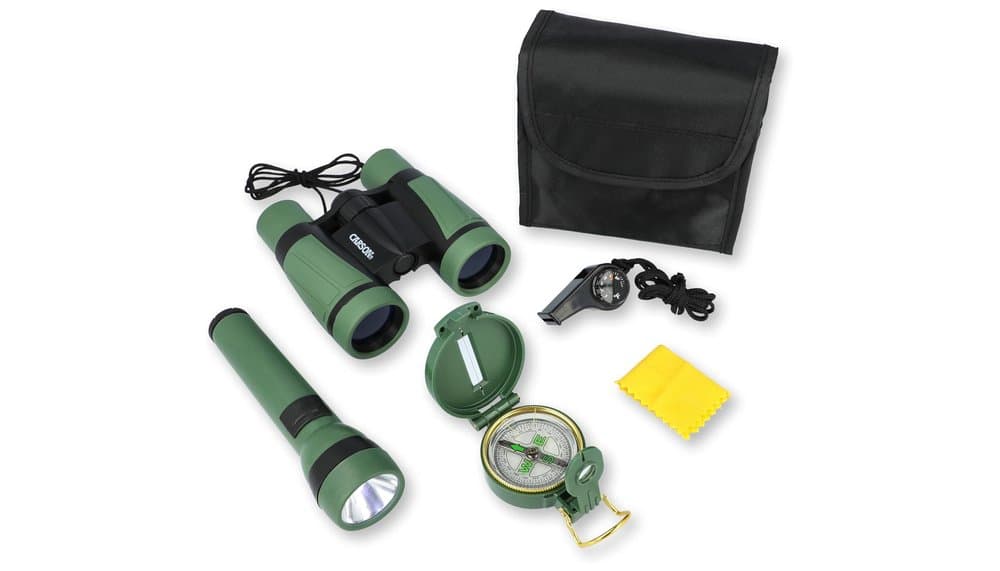
Carson AdventurePak Kids' Exploration Tool Kit Review
Explore nature with this kid's 5-piece tool kit for outdoor adventure and educational discovery. Perfect for young explorers.
Guides you might like
WiFi Trail Camera Guide
See wildlife discreetly from your couch! Learn how WiFi trail cameras let you monitor animals without disturbance and how to choose the right one.
Ultimate Travel Telescope Guide
Choose a portable, high-performance travel telescope to explore the universe from your backpack without compromising on essential astronomical views.
Ultimate Guide to Night Vision Binoculars
Choose the perfect night vision binoculars: Gen vs. digital? Unravel the tech to make your nighttime wildlife adventures a total success. Guide inside.