Opticron Explorer WA Ed-R 8x42 Monocular Review
Published on 8 May 2026 · By OptiqueNature
Review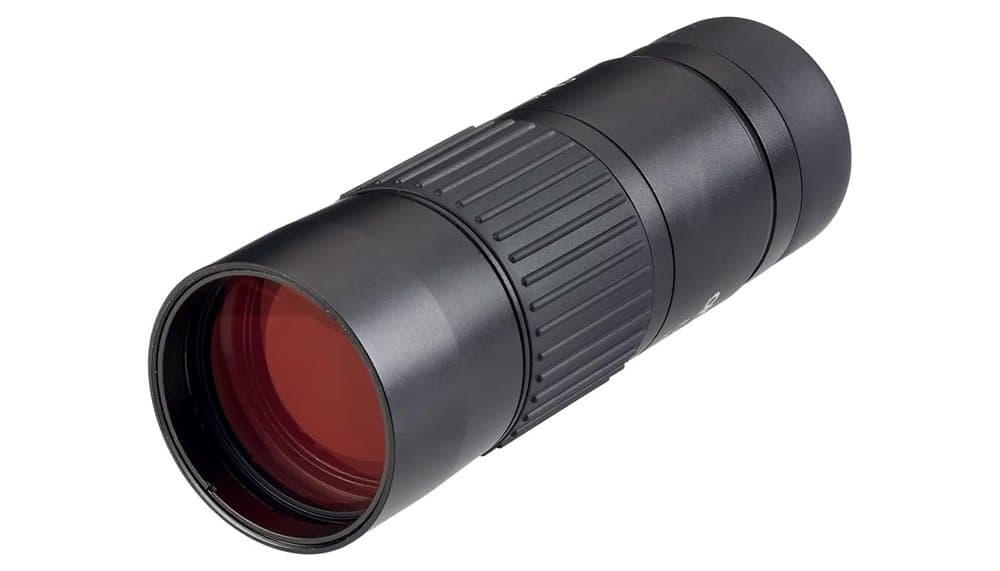
Introduction
In the world of nature observation, the balance between optical performance, compactness, and budget is a constant pursuit. Binoculars remain the standard, but for the lightweight hiker, traveling photographer, or casual observer, the monocular holds undeniable appeal. The Opticron Explorer WA Ed-R 8x42 positions itself as a high-end solution in this format, promising the optical technologies of the best binoculars in a single body. We will dissect this product based on its technical specifications, expert feedback, and user community reviews to determine if it lives up to its promises and which types of observers it is best suited for.
Key Strengths
- Superior optical quality thanks to the combination of ED (Extra-low Dispersion) glass and R-type multi-coatings for a bright, contrasty image with minimal chromatic aberrations.
- Robust and waterproof construction with nitrogen filling, ensuring use in all weather conditions without internal fogging.
- Wide field of view (WA) and generous eye relief, facilitating prolonged observation and use with glasses.
- Compactness and controlled weight for a 42mm objective instrument, making it a discreet field companion.
Key Weaknesses
- A focus wheel sometimes described as too stiff or slow by some users, potentially hindering responsiveness.
- The eyepiece cover is not secured, with a risk of loss noted by several buyers.
- A price/performance ratio that, while excellent, places the product in a segment where competition with entry-level binoculars is fierce.
Detailed Analysis of the Opticron Explorer WA Ed-R 8x42
Optical Quality and Visual Performance
On paper, the specifications of the Explorer WA Ed-R clearly signal high ambitions. The core of its performance lies in the combination of an ED glass roof prism and PC (Phase Correction) coatings. This combination is crucial: ED glass significantly reduces color fringing (chromatic aberration), especially on high-contrast edges, while phase correction coatings restore contrast and resolution, often degraded in uncorrected roof prisms. The R-type multi-coatings are designed to maximize light transmission.
In practice, this translates to images of great fidelity. User feedback abundantly confirms this: terms like "perfect clarity," "excellent visibility in low light," and "no distortion" consistently appear. With an exit pupil of 5.25 mm (42/8) and a twilight factor of 18.3, this monocular is suited for varied lighting conditions, from broad daylight to twilight, which users confirm by finding it performs well even at night.
The wide field of view is another major asset. It facilitates rapid subject location and offers a more immersive experience, particularly appreciated for wildlife observation or tracking birds in flight.
Build, Durability, and Ergonomics
The technical sheet indicates a waterproof and nitrogen-purged construction. Field reports corroborate this claim, with users describing it as "robust" and suitable for "year-round use." The rubber armor offers a good grip, though its "glossy black" finish can be more slippery than textured finishes.
The most discussed ergonomic point is the focus wheel. While some see it as a sign of solidity and precision ("it makes it feel more robust"), others find its action "too stiff" or "slow." This is a subjective characteristic, but it requires an adjustment period. The minimum focus distance of 1.9 meters is excellent for observing insects, flora, or nearby birds.
The eye relief is long and the multi-step twist-up eyecups adapt perfectly to glasses wearers. However, a design flaw is pointed out: the removable eyepiece cover is not attached. Several buyers report nearly losing or having lost it, and have had to devise makeshift solutions (like threading the strap through it). The instrument is tripod adaptable, a valuable feature for basic digiscopy or stable astronomical observation.
Value for Money and Competition
Analyzing the positioning of the Explorer WA Ed-R 8x42 is interesting. It does not compete with low-end monoculars. Its level of finish, optical materials (ED glass), and coatings place it in the mid/high-end segment of monoculars.
Its main challenge is justifying its investment compared to entry-level binoculars in a similar price range. The decisive argument is compactness and light weight (329g). For a hiker, traveler, or naturalist who prioritizes space and weight in their pack, this monocular offers optical performance often superior to standard compact binoculars. For primarily birdwatching or prolonged observation, a pair of binoculars generally remains more comfortable. It is therefore a niche tool, but one that excels in its category.
Summary Technical Sheet
| Characteristic | Detail |
|---|---|
| Model | Opticron Explorer WA Ed-R 8x42 |
| Magnification | 8x |
| Objective Diameter | 42 mm |
| Prism | Roof, with phase correction (PC) |
| Optical Glass | ED (Extra-low Dispersion) |
| Coatings | R-type multi-coatings (high transmission) |
| Field of View | Wide (WA) - Exact figure not provided in data |
| Exit Pupil | 5.25 mm |
| Twilight Factor | ~18.3 |
| Eye Relief | Long (suitable for glasses) |
| Minimum Focus Distance | 1.9 m |
| Waterproofing | Yes, nitrogen-purged construction |
| Tripod Support | Yes (adapter likely optional) |
| Eyecups | Multi-step twist-up |
| Dimensions (L x W x H) | 138 x 54 x 47 mm |
| Weight | 329 g |
| Included Accessories | Case, strap, objective cover, eyepiece cover (removable, not attached) |
What Users and Reviewers Say
An analysis of customer reviews and available expert feedback reveals a very clear consensus on several points.
Praise is unanimous regarding image quality. Users describe exceptional clarity, good contrast, and faithful colors. Performance in low light is frequently praised, with specific mentions for nighttime or end-of-day observation. The compactness and overall solidity of the item are also highly valued. Many call it a "quality product" or "high-end," considering it offers excellent value for the optical level provided.
Criticisms focus on specific ergonomic points. The main subject of frustration is the stiffness or slowness of the focus wheel. This is not a universal flaw (some appreciate it), but it is a noted trend. The second recurring negative point is the design of the eyepiece cover, deemed too easy to lose as it is not attached to the body. Finally, a few users note that for a pocket monocular, it remains a bit heavy (329g), although this weight is logical given the 42mm objective diameter.
Conclusion
The Opticron Explorer WA Ed-R 8x42 is not a monocular like the others. It transcends the format by incorporating serious optical technologies – ED glass and phase-correction coatings – typically reserved for quality binocular instruments. The result, confirmed by the community, is a bright, sharp, and pleasing image that rivals good binoculars.
Its limitations are mainly ergonomic: a focus wheel that may feel too stiff for some and a poorly designed eyepiece cover. However, its waterproof construction, wide field, and eye relief suitable for glasses wearers make it a reliable field tool.
Who should consider it? It is the ideal companion for the hiker, traveler, or naturalist who absolutely prioritizes compactness and weight without making major compromises on optical quality. It is also an excellent secondary tool for the photographer or observer already equipped with a long lens, seeking a lightweight viewer. On the other hand, for intensive and static birdwatching, a pair of 8x42 binoculars, even entry-level, will likely offer more comfort over long periods. The Explorer WA Ed-R 8x42 thus perfectly fulfills its mission: to offer premium optical performance in a minimalist format, for those for whom every gram and every cubic centimeter counts.
100% free and independent — All our articles are written independently, without any sponsorship. We may earn a commission on purchases made through our links, at no extra cost to you.
Articles you might like
Carson AdventurePak Kids' Exploration Tool Kit Review
Explore nature with this kid's 5-piece tool kit for outdoor adventure and educational discovery. Perfect for young explorers.
BOSTRON CY 10x50 Monocular Review & Test
Compact 10x50 monocular review: Analyzes optical clarity, field of view & build quality for hiking, nature & astronomy. See its true value.
FunKind HC600Pro 4G Trail Camera Review
FunKind HC600Pro solar-powered 4G trail camera review. Analyzes real-time wildlife monitoring specs, solar/battery power, and performance data.
Guides you might like
WiFi Trail Camera Guide
See wildlife discreetly from your couch! Learn how WiFi trail cameras let you monitor animals without disturbance and how to choose the right one.

Ultimate Travel Telescope Guide
Choose a portable, high-performance travel telescope to explore the universe from your backpack without compromising on essential astronomical views.
Ultimate Guide to Night Vision Binoculars
Choose the perfect night vision binoculars: Gen vs. digital? Unravel the tech to make your nighttime wildlife adventures a total success. Guide inside.