Omegon N 150/750 Telescope Review & Test Report
Published on 28 June 2026 · By OptiqueNature
Review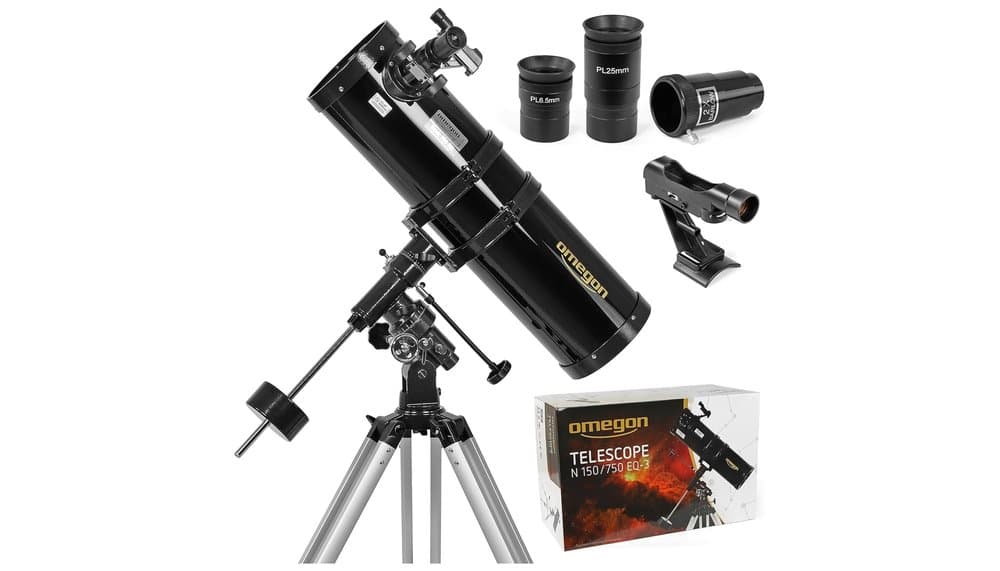
Inferred Analysis: A Newtonian Telescope for Serious Beginners
The market for beginner telescopes is vast, and it can sometimes be difficult to distinguish genuine opportunities from products simply marketed for novices. The Omegon Telescope N 150-750 EQ-3 clearly positions itself in the first category. It is an instrument that bets on solid fundamentals – a large aperture and a stable mount – rather than on gadgets. Our analysis, cross-referencing specifications, expert feedback, and user experiences, aims to determine if this choice is wise for an observer of the celestial or terrestrial nature.
Strengths
- Generous optical performance: The 150 mm aperture is a major asset, offering great light-gathering capability.
- Remarkable stability: The EQ-3 equatorial mount is frequently praised for its robustness and precise tracking.
- Complete and immediate kit: The inclusion of two eyepieces and a finder allows for immediate observation without mandatory additional purchases.
- Attractive price/performance ratio: For its segment, it offers a large diameter, often associated with more expensive models.
Weaknesses
- An ergonomics that requires learning: The equatorial mount, while performant, can disconcert a true beginner.
- Uneven build quality: Some users report machining defects or lower-quality parts (screws, finder).
- Entry-level accessories: The supplied eyepieces do the job but are often the first components to be upgraded.
- Size and weight: At 13 kg, it is not a portable instrument and requires dedicated storage space.
Detailed Analysis by Criterion
Optical Quality and Visual Performance
The heart of the Omegon N 150-750 is its Newtonian optics. On paper, the specs announce a 150 mm diameter primary mirror with a 750 mm focal length (f/5). This short focal ratio makes it a relatively bright and quite versatile instrument, capable of showing both wide fields for deep sky and, with a good eyepiece, planetary details.
The big question for a spherical mirror Newtonian of this focal ratio concerns spherical aberration. According to cross-referenced feedback from the community and expert tests, the mirror quality is considered overall satisfactory for the price and target audience. One expert user notes that the aberration is "imperceptible" under normal visual observing conditions. However, another opinion warns about the optical limits of an f/5 spherical mirror, especially at high magnification. In practice, for a beginner observing the Moon, Saturn's rings, or the Orion Nebula, the performance is largely sufficient and impressive. The light transmission is intrinsically high thanks to the mirror design (absence of lenses), but depends on the quality of the aluminizing.
Construction, Ergonomics, and Durability
This is the point where opinions are the most divided. The EQ-3 mount itself is a strong point. Users describe it as stable, ensuring smooth tracking once properly balanced. This is a significant advantage over low-end alt-azimuth mounts, which are often too light.
However, the finish and quality control seem to be the potential Achilles' heel of this model. Several user reports mention defects upon delivery: "mount locking screw that failed very quickly," "dent on the tube," "axis clamping thread broken." The red dot finder is regularly cited as the most "cheaply made" component, sometimes with mechanical play. The tube itself is standard, protected by white paint. It is neither waterproof nor anti-dew; it is an instrument designed for standard indoor/outdoor use, sheltered from rain and excessive dew.
The ergonomics for a beginner are mixed. Assembling the tripod and mount takes about an hour. The manual is described as basic, but the community points out that online tutorials are easy to find. The real learning lies in mastering the equatorial mount: polar alignment (orientation on the pole star), balancing, using the declination and right ascension axes. This represents a steeper learning curve than with an alt-azimuth mount, but far more rewarding in the long term for astronomical tracking.
Supplied Accessories and Versatility
The kit is complete to start:
- Plössl eyepieces 25 mm and 6.5 mm: They offer magnifications of 30x and 115x. The 25 mm is appreciated for its wide fields. The 6.5 mm, however, is often criticized for its low eye comfort (short eye relief) and limited optical quality. The community advises replacing it quickly.
- Red dot finder: Simple but effective once properly aligned. Its low manufacturing cost is apparent in its construction.
- 2x Barlow lens: Theoretically doubles the range of magnifications. As often in this segment, its optical quality is basic and can degrade the image. Experienced users recommend investing in a quality eyepiece rather than relying on this Barlow.
The versatility of use needs to be qualified. It is clearly an instrument designed for astronomy. Its weight (13 kg), size, and the obligatory use of a tripod make it unsuitable for mobile birdwatching or digiscoping in the field. On the other hand, for a fixed installation in a garden, it is perfectly suitable. Its ability to collect a lot of light might interest a nature photographer for very basic night imaging (Moon), but the lack of standard motorization and the manual mount seriously limit this application.
Comparison with the Competition
In the segment of beginner Newtonian telescopes on equatorial mounts, the Omegon N 150/750 faces models like equivalent SkyWatcher or Bresser models. Its main argument is often a slightly larger diameter at an equivalent price. However, the community notes that the consistency of finish can sometimes be better with some direct competitors. Compared to Dobsonians of the same diameter, it loses in simplicity of use and stability for a budget that is often lower, but gains the precise tracking function with its equatorial mount, a decisive advantage for planetary or shared observation.
What Users Say
The synthesis of 172 reviews (average rating of 4.2/5) and expert feedback reveals clear trends.
Recurring positive points:
- Optical quality perceived as excellent: "Excellent optical quality," "impressive for nebulae," "Saturn and its rings visible" are phrases that come up often.
- Mount stability: "The telescope is stable," "robust EQ-3 mount" are cited as major assets.
- Satisfaction with the complete kit: Beginners appreciate being able to observe immediately.
- Price/performance ratio: Many feel they got a good deal for the optical performance obtained.
Recurring negative points:
- Quality control/assembly problems: This is the most frequent complaint. Damaged parts, poor-quality screws, or a collimator (mirror adjustment) faulty upon delivery.
- Low-end accessories: The eyepieces (especially the 6.5 mm) and the Barlow are systematically singled out.
- Learning curve: The initial difficulty in mastering the equatorial mount and mirror adjustment (collimation) is emphasized.
- Size: It is bigger and heavier than some imagined.
Technical Specifications
| Characteristic | Detail |
|---|---|
| Optical type | Newtonian Reflector |
| Diameter (aperture) | 150 mm |
| Focal length | 750 mm |
| Focal ratio | f/5 |
| Mount | Manual EQ-3 Equatorial |
| Tripod | Adjustable height aluminum |
| Finder | Red dot pointer |
| Supplied eyepieces | Plössl 25 mm (30x) and 6.5 mm (115x) |
| Additional accessory | 2x Barlow |
| Accessory diameter | 1.25 inches |
| Total weight | Approximately 13 kg |
Conclusion
The Omegon Telescope N 150-750 EQ-3 is not a toy telescope, but a serious initiation instrument. It bets everything on the winning duo generous aperture / stable mount, and that is what makes it successful with motivated beginners. Community feedback confirms it: when well assembled and adjusted, it offers spectacular views of the sky that fully justify its investment.
However, it makes no concessions. It requires patience to assemble, understand, and potentially manage a few teething problems related to its economic positioning. The supplied accessories are the bare minimum; a budget for a quality mid-range eyepiece (like a 10 or 15 mm Plössl) and possibly a more precise finder should be planned quickly.
Ultimately, it is an excellent recommendation for the beginner astronomer ready to invest some learning time to access real optical performance. On the other hand, for the terrestrial nature observer looking for a quick-to-deploy instrument or for someone who wants a "turnkey" experience without the slightest adjustment, other options, potentially more expensive or with a smaller diameter, might be more suitable.
100% free and independent — All our articles are written independently, without any sponsorship. We may earn a commission on purchases made through our links, at no extra cost to you.
Articles you might like
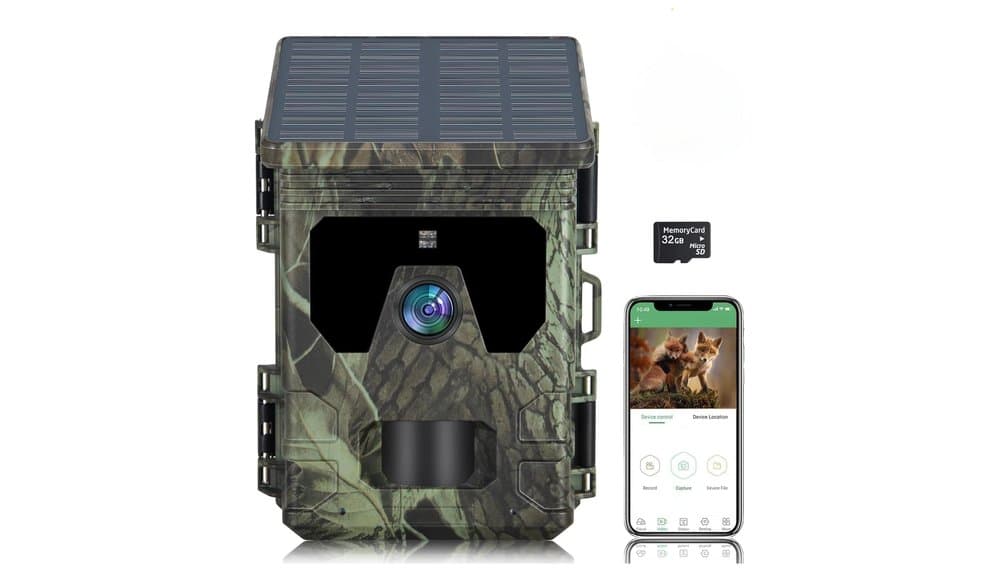
FunKind HC600Pro 4G Trail Camera Review
FunKind HC600Pro solar-powered 4G trail camera review. Analyzes real-time wildlife monitoring specs, solar/battery power, and performance data.
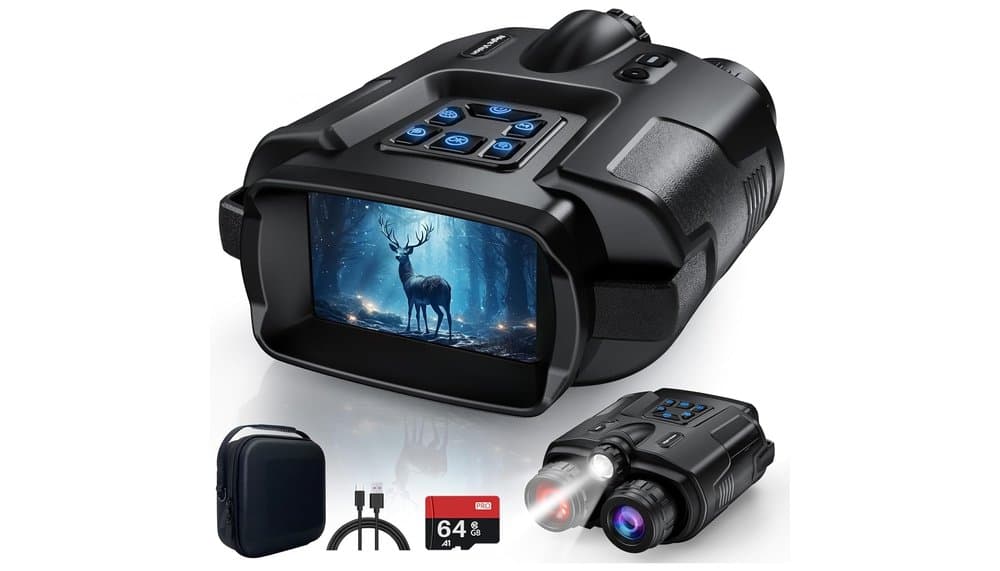
Haokoo Vision Nocturne 4K Night Vision Binoculars Review
Haokoo 4K Night Vision Binoculars review: See & record in total darkness. Compact, versatile for nature observation. High-definition digital performance.
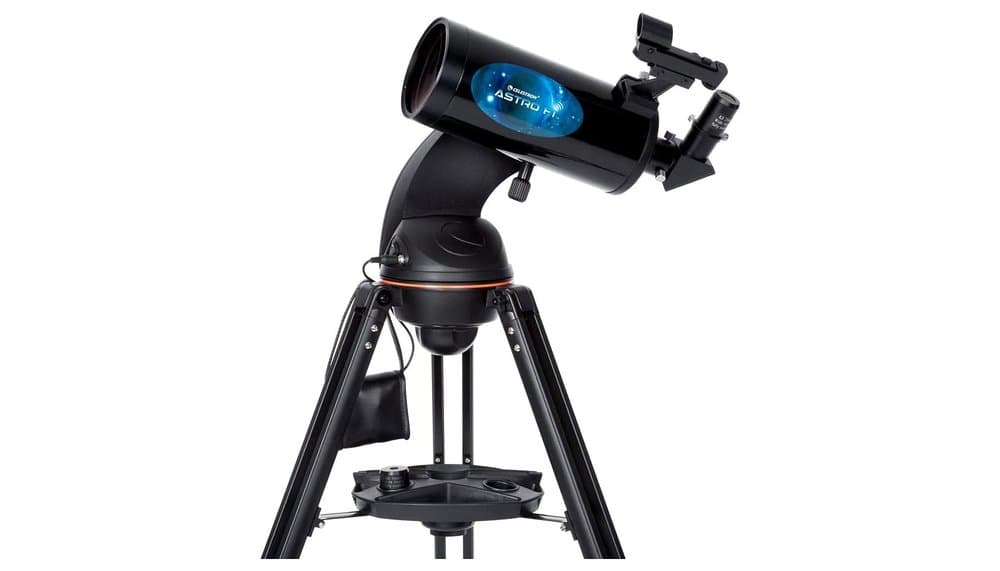
Celestron Astro-FI 102 WiFi Reflector Telescope Review
Wireless Celestron Astro-FI 102 telescope review: Does smartphone control simplify stargazing for beginners or add unnecessary complication?
Guides you might like

WiFi Trail Camera Guide
See wildlife discreetly from your couch! Learn how WiFi trail cameras let you monitor animals without disturbance and how to choose the right one.

Ultimate Travel Telescope Guide
Choose a portable, high-performance travel telescope to explore the universe from your backpack without compromising on essential astronomical views.
Ultimate Guide to Night Vision Binoculars
Choose the perfect night vision binoculars: Gen vs. digital? Unravel the tech to make your nighttime wildlife adventures a total success. Guide inside.