OM SYSTEM Olympus 8x40 S Binoculars Review & Test
Published on 29 March 2026 · By OptiqueNature
Review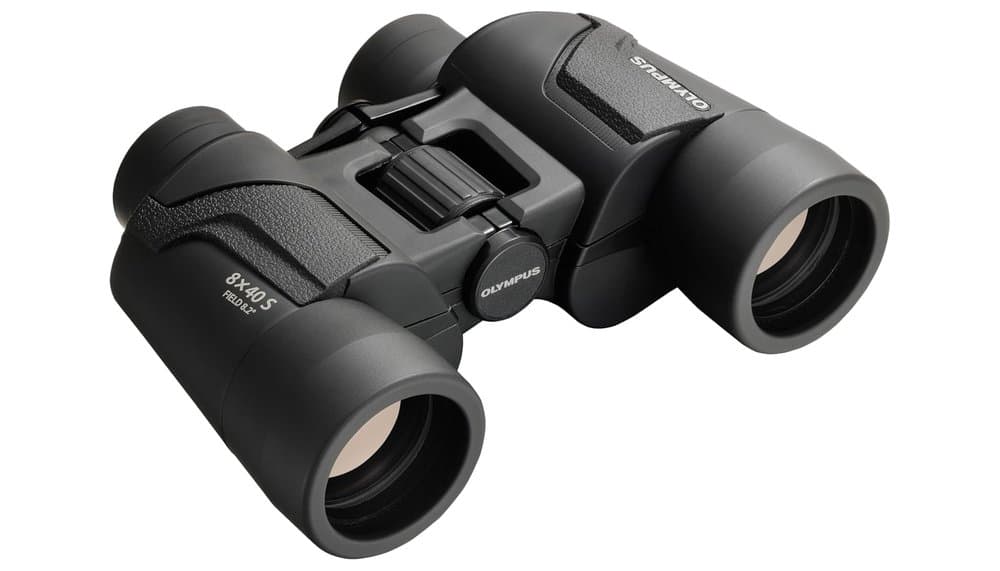
Introduction: An Olympus Legacy Revisited
Binoculars are an extension of our gaze, a fundamental tool for any nature observer. In the highly competitive segment of binoculars for naturalist purposes, the OM SYSTEM Olympus Binocular 8x40 S occupies a singular place. It embodies the transition between the legacy of Olympus, renowned for its precise optics, and the new era of the OM SYSTEM brand. Here, we are not dealing with a basic entry-level instrument, nor a premium product overloaded with technology. Rather, it is a robust and proven model, designed for field observation.
On paper, the specifications point to a classic and effective balance: 8x magnification, 40 mm objective lenses, a Porro construction. But it is feedback from the user community and expert tests that will allow us to determine if this theoretical balance translates into concrete satisfaction in the field, for birdwatching, hiking, or wildlife tracking.
Key Strengths
Based on the analysis of reviews and specifications, the major assets of the OM SYSTEM Olympus 8x40 S are clear.
- An exceptional 15-year warranty which, according to user feedback, constitutes a powerful argument for the perceived trust and durability of the product.
- Optics judged as very performant for its segment, with images described as sharp, bright, and with natural colors, even in subdued light conditions.
- A robust construction and an appreciated ergonomics, with a rubber armoring ensuring a good grip, even with gloves.
- A wide field of view (stated as 114m/1000m) facilitating the location and tracking of moving subjects, a crucial point for ornithology.
- A generous 5 mm exit pupil diameter (40/8=5), promising a comfortable and bright image, especially for older observers or in low-light conditions.
Weak Points
The analysis also highlights certain compromises and limits reported by users.
- A weight (715g) which, although lower than models with larger objectives, is often considered a bit high for prolonged handheld use, especially compared to more compact roof prism models.
- A construction mostly made of polymeric materials (plastic and rubber) which, while contributing to the contained weight, can give an impression of lesser prestige compared to magnesium alloy housings. The long-term warranty, however, compensates for this concern.
- The lack of water resistance (not waterproof according to specifications), a notable weak point for a product intended for outdoor use in all conditions.
- The included accessories (case, strap) often described as basic and not up to the optical quality of the binoculars themselves.
Detailed Analysis by Criterion
Optical Quality and Visual Performance
On paper, the specs announce an optical system integrating aspherical lenses and Porro prisms with multi-coatings. No mention of ED (Extra-low Dispersion) glass or advanced dielectric coatings, which positions these binoculars in a category of conventional high quality rather than the high-end.
The community notes, however, that the actual performance often exceeds expectations for this category. Users consistently highlight the sharpness, brightness, and color fidelity. One tester even specifies: "The image is so sharp that it feels unnatural." Chromatic aberration (color fringing) is described as well controlled. The twilight factor (√(8x40) = √320 ≈ 17.9) and the 5 mm exit pupil are very decent values that explain this good perception in low light. Light transmission is not quantified by the manufacturer, but feedback confirms a clear image even under forest canopy.
Field of View and Ergonomics
With a field of view at 1000m of 114 meters (approximately 6.5 degrees), the Olympus 8x40 S is in the high average for 8x40s. This width is regularly cited as a major asset for quickly locating birds in trees or tracking a moving animal. Compared to compact roof prism models, the field is often wider, which is an inherent advantage of the Porro design.
Regarding ergonomics, feedback is positive. The central focusing wheel is described as sensitive and smooth, operable even with gloves. The diopter adjustment on the left eyepiece is judged precise, allowing some users who wear glasses to do without them while using the binoculars. The eyecup has an appreciated particularity: its slightly convex shape allows, according to one user, for not having to position it at an exact distance from the eye, reducing fatigue and vignetting. The interpupillary distance adjusts easily. The ergonomic downside remains the perceived weight during long handheld observation sessions.
Construction and Durability
The technical sheet indicates a construction of plastic and rubber. While this may seem lightweight compared to metal, users report a feeling of robustness and quality finish. The rubber armor offers good resistance to minor shocks and a secure grip. The critical point is weatherproofing. The product being declared "not waterproof," it must therefore be reserved for outings in dry weather or one must be extremely careful in case of rain or near spray. This characteristic limits its universality for nature observation, an activity inherently exposed to the elements. The 15-year warranty is a reassuring element highly valued by the community, psychologically compensating for the use of polymeric materials.
Practical Use and Use Cases
- Birdwatching / Wildlife: This is its preferred domain. The good 8x40 balance, sharpness, wide field, and relative brightness make it a very suitable tool for the amateur or experienced naturalist looking for a reliable instrument without breaking the bank.
- Hiking: Its weight (715g) is a mixed argument. While it is less than a pair of 10x50s, it remains significant on a long walk. Its portability in a backpack is good, but worn around the neck all day, some users find the supplied strap uncomfortable.
- Digiscoping / Light Astronomy: The minimum focusing distance of about 6 meters (according to the product sheet) is decent but not exceptional for observing insects. For astronomy, the 5mm exit pupil and 40mm objectives allow viewing major deep-sky objects (star clusters, bright nebulae), but the lack of waterproofing and the general design clearly destine it primarily for daytime use.
- Concerts / Sports: The wide field of view and the 8x configuration are perfectly suited for this type of use, offering an immersive overview.
Technical Specifications
| Characteristic | Detail |
|---|---|
| Model | OM SYSTEM Olympus Binocular 8x40 S |
| Magnification | 8x |
| Objective Diameter | 40 mm |
| Prism | Porro |
| Field of View at 1000m | 114 m |
| Field of View (degrees) | ~6.5° |
| Exit Pupil | 5 mm |
| Minimum Focusing Distance | ~6 m |
| Diopter Adjustment | Left eyepiece |
| Optical Coatings | Multi-coated |
| Weatherproofing | Not waterproof (according to spec sheet) |
| Housing Material | Plastic and rubber |
| Weight | 715 g |
| Manufacturer Warranty | 15 years |
| Included Accessories | Strap, soft case, eyepiece covers, objective lens covers |
What Users and Testers Say
The synthesis of nearly 800 customer reviews, with an average rating of 4.6/5, as well as feedback from experts available online, paints a clear consensus.
The recurring positive points are:
- Surprising optical quality: The expression "sharp and bright" comes back as a leitmotif. Colors are judged natural, definition is appreciated. Several testimonies insist on performance in low light (forest, end of day).
- The 15-year warranty: It is systematically mentioned as a mark of trust and a decisive factor in the choice, compensating for concerns about plastic materials.
- Visual comfort and field width: The ease of finding and tracking a subject, as well as the precise diopter adjustment, are praised.
- Sturdiness and ergonomics: The grip is judged good, the focus wheel is smooth, and the whole gives an impression of a reliable and durable product.
The negative points or reservations expressed are:
- Weight and bulk: Although marked as "lightweight" by the manufacturer, many users find them heavy for prolonged handheld use. The standard strap is not considered very comfortable.
- Construction materials: The all-plastic construction disappoints some, even if the finish and robustness are acknowledged. It's an accepted compromise for weight and price.
- Accessories: The supplied case is regularly described as basic and of average quality, not matching the level of the binoculars themselves.
- Lack of waterproofing: Although less cited in general public reviews, it is a major handicap for serious observers who go out in all weathers. It is a technical characteristic that should not be overlooked.
The general impression is that of a product that exceeds expectations for its price in terms of optical rendering, but makes assumed compromises on materials and waterproofing to achieve it.
Conclusion: Who is this pair of binoculars for?
The technical analysis and the study of user feedback allow for a precise profile of the ideal user of the OM SYSTEM Olympus Binocular 8x40 S.
These binoculars are an excellent option for the regular nature observer, knowledgeable amateur, or serious beginner, who primarily seeks flawless image quality and a wide field of view without investing in the high-end. The naturalist who practices in fair weather, the hiker who takes out their binoculars occasionally, or the concert-goer will find it a very satisfying instrument. The 15-year warranty is a considerable psychological and practical asset.
On the other hand, they will be less suitable for the observer demanding durability against the elements (lack of waterproofing), for the one who prioritizes absolute lightness on very long hikes, or for the user who values the prestige of metallic materials. In these cases, one must look towards higher ranges, often with roof prisms and waterproofing, from OM SYSTEM or other specialized brands.
Ultimately, the Olympus 8x40 S proves that a classic optical formula, well executed and backed by a long warranty, can constitute a safe bet in the landscape of nature binoculars. They offer the essentials – a beautiful, clear, and wide image – with honorable robustness, while assuming certain technical choices that allow for maintaining a very competitive performance/price ratio. It is a reliable field tool that places the quality of visual observation at the heart of its proposition.
100% free and independent — All our articles are written independently, without any sponsorship. We may earn a commission on purchases made through our links, at no extra cost to you.
Articles you might like
Caytail 4K 48MP Hunting Camera Review & Test
In-depth review of the Caytail 4K 48MP trail camera with included SD card. We analyze specs and real user feedback on its true field performance.
Vanguard Endeavor HD65A Spotting Scope Review
Spotting scope with 65mm ED glass & 15-45x zoom for birding & hiking. Balanced performance & portability for serious nature observers.
Carson AdventurePak Kids' Exploration Tool Kit Review
Explore nature with this kid's 5-piece tool kit for outdoor adventure and educational discovery. Perfect for young explorers.
Guides you might like
WiFi Trail Camera Guide
See wildlife discreetly from your couch! Learn how WiFi trail cameras let you monitor animals without disturbance and how to choose the right one.
Ultimate Travel Telescope Guide
Choose a portable, high-performance travel telescope to explore the universe from your backpack without compromising on essential astronomical views.
Ultimate Guide to Night Vision Binoculars
Choose the perfect night vision binoculars: Gen vs. digital? Unravel the tech to make your nighttime wildlife adventures a total success. Guide inside.