NOCOEX 10x50 Binoculars Review: Rangefinder & Compass Test
Published on 23 July 2026 · By OptiqueNature
Review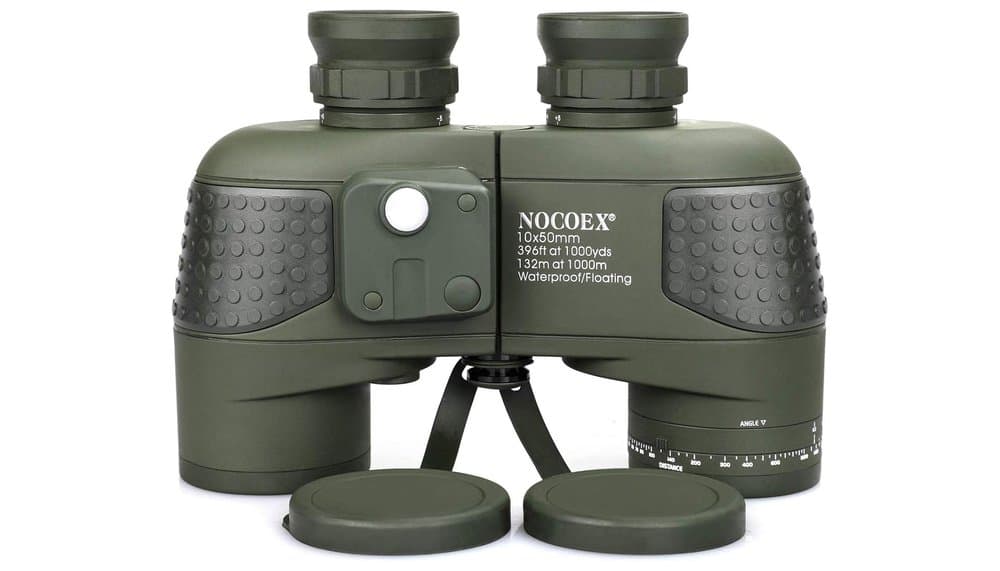
Introduction
In the rich and varied world of nature observation instruments, versatile 10x magnification, 50mm objective binoculars hold a special place. They often represent the ideal compromise between power, brightness, and portability. The NOCOEX 10 x 50 Waterproof Binoculars with Rangefinder and Compass model falls into this category, but it stands out by integrating navigation tools directly into its housing. On paper, this product promises to be an optical Swiss Army knife for outdoor enthusiasts. In this analysis, we will dissect its specifications, confront its promises with feedback from the community and testers, and evaluate its relevance to the concrete needs of nature observation, hiking, or navigation.
Strengths and Weaknesses
Strengths
- Integrated Versatility: The combination of an illuminated compass and a rangefinder reticle directly in the right eyepiece offers navigation and measurement functionalities without the need for additional devices.
- Asserted Robustness and Waterproofing: The specifications mention waterproof construction and nitrogen purged, a theoretical guarantee against fogging and humid conditions, essential for use at sea or in rainy weather.
- Theoretically High Brightness: A 50mm objective coupled with 10x magnification provides a generous exit pupil (5mm), promising good performance in low light.
- Complete Kit: The delivery includes numerous accessories (double-harness straps, case, eyepiece and objective lens covers), which users appreciate for immediate use.
Weaknesses
- Weight and Bulk: At nearly 1 kilogram, this model is significantly heavier and bulkier than many binoculars of the same configuration, a point often noted by owners.
- Uneven Peripheral Optical Quality: While the central image is generally judged to be good, some expert reviews online highlight noticeable chromatic aberrations (color fringing) and vignetting (darkening) at the edges of the field of view.
- Focus Mechanism and Ergonomics: The focus system, although fast, is sometimes described as less precise and less smooth than that of specialized models for birdwatching. The grip, due to the weight, can become uncomfortable during prolonged observations.
- Limited Usefulness of Integrated Tools: The rangefinder requires knowing the size of the target to be used, and the compass can be seen as a gimmick by optical purists who prioritize pure optical performance.
Detailed Analysis by Criterion
Optical Performance and Field of View
On paper, the specs announce Fully Multi-Coated (FMC) lenses and BaK-4 type prisms. These elements are quality standards in the mid-range segment. BaK-4 offers a higher refractive index than BK-7, which should, in theory, improve light transmission and image sharpness, especially at the edge of the field.
The 10x magnification with 50mm diameter objectives provides an exit pupil of 5mm (50/10). This value is comfortable and allows for a relatively bright image even in twilight conditions. The field of view is announced as 112 meters at 1000 meters (or 369 feet/1000 yards). This field is adequate but not exceptional for a 10x50; some competitors in the same range offer wider fields, often beyond 120m/1000m, for a more immersive panoramic observation, such as in birdwatching.
According to user feedback, the majority praise the clarity and sharpness at the center of the image. However, available expert reviews online tend to nuance this point. They indicate that the optical quality, although very decent for the price, can show its limits with noticeable distortions and vignetting (edge darkening) when observing high-contrast scenes. Light transmission, although correct, does not rival that of premium models equipped with dielectric coatings and ED (Extra-low Dispersion) glass.
Construction, Waterproofing, and Handling
Construction is a strong point highlighted by the brand and confirmed by users. The thick rubber armor provides good grip and apparent protection against minor shocks. The "100% waterproof" and "nitrogen purged" claim is crucial. If verified (which numerous positive reviews on use in humid conditions tend to confirm), it makes these binoculars a reliable tool for navigation, sea fishing, or hiking in changeable weather.
The downside of this robustness is the weight. At nearly 1 kg, the NOCOEX 10x50s are hefty. Several customer reviews, like one noting "A bit bulky," confirm this. This characteristic makes them less suitable for long handheld observation sessions or hikes where every gram counts. The presence of a tripod adapter socket is therefore a valuable asset for using them in digiscoping (adapting a smartphone) or for prolonged astronomical observations of the Moon or planets.
Ergonomics are affected by this weight, but also by the position of the compass buttons and the reticle illumination. For eyeglass wearers, the fold-down eyecups and an advertised eye relief of 22mm are major advantages, allowing access to the entire field of view without removing glasses.
Integrated Tools: Asset or Gimmick?
This is the particularity of this model. The reticle rangefinder works on the stadiametric principle: the user must know or estimate the size of an object to calculate its distance using the graduated scale in the eyepiece. It is a useful tool for hunting, observing wildlife at a fixed distance, or coastal navigation to estimate the distance to a landmark. However, its use requires learning and remains less precise and slower than a dedicated laser rangefinder.
The integrated and illuminated compass, on the other hand, is appreciated for its immediate practicality in hiking or at sea for quick orientation without letting go of the binoculars. Its lighting is crucial in low light. It should be noted that the presence of these elements in the binocular body contributes to their weight and mechanical complexity, which could potentially affect long-term reliability compared to optically simpler models.
Value/Quality Comparison Across Segments
- Budget Segment (Very Low Price): NOCOEX positions itself above, offering much better finish, real waterproofing, and BaK-4 prisms often absent in entry-level models that use BK-7 and have dull optics.
- Mid-Range Segment (The Target Core): This is where they play their game. They face renowned competitors (like some models from Celestron, Nikon, or Omegon) that often offer slightly superior optical quality and a wider field of view for a similar price, but generally without the rangefinder and compass. The choice therefore boils down to prioritizing integrated tools or pure optical finesse.
- Premium/PRO Segment: There is no possible comparison. Brands like Swarovski, Zeiss, or Leica offer light transmission, edge-to-edge sharpness, color rendition, and ergonomics on a completely different level, but at a price five to ten times higher. Tools like rangefinders are optional and of much higher precision.
Recap of Technical Specifications
| Criterion | NOCOEX 10x50 Specification |
|---|---|
| Magnification | 10x |
| Objective Lens Diameter | 50 mm |
| Exit Pupil | 5 mm |
| Twilight Factor | 22.36 (√(10x50)) |
| Field of View (at 1000m) | 112 meters (369 feet/1000 yards) |
| Angular Field of View | ~6.4 degrees |
| Eye Relief | 22 mm |
| Minimum Focus Distance | Not specified (generally ~5m for this type) |
| Prism Type | Porro BaK-4 |
| Optical Coatings | Fully Multi-Coated (FMC) |
| Waterproofing | Yes, nitrogen purged |
| Integrated Tools | Reticle Rangefinder, Illuminated Compass |
| Tripod Mount | Yes |
| Weight | 998 g |
| Dimensions | 20 x 7 x 16 cm |
What Users and Testers Say
The synthesis of 696 customer reviews (with an average rating of 4.5/5) and available expert reviews online gives us a realistic picture of the product's strengths and limits.
Recurring Positive Points:
- Perceived Excellent Value for Money: This is the common theme. Users feel they get a lot of gear (binoculars + tools + accessories) for their money.
- Sturdiness and Finish: The impression of robustness upon unboxing is very often mentioned ("strong build," "well made").
- Satisfactory Clarity for General Use: Terms like "clear," "sharp," "good brightness" often come up to describe the perceived image in the center of the field.
- Usefulness of Accessories: The comfortable straps and carrying case are appreciated.
- Appreciated Functionalities: The compass and rangefinder, although improvable, are considered practical bonuses, especially for navigation or hunting.
Expressed Negative Points or Reservations:
- Weight and Size: "A bit bulky," "Abbastanza pesante" ("quite heavy") are frequent remarks that limit intensive mobile use.
- Peripheral Optical Quality: Some reviews from experienced users and technical tests point out a drop in sharpness and aberrations at the edges, which is not the case with more optically refined models in the same price range.
- Tool Accuracy: The rangefinder is judged as "a bit mühselig" ("a bit laborious") or not very intuitive. Its accuracy depends entirely on the user's size estimation.
- Diopter Adjustment: Some find the mechanism less fine or less stable than on other models.
Conclusion: Who Are These Binoculars For?
The NOCOEX 10 x 50 Waterproof Binoculars with Rangefinder and Compass do not claim to be high-end observation instruments. They present themselves as a robust and versatile companion for outdoor activities where multifunctionality takes precedence over absolute optical excellence.
They find their ideal audience among:
- Boaters (sailors, sea anglers) who will benefit from the waterproofing, compass, and rangefinder to spot landmarks or other vessels.
- Occasional hikers and campers looking for a single pair for panoramic observation and orientation, without being image purists.
- Hunters for whom the integrated rangefinder can be a quick estimation tool.
- Beginners or families who want a complete and durable kit without investing in specialized equipment.
On the other hand, they will be less suitable for:
- Demanding birdwatchers who prioritize a wide field of view, perfect edge-to-edge sharpness, ultra-fast focus, and light weight for hours of handheld observation.
- Lightweight hikers for whom every gram in the backpack counts.
- Serious amateur astronomers who seek maximum light transmission and contrast for deep-sky objects.
Ultimately, this product fulfills its promise well: offering a complete, robust, and functional package at an accessible entry point. Its analysis shows that it deliberately sacrifices ultimate optical finesse and lightness in favor of versatility and durability. For general use, maritime use, or exploration, it represents a pertinent choice. For specialized and intensive naturalist observation practice, directing one's budget towards dedicated binoculars, without gadgets but with superior optics, will often be a better long-term investment.
100% free and independent — All our articles are written independently, without any sponsorship. We may earn a commission on purchases made through our links, at no extra cost to you.
Articles you might like
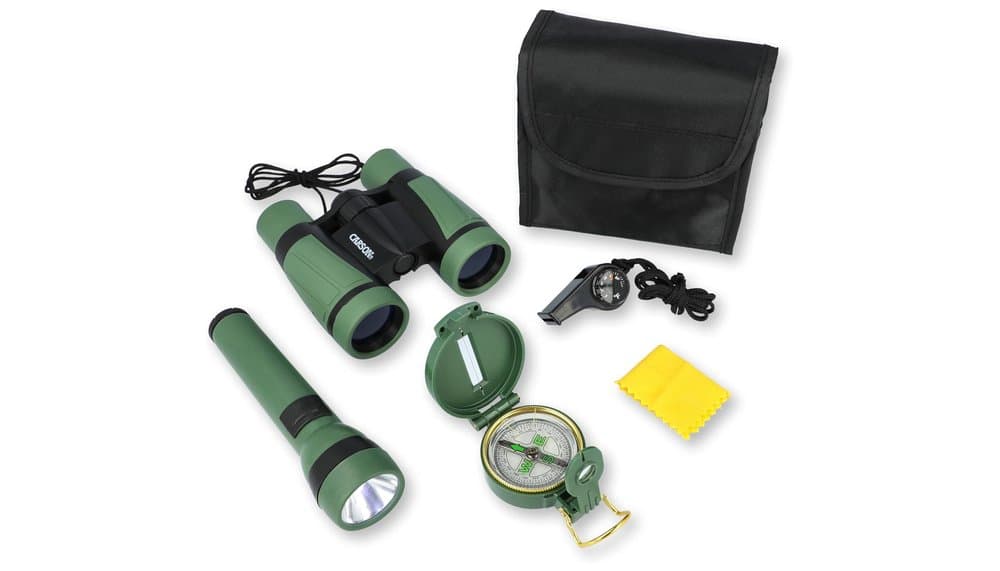
Carson AdventurePak Kids' Exploration Tool Kit Review
Explore nature with this kid's 5-piece tool kit for outdoor adventure and educational discovery. Perfect for young explorers.
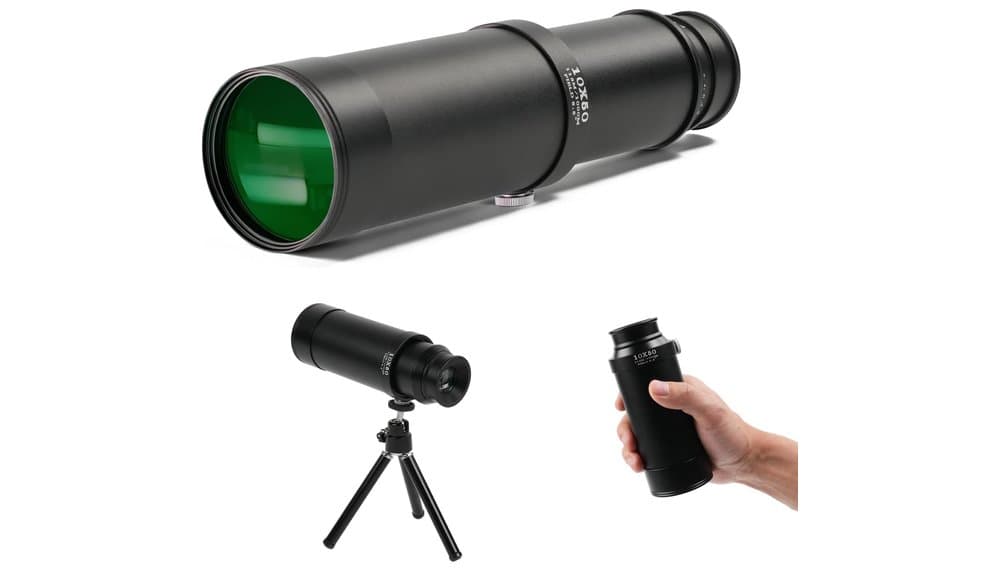
BOSTRON CY 10x50 Monocular Review & Test
Compact 10x50 monocular review: Analyzes optical clarity, field of view & build quality for hiking, nature & astronomy. See its true value.
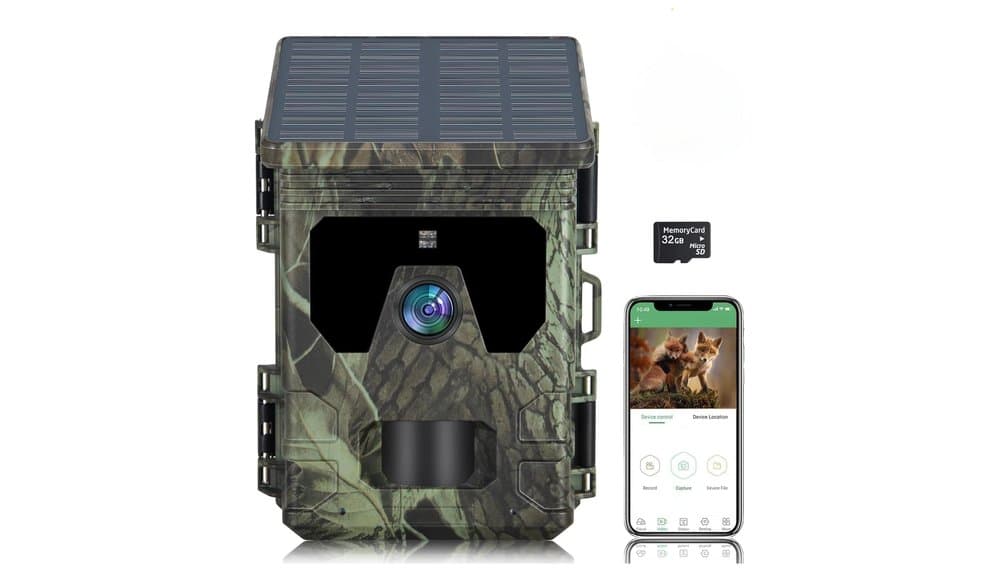
FunKind HC600Pro 4G Trail Camera Review
FunKind HC600Pro solar-powered 4G trail camera review. Analyzes real-time wildlife monitoring specs, solar/battery power, and performance data.
Guides you might like
WiFi Trail Camera Guide
See wildlife discreetly from your couch! Learn how WiFi trail cameras let you monitor animals without disturbance and how to choose the right one.

Ultimate Travel Telescope Guide
Choose a portable, high-performance travel telescope to explore the universe from your backpack without compromising on essential astronomical views.
Ultimate Guide to Night Vision Binoculars
Choose the perfect night vision binoculars: Gen vs. digital? Unravel the tech to make your nighttime wildlife adventures a total success. Guide inside.