Mijiao F36050 Telescope Review & Test
Published on 3 July 2026 · By OptiqueNature
Review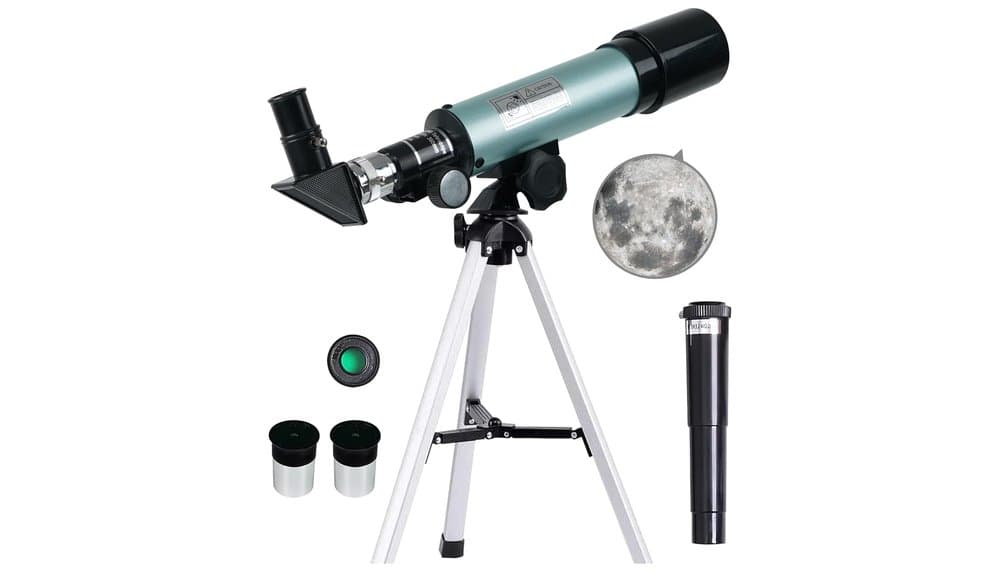
Introduction
The Mijiao F36050 presents itself as a portable refractor astronomical telescope for beginners, children, and families. With its 50 mm aperture optics and 360 mm focal length, it promises to open the doors to sky and nature observation. On paper, it is a complete kit including several eyepieces, a tripod, and accessories for digiscoping. But what is it like in practice? We investigate by analyzing its technical specifications, dissecting its theoretical optical performance, and cross-referencing this data with the massive feedback from the user community. Our goal is to determine whether this telescope is a valid stepping stone for amateur astronomy or merely an optical toy.
Strengths
- Extremely simple setup and handling, appreciated by beginners and parents.
- Attractive price/performance ratio for a first astronomical experience without a heavy investment.
- Complete kit including two eyepieces (H20mm and H6mm), a star diagonal, a moon filter, and a tripod.
- Lightweight and compact, facilitating transport and storage.
- Ideal for lunar observation, offering clear and detailed views of our natural satellite.
Weaknesses
- Light and unstable tripod, a source of vibrations and difficult to adjust precisely.
- Variable build and finish quality, typical of entry-level products.
- Limited performance on faint astronomical objects (planets, double stars) due to the modest aperture.
- Lack of a quality optical finder, complicating aiming.
- Basic Huygens (H) type eyepieces, offering a narrow field of view and limited eye comfort.
Detailed Technical Analysis
Optical Quality and Performance
The Mijiao F36050 is a standard achromatic refractor. This means it uses a doublet lens to reduce (not eliminate) chromatic aberration (color fringing). The specifications advertise fully coated optical glass. In the language of entry-level products, this typically indicates a simple anti-reflection coating on air surfaces, not high-performance multi-coatings. Light transmission is therefore adequate but cannot rival instruments with dielectric coatings or ED (Extra-low Dispersion) glass.
The 50 mm aperture is the key parameter. It determines the amount of light gathered and the resolving power. With a 50 mm aperture, the theoretical resolving power (Dawes' limit) is about 2.3 arcseconds. The mentioned "theoretical resolution" of 2000 arcseconds (about 33 minutes) in the description is a confusing and largely irrelevant marketing figure. In reality, this aperture allows seeing lunar craters in detail and, under very dark and stable skies, Saturn's rings or Jupiter's bands as small disks, but without great detail.
Magnification is provided by the H20mm (18x) and H6mm (60x) eyepieces. The 1.5x star diagonal (erroneously called an "erecting eyepiece" or "Barlow" in some descriptions) allows reaching 27x and 90x. It is crucial to understand that the maximum useful magnification for a telescope is about 2x per millimeter of aperture, i.e., 100x for this model. Claiming 90x is therefore realistic, but at this magnification, the image will often be dim and blurry if atmospheric conditions are not excellent. Huygens (H) type eyepieces are an old and basic design. They offer a narrow apparent field of view (often around 30-40°), short eye relief (not very suitable for glasses wearers), and distortions at the edges. This is a point where cost-cutting is significant.
The twilight factor (√(50x18) ≈ 30) and the exit pupil (50/18 ≈ 2.8mm) with the 20mm indicate it can be used for daytime terrestrial observation, with a fairly bright image.
Construction, Ergonomics, and Usage
The construction is primarily in aluminum and plastic. User feedback confirms a generally lightweight and sometimes flimsy feel, especially regarding the tube attachment to the fork and the focuser mechanisms. There is no mention of waterproofing or nitrogen purging (fogproof). This is clearly not an instrument designed for humid conditions or extreme cold.
The aluminum tripod is consistently pointed out as the weak point. Its lightness, necessary for portability, makes it very sensitive to vibrations. The slightest touch or a bit of wind makes aiming difficult, especially at high magnifications. The alt-azimuth mount is simple, with azimuth and altitude movements controlled manually. It is intuitive for a beginner but lacks finesse for tracking celestial objects.
Manual focusing is done via a knob. Users find the mechanism functional, albeit sometimes a bit rough. The minimum focusing distance is not specified, but for a refractor of this type, it is usually a few meters, allowing occasional terrestrial use.
Accessories and Versatility
The kit is generous with accessories:
- H20mm and H6mm eyepieces: Covers a basic range of magnifications.
- 1.5x Star Diagonal: Increases magnification and corrects the image for terrestrial observation (useful for wildlife or landscapes).
- Moon filter: A neutral density filter that reduces the Moon's brightness, improving comfort and contrast.
- Tripod and mount: Allows stationary observation.
A notable absence is a proper finder scope. The small red dot finder often included with similar models is missing here, making aiming at celestial objects more difficult for novices. For digiscoping, there is no included smartphone adapter, although some users report being able to rig a mount.
Technical Specifications
| Parameter | Mijiao F36050 Specification |
|---|---|
| Type | Achromatic Refractor |
| Aperture (Objective Diameter) | 50 mm |
| Focal Length | 360 mm (f/7.2 Ratio) |
| Mount | Manual Alt-Azimuth, Aluminum Fork |
| Included Eyepieces | H20mm (18x), H6mm (60x) |
| Optical Accessories | 1.5x Star Diagonal, Moon Filter |
| Advertised Magnification | 18x, 27x, 60x, 90x |
| Tripod | Aluminum, Adjustable Height |
| Optical Coating | "Fully coated" treatment |
| Approximate Weight | 0.68 kg (tube only) / ~1.5 kg (full kit) |
| Primary Uses | Lunar observation, Astronomy introduction, Daytime terrestrial observation |
What Users Say: Review Synthesis
Analysis of hundreds of international reviews (France, Germany, United Kingdom, Spain) reveals a clear consensus, with an overall rating of 3.9/5 that well reflects its strengths and limitations.
Recurring positive points:
- Simplicity and initial satisfaction: The majority of users, especially those buying for children or for a first experience, are very satisfied. They emphasize the ease of assembly ("in 10 minutes without tools") and the fact that the product works immediately for observing the Moon.
- Results on the Moon: This is the highlight. Reviews indicate that lunar craters are clearly visible, providing a "wow effect" and great satisfaction, especially for children.
- Price/Performance Ratio: Many describe it as a "perfect telescope to start with" or an "excellent educational gift" that fulfills its role without breaking the bank. The phrase "surprising for the price" often appears.
- Lightweight and Portability: Its compact and light format is appreciated for storage and family outings.
Negative points and reported issues:
- Tripod Stability: This is the most frequent and severe criticism. The tripod is described as "too light," "unstable," "vibrates at the slightest touch." This seriously hampers the experience, especially during fine focus adjustments.
- Quality Control Issues: Several reviews report factory defects. The most notable is mentioned by a user in the Netherlands: a plastic cap partially obstructing the tube was present inside, making the image blurry. Once manually removed, the telescope worked normally. Others report poorly machined parts or difficulties focusing.
- Obvious Astronomical Limits: More demanding users or those expecting to see colorful galaxies note that for planets (except the Moon), details are very limited. Deep-sky objects (nebulae, galaxies) are generally invisible, which is normal with a 50 mm aperture in urban areas.
- Frustration for Some: Complete failures ("doesn't work," "blurry image impossible to adjust") appear, often related to lack of product knowledge, a factory defect, or unrealistic expectations.
Conclusion: Who is this telescope for?
The Mijiao F36050 is not an instrument for the demanding astronomer or the naturalist seeking high-end optics. It is a product that finds its place in a very specific niche.
It is a relevant and valid choice if you are looking for a low-cost introductory tool, primarily intended for lunar observation and sparking wonder in the young. It perfectly fulfills this role of "first contact" with the sky, simple to set up and capable of delivering gratifying views of the Moon. It is an excellent educational gift to stimulate a child's scientific curiosity without a significant budget.
However, it is essential to dismiss any expectation of advanced optical performance. Its light construction, unstable tripod, and basic eyepieces clearly place it in the category of "entry-level telescopes." Those whose budding passion will require more detail (on planets) or more robustness will quickly need to look towards refractor or Newtonian models with 70 mm to 130 mm apertures and a sturdier mount.
In summary, the Mijiao F36050 is a respectable and inexpensive gateway into astronomy. It succeeds where many fail: making you want to see more. But it must be understood and purchased for what it is: a first step, not a final destination.
100% free and independent — All our articles are written independently, without any sponsorship. We may earn a commission on purchases made through our links, at no extra cost to you.
Articles you might like
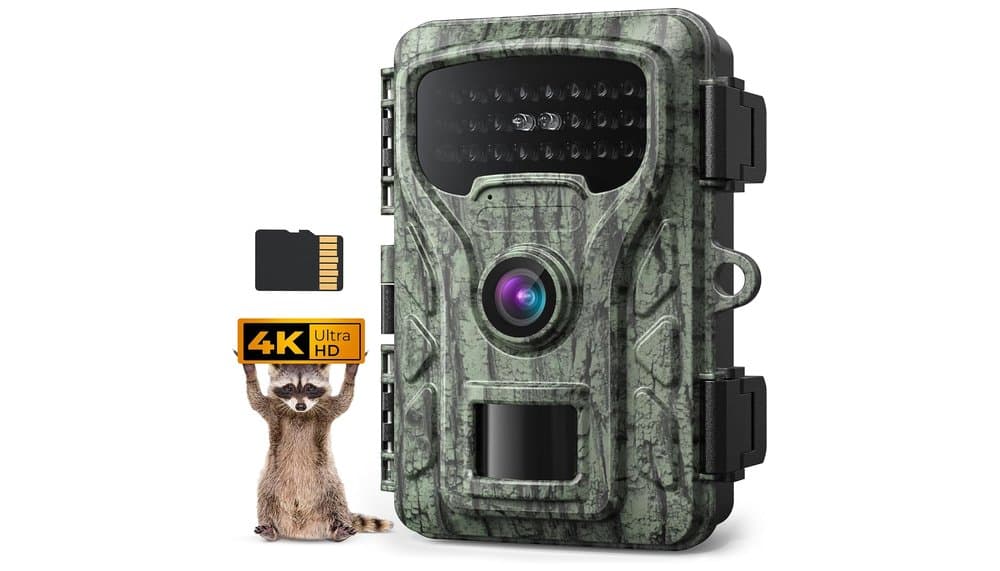
Caytail 4K 48MP Hunting Camera Review & Test
In-depth review of the Caytail 4K 48MP trail camera with included SD card. We analyze specs and real user feedback on its true field performance.
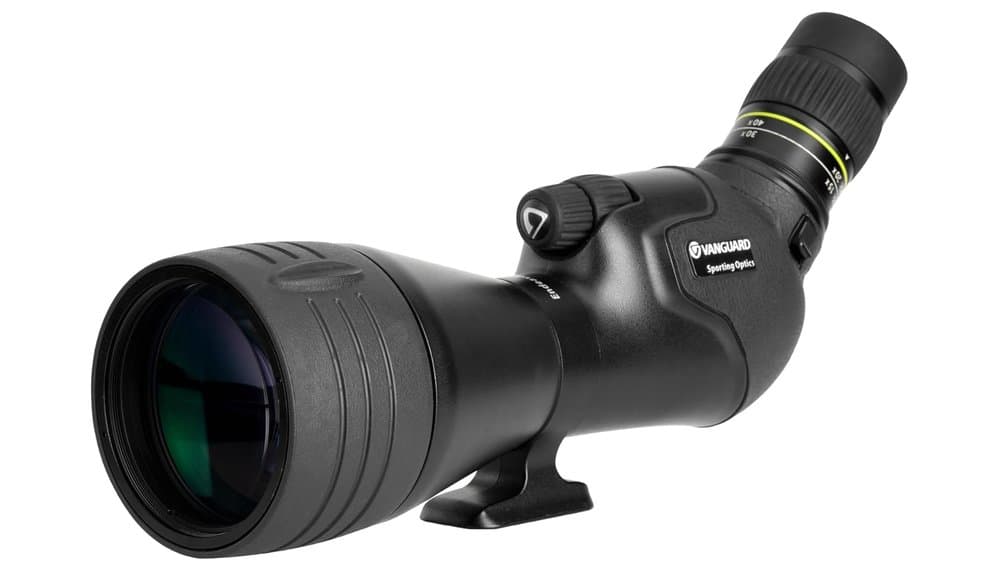
Vanguard Endeavor HD65A Spotting Scope Review
Spotting scope with 65mm ED glass & 15-45x zoom for birding & hiking. Balanced performance & portability for serious nature observers.
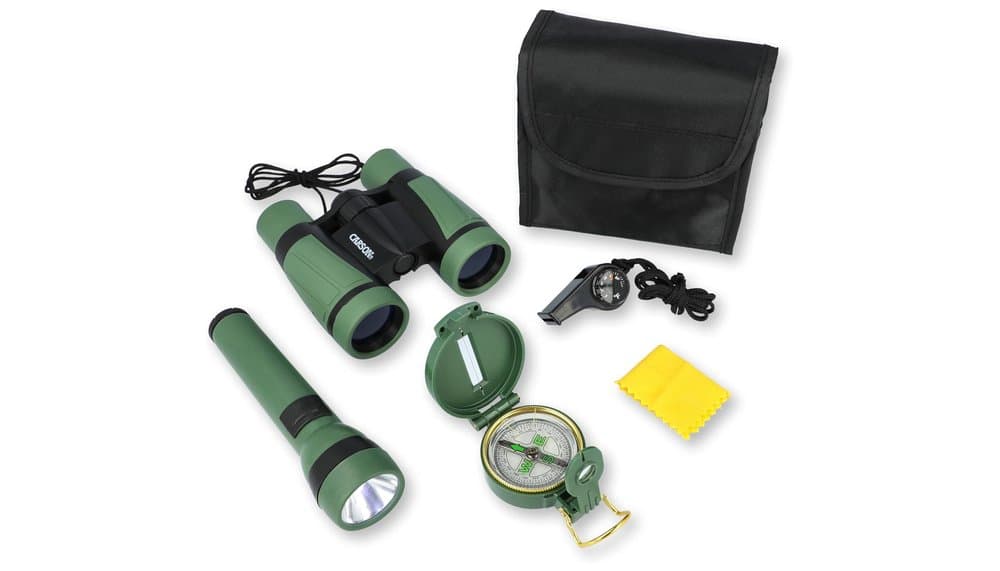
Carson AdventurePak Kids' Exploration Tool Kit Review
Explore nature with this kid's 5-piece tool kit for outdoor adventure and educational discovery. Perfect for young explorers.
Guides you might like
WiFi Trail Camera Guide
See wildlife discreetly from your couch! Learn how WiFi trail cameras let you monitor animals without disturbance and how to choose the right one.
Ultimate Travel Telescope Guide
Choose a portable, high-performance travel telescope to explore the universe from your backpack without compromising on essential astronomical views.
Ultimate Guide to Night Vision Binoculars
Choose the perfect night vision binoculars: Gen vs. digital? Unravel the tech to make your nighttime wildlife adventures a total success. Guide inside.