Long Range Observation Glasses Binoculars Review
Published on 4 July 2026 · By OptiqueNature
Review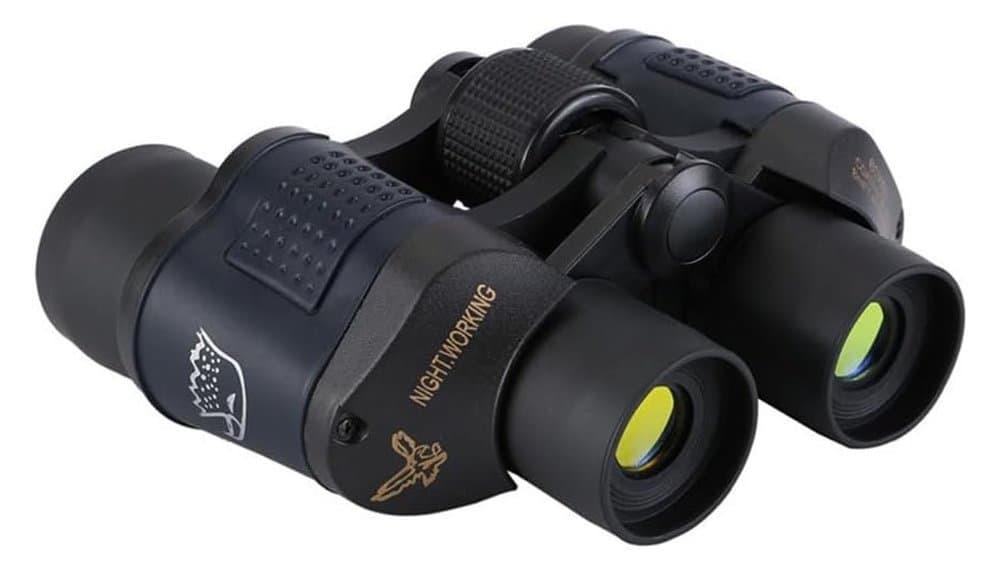
Introduction
In the vast world of observation binoculars, it can sometimes be difficult to navigate between marketing promises and optical reality. Today, we are examining the Long Range Observation Glasses Treated Multilayer Optics Binoculars, a product positioned for adventurers and naturalists seeking compact and versatile equipment. By analyzing its technical specifications, product sheet, and community feedback, we will separate fact from fiction to determine if these binoculars are the ideal companion for your outdoor excursions.
Strengths and Weaknesses: A First Overview
Before diving into the details, here is what emerges from our analysis:
Strengths:
- Compact and lightweight construction (623g), ideal for hiking and travel.
- Advertised BAK4 prism, promising better light transmission and a sharp field of view to the edges.
- Multilayer coatings ("Treated Multilayer Optics") theoretically beneficial for clarity and contrast.
- Indicated waterproofing ("Waterproof"), a major asset for outdoor use.
- Complete included accessories (strap, cloth, carrying case).
Weaknesses:
- Missing critical technical information: magnification, objective lens diameter, field of view, and twilight index are not specified, which is a serious handicap for objective evaluation.
- Complete lack of details on the lenses (type of glass, presence of ED low-dispersion glass).
- Generic design and vague marketing, typical of low-cost "no name" products.
- Limited user experience feedback in the provided data, preventing solid real-world validation.
Detailed Analysis: What Do the Specifications Hide?
Optical Performance: Promises vs. Likely Reality
The product sheet highlights attractive terms: "Treated Multilayer Optics", "BAK4 Prism", "Clear Viewing Reflecting". On paper, this suggests a serious optical construction. Multilayer coatings are indeed essential for reducing stray reflections and increasing light transmission, while the BAK4 prism (barium crown) offers a higher refractive index than standard BK7, limiting light loss and providing a brighter image, especially in peripheral vision.
However, the complete absence of the two key figures – magnification (e.g., 8x) and objective lens diameter (e.g., 42mm) – is a major red flag. These data determine everything: brightness (calculated via the exit pupil diameter), field of view, image stability, and the twilight index. Without them, it is impossible to objectively compare them to the competition. Mentions of "high transmittance" therefore remain vague, unquantifiable claims.
Note on lenses: There is no mention of ED (Extra-low Dispersion) glass or equivalent. These glasses are crucial in mid and high-end ranges to reduce color fringing (chromatic aberration) and improve sharpness and contrast, especially under high-contrast lighting conditions. Their absence suggests the use of standard optical glass.
Construction and Ergonomics: Robust and Portable?
The construction is presented as "Compact Lightweight" with a weight of 621 grams. This is indeed a very reasonable weight for a standard pair of binoculars, favorable for long handheld sessions or wearing around the neck. Waterproofing ("Waterproof") is advertised, but without a protection rating (like IPX7), which limits the confidence one can have in it for accidental immersion.
Ergonomics and eye relief (distance between the eyepiece and the eye) are not detailed. The latter point is crucial for observers who wear glasses. The presence of fold-down eyecups would be a minimum requirement to accommodate these users. The mentioned "Non-Slip" likely refers to the texture of the rubberized grip armor, a positive point for good handling.
The minimum focusing distance is not communicated. This is an essential criterion for observing insects, flora, or nearby birds.
Specifications and Recommended Uses
The marketing targets a wide range of activities: hiking, travel, hunting, fishing, safari, concerts, exploration. This displayed versatility is often a sign of a generalist product. For specialized uses like demanding birdwatching or astronomy, the actual performance will likely be limiting due to brightness and optical resolution, which depend on the unknown parameters.
For digiscoping (smartphone photography), the absence of a dedicated adapter and the likely average optical quality will make the exercise hit-or-miss. For astronomical observation, a generous objective lens diameter (at least 50mm) is preferable to capture more light, which does not seem to be the case here given the advertised weight and dimensions.
Comparison with the Market
It is difficult to precisely position this product without its key specs. However, based on its marketing language and implicit price positioning (generally very low), we can evaluate it.
- Compared to entry-level models from reputable brands (like certain basic binoculars from Bushnell or Celestron), these Long Range Observation Glasses risk suffering from lower quality control, less performant optics (even at equivalent magnification), and inferior durability. Established brands generally offer complete specs and a more reliable warranty.
- Compared to mid-range models (Nikon Prostaff, Vortex Diamondback), the gap widens. These models offer lenses with advanced coatings, a documented wide field of view, a lifetime warranty, and clearly superior, quantifiable optical performance.
- In absolute terms: if the price is very attractive, these binoculars could serve as a first "disposable" pair for occasional activities. However, for regular outdoor use, investing in a branded model with transparent characteristics generally offers much better value for money and long-term satisfaction.
What Users Say: An Absence of Concrete Feedback
In the data provided for this article, we note a complete absence of detailed customer ratings and reviews. The displayed percentages (0% for all stars) indicate that no feedback is available or was integrated into the analysis. This gap is significant.
Generally, for products of this type, early user feedback often highlights recurring points:
- Positive: decent size/price ratio for very occasional use, lightness, practicality of accessories.
- Negative: imprecise focusing, "soft" images or lack of edge sharpness, washed-out colors (low light transmission), fragile plastic construction, questionable waterproofing, sometimes defective collimation (optical alignment) leading to eye strain.
The absence of this feedback for this specific model deprives us of a crucial validation element. It is therefore imperative, for any potential buyer, to actively seek verified reviews and independent tests on this exact model before considering a purchase.
Summarized Technical Specifications
| Characteristic | Detail (from product sheet) | Comment / Interpretation |
|---|---|---|
| Model Designation | Long Range Observation Glasses Treated Multilayer Optics Binoculars | Generic commercial name. |
| Magnification (x) / Objective Lens Diameter (mm) | Not specified | Critical missing point. Determines all performance. |
| Prism | BAK4 (advertised) | Good point on paper, superior material to BK7. |
| Optical Coatings | Treated Multilayer Optics (advertised) | Multilayer coatings, essential for clarity. |
| Field of View | Not specified | Impossible to compare immersion and subject tracking. |
| Exit Pupil | Not calculable (missing data) | Determines perceived brightness. |
| Twilight Index | Not calculable (missing data) | Indicator of performance in low light. |
| Minimum Focus Distance | Not specified | Important for close-up observation (insects, flowers). |
| Eye Relief | Not specified | Critical for eyeglass wearers. |
| Waterproofing | "Waterproof" (advertised) | No standard (IPX) is specified. |
| Weight | 621 g | Light weight, an advantage for carrying. |
| Accessories | Strap, cleaning cloth, carrying case | Complete standard kit. |
Conclusion: Who Might These Binoculars Suit?
The Long Range Observation Glasses Treated Multilayer Optics Binoculars present, on paper, a checklist of attractive features for the occasional hiker or adventurer: lightness, compactness, BAK4 prism, and multilayer coatings.
However, the omission of fundamental optical specifications is a disqualifying flaw for any somewhat demanding observer. Without knowing the magnification, objective lens diameter, and field of view, it is impossible to know what one is really buying and to match it to a precise use. This opacity, coupled with a generic design and the absence of verifiable user feedback in our data, places this product in the "gamble" category.
Our recommendation is clear: if you are looking for binoculars for the serious practice of nature observation (birdwatching, wildlife observation), it is much wiser to direct your budget towards a recognized brand that provides all technical data. For very occasional use and if the price is extremely low, they might serve as a backup, but with the acceptance of significant risk regarding image quality and durability. In any case, thorough research for verified reviews of this specific model is an essential step before making any decision.
100% free and independent — All our articles are written independently, without any sponsorship. We may earn a commission on purchases made through our links, at no extra cost to you.
Articles you might like
FunKind HC600Pro 4G Trail Camera Review
FunKind HC600Pro solar-powered 4G trail camera review. Analyzes real-time wildlife monitoring specs, solar/battery power, and performance data.
Haokoo Vision Nocturne 4K Night Vision Binoculars Review
Haokoo 4K Night Vision Binoculars review: See & record in total darkness. Compact, versatile for nature observation. High-definition digital performance.
Celestron Astro-FI 102 WiFi Reflector Telescope Review
Wireless Celestron Astro-FI 102 telescope review: Does smartphone control simplify stargazing for beginners or add unnecessary complication?
Guides you might like
WiFi Trail Camera Guide
See wildlife discreetly from your couch! Learn how WiFi trail cameras let you monitor animals without disturbance and how to choose the right one.
Ultimate Travel Telescope Guide
Choose a portable, high-performance travel telescope to explore the universe from your backpack without compromising on essential astronomical views.
Ultimate Guide to Night Vision Binoculars
Choose the perfect night vision binoculars: Gen vs. digital? Unravel the tech to make your nighttime wildlife adventures a total success. Guide inside.