Long Exposure Photography Book Review
Published on 13 June 2026 · By OptiqueNature
Review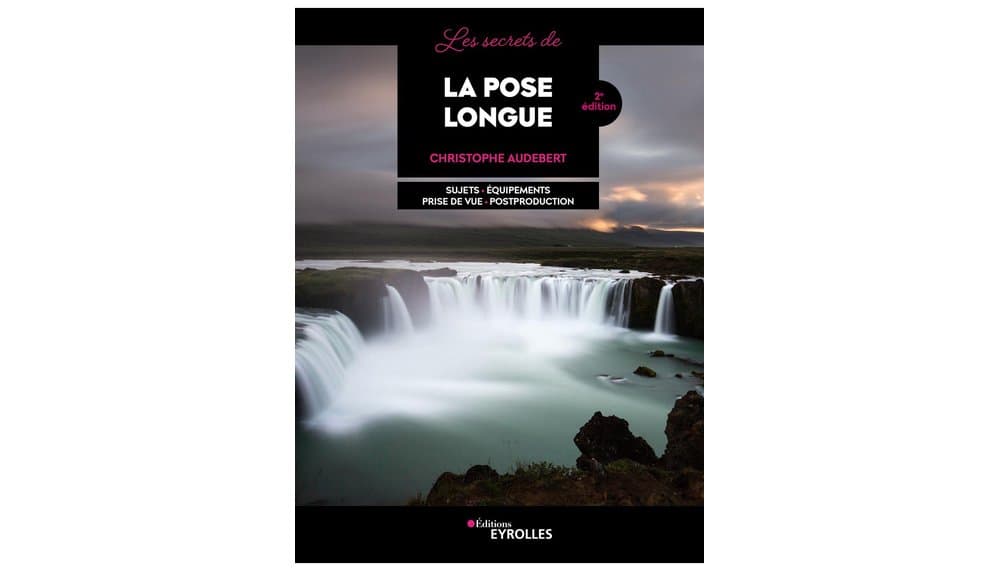
Introduction
In the world of photography, and especially in nature photography, technique is nothing without mastery. While our site usually focuses on the precise analysis of optical hardware – binoculars, telephoto lenses, spotting scopes – it is just as crucial to examine the resources that allow us to exploit their full creative potential. "Les secrets de la pose longue: Sujets - Équipements - Prise de vue - Postproduction" positions itself as one of these key guides. This book does not deal with a particular lens or filter, but with the entire body of knowledge necessary to transform a natural scene into a spectacular image using long exposure times. Here, we will dissect this work not as a literary object, but as a technical and pedagogical tool, cross-referencing its editorial promises with the very concrete feedback from the community of practicing photographers.
Key Strengths
Based on the very structure of the title and user feedback, several major strengths immediately stand out.
A complete and structured pedagogical approach: The book covers the process from A to Z, from identifying suitable subjects (watercourses, clouds, astral trails) to specific postproduction, including the critical choice of equipment and shooting settings. This comprehensiveness is highly praised by readers, who see it as a logical learning path.
Rooted in practice with concrete examples: The community particularly emphasizes this aspect. The book is "full of concrete and very precisely informed examples," as one user notes. This means that theories and settings are systematically illustrated, which is essential for a technique as visual and sensory as long exposure.
Accessibility for beginners, without sacrificing depth: Phrases like "very interesting for embarking on the adventure" appear frequently. The book seems to succeed in being a clear entry point for novices, while offering enough substance and technical precision (summaries of settings, tips) to serve as a reference later on.
Weak Points
The analysis of feedback does not reveal any glaring flaws, which explains the exceptional average rating of 4.8/5. However, a careful reading allows us to identify a few potential limitations.
A focus perhaps too broad for experts: By trying to cover all aspects, the book could, by definition, not go into extreme detail on very niche sub-techniques (like hyper-long exposures of several minutes or image stacking for astrophotography). A photographer already very skilled in studio or classic landscape might find it more of a useful synthesis than a revolution.
The "physical book" aspect as a limitation: Although not a criticism of the content, some modern practitioners might regret the lack of digital complements (example RAW files, video tutorials) often expected today for learning postproduction. The book remains a self-contained, traditional medium.
Detailed Analysis of Content and Relevance
Let's now dive into the heart of the book to understand how it aligns with the practice of nature photography and the use of quality optical equipment.
Subject Selection: Harnessing Natural Elements
This first part is crucial for our readers. It does not talk about gear, but about photographic intent. By identifying natural scenes that benefit from being translated into long exposure – waterfalls, tides, starry skies, wheat fields in the wind – the book guides the eye. It teaches how to see the potential for movement and temporality in a landscape, which is the first step before taking out a tripod and filters. This is a fundamental skill that perfectly complements owning a good wide-angle lens or a sturdy mount.
Equipment: Much More Than Just an Accessory
Here, the analysis directly aligns with our usual concerns. The book obviously details the robust tripod, essential for any long exposure, but it especially focuses on the key optical component: neutral density (ND) filters and graduated filters. According to feedback, it covers their role, density, optical quality (risk of color cast, impact on sharpness) and selection. For a user of high-end equipment, understanding that a poor-quality ND filter can degrade the performance of a lens with ED glass and multi-coatings is paramount. The book seems to play this role of technical advisor, explaining how this "accessory" becomes a master component of the optical chain.
Shooting: From Theory to Practice in the Field
This is the operational chapter. Testers highlight the presence of settings summaries, a precious aid in the field. The book likely covers Bulb mode, calculating exposure with ND filters, noise management, and using a self-timer or remote release. For a nature observer, these techniques are transferable: absolute stabilization is just as necessary for digiscoping with a smartphone at the end of a spotting scope. The rigorous methodology advocated by long exposure – stability, planning, repeating shots – is a beneficial discipline for all naturalist photography.
Postproduction: Finalizing the Image
Long exposure does not stop at capture. RAW files often require specific processing to contrast the fluid movements, balance the white balance (often affected by dense ND filters), and refine sharpness. By covering this step, the book acknowledges that the image is made in two stages: during capture and at the computer. This honesty is appreciated by modern photographers.
Technical Specifications
Although it is a book, its editorial "specifications" inform us about its seriousness and target audience.
| Characteristic | Detail |
|---|---|
| Exact Title | Les secrets de la pose longue: Sujets - Équipements - Prise de vue - Postproduction |
| Format | Paperback book, illustrated |
| Publication Date | September 1, 2022 |
| Structure | 4 major thematic parts (Subjects, Equipment, Shooting, Postproduction) |
| Assumed Level | Beginner to intermediate |
| Language | French |
| Pedagogical Approach | Practical, based on concrete examples and settings summaries |
| Average Community Rating | 4.8 / 5 stars (based on 32 global reviews) |
What Users Say
The synthesis of customer reviews and available expert feedback paints an extremely consistent and positive picture.
Positive trends are overwhelming:
- Very high overall satisfaction: With 81% of 5-star ratings and 19% of 4-star ratings, approval is nearly unanimous. No rating lower than 4 stars is listed in the provided data.
- Effective and concrete pedagogy: The terms "concrete examples," "precisely," "settings summary" recur like a leitmotif. Readers feel the author shares field experience, not just theory.
- Accessibility and reading pleasure: "Easy to read," "very enjoyable to read," "very interesting for getting started" are recurring comments. The book seems to avoid the pitfall of overly technical jargon without substance.
- Confirmed usefulness: It is described as "perfect" for photo enthusiasts and is a gift that "brings great pleasure," indicating it meets a real identified need.
Points of attention or criticism:
- Unattainable perfection: Only one review mentions "4 stars just because 'no body perfect'," suggesting that a tiny, unexplained reservation may exist, perhaps regarding a detail of content or presentation. This confirms that a minority does not perceive the work as 100% exhaustive, which is normal.
- No substantial technical criticism emerges from the analyzed feedback. Any potential flaws therefore seem marginal and subjective.
Conclusion
"Les secrets de la pose longue: Sujets - Équipements - Prise de vue - Postproduction" proves, based on the cross-analysis of its structure and user feedback, to be a very high-value pedagogical tool for any photographer wishing to master this technique. Its immense success with the community, materialized by a 4.8/5 rating, is explained by its comprehensive, practical, and accessible approach.
For the nature observation enthusiast who already owns quality optical equipment, this book is the logical complement. It enables the shift from observation to creating powerful artistic images. It explains how to get the best out of your tripod, how to choose ND filters that won't betray the quality of your glass, and how to capture the flow of time in a natural scene. We can affirm that this work is not just another photography book; it is a technical implementation guide that bridges the gap between owning good equipment and producing successful long exposure images. If this technique intrigues you or eludes you, the feedback clearly indicates that this book constitutes a very worthwhile investment in knowledge.
100% free and independent — All our articles are written independently, without any sponsorship. We may earn a commission on purchases made through our links, at no extra cost to you.
Articles you might like
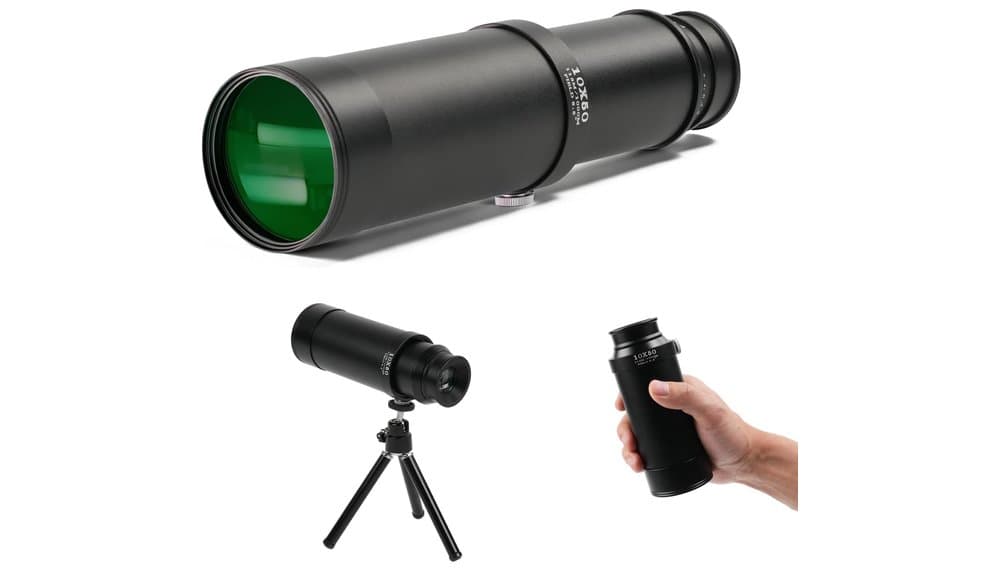
BOSTRON CY 10x50 Monocular Review & Test
Compact 10x50 monocular review: Analyzes optical clarity, field of view & build quality for hiking, nature & astronomy. See its true value.
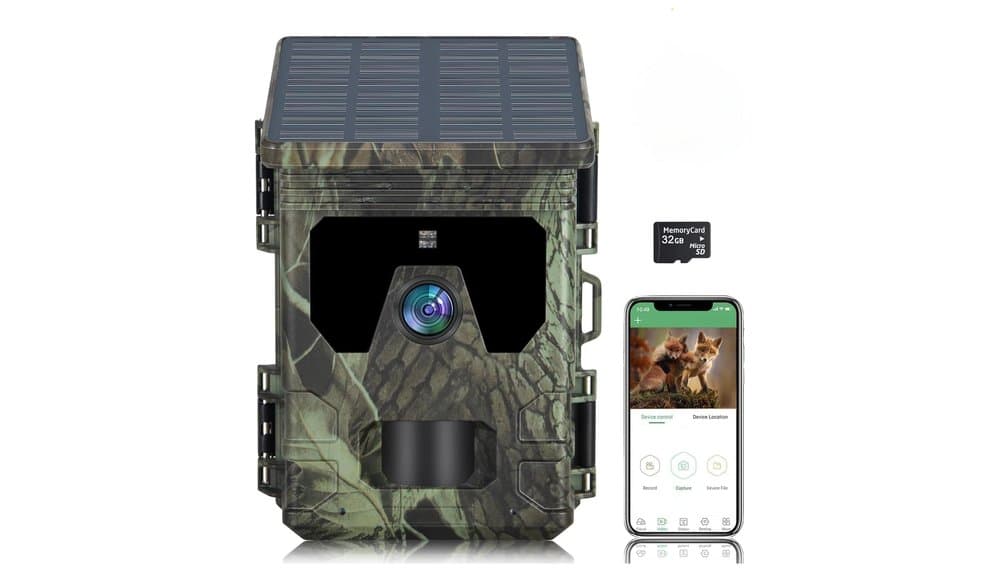
FunKind HC600Pro 4G Trail Camera Review
FunKind HC600Pro solar-powered 4G trail camera review. Analyzes real-time wildlife monitoring specs, solar/battery power, and performance data.
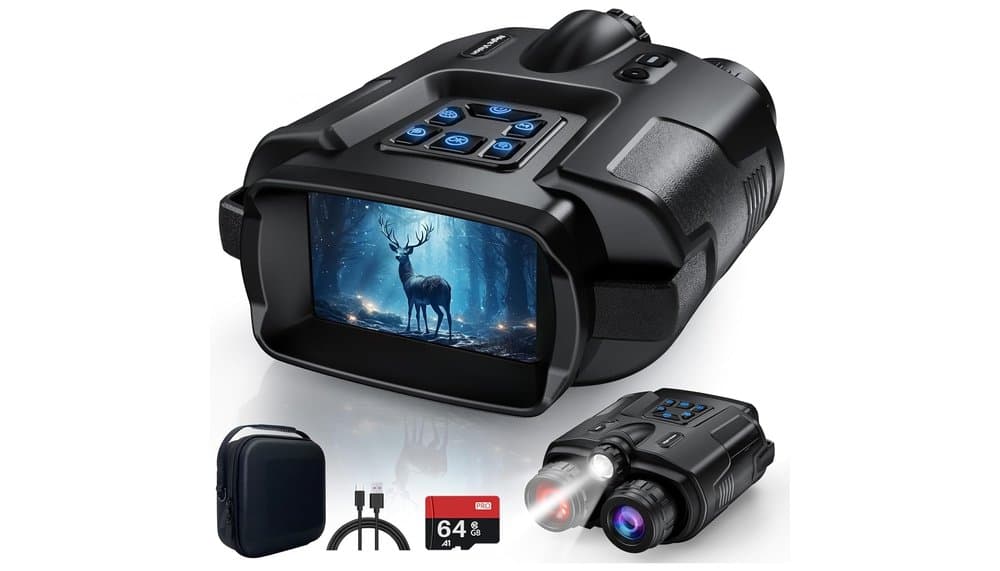
Haokoo Vision Nocturne 4K Night Vision Binoculars Review
Haokoo 4K Night Vision Binoculars review: See & record in total darkness. Compact, versatile for nature observation. High-definition digital performance.
Guides you might like
WiFi Trail Camera Guide
See wildlife discreetly from your couch! Learn how WiFi trail cameras let you monitor animals without disturbance and how to choose the right one.
Ultimate Travel Telescope Guide
Choose a portable, high-performance travel telescope to explore the universe from your backpack without compromising on essential astronomical views.
Ultimate Guide to Night Vision Binoculars
Choose the perfect night vision binoculars: Gen vs. digital? Unravel the tech to make your nighttime wildlife adventures a total success. Guide inside.