LCNCY LY-79 Telescope-Binocular Tripod Review
Published on 9 March 2026 · By OptiqueNature
Review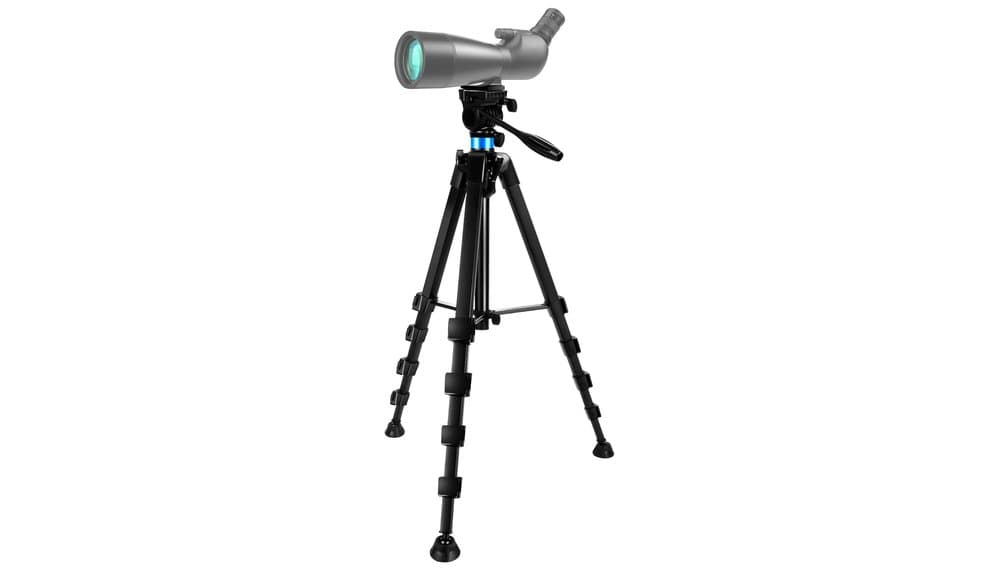
Introduction
For nature enthusiasts, a good tripod is often the silent companion that turns an interesting observation into a fascinating experience. Stabilizing a spotting scope to scrutinize a bird of prey, or resting powerful binoculars for a fatigue-free astronomy session—this is where the LCNCY LY-79 Telescope-Binocular Tripod comes into play. Positioned as a universal solution, this tripod promises to adapt to a wide range of equipment. We will dissect this product to determine if it lives up to its promises of versatility and performance, based on its technical specifications and the concrete feedback from the user community.
Strengths & Weaknesses
Before diving into the details, here is what stands out as the strengths and limitations of the LCNCY LY-79.
Strengths
- Exceptional Versatility: Its greatest strength lies in its compatibility with almost all devices, from binoculars to telescopes, as well as cameras and smartphones.
- Portability and Light Weight: With a weight of 2 kg (4.5 lbs) and a folded size of 61 cm (24 inches), it is designed to be easily transported into the field.
- Complete and Practical Kit: The inclusion of two quick-release plates, a binocular adapter, and a V-yoke makes it immediately operational for many uses.
- Comfortable Usage Height: Its maximum height of 184 cm (72.4 inches) allows for comfortable standing use for most users.
Weaknesses
- Limited Stability and Robustness: Its main compromise is insufficient rigidity for heavy equipment or in windy conditions, as reported by several users.
- Finish and Precision of Mechanisms: Testers point out that the joints and locks, especially on the head, sometimes lack firmness and precision.
- Entry-Level Materials: Some components, such as the plastic leg junction block, are identified as potential weak points.
Detailed Analysis
Versatility and Compatibility: The Swiss Army Knife of Tripods
The LCNCY LY-79 presents itself first and foremost as a universal platform. On paper, its specifications announce very broad compatibility: binoculars, spotting scopes, astronomical telescopes, cameras (DSLRs, bridge cameras, camcorders) and even projectors. This "all-in-one" approach is its main selling point. The presence of a dedicated binocular adapter and two standard quick-release plates (1/4") means you can quickly switch from a spotting scope to a camera for digiscoping, or mount large astronomy binoculars. For the occasional user or beginner who doesn't want to accumulate multiple supports, this is a major advantage.
Build Quality and Ergonomics: The Weight/Robustness Compromise
The construction is in aluminum, a classic choice to lighten the overall weight. With a weight of 2.04 kg and a stated maximum load of 10 kg, the tripod seems, on paper, well-balanced. However, this is where feedback from the field indicates issues. The maximum load is a theoretical figure; in practice, the community notes that stability becomes compromised well below this limit, especially when the legs are fully extended or in moderate wind. One user explicitly points out that the plastic leg junction block seems fragile, indicating a risk of breakage, particularly in winter conditions. Opinions are divided: some find it "solid and stable" for moderate use, while others criticize its lack of rigidity and a head that is difficult to manipulate with precision.
The ergonomics are standard with 5-section legs allowing for a very wide height adjustment. The fluid head offers, in theory, smooth pan and tilt movements, essential for tracking a bird in flight or scanning the night sky. But here again, testers report that the action can be jerky or too loose, lacking the finesse required for the most demanding observations.
Practical Use Cases: For Whom, For What?
Cross-referencing the specifications and feedback, we can outline the ideal user profile for the LY-79:
- Occasional Birdwatching and Nature Observation: Ideal for stabilizing 10x42 binoculars or a small spotting scope during short to medium-duration sessions. Its lightness is appreciated for hiking.
- Very Light Amateur Astronomy: Suitable for large binoculars (15x70) or small, lightweight telescopes, in open, windless conditions. For a medium-sized telescope, its stability will be insufficient.
- Digiscoping and Hobby Photography: The double quick-release plate facilitates switching between the optic and a compact camera or smartphone. Perfect for trials or occasional use.
- Indoor or Light Studio Use: For webcams, projectors, or small cameras in controlled conditions.
Conversely, it is not recommended for:
- Heavy telescopes or long professional camera lenses.
- Critical observation sessions in strong wind.
- Users requiring millimeter-precise pointing (astrophotography).
- Extreme environments where the durability of plastic components would be severely tested.
Value for Money and Competition
The LCNCY LY-79 is clearly positioned in the entry-level / low mid-range segment. Its value lies in the fact that it includes almost all necessary accessories in a single package at a contained price. You pay for versatility and portability, not for ultimate performance.
Compared to the competition, this means:
- Versus Basic Photo Tripods: It offers a clear advantage with its binocular adapter and head designed for tracking, but may be less stable than a dedicated photo tripod of similar weight.
- Versus Premium Observation Tripods (Manfrotto, Gitzo, etc.): There is no comparison in terms of stability, finish, smoothness of movement, and durability. Premium products are heavier, much more rigid, and significantly more expensive.
- Versus Similar Kits from Other Generic Brands: It sits in the same price range. The choice will come down to details like the type of head, the perceived quality of the locks, or the design of the leg junction block.
Technical Specifications
| Characteristic | Specification of the LCNCY LY-79 |
|---|---|
| Maximum Height | 184 cm (72.4 inches) |
| Minimum Height | 61 cm (24 inches) |
| Number of Sections | 5 |
| Material | Aluminum |
| Weight | 2.04 kg (4.5 lbs) |
| Maximum Load | 10 kg (22 lbs) |
| Head Type | Removable Fluid Head |
| Quick-Release Plate | 2 x standard 1/4" plates |
| Included Accessories | Binocular adapter, V-yoke, 2 camouflage straps, Carrying bag |
| Compatibility | Binoculars, Spotting Scopes, Telescopes, Cameras (DSLR, etc.), Camcorders, Smartphones |
What Users Say
A synthesis of collected customer reviews and expert feedback confirms the identified trends.
Praise converges on several points:
- Value for Money: Many call it a "good buy" for the price, noting it is "solid" for standard use.
- Ease of Use: Users appreciate its quick setup and simple height adjustments.
- Appreciated Versatility: The ability to use one tripod for multiple activities (spotting scope, binoculars, photography) is often cited as a decisive advantage.
- Light and Portable: Its weight and folded size are seen as major assets for transport.
Recurrent criticisms point to structural weaknesses:
- Stability Issues: One review clearly notes it is "not very rigid," another states the adapter mount is "extremely weak." This is the most frequently mentioned flaw.
- Fragility of Certain Components: The plastic leg junction block is explicitly named as a weak point, with concerns about its longevity, "especially in freezing conditions."
- Head Quality: Several remarks indicate that the "fluid" head is not as fluid as hoped, sometimes being "hard to pan" or lacking precision in locking.
Overall, the high average rating (4.4/5) seems to reflect the satisfaction of users with modest expectations, using the tripod in favorable conditions with lightweight gear. Disappointments come from users with more demanding needs in terms of stability and finish.
Conclusion
The LCNCY LY-79 Telescope-Binocular Tripod is a product that perfectly embodies the notion of compromise. It is a versatile, practical, and economical solution that will perfectly meet the needs of the occasional nature observer, the hiker who wants to stabilize their binoculars without breaking the bank, or the astronomy beginner looking for a support for their first pair of binoculars.
However, its technical analysis and user feedback are unanimous about its limits: one should not expect the stability and finish of a professional product. Its lightness and certain material choices (plastic components) come at the expense of rigidity and, likely, longevity under intensive use.
Our verdict: This tripod is an excellent entry-level platform or a secondary portable solution. It excels in versatility and ease of use. On the other hand, if your priority is unwavering stability for heavy equipment, difficult observing conditions, or critical photographic uses, it will be necessary to consider a higher investment in a more robust and specialized tripod. The LCNCY LY-79 does well what it is designed to do: offer a maximum of features at a contained price, clearly accepting the compromises that this implies.
100% free and independent — All our articles are written independently, without any sponsorship. We may earn a commission on purchases made through our links, at no extra cost to you.
Articles you might like
Caytail 4K 48MP Hunting Camera Review & Test
In-depth review of the Caytail 4K 48MP trail camera with included SD card. We analyze specs and real user feedback on its true field performance.
Vanguard Endeavor HD65A Spotting Scope Review
Spotting scope with 65mm ED glass & 15-45x zoom for birding & hiking. Balanced performance & portability for serious nature observers.
Carson AdventurePak Kids' Exploration Tool Kit Review
Explore nature with this kid's 5-piece tool kit for outdoor adventure and educational discovery. Perfect for young explorers.
Guides you might like
WiFi Trail Camera Guide
See wildlife discreetly from your couch! Learn how WiFi trail cameras let you monitor animals without disturbance and how to choose the right one.
Ultimate Travel Telescope Guide
Choose a portable, high-performance travel telescope to explore the universe from your backpack without compromising on essential astronomical views.
Ultimate Guide to Night Vision Binoculars
Choose the perfect night vision binoculars: Gen vs. digital? Unravel the tech to make your nighttime wildlife adventures a total success. Guide inside.