KODAK BCS100 Kids Binoculars Review and Hands-On Test
Published on 26 June 2026 · By OptiqueNature
Review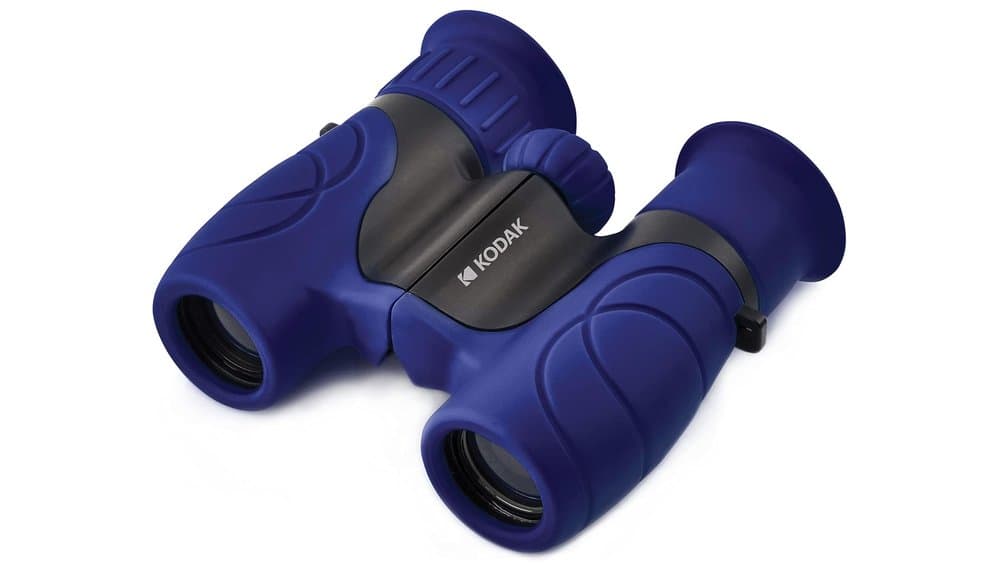
Introduction
Children's binoculars are often considered toys, but they can also be the first serious optical instrument for a budding young naturalist. Our analysis focuses on the KODAK BCS100 Kids Binoculars, a model specifically designed for small hands. Although we have not tested them hands-on, we will dissect their technical specifications, cross-reference feedback from a large community of users, and position them within the broader landscape of binoculars for nature observation. The goal is to determine whether this product fulfills its role as a first exploration tool without sacrificing optical and mechanical fundamentals.
Strengths
- Ergonomics perfectly adapted for children: A lightweight, compact design and a soft rubber coating provide a safe and comfortable grip.
- Ease of use: The fixed-focus (focus-free) system is ideal for young children who do not have to manipulate complex dials.
- Perceived excellent value for money: The majority of buyers consider the product offers excellent value for children's use.
- Practical included accessories: The presence of a neck strap and a carrying case makes handling and storage easier for adventures.
Weaknesses
- Potentially fragile mechanical construction: Some feedback reports a plastic hinge that is not very resistant to shocks or rough handling.
- Basic optics: Complete absence of advanced optical technologies (no ED glass, phase correction coatings, or dielectric prisms), limiting image sharpness and brightness.
- No weather resistance: The product is not waterproof and not nitrogen-purged, making it vulnerable to internal fogging and moisture.
- Medium-quality accessories: The quality of the neck strap and packaging is sometimes pointed out as being minimalist.
Detailed Analysis of the KODAK BCS100
Optical Performance: Specifications Suited for Initiation
On paper, the optical specifications of the KODAK BCS100 are those of an entry-level compact: an 8x21 configuration. The 8x magnification is a wise choice for children, as it offers significant closeness without overly amplifying the natural shaking of small hands. Higher magnification would have made the image unstable and difficult to use.
The 21 mm objective lens diameter indicates binoculars designed for use in full daylight. The exit pupil, calculated by dividing the objective diameter by the magnification (21/8), is about 2.6 mm. This is an acceptable value for daytime use but becomes limiting in low-light conditions (dusk, dense forest). Light transmission is not disclosed by the manufacturer, but given the lack of mention of multi-coatings or high-end prisms, one can expect a significant loss of light. Online testers also emphasize that it is a product for daylight.
The field of view is not specified in the data sheets, but with such a configuration, it is likely fairly wide, which is an asset for children who struggle to locate and follow an object. The focus is fixed (focus-free), designed to be sharp from a few meters to infinity. This simplicity is a major advantage for very young users, even if it sacrifices the possibility of precise focus on very close objects.
Construction and Ergonomics: Designed for Small Hands
This is clearly the area where the product excels according to user feedback. The featherweight of 220 grams and the compact dimensions are unanimously praised. The soft rubber coating is not just aesthetic; it offers better grip and some cushioning in case of a minor drop. The community notes that the shape is suitable and that children aged 4 to 8 can handle them without difficulty.
However, long-term robustness is a question mark. While many reviews praise their general sturdiness for a child's use, several critical feedbacks, particularly on forums, point to the fragility of the central hinge, identified as being made of plastic. This aligns with the web context's concerns about the lack of feedback on real durability. The product is explicitly not waterproof and not fogproof, confining it to use in dry weather. This is an important limitation to consider for unpredictable outdoor activities.
Practical Use and Use Cases
The KODAK BCS100 find their audience in very specific scenarios:
- Initiation to observation for ages 4-10: This is their reason for being. They allow a child to discover garden birds, distant animals, or landscape details.
- Light family outings: Hiking, park visits, or attending sports matches as a spectator.
- Fun educational tools: To stimulate scientific and naturalist curiosity.
On the other hand, they are completely unsuitable for more demanding uses:
- Observation in low light (dawn, dusk): The small objective and basic optics will make the image dark and lacking in contrast.
- Activities in wet conditions: The lack of waterproofing is a deal-breaker.
- Digiscoping or astronomy: The lack of support for adapting a smartphone and limited optical performance disqualify them.
- Use by demanding adults: The eyepiece separation and overall performance are not suitable for regular use by an adult.
Value Comparison
Let's position the KODAK BCS100 in the landscape of binoculars for nature observation.
- Versus optical toys: They stand out clearly. Most "toy binoculars" have plastic optics and whimsical construction. The KODAK, with their (assumed) glass lenses and anti-UV coating, offer an authentic image, which is confirmed by users who note "good visibility" or "clear vision".
- In the adult entry-level segment: Compared to basic models for adults (often 8x42 or 10x42), they lose on all optical fronts: brightness, eye comfort, field of view, and durability. Their only advantage remains child ergonomics.
- In the premium youth segment: There are high-end binoculars designed for children, with quality optics, true waterproofing, and a lifetime warranty (like certain ranges from specialized brands). The KODAK BCS100 then offer an economical alternative to ensure the child is interested before investing in a more serious and durable instrument.
Their value therefore lies in their role as an initiation product with lower financial commitment. They are an acceptable stepping stone into the world of observation.
Technical Specifications
| Characteristic | Detail for the KODAK BCS100 |
|---|---|
| Model | KODAK BCS100 Kids Binoculars |
| Configuration | 8x21 |
| Prisms | Type not specified (likely basic Porro or Roof) |
| Optical Coatings | Mention of an anti-UV coating for eye protection. No mention of multi-coatings, phase correction, or dielectric coatings. |
| Exit Pupil Diameter | 2.6 mm (21/8) |
| Field of View | Not specified by the manufacturer |
| Minimum Focus Distance | Fixed (Focus-Free), likely a few meters |
| Eye Relief | Not specified, but feedback indicates it is short. May be problematic for eyeglass wearers. |
| Waterproof / Fogproof | No (Water Resistance Level: Not Water Resistant) |
| Gas Filling | Most likely no |
| External Coating | Soft Rubber |
| Weight | 220 grams |
| Included Accessories | Neck strap, carrying case, cleaning cloth |
What Users Say
The synthesis of 122 customer reviews (with an average rating of 4.5/5) and online discussions gives us a very clear picture of the perceived strengths and limits of this product.
The recurring positive points are:
- Perfect fit for children: Terms like "small hands", "child aged 4/5/6", "first binoculars" constantly reappear. Parents emphasize that the product is simple, light, and suitable for its audience.
- Image quality sufficient for the purpose: Despite the basic optics, feedback like "nice vision", "good visibility", or "impressive clarity" (in a children's context) show that the image is satisfactory for the target user.
- Value for money judged excellent: Many reviews, especially 5-star ones, insist that the product is "perfect for the price" or "a good gift idea".
- Design and handling: The colorful design (blue or red) is appealing, and the rubberized coating is appreciated for comfort and grip.
The negative points or reservations that emerge concern:
- Mechanical durability: This is the main pitfall. Feedback like "flimsy garbage" or "broken by New Year" warns about the fragility of the plastic hinge. A French user also notes that "the quality of the cord is frankly modest".
- Optical limits for an adult: As expected, reviews specify that "an adult will likely be less satisfied", confirming the strictly child-oriented positioning.
- Packaging and accessories: Several comments mention "packaging a bit light on protection" or damaged upon arrival.
The overall impression from the community is that of a product successful in its primary role: to amaze a child without breaking the bank. The reported failures seem linked to an expectation of superior robustness or a misunderstanding of the strictly "child initiation" positioning.
Conclusion
The KODAK BCS100 Kids Binoculars are not optical instruments for enthusiasts. They do not have ED glass, are not waterproof, and their mechanical construction shows signs of weakness under intensive use. However, evaluating this product with the criteria of an adult binocular would be to miss its essence.
It is a well-designed initiation tool for its audience. Its merit is to offer young children a real optical experience, with a decent image in full daylight, in a format suited to their morphology and skill level. The simplicity of the fixed focus is a real strength for the youngest.
Our analysis concludes that these binoculars represent a wise choice for a first purchase, allowing a child's interest in observation to be tested without a significant investment. They are a stepping stone. If the child gets hooked and the binoculars show their limits (or break), one can then consider moving to a more robust and performant youth model. For occasional, supervised use in fair weather, they fulfill their contract, as evidenced by the majority satisfaction of buyers. For any more serious, wet, or long-lasting use, one will have to look elsewhere.
100% free and independent — All our articles are written independently, without any sponsorship. We may earn a commission on purchases made through our links, at no extra cost to you.
Articles you might like
Caytail 4K 48MP Hunting Camera Review & Test
In-depth review of the Caytail 4K 48MP trail camera with included SD card. We analyze specs and real user feedback on its true field performance.
Vanguard Endeavor HD65A Spotting Scope Review
Spotting scope with 65mm ED glass & 15-45x zoom for birding & hiking. Balanced performance & portability for serious nature observers.
Carson AdventurePak Kids' Exploration Tool Kit Review
Explore nature with this kid's 5-piece tool kit for outdoor adventure and educational discovery. Perfect for young explorers.
Guides you might like
WiFi Trail Camera Guide
See wildlife discreetly from your couch! Learn how WiFi trail cameras let you monitor animals without disturbance and how to choose the right one.

Ultimate Travel Telescope Guide
Choose a portable, high-performance travel telescope to explore the universe from your backpack without compromising on essential astronomical views.
Ultimate Guide to Night Vision Binoculars
Choose the perfect night vision binoculars: Gen vs. digital? Unravel the tech to make your nighttime wildlife adventures a total success. Guide inside.