KEXWAXX BE-2 Monocular Telescope Review
Published on 24 March 2026 · By OptiqueNature
Review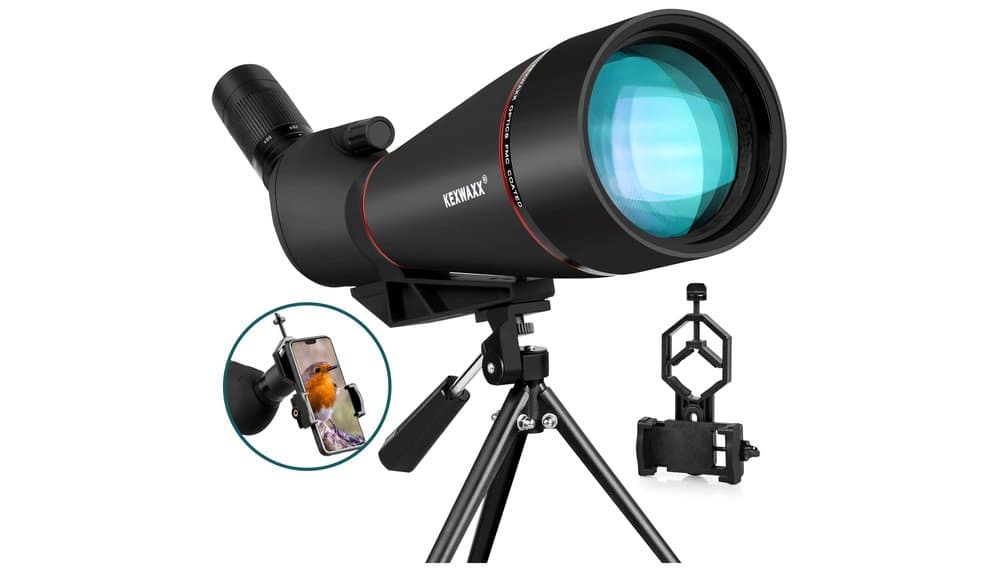
The KEXWAXX BE-2: A Large Diameter Monocular for Demanding Enthusiasts?
In the very dense market of observation instruments, the KEXWAXX BE-2 Monocular Telescope positions itself as an ambitious product. With its impressive 100 mm objective lens and 25-75x magnification range, it promises high-flying performance at a contained price. But does this promise hold up when confronted with the realities of field use and the demands of observers? Through a meticulous analysis of its specifications, expert feedback, and the user community's experience, we separate fact from fiction about this monocular that is making waves.
Strengths
- Generous objective lens diameter: With its 100 mm, it captures significantly more light than standard models (60-80mm), promising bright images, especially in low light.
- Extended zoom range: The ability to zoom from 25x to 75x offers rare versatility, allowing you to switch from a wide field to a very close observation.
- Honorable optical quality for its segment: The use of BaK-4 prisms and FMC (Full Multi-Coated) treatments on paper is confirmed by users who note an overall clear and contrasted image up to 50x.
- Complete accessory kit: The inclusion of a smartphone adapter for digiscoping, a tripod, and a carrying case adds value and facilitates getting started.
Weaknesses
- Noticeable degradation at maximum zoom: As often with powerful zooms, the image loses significant sharpness and brightness beyond 60x, with marked chromatic aberration.
- Limited ergonomics and portability: Its considerable weight (1.03 kg without tripod) and bulk make it an instrument poorly suited for long hikes or strictly handheld use.
- Included tripod unsuitable: The included tripod is unanimously described as too light and unstable for the device's weight, making its use beyond 50x almost impossible without shaking.
- Limited compatibility with glasses: The eye-relief appears insufficient for eyeglass wearers, especially at high magnification, forcing them to remove their glasses.
Detailed Analysis: Under the Loupe of Specs and Field Use
Optical Quality and Performance
On paper, the specifications of the KEXWAXX BE-2 are enticing. The 100 mm diameter objective lens is its major asset. This parameter, more than magnification, is crucial for brightness and sharpness. The theoretical twilight factor (square root of (100 x 75) = 86.6) is high, indicating good potential in low light. The exit pupil varies from 4 mm at 25x (100/25) to only 1.33 mm at 75x. This latter figure is very low, explaining the dark image and difficulty focusing at this zoom level: the eye struggles to perfectly align its own pupil with this very small circle of light.
The BaK-4 (barium crown) prisms and FMC coatings are markers of quality in the mid-range segment. According to feedback, they fulfill their role, offering an overall contrasted image with faithful colors in the low to medium magnification range. An experienced birdwatching user even notes that "side-by-side and without exceeding 50x, the image is a tad sharper with a Zeiss [high-end] but frankly the difference in image quality is slight". This is high praise.
However, the optical Achilles' heel is confirmed by all: quality drops significantly approaching 75x. Testers highlight the appearance of visible chromatic aberration (colored fringes, especially purple/green on strong contrasts), a loss of sharpness, and a darkening of the image. This is an expected physical and optical limitation for an instrument at this price level. As one user summarizes, its reasonable use is between 25x and 50/60x.
Build, Sealing, and Ergonomics
The build seems robust with a rubber armor offering a good grip and protection from minor shocks. The "waterproof" mention and "Lotus Lens" technology (hydrophobic coating on the objective lens) are assets for use in damp conditions (fog, seaside). No user feedback reports problems with moisture infiltration or internal fogging, which is reassuring.
Ergonomics is its other critical point. At 1.03 kg and 23 cm long, this is not an instrument you quickly pull from a pocket. It is designed to be used on a tripod. The dual manual focus (one coarse and one fine wheel) is judged to be precise, but the depth of field is extremely shallow at high magnification, making focusing delicate and sensitive to the slightest movement.
The included tripod is systematically singled out. "Flimsy," "gadget," "wobbly" are the recurring terms. It is totally unsuitable for the mass and height of the instrument, turning the slightest breeze or contact into uncontrollable shaking. The community is unanimous: planning to purchase a serious photo tripod and a robust head is essential to exploit the BE-2's potential.
Recommended Use Cases and Limitations
- Static terrestrial observation (birdwatching, surveillance): This is its preferred domain. Mounted on a good tripod, it excels for detailed observation of birds, mammals, or landscapes from a fixed point. Its brightness at low and medium magnification is appreciated.
- Light astronomy: Several users were pleasantly surprised. They report having clearly distinguished Saturn's rings and Jupiter's cloud bands at 75x. This is a non-negligible bonus for sky enthusiasts, although it doesn't rival a real telescope.
- Digiscoping (photo via smartphone): The provided adapter allows for attempts, but feedback is mixed. The required stability is extreme and image quality at high zoom is disappointing. It's a "plus" feature rather than a reliable primary use.
- Hiking or active observation: Not recommended. Its weight and imperative need for a tripod make it poorly suited.
- Eyeglass wearers: Problematic. The insufficient eye-relief at high magnification requires removing glasses, which can be a deal-breaker for those with astigmatism.
What Users Say: A Synthesis of Feedback
Analyzing over 200 customer reviews and independent expert tests reveals a clear consensus.
The recurring positive points revolve around surprising quality for the price. Terms like "mind-blowing," "excellent value for money," and "very good optics" frequently describe performance up to 50-60x. The brightness is widely praised, as is the apparent robustness of the tube and the quality of the main accessories (case, smartphone adapter). The versatility offered by the large zoom and the ability to observe planets are regularly commended.
The negative points are equally clear and targeted:
- Optical quality degrades strongly between 60x and 75x, with a dark and less sharp image.
- The provided tripod is unusable for serious observation. It's the number one point of frustration.
- The instrument is heavy and bulky, destining it for sedentary use.
- The eyecup is uncomfortable for eyeglass wearers, limiting access to the full field of view.
- Focus is very sensitive at high magnification due to minimal depth of field.
One user sums up the sentiment well: "You are clearly buying a spotting scope and nothing more, the thing sold with it cannot be considered a tripod." Therefore, the investment in a stable tripod must be integrated into the total cost of ownership.
Technical Specifications
| Feature | Detail |
|---|---|
| Model | KEXWAXX BE-2 Monocular Telescope |
| Objective Diameter | 100 mm |
| Magnification | 25x - 75x (Continuous Zoom) |
| Prisms | BaK-4 |
| Optical Coatings | FMC (Full Multi-Coated) |
| Lens Coating | Hydrophobic "Lotus Lens" |
| Waterproofing | Yes (Waterproof) |
| Focus | Dual Manual (Coarse/Fine) |
| Eyepiece Diameter | Not specified (Short eye-relief) |
| Included Accessories | Table tripod, smartphone adapter, carrying case |
| Weight | 1026 g (without accessories) |
| Dimensions | 229 x 75 x 30 mm |
Conclusion
The KEXWAXX BE-2 Monocular Telescope is a product that demands realism. It is not a miracle optic that rivals premium brands on all fronts. However, it constitutes an extremely serious option for the static, demanding observer on a limited budget.
Its strength lies in the combination of a large objective diameter (100mm) and properly treated optics (BaK-4, FMC), delivering a bright and detailed image in its optimal magnification range (25-60x). For birdwatching from a hide, wildlife surveillance, or even an introduction to planetary observation, it offers performances that, according to feedback, approach models ten times more expensive under these conditions.
Its purchase must nevertheless be made with full awareness: it will require the acquisition of a robust tripod, its maximum 75x zoom is more of a marketing argument than a practical function, and it is not suited for eyeglass wearers at high magnification nor for active hiking.
In summary, if you are looking for a powerful and bright spotting scope for use primarily on a tripod from a fixed point, and you are willing to ignore its ultimate zoom and invest in a worthy support, the KEXWAXX BE-2 represents a very convincing performance/price ratio. It is a tool for pragmatic enthusiasts who know where to look and how to use it.
100% free and independent — All our articles are written independently, without any sponsorship. We may earn a commission on purchases made through our links, at no extra cost to you.
Articles you might like
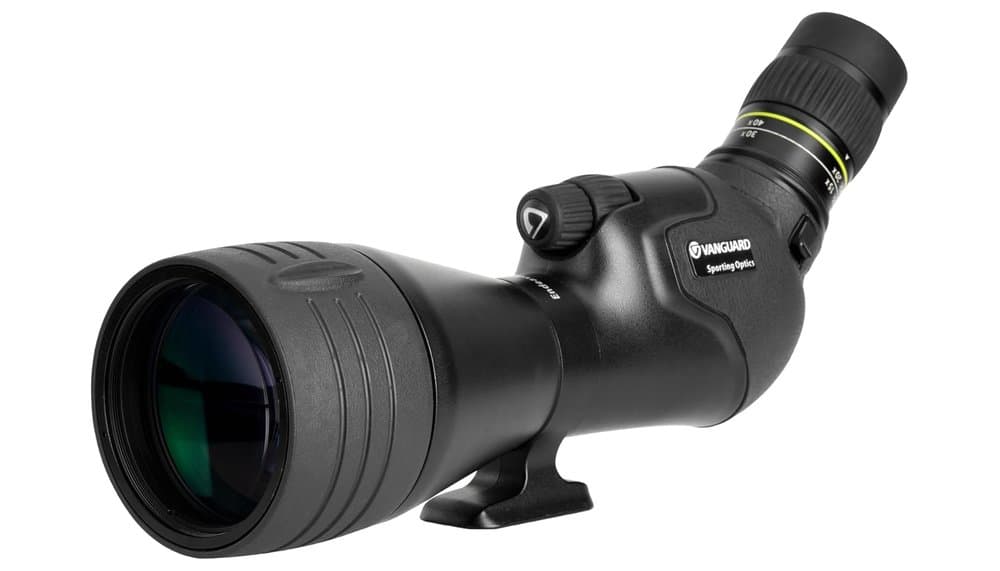
Vanguard Endeavor HD65A Spotting Scope Review
Spotting scope with 65mm ED glass & 15-45x zoom for birding & hiking. Balanced performance & portability for serious nature observers.
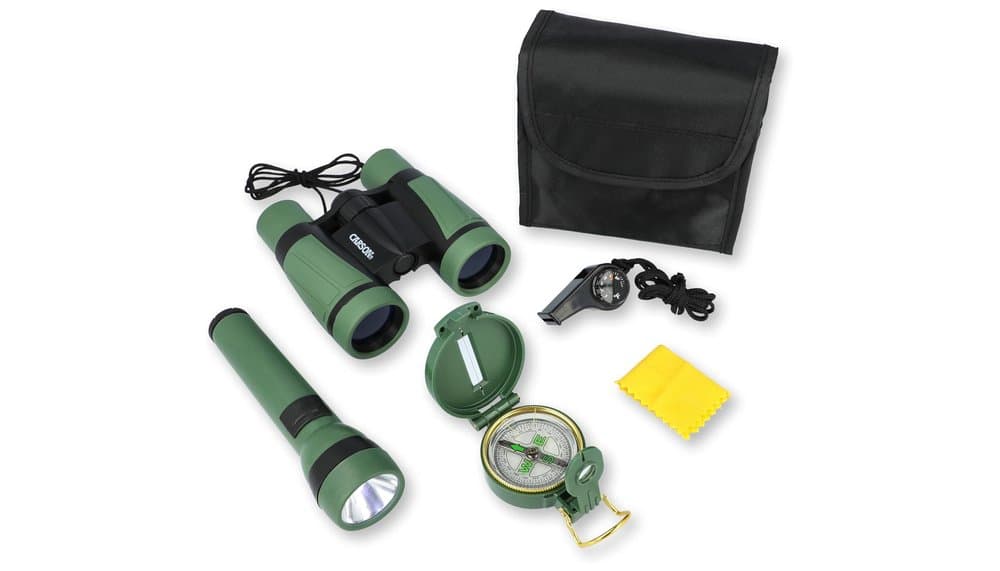
Carson AdventurePak Kids' Exploration Tool Kit Review
Explore nature with this kid's 5-piece tool kit for outdoor adventure and educational discovery. Perfect for young explorers.
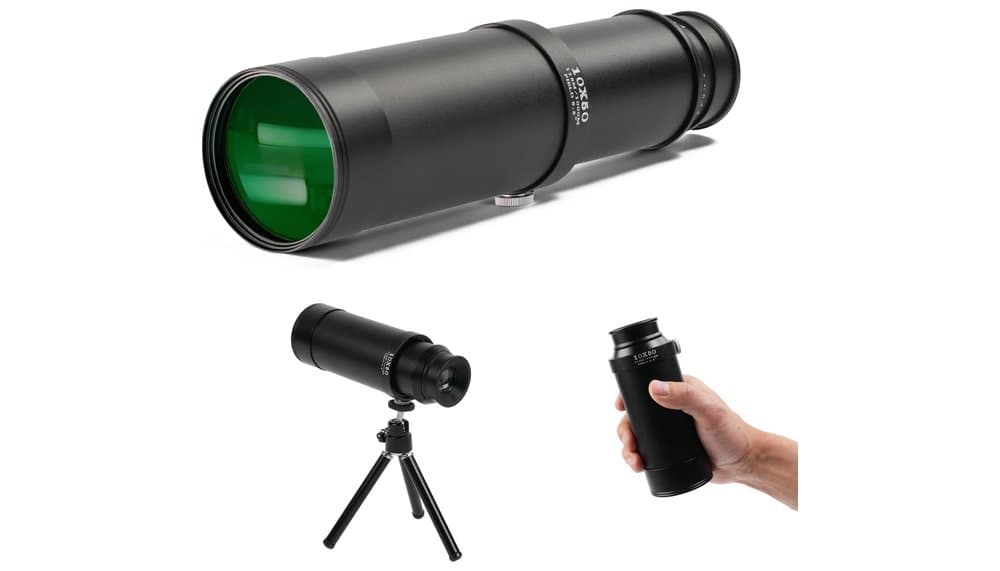
BOSTRON CY 10x50 Monocular Review & Test
Compact 10x50 monocular review: Analyzes optical clarity, field of view & build quality for hiking, nature & astronomy. See its true value.
Guides you might like
WiFi Trail Camera Guide
See wildlife discreetly from your couch! Learn how WiFi trail cameras let you monitor animals without disturbance and how to choose the right one.
Ultimate Travel Telescope Guide
Choose a portable, high-performance travel telescope to explore the universe from your backpack without compromising on essential astronomical views.
Ultimate Guide to Night Vision Binoculars
Choose the perfect night vision binoculars: Gen vs. digital? Unravel the tech to make your nighttime wildlife adventures a total success. Guide inside.