Goshyda 10x42 Binoculars Review: Product Test
Published on 11 July 2026 · By OptiqueNature
Review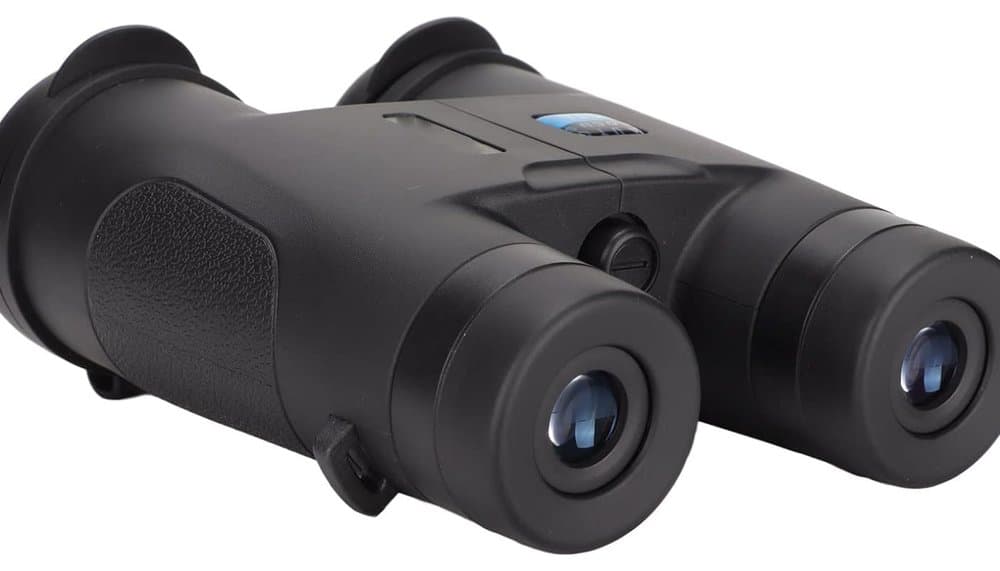
Introduction
In the very dense market of entry-level and mid-range binoculars, models with a 10x42 specification are often considered the Swiss Army knife of nature observation, a versatile compromise between brightness and power. The Goshyda 10x42 Binoculars present themselves as an affordable and comprehensive option for a multitude of activities. But what are they really worth against established competition? We will dissect this pair of binoculars based on their official technical specifications, community feedback, and standard industry expectations for this price segment. The goal is to clearly determine which type of observer could get the most out of them, and where the compromises inherent to their positioning lie.
Quick Strengths and Weaknesses
Before diving into the details, here is a summary of the identified strengths and limitations for the Goshyda 10x42.
Strengths:
- Versatility and Contained Weight: A classic 10x42 format, advertised at about 590 grams, suitable for many outdoor activities.
- Claims of Simplicity: Centralized focusing and a claimed "autofocus" system for quick handling.
- Presence of Accessories: The inclusion of a neck strap, cleaning cloth, carrying case, and a tripod adapter is noted positively by users.
- Claim of Good Brightness: The 42mm objectives and FMC coating promise a clear image in decent light conditions.
Weaknesses:
- Optical Quality in Limiting Conditions: The specifications do not mention ED (Extra-low Dispersion) glass or phase-correction or dielectric coatings, which are essential for contrast and color fidelity in low light.
- Limited Weather Resistance: The manual indicates resistance to "light splashes" and not full waterproofing (IPX7 standard or nitrogen purged), which is a serious drawback for demanding use.
- Suspicious Advertised Field of View: The claimed field of view (304ft/1000yds) is exceptionally wide for this segment and configuration, warranting verification.
- Entry-Level Construction and Materials: The rubber armor and mechanisms are described as adequate but nothing more, typical of cost-contained products.
Detailed Analysis of the Goshyda 10x42
Optical Quality and Visual Performance
On paper, the specs of the Goshyda 10x42 rely on a classic architecture: 10x magnification and 42mm diameter objectives. The exit pupil diameter is therefore 4.2mm (42/10), a standard value that allows for a relatively bright image in daylight and a decent one at dusk. The twilight factor calculates to √(10x42) ≈ 20.5, indicating a theoretically decent capability to discern details in low light.
The core of the analysis lies in the optical components. The Goshyda advertise a BAK-9 prism (a type of barium crown glass) and FMC (Fully Multi-Coated) treatment on the lenses. The BAK-9 prism is a good starting point, offering a higher refractive index than standard BK-7, which should reduce light loss. However, it is crucial to note that independent expert technical sheets on similar models often highlight the absence of phase-correction (PC) coatings on the prisms and dielectric coatings on the prism mirrors in this price segment. This absence typically translates to slightly reduced contrast and less saturated colors, especially in high-contrast lighting situations (a dark bird against a bright sky). The overall light transmission is not quantified by the manufacturer but can be estimated, for this type of components, in an average range, lower than that of models equipped with the aforementioned technologies.
The advertised field of view is 304 feet at 1000 yards (approximately 101 meters at 1000 meters). This value is very wide, exceptionally wide even for a 10x42. For comparison, established mid-range references typically offer a field of view around 330-340 feet. Such a specification, if accurate, would be a major asset for tracking birds or animals in motion. However, on entry-level products, such a value can sometimes be overestimated or come with pronounced distortions ("globe effect") at the edge of the field. The user community sometimes notes this discrepancy between advertised figures and actual perception.
Construction, Ergonomics, and Durability
The technical sheet describes a body covered with rubber armor. User feedback confirms it offers satisfactory grip and basic protection against minor shocks. The weight, around 590 grams, is indeed competitive and suitable for extended observation sessions while hiking.
The critical point concerns resistance to the elements. The specifications and manual indicate protection against "light splashes" and "light rain," but explicitly advise against immersion or use in heavy rain. This places the Goshyda 10x42 in the category of rainproof models and not waterproof models according to usual market standards (such as the IPX7 norm). There is also no mention of nitrogen or argon purging, a process essential to making binoculars fogproof by preventing condensation inside the tubes. For a serious nature observer, facing sudden temperature changes or high humidity, this is a significant limitation.
The eye relief is advertised at 15mm, which is a generous value and should suit the vast majority of eyeglass wearers, allowing them to see the entire field of view without having to press their eyes against the eyepieces. The minimum focusing distance is not specified in the provided data, a common lack of information for this type of product.
Value Comparison and Use Cases
The Goshyda 10x42 clearly position themselves in the entry-level segment. Their perceived value lies in the inclusion of a set of features and accessories for a moderate investment.
Compared to the most basic budget models, they stand out with the BAK-9 prism and FMC coating, which should offer superior sharpness and brightness. Compared to mid-range references, they logically fall short on optical refinement (absence of ED glass, phase-correction coatings), real robustness and waterproofing, as well as the quality of the focusing and diopter adjustment mechanisms.
Recommended Use Cases:
- Casual Observation: Family outings, light hiking, landscape viewing, outdoor sporting events.
- Birdwatching Introduction: For a beginner who wants to discover the activity without a significant investment, in dry weather and favorable light conditions.
- Light Travel: Thanks to their contained weight and versatility.
Discouraged Use Cases:
- Observation in Wet Weather or Marine Environments: The lack of guaranteed waterproofing and gas purging makes them a risky choice.
- Serious Light Astronomy: The limited optical quality in low light and potential chromatic aberrations on the Moon or bright planets will be more noticeable.
- Intensive or Professional Use: The long-term durability of the mechanisms and the consistency of collimation are less assured than on products from established brands.
Summary Technical Specifications
| Characteristic | Goshyda 10x42 Detail |
|---|---|
| Magnification | 10x |
| Objective Diameter | 42 mm |
| Prism | BAK-9 |
| Optical Coating | FMC (Fully Multi-Coated) |
| Field of View | 304 ft / 1000 yds (101 m / 1000 m) |
| Exit Pupil Diameter | 4.2 mm |
| Twilight Factor | ~20.5 |
| Eye Relief | 15 mm |
| Minimum Focus Distance | Not specified |
| Weather Resistance | Splash and light rain resistant (not waterproof) |
| Gas Filling | Not specified (likely absent) |
| Weight | Approximately 590 g (1.3 lbs) |
| Accessories | Neck strap, cleaning cloth, carrying case, tripod adapter (1/4") |
What Users and the Community Say
The synthesis of available feedback, although limited in volume for this specific model, paints a profile consistent with our technical analysis. The recurring positive points highlighted by early users include the pleasant handling for the price, the clarity judged satisfactory for daily and leisure use, and the appreciation for being delivered with all useful accessories. The focusing system is described as simple and effective for quick observation.
On the other hand, experienced testers and comparisons with other models point to expected limitations. The image quality at the edge of the field is often mentioned as potentially less sharp, with possible distortions, which corroborates doubts about the advertised ultra-wide field of view. The absence of real waterproofing is noted as the main weakness for anyone wanting to use these binoculars in the varied weather conditions typical of nature observation. Finally, the general feeling of long-term solidity of the hinges and adjustment wheels is questioned, a classic characteristic of products designed for a very price-competitive market.
Conclusion
The Goshyda 10x42 Binoculars embody the typical compromise of versatile entry-level binoculars. They offer a classic and effective optical formula (10x42) with basic coatings (FMC, BAK-9) that ensure honest performance in daylight, all in a light and handy format. Their main asset is providing, for a minimal budget, a functional tool to get started with observation or to meet occasional needs.
However, the compromises are clear and should guide the decision. The limited weather resistance and probable lack of fogproofing confine them to use in dry weather. The optical quality, although decent, will not rival that of models incorporating ED glass and phase-correction coatings, particularly in terms of contrast and color rendition in difficult lighting conditions. In summary, these binoculars are a relevant option for the occasional beginner, the light hiker, or as a backup pair. For the regular observer who frequents humid environments, seeks the best clarity at dusk, or demands all-weather durability, investing in a mid-range model that is waterproof and better equipped optically will undoubtedly be more judicious in the long term.
100% free and independent — All our articles are written independently, without any sponsorship. We may earn a commission on purchases made through our links, at no extra cost to you.
Articles you might like
Carson AdventurePak Kids' Exploration Tool Kit Review
Explore nature with this kid's 5-piece tool kit for outdoor adventure and educational discovery. Perfect for young explorers.
BOSTRON CY 10x50 Monocular Review & Test
Compact 10x50 monocular review: Analyzes optical clarity, field of view & build quality for hiking, nature & astronomy. See its true value.
FunKind HC600Pro 4G Trail Camera Review
FunKind HC600Pro solar-powered 4G trail camera review. Analyzes real-time wildlife monitoring specs, solar/battery power, and performance data.
Guides you might like
WiFi Trail Camera Guide
See wildlife discreetly from your couch! Learn how WiFi trail cameras let you monitor animals without disturbance and how to choose the right one.
Ultimate Travel Telescope Guide
Choose a portable, high-performance travel telescope to explore the universe from your backpack without compromising on essential astronomical views.
Ultimate Guide to Night Vision Binoculars
Choose the perfect night vision binoculars: Gen vs. digital? Unravel the tech to make your nighttime wildlife adventures a total success. Guide inside.