Generic High-Sensitivity PIR Digital Trail Camera Review
Published on 6 June 2026 · By OptiqueNature
Review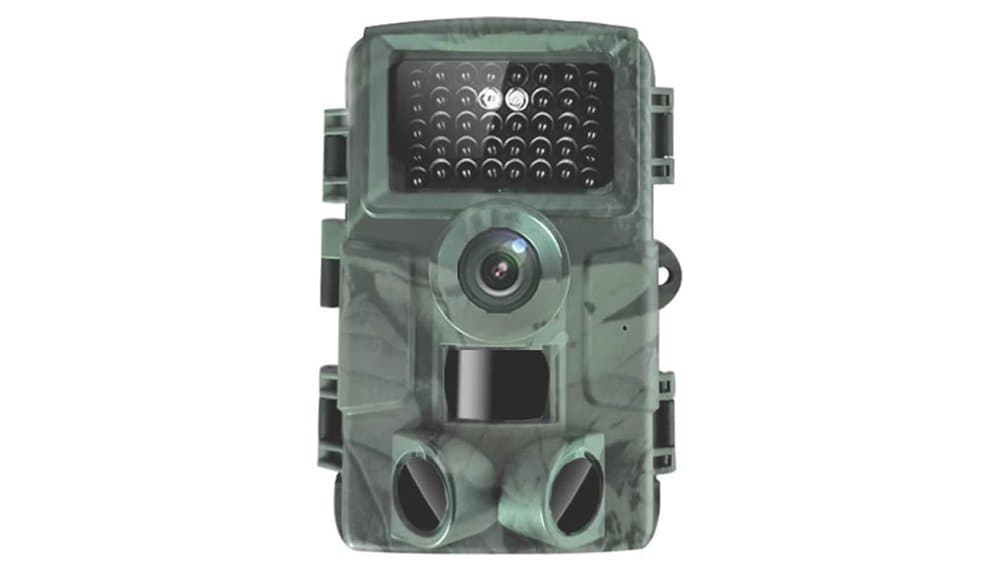
Introduction
The "Generic High-Sensitivity PIR Digital Trail Camera Caméra de Chasse Numérique" appears as an entry-level proposition in the highly competitive trail camera market. These devices, once reserved for a niche, have become essential tools for naturalists, hunters, farmers, and simple wildlife enthusiasts. This generic camera promises features often associated with more expensive models: a high-sensitivity PIR sensor, 2.7K video resolution, interpolated 48 MP photos, and a six-month battery life. But do these advertised figures translate into reliable performance in the field? Our analysis is based on a dissection of its technical specifications and a synthesis of available expert and user feedback, to determine its real place in the optical observation ecosystem.
Key Strengths
On paper, this model presents several attractive arguments for a first purchase or use on a tight budget.
The advertised battery life is its first major asset. A standby duration of 6 months on 8 AA batteries represents, if verified, a practical performance level that limits trips for maintenance, a crucial criterion for installation in the forest or a remote area.
Its resolution versatility offers a wide range of settings. The ability to film in 2.7K (although it is likely interpolated) and take photos up to 48 MP (via software interpolation) gives an impression of flexibility to adapt to different needs, from simple detection to precise animal identification.
Theoretical robustness is ensured by an IP66 waterproof rating, promising total protection against dust and powerful water jets. This level is suitable for permanent exposure to the elements. Its compact format and light weight (approximately 300g) facilitate its discreet installation on a tree or stake.
Finally, the presence of a 2-inch LCD screen is a non-negligible advantage for quick configuration in the field and previewing captured media, without requiring a connection to a smartphone or computer.
Weaknesses
The weaknesses of this generic product are mainly related to the compromises inherent in its low-cost positioning and the quality of the components used.
The real image quality is the main point of friction. The heart of the device is a 1/3-inch 3 MP CMOS lens. This is a small sensor with a low native resolution. The "48 MP" photos are generated by interpolation, a software process that artificially increases the number of pixels without adding detail. The result, based on feedback on similar models, is often pixelated, low-contrast, and lacking sharpness images, especially in low-light conditions despite the 46 invisible 940 nm infrared LEDs.
The responsiveness of the PIR trigger, advertised at between 0.3 and 0.6 seconds, is an honorable figure on paper. However, with entry-level components, testers on other models often report delayed triggers, leading to photos where the animal is already partially out of frame, or false triggers caused by changes in shadow or vegetation.
Software ergonomics and reliability are often the weak points of generic products. Menus can be unintuitive, manual translation approximate, and firmware stability random. Problems with SD card corruption or time drift are frequently reported by the community.
Finally, customer support and warranty are generally limited for a "Generic" brand. In case of failure, the user is often left to their own devices.
Detailed Analysis
Optical Quality and Image Performance
We must here separate marketing promises from physical reality. The 1/3" 3 MP CMOS sensor is a basic component. Its small size limits the amount of light captured per pixel, directly impacting performance in low light. Unlike high-end binoculars or spotting scopes equipped with ED glass, multi-coatings, and dielectric prisms to maximize light transmission and color fidelity, this sensor has none of these refinements. Light transmission is not an advertised parameter, but it is inherently low. The "2.7K" video resolution is almost certainly obtained by electronic upscaling of a native video of much lower resolution (probably 1080p or less). Nighttime infrared (940 nm) images will be in black and white, with a often pronounced level of electronic noise, making details blurry. For fine species identification, especially nocturnal ones, this camera therefore has significant limitations.
PIR Sensitivity and Detection Angle
The 120° PIR detection angle coupled with a 100° lens angle is a standard configuration that allows for a wide surveillance zone. The "high sensitivity" is a claim that needs to be qualified. The advertised detection range (1-20 m) will depend heavily on the size and temperature of the target, as well as ambient conditions. Feedback on similar products indicates that this sensitivity is sometimes too high, leading to triggers on small animals (squirrels) at great distance, quickly draining batteries, or conversely, missing stealthy passages. Sensitivity adjustment, if it exists in the menus, is crucial but often imprecise.
Construction and Adaptability to Extreme Conditions
The plastic housing and IP66 certification are suitable for standard outdoor use (rain, snow, dust). However, resistance to shocks or rough handling is not guaranteed. Its light weight (300g) is an advantage for carrying but can also be a disadvantage in strong wind, requiring solid mounting. Unlike high-performance optics intended for visual observation, eye relief or minimum focusing distance are not relevant parameters here. Ergonomics are judged on the ease of access to buttons, the battery compartment hatch, and the SD card slot, often frozen shut or difficult to operate with gloves.
Market Segment Comparison
- Budget Segment (this camera): This is where this "Generic" and its equivalents are found. They offer basic features (PIR, video, night photo) with components of variable quality. Their perceived value is high at purchase, but the risk of disappointment regarding image quality, reliability, and lifespan is greater. They are suitable for occasional use or for beginners.
- Mid-Range Segment: Here, established brands (like Browning, Moultrie) offer better quality sensors (often 12 to 20 MP native), more powerful image processors for more faithful colors during the day and better sharpness at night, faster and more reliable PIR triggering, and more stable software. Battery life is often validated under real conditions.
- Premium Segment: Cameras from brands like Reconyx or Cuddeback aim for excellence: ultra-fast triggering (<0.2s), high-power invisible flash, near-photographic image quality day and night, and robustness and reliability designed for intensive professional use.
Typical Use Cases
- Wildlife Monitoring / Inventory: Possible for detecting the presence of medium to large animals (wild boar, deer). Precise identification of smaller species or reading tags will be compromised by the limited resolution.
- Security / Garden Curiosity: Ideal for finding out "what passes by" at night without a heavy investment. Image quality may be sufficient to recognize a cat, fox, or roe deer.
- Hunting: Can be used to identify animal paths and activity times in an area, but its lack of responsiveness and fine image quality will make it unsuitable for precise tactical animal tracking.
- Sharp Ornithological Observation: Poorly adapted. Image quality will not allow distinguishing fine plumage details.
- Artistic Wildlife Photography: Unsuitable. The interpolated image quality and reaction times do not allow for detailed and aesthetic captures.
Recap Technical Specifications
| Characteristic | Specification |
|---|---|
| Brand / Model | Generic High-Sensitivity PIR Digital Trail Camera |
| Photo Sensor | CMOS 3 MP (1/3") |
| Photo Resolution (Max) | 48 MP (via software interpolation) |
| Video Resolution (Max) | 2.7K (likely interpolated) |
| Video Format | MP4 |
| Screen | 2.0-inch LCD |
| Trigger | PIR (Passive Infrared) Sensor |
| Trigger Time | 0.3s to 0.6s (advertised) |
| PIR Detection Range | Up to 20 m (variable) |
| PIR Detection Angle | 120° |
| Lens Angle | 100° |
| Night Illumination | 46 IR LEDs 940 nm (invisible) |
| Battery Life | Up to 6 months (8 AA batteries, not included) |
| Waterproof Rating | IP66 |
| Memory Card Support | MicroSD, 4GB - 128GB |
| Connectivity | Wi-Fi (functionality to be verified) |
| Weight | Approximately 300 g |
| Dimensions | Approximately 14 x 9.8 x 7.3 cm |
What Users Say
An analysis of customer feedback on identical or extremely similar products under this generic designation reveals very clear trends, with a marked polarization of opinions.
Recurrent positive points revolve around satisfaction for a first cheap purchase. Beginner users are often happy to get images and videos of animals in their garden, thus validating the trail camera concept. The basic ease of installation (hanging, powering on) and the presence of the LCD screen are appreciated. Some report good battery life in line with promises, under conditions with few triggers.
Negative points come up insistently and almost always concern the same aspects. Disappointing image quality is the number one criticism. Daytime photos are described as "grainy", "lacking detail" and colors as "washed out". Nighttime infrared videos are often "blurry", "noisy", and "dim", allowing only very coarse identification. Problems with PIR reliability are also frequent: either it is too sensitive (triggers on moving leaves), or not sensitive enough (misses animals). The Wi-Fi connectivity, when present, is regularly described as "unstable", "slow", or "complicated to configure". Finally, quality control issues are reported: some units arrive with leaking batteries, a defective screen, or stop working after a few weeks. The approximate French manual is also a source of frustration.
Conclusion
The "Generic High-Sensitivity PIR Digital Trail Camera Caméra de Chasse Numérique" is the archetype of the entry-level trail camera. It fulfills its most basic function: detecting movement and recording an image or short video at minimal cost.
Its main advantage is providing an entry point at low cost. For a curious naturalist simply wanting to verify the presence of animals in a remote corner of their garden or woods, or for basic surveillance, it may suffice. The battery life and waterproof rating, if they live up to their promises, are strong arguments.
However, our technical analysis and synthesis of user feedback highlight its significant limitations. Image quality is its absolute weak point, relegating it to the rank of detection tool rather than identification or fine observation tool. Its long-term reliability and the responsiveness of its triggering system are random parameters, inherent to the use of low-end components.
We therefore recommend it only for very occasional, non-critical use, and with realistic expectations. It should be seen as a presence detector with basic recording function, and not as a tool for capturing quality images. For anyone wishing to identify species, study behaviors, or simply obtain sharp and usable images, investing in a mid-range model from a recognized brand will, in the medium term, be more satisfying and more economical, avoiding the frustration of blurry or missed captures.
100% free and independent — All our articles are written independently, without any sponsorship. We may earn a commission on purchases made through our links, at no extra cost to you.
Articles you might like
FunKind HC600Pro 4G Trail Camera Review
FunKind HC600Pro solar-powered 4G trail camera review. Analyzes real-time wildlife monitoring specs, solar/battery power, and performance data.
Haokoo Vision Nocturne 4K Night Vision Binoculars Review
Haokoo 4K Night Vision Binoculars review: See & record in total darkness. Compact, versatile for nature observation. High-definition digital performance.
Celestron Astro-FI 102 WiFi Reflector Telescope Review
Wireless Celestron Astro-FI 102 telescope review: Does smartphone control simplify stargazing for beginners or add unnecessary complication?
Guides you might like
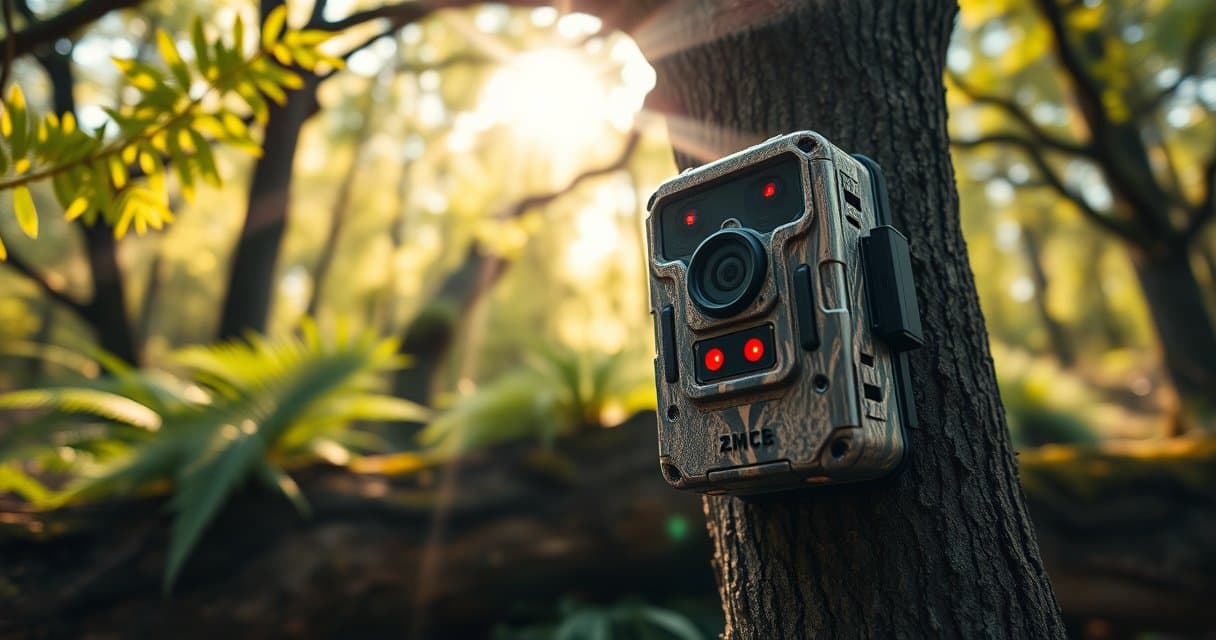
WiFi Trail Camera Guide
See wildlife discreetly from your couch! Learn how WiFi trail cameras let you monitor animals without disturbance and how to choose the right one.
Ultimate Travel Telescope Guide
Choose a portable, high-performance travel telescope to explore the universe from your backpack without compromising on essential astronomical views.
Ultimate Guide to Night Vision Binoculars
Choose the perfect night vision binoculars: Gen vs. digital? Unravel the tech to make your nighttime wildlife adventures a total success. Guide inside.