FAMISA 90mm Aperture Telescope Review & Test
Published on 9 September 2026 · By OptiqueNature
Review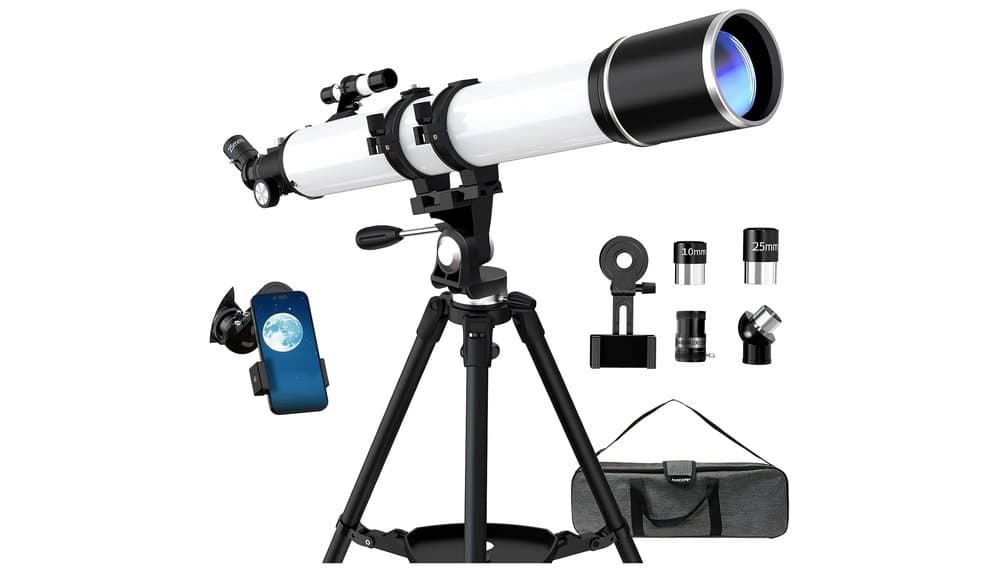
Introduction
The entry-level telescope market is vast, and it can be difficult to distinguish marketing promises from optical and mechanical reality. The FAMISA Telescope 90mm Aperture 900mm Refractor Telescope positions itself as a versatile instrument for celestial and terrestrial observation. On paper, its specifications are attractive: a 90 mm objective and a 900 mm focal length. But how does it actually perform against the demands of observation? We conduct here a comprehensive analysis, cross-referencing official technical specifications with concrete feedback from the user community and expert opinions, to determine who this telescope is really suited for.
Strengths
- Large aperture for its category: A 90 mm objective captures a significant amount of light, which is an undeniable asset for planetary and lunar observation.
- Interesting focal ratio: A 900 mm focal length (f/10) is classic for astronomical refractors and helps reduce chromatic aberration with standard glass.
- Complete and immediately operational: The kit includes everything needed to get started: two eyepieces, a 3x Barlow, a finderscope, a diagonal, a tripod, a smartphone adapter, and a carrying case.
- Theoretical portability: The whole set fits in its carrying case, making it theoretically portable for observation sessions away from home.
Weaknesses
- Inadequate mount and tripod: According to user feedback, this is the most critical point. Stability is poor, vibrations take a long time to dampen, making high-magnification observation difficult.
- Entry-level optics: The provided eyepieces are basic Plössl type and the 3x Barlow is often judged too powerful and degrading to the image. No mention of high-performance multi-coated treatments.
- Present chromatic aberration: Despite the slow focal ratio (f/10), the absence of ED (Extra-low Dispersion) glass or quality achromatism is noticeable on high-contrast targets like the Moon or Jupiter.
- Limited mechanical precision: The fine controls (micrometric) are described as imprecise and the overall quality of the altazimuth mount is perceived as fragile.
Detailed Analysis of the FAMISA 90/900
Optical Quality and Field Performance
On paper, the 90 mm aperture / 900 mm focal length duo is solid for a beginner's astronomical refractor. It promises good resolving power and useful magnification. The brightness, a function of the objective's surface area, is adequate.
However, theory clashes with practice. Testers emphasize that the quality of the auxiliary optics (eyepieces and Barlow) is the main limiting factor. The 3x Barlow, pushing magnification often beyond the practical limits of the instrument (advertised 270x), severely degrades clarity and contrast. The maximum useful magnification, according to the community, is well below 270x, around 120x to 150x under ideal atmospheric conditions.
For terrestrial observation (birds, landscapes), the refractor provides an upright image via the supplied prism diagonal. The field of view with the lowest power eyepiece (20 mm) is acceptable for locating objects, but does not reach the width of a quality instrument dedicated to nature observation. The eye relief of the Plössl eyepieces is often too short for observers wearing glasses, a recurring limitation noted in the feedback.
Construction, Ergonomics, and Durability
This is the area where the gap between promises and user experience is most pronounced. Although the optical tube itself is generally considered acceptable, the support system is unanimously criticized.
The altazimuth mount is light and its movements are described as jerky or having "play," making tracking celestial objects unpleasant. The steel tripod, despite its weight, lacks rigidity. Testers point out that the slightest touch or wind causes persistent vibrations, a fatal flaw at high magnification.
There is no indication of waterproofing or fogproof nitrogen purging. This is an instrument intended for indoor/outdoor use in dry weather. The carrying bag offers basic protection against dust and minor shocks.
Versatility and Typical Use Cases
- Beginner Astronomy (Moon, planets): This is its relative strong point. For discovering lunar craters, Jupiter's bands, or Saturn's rings at low to medium magnification, it fulfills its function. Purists will be frustrated by chromatic aberration and instability.
- Occasional Terrestrial Observation: Possible, but not optimal. The lack of integrated zoom and limited field of view make it less practical than a dedicated spotting scope for birdwatching.
- Digiscoping / Light Astrophotography: The smartphone adapter allows for capturing satisfactory images of the Moon to share the experience. For planets or deep sky, the optical and mechanical limitations make the exercise very difficult. It is more about "souvenir photos" than serious astrophotography.
- Hiking / Travel: The carrying case makes it possible in theory, but the total weight (nearly 5 kg) and the perceived fragility of the tripod and mount make it a poorly recommended companion for demanding hikes.
Value for Money in the Market
Positioned in the budget segment, the FAMISA 90/900 bets on the completeness of the kit. Its perceived value is high for a newcomer attracted by the accessory list.
However, comparative analysis shows that this model sacrifices the most crucial element for user experience: stability. For a similar budget, options with a slightly smaller aperture (70mm) but paired with a more robust mount often offer much better satisfaction in use. The community agrees that it is better to have a small stable telescope than a large unstable one. This product perfectly illustrates this adage.
Technical Specifications: FAMISA Telescope 90mm Aperture 900mm
| Characteristic | Specification |
|---|---|
| Type | Astronomical Refractor |
| Aperture (Objective Diameter) | 90 mm |
| Focal Length | 900 mm |
| Focal Ratio (F/D) | f/10 |
| Mount | Altazimuth with Micrometric Controls |
| Tripod | Steel Tripod, Adjustable Height |
| Supplied Eyepieces | Plössl 25 mm and 10 mm (likelihood) |
| Multiplier Accessory | Barlow lens 3x |
| Finderscope | 6x24 Straight Finder (generally) |
| Diagonal | 90° Prism for Terrestrial Observation |
| Smartphone Adaptation | Universal Adapter Included |
| Portability | Carrying Bag Supplied |
| Total Weight (est.) | 4.76 kg |
What Users and Testers Say
A synthesis of feedback from independent experts and customer reviews reveals a very clear consensus.
Recurring Positive Points:
- The ease of assembly for a complete beginner.
- The satisfaction of being able to observe Saturn's rings or lunar craters for the first time with an instrument at this price.
- The completeness of the package: "You have everything in the box to get started."
- The correct performance at low magnification (with the 25 mm eyepiece) for lunar observations.
Negative Points and Frustrations:
- Chronic Instability: This is the number one complaint. The tripod and mount are judged too light and vibrating, spoiling the observation.
- Unusable 3x Barlow: Described as a "gimmick" by many, it gives a dark and blurry image. Most users advise not to use it or to replace it.
- Accessory Quality: The finderscope is often described as difficult to adjust and of low quality. The eyepieces are the bare minimum.
- Chromatic Aberrations (color fringing): Noticeably present on the bright Moon and planets, a sign of basic achromatism.
- Movement Precision: The mount is difficult to adjust precisely for tracking an object, especially at high magnification.
Conclusion
The FAMISA Telescope 90mm Aperture 900mm Refractor Telescope is a typical beginner's kit that illustrates the compromises of the entry-level market. It bets everything on the appeal of numbers (aperture, magnification) and the quantity of accessories, to the detriment of the quality of the most decisive elements for the experience: the mount and the tripod.
Its target audience is clear: the absolute beginner astronomer, patient and handy, who wants to discover the sky at minimal cost and is willing to accept its mechanical limits. It can offer beautiful first-time emotions on the Moon and planets at low power. On the other hand, for the regular terrestrial observer, the hiker, or someone seeking a stable and precise astronomical experience, its structural flaws are too penalizing. The community often advises investing, at an equivalent budget, in an instrument where the mount represents a larger share of the overall value. This telescope is a gateway, but a gateway that shakes.
100% free and independent — All our articles are written independently, without any sponsorship. We may earn a commission on purchases made through our links, at no extra cost to you.
Articles you might like
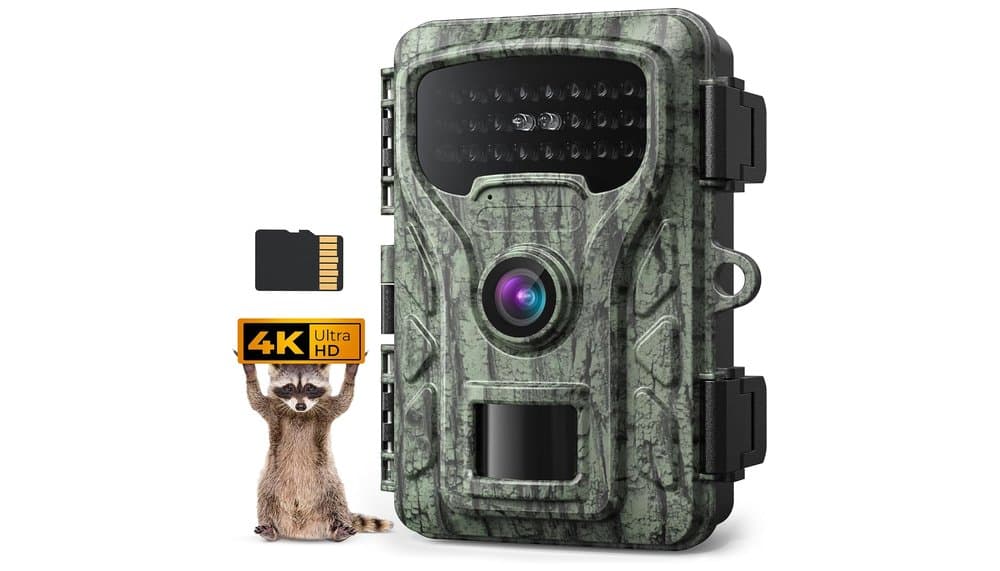
Caytail 4K 48MP Hunting Camera Review & Test
In-depth review of the Caytail 4K 48MP trail camera with included SD card. We analyze specs and real user feedback on its true field performance.
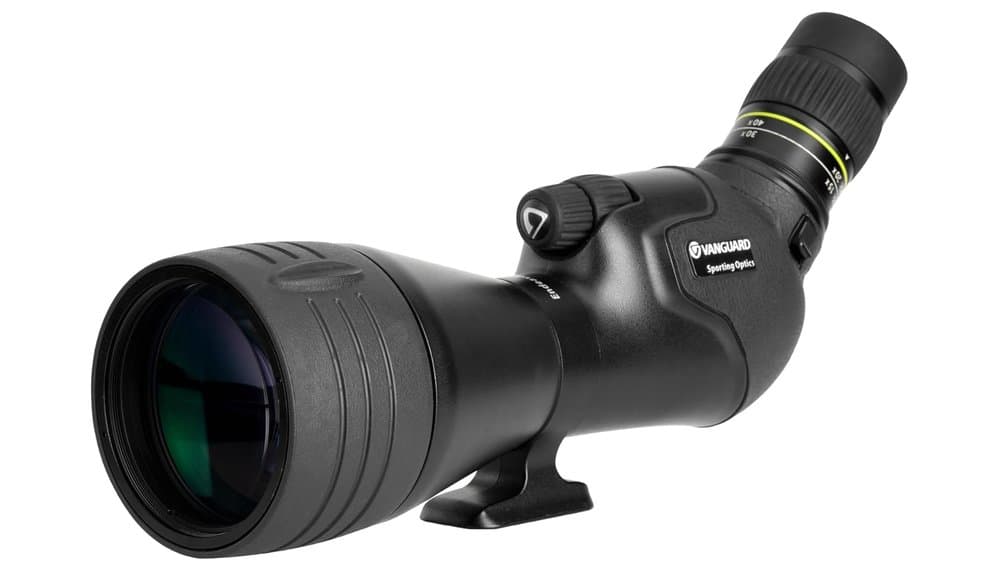
Vanguard Endeavor HD65A Spotting Scope Review
Spotting scope with 65mm ED glass & 15-45x zoom for birding & hiking. Balanced performance & portability for serious nature observers.
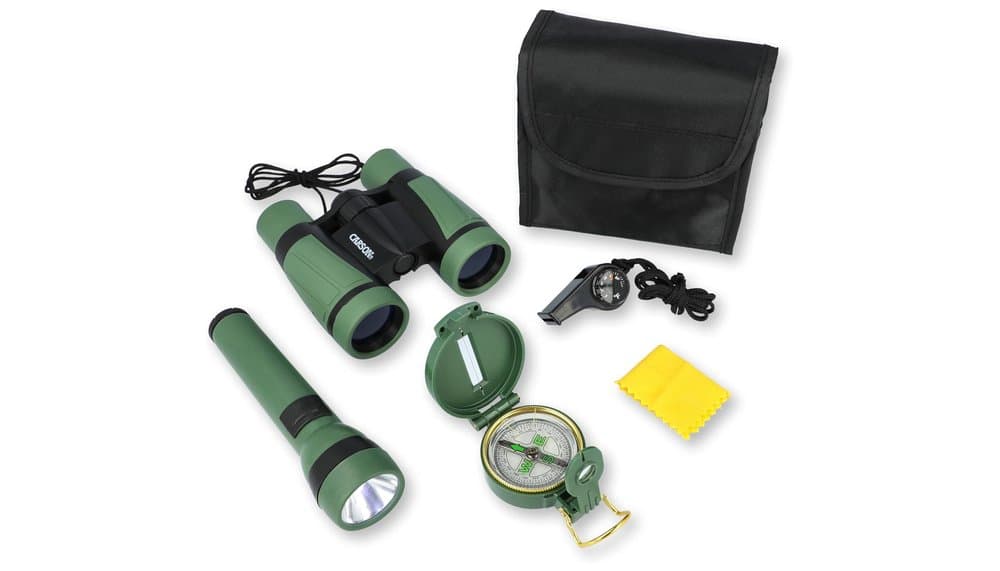
Carson AdventurePak Kids' Exploration Tool Kit Review
Explore nature with this kid's 5-piece tool kit for outdoor adventure and educational discovery. Perfect for young explorers.
Guides you might like
WiFi Trail Camera Guide
See wildlife discreetly from your couch! Learn how WiFi trail cameras let you monitor animals without disturbance and how to choose the right one.
Ultimate Travel Telescope Guide
Choose a portable, high-performance travel telescope to explore the universe from your backpack without compromising on essential astronomical views.
Ultimate Guide to Night Vision Binoculars
Choose the perfect night vision binoculars: Gen vs. digital? Unravel the tech to make your nighttime wildlife adventures a total success. Guide inside.