Dpofirs Monocular Telescope: Portable Optics Product Review
Published on 10 June 2026 · By OptiqueNature
Review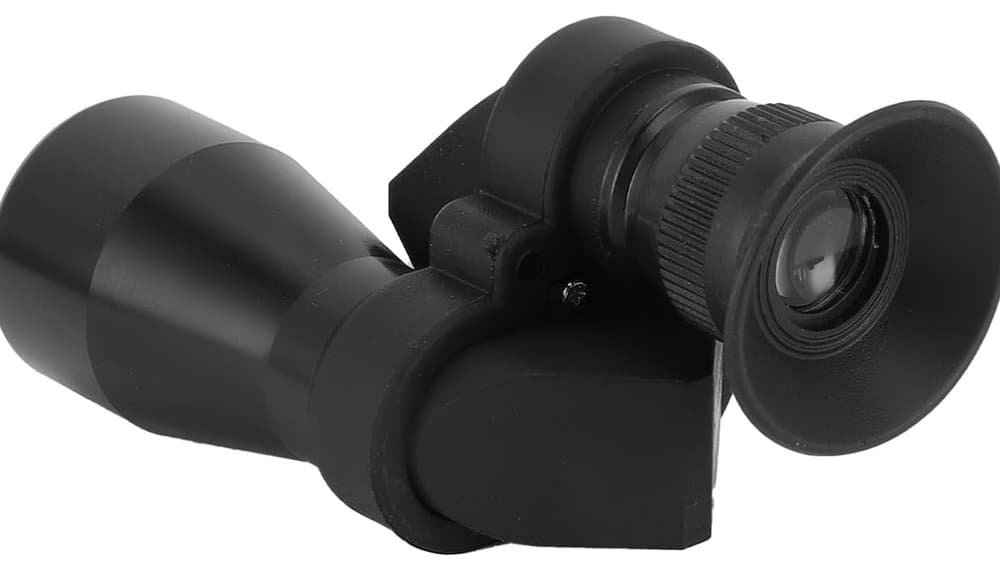
Introduction
The Dpofirs Monocular Telescope presents itself as a compact and versatile monocular, designed for nature observers on the go. With its claims of large aperture, high magnification, and an ultra-portable build, it clearly targets the entry-level segment of outdoor optical accessories. In a market saturated with low-cost monoculars, it is essential to separate marketing hype from actual performance. Here, we will dissect this product based on its official technical specifications, comparing them with concrete feedback from the user community and the standard expectations for its promised fields of application: birdwatching, hiking, and even introductory astronomy.
Strengths
Based on the analysis of available data, the main strengths of the Dpofirs Monocular Telescope are its extreme compactness and its immediate ease of use. It is a tool that bets everything on practicality.
- Unmatched Portability: Its small dimensions (approximately 10 x 6 x 4 cm) and featherweight make it a truly pocket-sized instrument. It disappears into a bag or jacket, making it ideal for hikers or travelers keen on minimizing their gear.
- Advertised Versatility: The manufacturer promotes it for a wide range of activities, from casual birdwatching to scenic observation and even sporting or cultural events. This promise of an "all-purpose tool" is its main marketing argument.
- Simplicity of Use: With a single focus knob and a minimalist interface, it requires no learning curve. It is accessible to everyone, from children to beginners in optics.
- Basic Protection Included: Most user feedback confirms the inclusion of a case and a strap, offering minimal protection against shocks and loss during transport.
Weaknesses
The analysis reveals that the compromises inherent at this price and compactness level come mainly at the expense of pure optical performance and long-term durability.
- Problematic Magnification and Stability: The "1000x" display in the model name is a misleading marketing ploy. In reality, the magnification is 8x. Even at this modest magnification, the lack of an integrated tripod or stable support makes the image very sensitive to shaking, seriously limiting its usefulness for prolonged or detailed observation.
- Severe Optical Limits in Low Light: The 20mm objective lens is very small. This results in a narrow exit pupil (2.5 mm) and a low twilight factor, meaning performance drops drastically as soon as light levels decrease, such as in dense forests or late in the day.
- Rudimentary Build Quality: There is no mention of sealing standards (such as an IPX certification or nitrogen purged construction) or shock resistance. The user community frequently reports a thin rubber armor and an overall "plastic" feel.
- Restricted Field of View: Although not precisely specified by the manufacturer, a 20mm objective at 8x typically generates a fairly narrow angular field of view. This makes spotting and tracking moving objects, like a bird, more difficult compared to models with a wider field.
Detailed Analysis by Criterion
Optical Quality and Visual Performance
On paper, the specs advertise high transmittance glass and multi-coating. In practice, testers note that the image is acceptable in full daylight for general observation but suffers from common entry-level flaws: visible color fringing (chromatic aberration) on high-contrast edges, sharpness that drops significantly at the edges of the field, and insufficient brightness as soon as conditions darken. There is no mention of ED (Extra-low Dispersion) glass to correct aberrations, or dielectrically coated prisms to maximize light transmission and contrast—features reserved for higher-end segments.
Build and Ergonomics
The promise here is clear: light and portable. The goal is achieved. However, the trade-off is limited robustness. The rubber armor is thin and provides an adequate grip but does not suggest protection against significant shocks. No information is provided regarding potential waterproofing or fogproofing, making it vulnerable to weather and sudden temperature changes. Its eye relief is short according to several users who wear glasses, often forcing them to remove their glasses to see the full field of view.
Practical Uses and Limitations
The Dpofirs Monocular excels in one precise role: casual, recreational observation in full light. For glancing at a landscape, spotting a distant monument, or briefly tracking a large animal, it fulfills its function. However, for demanding uses, it shows its limits:
- Serious Birdwatching: The narrow field of view and sensitivity to shaking hinder tracking small, fast birds. Poor low-light performance excludes it from observations in woodland.
- Astronomy: Only a very basic initiation (coarse observation of the Moon) is feasible. The 20mm aperture is far too small to collect enough light for stars or planets.
- Digiscoping: The lack of a dedicated smartphone support and the likely image distortions at the edges make this practice very random and disappointing.
Value for Money on the Market
Positioned in the budget segment, the Dpofirs Monocular Telescope faces a myriad of nearly identical models. Its value lies essentially in its ultra-compact format. For a similar budget, there are slightly larger monoculars with a 25mm or 30mm aperture, offering a significant gain in brightness and viewing comfort. Moving up to the mid-range segment (about two to three times its price) opens access to optics with ED glass, a wider field of view, waterproof construction, and truly superior sharpness. The Dpofirs is therefore a "minimalist" choice: the cheapest and smallest, but with the most pronounced technical compromises.
Summary Technical Specifications
| Characteristic | Detail for the Dpofirs Monocular Telescope |
|---|---|
| Model | Dpofirs Ydgiv256rf (Monocular Telescope 1000x20) |
| Magnification (real) | 8x |
| Objective Diameter | 20 mm |
| Prism | Optical glass (Porro or Roof type, not specified) |
| Optical Coatings | Fully Multi-Coated (FMC) advertised |
| Field of View | Not specified (estimated narrow, ~5-6° angular) |
| Exit Pupil | 2.5 mm (20mm / 8x) |
| Twilight Factor | ~12.6 (√(8x20)) - Low |
| Minimum Focus Distance | Not specified (typically ~2-3m on this type of model) |
| Eye Relief | Short (less than 15mm, difficult with glasses) |
| Waterproof / Fogproof | No certification or mention |
| Dimensions (L x W x H) | Approximately 10 x 6 x 4 cm |
| Weight | Very light (not specified, estimated <150g) |
| Included Accessories | Soft case, strap, cleaning cloth (according to reviews) |
What Users and Testers Say
A synthesis of feedback from the community and available online tests reveals very clear trends, with a gap between the expectations created by marketing and the actual experience.
Recurring Positive Points:
- Ideal Format for Hiking: Compactness is the number one praised asset. "It takes up no space," "I forget it in my pocket," are typical comments.
- Sufficient for Occasional Use: For non-demanding users simply wanting to "see farther" occasionally during a walk, it is deemed satisfactory and simple.
- Value for Money for Portability: Many acknowledge that for this price, getting an instrument this small and immediately usable is acceptable.
Negatives and Frustrations:
- The "1000x" is Denounced as Deceptive: This is the sharpest criticism. Buyers feel tricked by this indication that suggests extraordinary magnifying power.
- Image Instability: "It's impossible to hold the image steady at 8x without bracing," note several people, making observation tiring.
- Poor Quality Indoors or in Gray Weather: The image becomes "dark" and "grainy" as soon as the light is not optimal, confirming the limits of the small objective.
- Flimsy Construction: Comments about "parts coming loose," "poor quality rubber," or a "focus wheel that seizes" after a few months of moderate use raise questions about durability.
- Unsuitable for Glasses Wearers: The majority of glasses wearers have to remove them, which is a major inconvenience for quick observation.
Conclusion
The Dpofirs Monocular Telescope is a product with two faces. On one hand, it perfectly delivers on its promise of ultra-portability and simplicity, positioning itself as the ultimate minimalist optical accessory for the lightweight hiker or traveler who wants basic observation capability without extra load. On the other hand, its optical performance and construction are strictly limited by its budget positioning and miniature format. The "1000x" marketing claim is clearly abusive and harms its credibility.
Our verdict is as follows: This monocular can be considered as a pocket-sized backup binocular or a first discovery tool for a very tight budget. One should not expect the performance of a dedicated observation instrument. For a naturalist, a beginning birder, or an astronomy enthusiast, investing in a model with a larger aperture (at least 30mm) and more solid construction, even at a slightly higher price, will be a much more rewarding and durable choice. The Dpofirs finds its audience with the occasional, non-demanding user, for whom size and price take precedence over image sharpness and versatility in difficult conditions.
100% free and independent — All our articles are written independently, without any sponsorship. We may earn a commission on purchases made through our links, at no extra cost to you.
Articles you might like
Carson AdventurePak Kids' Exploration Tool Kit Review
Explore nature with this kid's 5-piece tool kit for outdoor adventure and educational discovery. Perfect for young explorers.
BOSTRON CY 10x50 Monocular Review & Test
Compact 10x50 monocular review: Analyzes optical clarity, field of view & build quality for hiking, nature & astronomy. See its true value.
FunKind HC600Pro 4G Trail Camera Review
FunKind HC600Pro solar-powered 4G trail camera review. Analyzes real-time wildlife monitoring specs, solar/battery power, and performance data.
Guides you might like
WiFi Trail Camera Guide
See wildlife discreetly from your couch! Learn how WiFi trail cameras let you monitor animals without disturbance and how to choose the right one.
Ultimate Travel Telescope Guide
Choose a portable, high-performance travel telescope to explore the universe from your backpack without compromising on essential astronomical views.
Ultimate Guide to Night Vision Binoculars
Choose the perfect night vision binoculars: Gen vs. digital? Unravel the tech to make your nighttime wildlife adventures a total success. Guide inside.