Celestron StarSense Explorer 114mm Telescope Review
Published on 17 September 2026 · By OptiqueNature
Review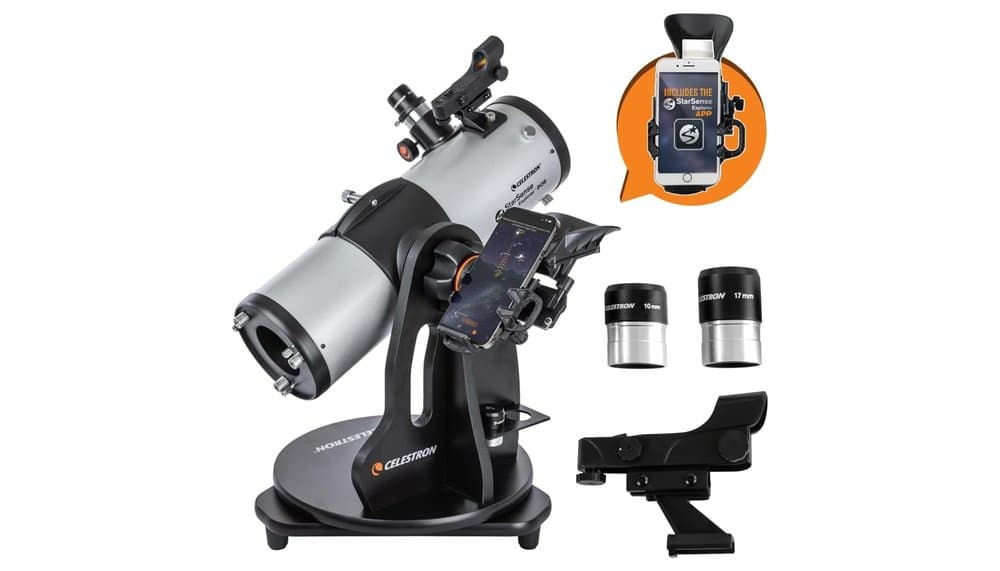
Analysis of the Celestron StarSense Explorer 114mm Tabletop Dobsonian Telescope
The Celestron StarSense Explorer 114mm Tabletop Dobsonian Telescope is an instrument generating significant interest in the beginner telescope market. By merging classic Newtonian optics with modern smartphone-assisted technology, it promises to democratize access to astronomy. We will dissect its performance, construction, and value through its specifications, expert feedback, and community reviews.
Strengths and Weaknesses
Strengths
- Revolutionary StarSense Technology: The smartphone app guides the user with great precision, eliminating the main difficulty for beginners: finding celestial objects.
- Quality optics for its segment: The 114 mm parabolic primary mirror offers decent light-gathering power for planetary and deep-sky observations.
- Stable tabletop Dobsonian mount: Robust and intuitive design, offering smooth manipulation in azimuth and altitude.
- Portability and compactness: "Tabletop" format ideal for observations on a terrace, balcony, or while traveling.
- Immersive user experience: Playful and educational interface, with suggestions for objects to observe each night.
Weaknesses
- Potentially tricky initial assembly: Assembling the Dobsonian base requires patience and, according to feedback, some screws can be stubborn.
- Dependence on a smartphone and a license: The core system requires a compatible device and a unique activation code that must be kept safely.
- Inherent optical limits: The 114 mm aperture, while decent, remains limited for the faintest deep-sky objects compared to larger diameter models.
- No motorization: The user must move the tube manually, which differs from a fully automatic GoTo system.
Detailed Analysis
Optical Quality and Visual Performance
The optical heart of this telescope is a 114 mm (4.5 inch) Newtonian reflector with a focal length of 450 mm (f/3.95). This optical configuration is proven. The parabolic primary mirror (as opposed to the lower-quality spherical mirrors often found in this price segment) is a crucial point. It minimizes optical aberrations (coma) and ensures decent resolution and contrast for the price.
The short focal ratio (f/3.95) indicates a relatively "fast" instrument offering a fairly wide field of view. This makes it versatile: suitable for observing the Moon with striking detail, Saturn's rings, Jupiter's bands with its Galilean moons, but also extended objects like the Orion Nebula (M42) or the Pleiades cluster. Light transmission is dictated by the 114 mm aperture and mirror coatings (likely an aluminum coating and a protective layer). It is sufficient to reveal a multitude of stars and objects in moderately light-polluted skies.
The supplied eyepieces (10 mm and 17 mm Plössl) offer magnifications of 45x and 26.5x. The 17 mm eyepiece will likely be the most used, with a comfortable exit pupil of about 4.3 mm, suitable for relaxed observation. The 10 mm eyepiece allows for zooming in on planets. The Red Dot StarPointer finder is a standard but effective accessory for initial rough pointing before using the StarSense app.
Construction, Ergonomics, and Handling
Build quality is consistently praised by users. The tabletop Dobsonian mount, made of composite material, is described as stable and without play. Movements in azimuth and altitude are ensured by Teflon pads, guaranteeing smooth movement essential for following the app's instructions. The optical tube, robustly built, attaches solidly to the base.
The ergonomics are that of a classic Dobsonian, simplified by the tabletop format. A stable surface (table, low pedestal) must be planned for installation. Manual focusing via the knob is precise. For eyeglass wearers, the roll-down eyecup offers adjustable eye relief, allowing for comfortable observation with or without correction.
The most frequently mentioned point concerns the initial assembly of the base. Instructions are described as clear by the majority, but tightening some screws may require a bit of force. As one user points out, "you just need to read calmly and be minimally logical." Once assembled, the whole is judged to be very solid.
StarSense Technology: The Game-Changer
This is the flagship feature that distinguishes this product. The system relies on a dedicated dock that precisely positions the smartphone at the rear of the tube. The app, after a quick alignment, uses the phone's camera and sensors to map the sky in real time.
In practice, the user selects an object from an automatically generated list (planets, stars, nebulae, galaxies visible from their location and at their time). The app then displays guiding arrows on the screen. The user simply manually rotates the telescope until the arrows converge, with a green reticle confirming that the object is centered in the eyepiece's field of view. This technology significantly shortens the learning curve and transforms the hunt for celestial objects into a playful and rewarding experience, perfect for families or complete beginners.
Value for Money and Competitive Segments
In the entry-level segment of complete telescopes (around 200-300€), the StarSense Explorer 114mm positions itself as a premium product. Its price is higher than that of a classic 114mm Dobsonian or an equivalent refractor telescope. However, the added value of the StarSense app is substantial.
- Compared to classic manual telescopes: It far surpasses models equipped with basic, often unstable, alt-azimuth mounts (as noted in a user comparison with a competing "DX" model). The tabletop Dobsonian mount is more robust and precise.
- Compared to motorized GoTo telescopes: It is generally cheaper. It offers similar pointing assistance in spirit (guidance to the object), but without motorization. This makes it simpler, more mechanically reliable, and less power-hungry, but requires constant manual manipulation.
- Verdict: Its value for money is excellent for a beginner looking to maximize their chances of success and immediate enjoyment. The investment is justified by the unique user experience and perceived build quality.
What Users Say
Customer reviews, with an average rating of 4.5/5, converge on several points.
Recurring positive points:
- Perceived high build quality: Terms like "magnificent," "serious," "quality delivered" often recur.
- Effectiveness of the StarSense system: Described as "easy to set up," "works very well" once the procedure is understood. It makes locating objects "child's play."
- Satisfactory optics: Users report having seen "Saturn and its rings," "Jupiter and its bands," confirming the instrument's planetary capabilities.
- Appreciated portability: Its compact format and ease of transport are highlighted.
Points of caution raised:
- Base assembly: While generally considered doable, it can present a temporary difficulty ("some screws are a bit hard to tighten").
- App learning curve: Requires following the steps scrupulously. The online manual is however judged to be clear.
- Dependence on the activation code: Experts remind that this code must be kept, as without it the app becomes unusable.
Experts confirm these trends, praising the real innovation that StarSense represents for beginners. They note that the telescope itself offers perfectly respectable optical performance for its aperture, well beyond optical toys, and that its Dobsonian design is robust and effective.
Technical Specifications
| Feature | Detail |
|---|---|
| Optical type | Newtonian Reflector |
| Diameter (aperture) | 114 mm |
| Focal length | 450 mm |
| Focal ratio (f/) | f/3.95 |
| Mount | Tabletop Dobsonian (alt-azimuth) |
| Supplied eyepieces | 10 mm (45x) and 17 mm (26.5x) Plössl |
| Finder | StarPointer Red Dot |
| Assistive technology | StarSense Explorer (dock and smartphone app) |
| Smartphone compatibility | iOS (iPhone XR/XS and later, iOS 18+) and Android (Android 12+) |
| Dimensions (base) | Approximately 38 x 38 x 57 cm |
| Weight | 5.72 kg |
| Manufacturer warranty | 2 years |
Conclusion
The Celestron StarSense Explorer 114mm Tabletop Dobsonian Telescope is much more than a simple beginner's telescope. It is an intelligent learning platform that elegantly solves the main obstacle for novice amateur astronomers. By combining honest-quality Newtonian optics (with its parabolic mirror) and a simple, stable tabletop Dobsonian mount, it provides a solid mechanical and optical foundation.
The real asset is its StarSense ecosystem, which transforms the smartphone into an interactive planetarium and personal celestial guide. This innovation fully justifies its slightly higher price positioning compared to a classic Dobsonian.
It is perfectly suited for the beginning or family astronomer seeking to achieve rewarding results quickly, without getting discouraged by traditional star charts. Its compactness also makes it an ideal travel or terrace companion. For those seeking complete motorization or a larger aperture for deep sky, other models exist. But for a successful, modern, and fun introduction to astronomical observation, this Celestron StarSense Explorer 114mm constitutes a strong and justified recommendation.
100% free and independent — All our articles are written independently, without any sponsorship. We may earn a commission on purchases made through our links, at no extra cost to you.
Articles you might like
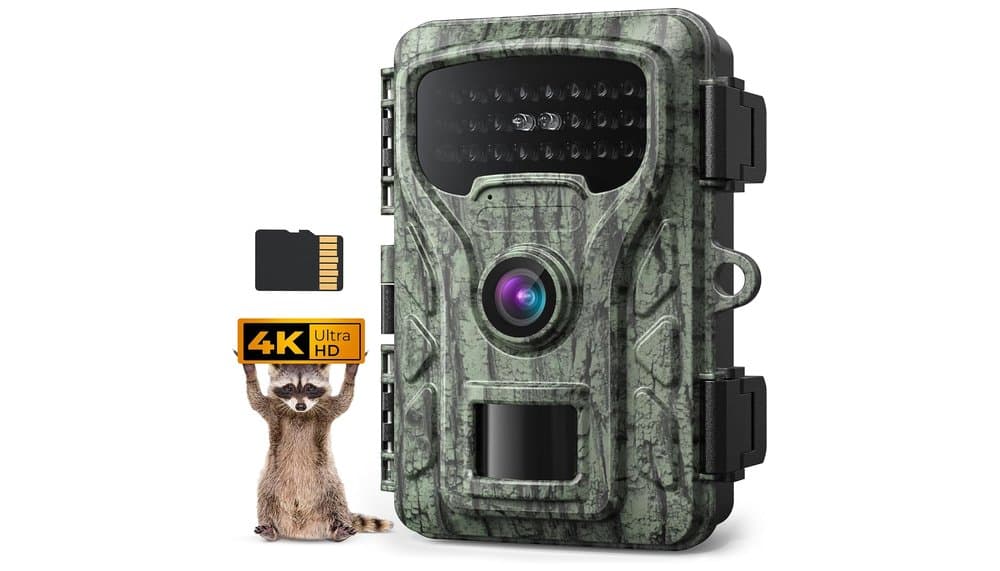
Caytail 4K 48MP Hunting Camera Review & Test
In-depth review of the Caytail 4K 48MP trail camera with included SD card. We analyze specs and real user feedback on its true field performance.
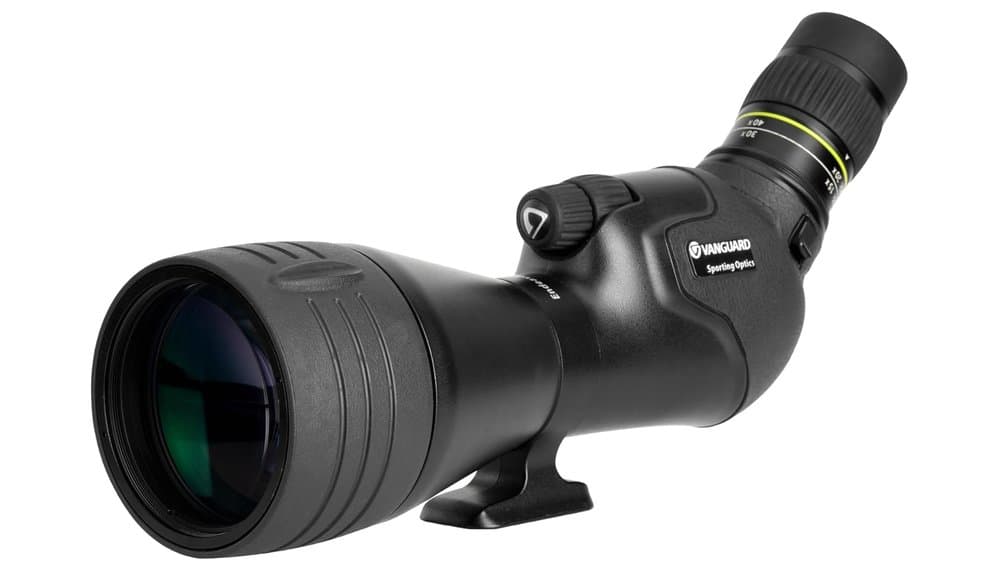
Vanguard Endeavor HD65A Spotting Scope Review
Spotting scope with 65mm ED glass & 15-45x zoom for birding & hiking. Balanced performance & portability for serious nature observers.
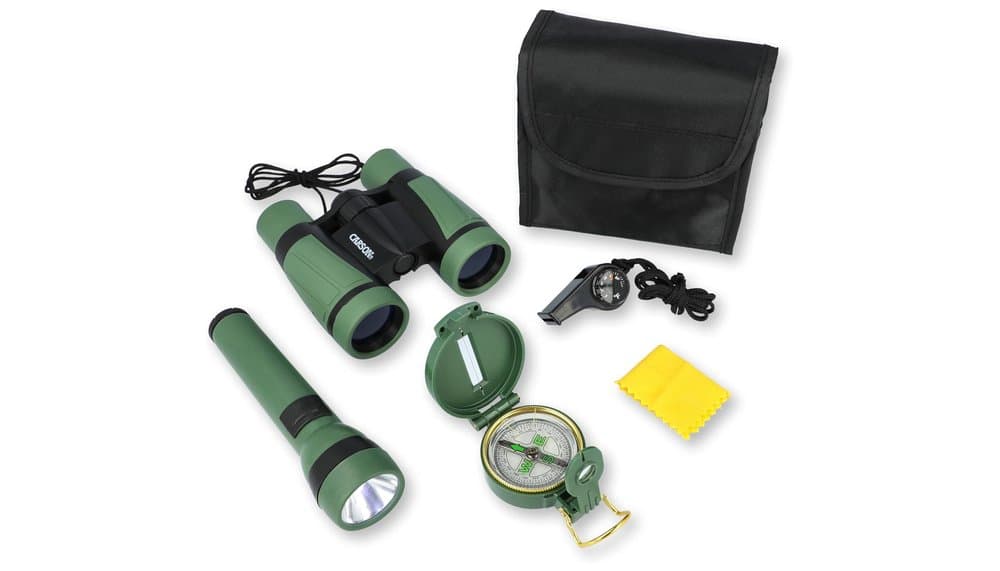
Carson AdventurePak Kids' Exploration Tool Kit Review
Explore nature with this kid's 5-piece tool kit for outdoor adventure and educational discovery. Perfect for young explorers.
Guides you might like
WiFi Trail Camera Guide
See wildlife discreetly from your couch! Learn how WiFi trail cameras let you monitor animals without disturbance and how to choose the right one.

Ultimate Travel Telescope Guide
Choose a portable, high-performance travel telescope to explore the universe from your backpack without compromising on essential astronomical views.
Ultimate Guide to Night Vision Binoculars
Choose the perfect night vision binoculars: Gen vs. digital? Unravel the tech to make your nighttime wildlife adventures a total success. Guide inside.